English
 Español
 中文
中文 हिन्दी
 Français
Government and Politics
Government and Politics of Slovenia
Government structure, leadership, capital, military, and national symbols of Slovenia.
Government Structure
Constitutional foundations, branches, parties, and leadership.
- Government Type
- parliamentary democratic republic
- Administrative Divisions
- 182 municipalities (obcine, singular - obcina) and 11 urban municipalities* (mestne obcine , singular - mestna obcina ) Ajdovscina, Beltinci, Benedikt, Bistrica ob Sotli, Bled, Bloke, Bohinj, Borovnica, Bovec, Braslovce, Brda, Brezice, Brezovica, Cankova, Celje*, Cerklje na Gorenjskem, Cerknica, Cerkno, Cerkvenjak, Crensovci, Crna na Koroskem, Crnomelj, Destrnik, Divaca, Dobje, Dobrepolje, Dobrna, Dobrova-Horjul-Polhov Gradec, Dobrovnik-Dobronak, Dolenjske Toplice, Dol pri Ljubljani, Domzale, Dornava, Dravograd, Duplek, Gorenja Vas-Poljane, Gorisnica, Gornja Radgona, Gornji Grad, Gornji Petrovci, Grad, Grosuplje, Hajdina, Hoce-Slivnica, Hodos-Hodos, Horjul, Hrastnik, Hrpelje-Kozina, Idrija, Ig, Ilirska Bistrica, Ivancna Gorica, Izola-Isola, Jesenice, Jezersko, Jursinci, Kamnik, Kanal, Kidricevo, Kobarid, Kobilje, Kocevje, Komen, Komenda, Koper-Capodistria*, Kostel, Kozje, Kranj*, Kranjska Gora, Krizevci, Krsko, Kungota, Kuzma, Lasko, Lenart, Lendava-Lendva, Litija, Ljubljana*, Ljubno, Ljutomer, Logatec, Loska Dolina, Loski Potok, Lovrenc na Pohorju, Luce, Lukovica, Majsperk, Maribor*, Markovci, Medvode, Menges, Metlika, Mezica, Miklavz na Dravskem Polju, Miren-Kostanjevica, Mirna Pec, Mislinja, Moravce, Moravske Toplice, Mozirje, Murska Sobota*, Muta, Naklo, Nazarje, Nova Gorica*, Novo Mesto*, Odranci, Oplotnica, Ormoz, Osilnica, Pesnica, Piran-Pirano, Pivka, Podcetrtek, Podlehnik, Podvelka, Polzela, Postojna, Prebold, Preddvor, Prevalje, Ptuj*, Puconci, Race-Fram, Radece, Radenci, Radlje ob Dravi, Radovljica, Ravne na Koroskem, Razkrizje, Ribnica, Ribnica na Pohorju, Rogasovci, Rogaska Slatina, Rogatec, Ruse, Salovci, Selnica ob Dravi, Semic, Sempeter-Vrtojba, Sencur, Sentilj, Sentjernej, Sentjur pri Celju, Sevnica, Sezana, Skocjan, Skofja Loka, Skofljica, Slovenj Gradec*, Slovenska Bistrica, Slovenske Konjice, Smarje pri Jelsah, Smartno ob Paki, Smartno pri Litiji, Sodrazica, Solcava, Sostanj, Starse, Store, Sveta Ana, Sveti Andraz v Slovenskih Goricah, Sveti Jurij, Tabor, Tisina, Tolmin, Trbovlje, Trebnje, Trnovska Vas, Trzic, Trzin, Turnisce, Velenje*, Velika Polana, Velike Lasce, Verzej, Videm, Vipava, Vitanje, Vodice, Vojnik, Vransko, Vrhnika, Vuzenica, Zagorje ob Savi, Zalec, Zavrc, Zelezniki, Zetale, Ziri, Zirovnica, Zuzemberk, Zrece
- Legal System
- based on civil law system
- Suffrage
- 18 years of age; universal (16 years of age, if employed)
- Citizenship
- citizenship by birth: no citizenship by descent only: at least one parent must be a citizen of Slovenia; both parents if the child is born outside of Slovenia dual citizenship recognized: yes, for select cases residency requirement for naturalization: 10 years, the last 5 of which have been continuous
- Executive Branch
- chief of state: President Nataša PIRC MUSAR (since 23 December 2022) head of government: Prime Minister Robert GOLOB (since 1 June 2022) cabinet: Council of Ministers nominated by the prime minister and elected by the National Assembly elections: president elected by popular vote for a five-year term; election last held 23 October and 13 November 2022 (next to be held in fall 2027); following National Assembly elections, the leader of the majority party or the leader of a majority coalition is usually nominated to become prime minister by the president and elected by the National Assembly; election last held 24 April 2022 (next National Assembly elections to be held in 2026) election results: Nataša PIRC MUSAR elected president in second round; percent of vote in second round - Nataša PIRC MUSAR 53.9%, Anže LOGAR 46.1%; Robert GOLOB elected prime minister; National Assembly vote - 54 to 30
- Legislative Branch
- bicameral Parliament consisting of a National Assembly or Drzavni Zbor (90 seats; 40 are directly elected and 50 are selected on a proportional basis; note - the numbers of directly elected and proportionally elected seats varies with each election; members are elected by popular vote to serve four-year terms) and the National Council or Drzavni Svet (40 seats; this is primarily an advisory body with limited legislative powers; it may propose laws, ask to review any National Assembly decisions, and call national referenda; members - representing social, economic, professional, and local interests - are indirectly elected to five-year terms by an electoral college) elections: National Assembly - last held 3 October 2004 (next to be held October 2008) election results: percent of vote by party - SDS 29.1%, LDS 22.8%, ZLSD 10.2%, NSi 9%, SLS 6.8%, SNS 6.3%, DeSUS 4.1%, other 11.7%; seats by party - SDS 29, LDS 23, ZLSD 10, NSi 9, SLS 7, SNS 6, DeSUS 4, Hungarian and Italian minorities 1 each
- Judicial Branch
- Supreme Court (judges are elected by the National Assembly on the recommendation of the Judicial Council); Constitutional Court (judges elected for nine-year terms by the National Assembly and nominated by the president)
- Political Parties
- Democratic Party of Retired (Persons) of Slovenia or DeSUS [Karl ERJAVEC]; Liberal Democratic Party or LDS [Jelko KACIN]; New Slovenia or NSi [Andrej BAJUK]; Slovene Democratic Party or SDS [Janez JANSA]; Slovene National Party or SNS [Zmago JELINCIC]; Slovene People's Party or SLS [Janez PODOBNIK]; Slovene Youth Party or SMS [Darko KRANJC]; United List of Social Democrats or ZLSD [Borut PAHOR]
- Head of State
- Danilo TURK
- Head of Government
- Borut PAHOR
- Cabinet
- Council of Ministers nominated by the prime minister and elected by the National Assembly
- Elections
- president elected by popular vote for a five-year term (eligible for a second term); election last held 21 October and 11 November 2007 (next to be held in the 8 October 2012); following National Assembly elections, the leader of the majority party or the leader of a majority coalition is usually nominated to become prime minister by the president and elected by the National Assembly; election last held on 9 November 2004 (next National Assembly elections to be held in October 2008)
- Election Results
- Danilo TURK elected president; percent of vote - Danilo TURK 68.2%, Alojze PETERLE 31.8%; Borut PAHOR elected prime minister by National Assembly vote in 2008
- Constitution
- adopted 23 December 1991, effective 23 December 1991
- Independence
- 25 June 1991 (from Yugoslavia)
- National Holiday
- Independence Day/Statehood Day, 25 June (1991)
- International Organization Participation
- ACCT (observer), BIS, CE, CEI, EAPC, EBRD, EU (new member), FAO, IADB, IAEA, IBRD, ICAO, ICC, ICCt, ICRM, IDA, IFC, IFRCS, IHO, ILO, IMF, IMO, Interpol, IOC, IOM, ISO, ITU, NAM (guest), NSG, OPCW, OSCE, PCA, PFP, UN, UNCTAD, UNESCO, UNIDO, UNMIK, UNTSO, UPU, WCO, WEU (associate partner), WHO, WIPO, WMO, WToO, WTrO, ZC
- Diplomatic Representation in the U.S.
- chief of mission: Ambassador Davorin KRACUN chancery: 1525 New Hampshire Avenue NW, Washington, DC 20036 telephone: [1] (202) 667-5363 FAX: [1] (202) 667-4563 consulate(s) general: Cleveland, New York
- U.S. Diplomatic Representation
- chief of mission: Ambassador Thomas B. ROBERTSON embassy: Presernova 31, 1000 Ljubljana mailing address: American Embassy Ljubljana, Department of State, 7140 Ljubljana Place, Washington, DC 20521-7140 telephone: [386] (1) 200-5500 FAX: [386] (1) 200-5555
Capital City
Seat of government and political history.
- Capital City
- Ljubljana
- Location
- 46 03 N, 14 31 E
- Time Difference
- UTC+1 (6 hours ahead of Washington, DC, during Standard Time)
- History
- likely related to the Slavic root "ljub", meaning "to like" or "to love"; by tradition, the name is related to the Slovene word "ljubljena" meaning "beloved"
Embassy and Diplomatic Representation
Embassy location and contact details.
U.S. Embassy Ljubljana, Consular Section Prešernova 31 1000 Ljubljana Telephone: (386) (1) 200-5595 Emergency after-hours telephone: (386) (1) 200-5556 Facsimile: (386) (1) 200-5535 E-mail: ACSLjubljana@state.gov
Military
Branches, service obligations, expenditures, and manpower.
- Military Branches
- Slovenian Armed Forces (Slovenska Vojska, SV): Forces Command (with ground units, naval element, air and air defense brigade); Administration for Civil Protection and Disaster Relief (ACPDR
- Service Age and Obligation
- 18-25 years of age for voluntary military service; conscription abolished in 2003
National Symbols
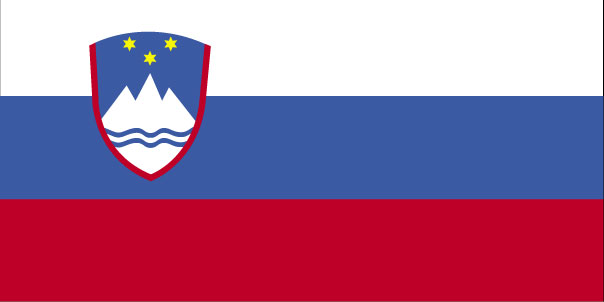
Flag, anthem, and other symbols of national identity.