
 English
 Español
 中文
中文 हिन्दी
 Français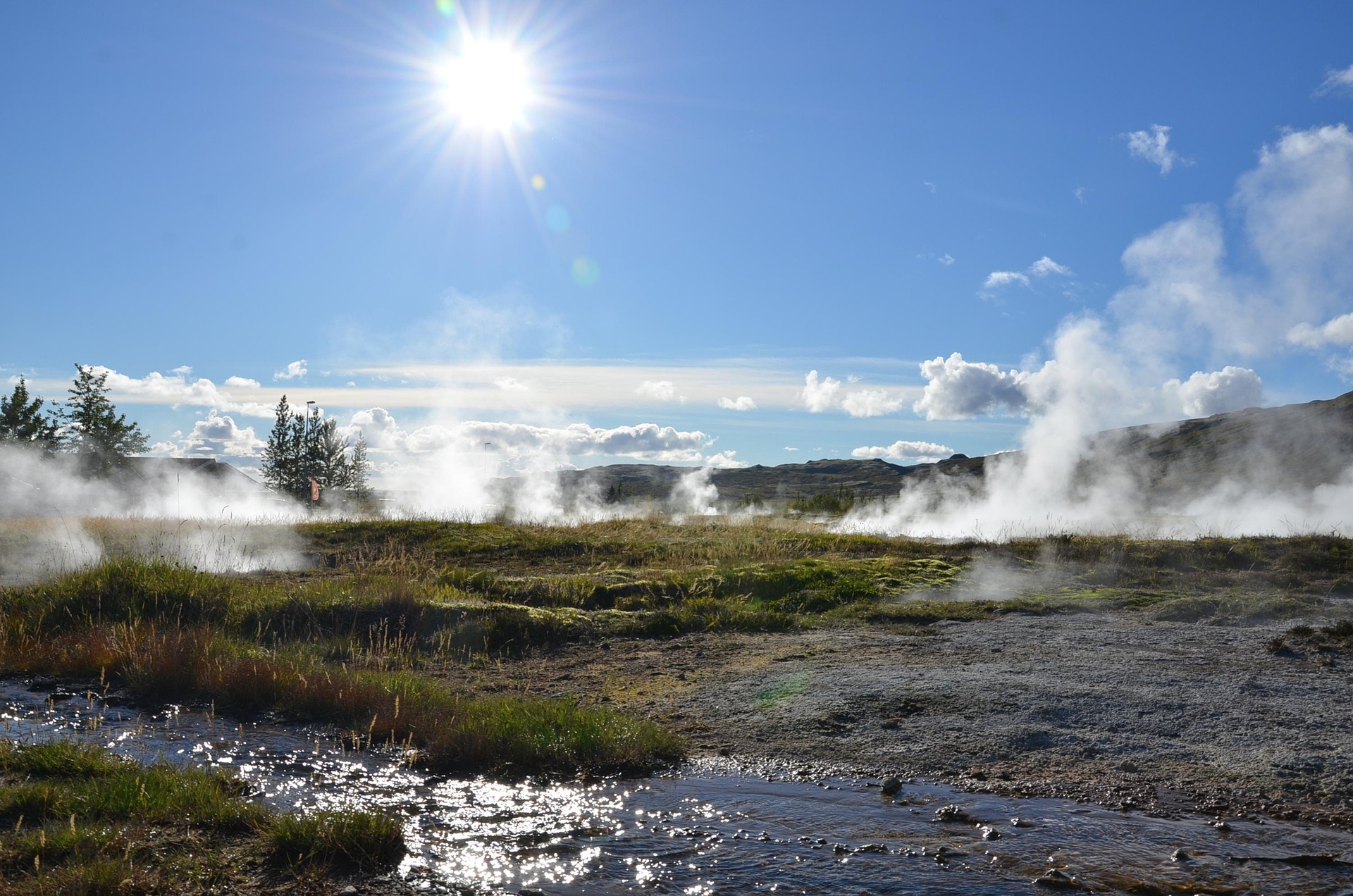
Geothermal Energy: Heat from the Earth
Geothermal energy — the heat stored within the earth — is one of the most ancient energy sources used by humanity and one of the most reliable forms of renewable energy available. Unlike solar and wind power, which vary with weather and time of day, geothermal energy is continuously available, day and night, regardless of season or weather conditions. The earth's interior has been generating heat through the decay of radioactive elements and the residual heat from the planet's formation for billions of years and will continue to do so for billions more — making geothermal energy, in any practical sense, inexhaustible.
The total heat energy stored in the earth's crust — the outermost few kilometers of rock that humans can access with current drilling technology — vastly exceeds total human energy consumption, and the heat flux from the earth's interior (approximately forty-seven terawatts flowing continuously to the surface) exceeds human energy use. However, this heat is very diffusely distributed, and concentrating enough of it to generate electricity economically requires either natural concentrations of heat close to the surface (volcanic regions, mid-ocean ridges, hotspots) or advanced technologies that can access heat in deeper or less permeable rock formations.
The practical use of geothermal energy ranges from the low-technology uses that have served human communities for thousands of years — bathing in hot springs, using geothermal steam for cooking and heating — to sophisticated modern geothermal power plants that generate electricity for grids in countries including Iceland, Kenya, the Philippines, and the United States. An estimated eighty countries have some level of geothermal energy development, and the technology is experiencing a renaissance of investment and innovation as new drilling techniques and enhanced geothermal systems promise to extend geothermal energy access to regions without natural hydrothermal resources.
Ancient and Historical Uses of Geothermal Energy
Hot springs — naturally occurring pools of geothermally heated water that emerge where the earth's heat reaches groundwater near the surface — have been recognized as unusual and useful phenomena since the earliest human occupations of geothermally active regions.
The ancient Romans made extensive use of geothermal water, building bath complexes (thermae and balnea) at natural hot spring sites across their empire. The baths at Aquae Sulis (modern Bath, England), Aquae Calidae (modern Caldas da Rainha, Portugal), and Aquae Granni (modern Aachen, Germany) are among the most famous, but hundreds of thermal bathing facilities were established at geothermal springs throughout the Roman world. The Aquae Sulis baths, built over a natural hot spring where water at approximately forty-six degrees Celsius emerges from the Bath Limestone aquifer, were one of the most elaborate bathing complexes in Roman Britain and functioned continuously for over four hundred years.
In Iceland — a volcanic island created by the Mid-Atlantic Ridge and one of the most geothermally active places on earth — early Norse settlers used geothermal water for washing, cooking, and heating from the time of first settlement in the ninth century AD. The Icelandic Sagas mention the use of hot pools for washing and bathing, and the geothermal hot pool at Laugardalur in Reykjavik was used for washing clothes as recently as the early twentieth century. The name "Reykjavik" itself derives from Old Norse "Reykjavík" meaning "Smoky Bay" — a reference to the steam and sulfurous vapors rising from the geothermal springs that early Norse explorers saw from the sea.
Native peoples of New Zealand's volcanic North Island — the Maori — have used geothermal resources extensively for centuries. The Maori used hot springs and boiling pools for cooking ("hangi" steaming), bathing, and traditional medicine. The geothermal landscape of the Waikato and Bay of Plenty regions, including the spectacular geysers, mud pools, and hot springs at Whakarewarewa (adjacent to the modern city of Rotorua), has been central to Maori culture and spiritual practice for over seven hundred years.
Japan's geothermal resources have supported a tradition of "onsen" (hot spring bathing) that extends back at least to the sixth century and is a central element of Japanese culture. Japan has approximately three thousand registered hot spring resorts and over twenty-seven thousand hot spring sources, making it one of the most geothermally endowed countries in the world. The therapeutic properties attributed to different mineral waters at different onsen sites — sulfurous, alkaline, iron-bearing, radioactive (mildly, in the case of some radium-bearing springs) — have long attracted visitors seeking health benefits.
The Maori of the Rotorua region of New Zealand used geothermal steam vents for cooking from ancient times. The practice of "hangi" in geothermal areas involved placing food in baskets lowered into natural steam vents, using the earth's own heat to cook meat and vegetables in a practice that has been continued into the modern era as a cultural tradition and tourist attraction.
The Birth of Geothermal Electricity
The first use of geothermal energy to generate electricity was at Larderello in Tuscany, Italy, where natural steam from fumaroles (volcanic steam vents) had been used to evaporate boric acid for industrial purposes since the eighteenth century. The boric acid industry at Larderello was established by Francesco de Larderel, a French entrepreneur, in the 1820s, and the town was subsequently named in his honor.
Piero Ginori Conti, an engineer and the owner of the Larderello boric acid works, conducted the first experiments in using geothermal steam for electricity generation in 1904, powering five light bulbs from a small steam-driven generator. On July 4, 1904, Ginori Conti successfully demonstrated the generation of electrical power from geothermal steam — the first time in history that electrical energy had been produced from the earth's interior heat. This demonstration led to the construction of the world's first geothermal power plant at Larderello in 1911, which supplied electricity to the local railway and subsequently to the regional grid. The Larderello complex has been continuously expanded since then and by 2024 had an installed capacity of approximately 800 megawatts, still generating a significant share of Tuscany's electricity after more than a century of operation.
New Zealand developed geothermal electricity in the 1950s, building the Wairakei Geothermal Power Station in the Taupo Volcanic Zone, which began commercial operation in 1958. Wairakei was the world's first geothermal power plant to use hot water (rather than dry steam) as the energy source, requiring the development of "flash steam" technology that allows high-pressure hot water to be converted to steam by reducing its pressure. Wairakei demonstrated that the abundant hydrothermal resources of the Taupo Volcanic Zone could provide significant quantities of electricity, launching New Zealand's geothermal energy program, which by 2024 provides approximately seventeen to eighteen percent of New Zealand's electricity.
The Geysers geothermal complex in California, located approximately one hundred and twenty kilometers north of San Francisco in the Mayacamas Mountains, is the world's largest single complex of geothermal generating plants. The Geysers began commercial electricity generation in 1960, and capacity was expanded rapidly through the 1960s and 1970s. At its peak in 1987, The Geysers generated approximately 2,000 megawatts, providing a significant fraction of California's electricity. Over-extraction of steam without adequate reinjection led to reservoir pressure decline in the 1980s and 1990s, reducing output to approximately 900 megawatts by the 2000s. The injection of treated municipal wastewater into the reservoir since 1997 has partially reversed the pressure decline.
How Geothermal Energy Works: Geology and Resource Types
The geothermal energy available at any location depends on the local geothermal gradient — the rate at which temperature increases with depth below the surface. The average geothermal gradient is approximately twenty-five to thirty degrees Celsius per kilometer, meaning that drilling one kilometer into the earth typically encounters rock approximately twenty-five to thirty degrees warmer than surface temperature. In geothermally active regions — volcanic arcs, mid-ocean ridges, continental rifts, and hotspots — the geothermal gradient can be many times higher than average, making useful temperatures accessible at shallower depths.
Geothermal resources are classified by temperature and the type of resource they represent. High-temperature resources (above approximately 200 degrees Celsius) are typically found in volcanic regions and are used primarily for electricity generation. Medium-temperature resources (90-200 degrees Celsius) can be used for electricity generation using binary cycle technology or for direct heat applications. Low-temperature resources (below 90 degrees Celsius) are used primarily for direct heat applications — space heating, greenhouse heating, aquaculture, industrial processes, and balneology (therapeutic bathing).
The most productive geothermal resources for electricity generation are hydrothermal systems — natural accumulations of hot water or steam in permeable rock formations. A hydrothermal system requires three elements: a heat source (volcanic or magmatic intrusion), permeability (fractures or porous rock through which water can circulate), and a cap rock (low-permeability rock that traps the hot water or steam and prevents it from escaping to the surface). Natural hydrothermal systems are found primarily along tectonic plate boundaries and at mantle hotspots.
Dry steam reservoirs — in which the dominant fluid is steam rather than hot water — are the rarest and most highly prized geothermal resource, as steam can be used directly to drive turbines without the need for flash separation equipment. The Larderello field in Italy and The Geysers in California are the two most important dry steam fields in the world.
Flash steam power plants are the most common type of geothermal power plant. High-pressure hot water (typically 150-350 degrees Celsius) from the geothermal reservoir is pumped to the surface, where it enters a "flash tank" in which the pressure is reduced. The reduction in pressure causes part of the hot water to flash (vaporize) to steam, which drives the turbine. The remaining hot water, along with the condensed steam after it passes through the turbine, is typically reinjected into the reservoir to maintain pressure and minimize surface impacts.
Binary cycle power plants use the geothermal water to heat a secondary fluid (typically organic fluids such as isobutane, pentane, or hydrofluorocarbons) with a lower boiling point than water in a heat exchanger. The secondary fluid vaporizes and drives a turbine. Binary cycle plants can utilize geothermal water at temperatures as low as approximately 70-90 degrees Celsius, significantly extending the range of geothermal resources that can be used for electricity generation. Binary cycle plants are closed-loop systems in which the secondary working fluid is entirely contained, with no emissions to the atmosphere.
Geothermal Energy by Country
Geothermal power generation is highly concentrated in countries located along active tectonic plate boundaries, particularly the Pacific Ring of Fire and the East African Rift.
The United States has the world's largest installed geothermal electricity capacity, approximately 3.7 gigawatts, concentrated in California (primarily The Geysers and the Salton Sea area), Nevada, Utah, and Hawaii. The US geothermal resource base is the subject of intensive research, with the Department of Energy's GeoVision study (2019) estimating that enhanced geothermal systems (EGS) could provide over one hundred gigawatts of additional capacity, potentially making geothermal a major contributor to US electricity decarbonization.
Indonesia is the world's second largest geothermal power producer, with approximately 2.4 gigawatts of installed capacity and by far the world's largest untapped geothermal resource base (estimated at approximately twenty-eight gigawatts of technically exploitable potential, the largest in the world). Indonesia's volcanic island arc, formed by the subduction of the Indo-Australian plate under the Eurasian plate, contains hundreds of volcanic centers with associated geothermal resources. The Kamojang and Darajat fields in West Java, the Sarulla complex in North Sumatra (one of the world's largest single geothermal projects, 330 megawatts), and many other fields have been developed. Indonesia's geothermal development has been slower than its resource potential would suggest, constrained by financing challenges, bureaucratic complexities, and the difficulty of developing remote resources.
The Philippines has approximately 1.9 gigawatts of installed geothermal capacity, providing approximately eleven to twelve percent of the country's electricity. Philippine geothermal development began in the 1970s with the Tiwi and MakBan fields on Luzon Island and has been driven by the country's vulnerability to fossil fuel price shocks as an importer of all its oil and gas. Philippine geothermal resources are operated by Energy Development Corporation (EDC), a subsidiary of the Lopez Group, making it one of the rare cases of significant geothermal capacity held by a private domestic company rather than a state utility or international developer.
Iceland generates approximately twenty-seven percent of its electricity and approximately sixty-six percent of its total primary energy consumption from geothermal sources — by far the highest share of geothermal in any country's energy mix. Iceland's exceptional geothermal endowment reflects its position directly on the Mid-Atlantic Ridge, a divergent plate boundary where the North American and Eurasian plates are separating at approximately twenty millimeters per year. Iceland has approximately six hundred geothermal power stations (including both electricity and heat systems) and uses geothermal district heating to warm approximately ninety percent of Iceland's buildings. The Hellisheidi power station near Reykjavik is one of the world's largest geothermal power plants, with approximately 300 megawatts of electricity and 400 megawatts of thermal capacity.
Kenya is the most important geothermal power producer in Africa, with approximately 863 megawatts of installed capacity — providing approximately forty-four percent of Kenya's electricity. Kenya's geothermal resources are located in the Kenyan segment of the East African Rift System, centered on Hell's Gate and Olkaria in the Great Rift Valley southwest of Nairobi. The Olkaria Geothermal Project, developed by KenGen (Kenya Electricity Generating Company) with support from the World Bank and other international financiers, has expanded from initial development in the 1980s to become one of Africa's most successful renewable energy programs. Kenya's geothermal electricity is among the cheapest in Africa, providing a competitive advantage for industrial and commercial users.
Mexico has approximately 1 gigawatt of installed geothermal capacity, primarily at the Cerro Prieto field in Baja California — one of the world's largest geothermal power plants — and at the Los Azufres and Los Humeros fields in central Mexico. Mexico's geothermal development has been somewhat constrained by the dominance of the state utility CFE (Comisión Federal de Electricidad) and by competition from cheap natural gas.
New Zealand, as noted, derives approximately seventeen to eighteen percent of its electricity from geothermal power, with major plants at Wairakei, Rotokawa, Ngatamariki, and Te Huka in the Taupo Volcanic Zone. New Zealand's geothermal electricity is generated by a mix of state and private operators, with Mighty River Power (now Mercury NZ) and Contact Energy being the major private geothermal generators.
Enhanced Geothermal Systems: Engineering the Earth
The conventional geothermal resources described above — natural hydrothermal systems with permeable rock, heat, and water in proximity — are geographically limited to a relatively small number of regions. Enhanced geothermal systems (EGS), also known as engineered geothermal systems, are an approach to accessing the far more widely distributed "hot dry rock" resource that exists wherever there is adequate heat at accessible depths, even where there is no natural permeability or water.
EGS involves drilling deep wells (typically three to ten kilometers) into hot, impermeable rock, then hydraulically fracturing the rock to create a network of permeable fractures, and injecting water that circulates through the fractures, absorbs heat, and is extracted through production wells. The extracted hot water or steam is used to generate electricity (or provide direct heat), and the cooled water is reinjected to continue the cycle — making EGS a closed-loop system that can operate indefinitely at any location with adequate heat at depth.
The concept of hot dry rock geothermal energy was pioneered at Los Alamos National Laboratory in New Mexico in the early 1970s, with an experimental project at Fenton Hill that created the world's first EGS reservoir in 1977. The Fenton Hill experiment demonstrated the feasibility of the concept but also revealed significant technical challenges: the induced fractures were difficult to control, much of the injected water was lost to the surrounding rock, and the heat extraction rate was lower than predicted.
Subsequent EGS projects at Soultz-sous-Forêts in France (now the European EGS Research Centre, operating since the 1980s), Habanero in Australia, Newberry in Oregon, and Cooper Basin in Australia (the world's hottest EGS resource at approximately 250 degrees Celsius) have refined the technology and demonstrated both its potential and its continuing challenges. The Soultz-sous-Forêts project, located in the Rhine Graben between France and Germany, has operated as a research facility for over thirty years and has generated small amounts of electricity, but has not achieved the performance levels needed for commercial viability.
The United States Department of Energy's geothermal program has invested heavily in EGS research, including the FORGE (Frontier Observatory for Research in Geothermal Energy) project at Milford, Utah, where a deep EGS reservoir is being developed as a research and demonstration facility. The FORGE project aims to demonstrate EGS technology at commercial scale, providing the knowledge base for large-scale deployment.
The EGS commercial landscape changed dramatically in 2023-2024 with the emergence of well-funded startup companies that claim to have developed approaches that overcome the traditional EGS challenges. Fervo Energy, based in Houston, has developed a technology using horizontal drilling (adapted from oil and gas) and distributed temperature sensing to create high-performance EGS reservoirs; Fervo's Project Red in Humboldt County, northern Nevada came online in November 2023, providing approximately 3 megawatts to the grid under an agreement with Google. Quaise Energy is developing a millimeter-wave drilling technology (using high-power microwave beams to vaporize rock) that could access depths beyond the reach of conventional drilling. Eavor Technologies has developed a "closed-loop" EGS approach using sealed multilateral well pairs that circulate a working fluid in a closed loop without any injection into the reservoir — avoiding the induced seismicity concerns that have affected some EGS projects.
Geothermal Direct Use: Heating and Cooling
The direct use of geothermal heat — without converting it to electricity — is the largest application of geothermal energy globally by thermal energy delivered, and is often economically attractive at lower temperatures than those required for power generation.
District heating — piping geothermally heated water through insulated underground pipes to heat buildings in a district or city — is the most significant direct-use application. Iceland's geothermal district heating system, which serves Reykjavik and most other Icelandic communities, is the world's most developed example. Reykjavik Energy (Orkuveita Reykjavikur) operates a system that pipes approximately two thousand liters per second of geothermal water at seventy-five to eighty-five degrees Celsius through a network of pipes to heat approximately ninety percent of Iceland's buildings. The geothermal district heating system has replaced virtually all fossil fuel use for space heating in Iceland, at costs substantially lower than fossil fuel alternatives.
Paris, France, has one of Europe's largest geothermal district heating systems, using the deep Dogger aquifer — a layer of porous limestone at depths of approximately seventeen hundred meters under much of the Paris Basin — which contains water at approximately sixty to seventy degrees Celsius. The Paris geothermal heating system supplies heat to approximately two hundred thousand dwellings and has been operating since the 1970s.
The Pannonian Basin in Central Europe — covering parts of Hungary, Romania, Serbia, Slovakia, Austria, and Croatia — contains moderate-temperature geothermal aquifers that have been used for district heating in numerous cities, including Debrecen and Szeged in Hungary, and for greenhouse agriculture and balneology.
Greenhouse heating using geothermal energy has been developed extensively in Iceland (where geothermally heated greenhouses produce tropical fruits and vegetables despite Iceland's northern latitude), Turkey (which has the world's largest geothermal greenhouse area, approximately three thousand hectares), the Netherlands (where geothermal heat from deep aquifers is increasingly used to heat commercial horticulture), and many other countries.
Geothermal heat pumps (GHPs) — also known as ground source heat pumps — use the stable temperature of the shallow earth (typically eight to fifteen degrees Celsius at depths of one to ten meters, regardless of surface temperature) as a heat source in winter and a heat sink in summer, providing efficient space heating and cooling. GHPs are not strictly geothermal energy in the sense of using the earth's internal heat; they are more accurately described as solar energy stored in the shallow earth. However, they exploit the same principle of using the earth's subsurface temperature and are often classified with geothermal direct use. GHPs are the most widely deployed geothermal technology globally, with approximately eighty to one hundred gigawatts of thermal capacity in the United States, China, Sweden, Germany, and many other countries.
Geothermal Energy and Volcanoes
The spectacular volcanic landscapes associated with geothermal energy have made geothermal regions among the world's most remarkable tourist destinations, and the relationship between geothermal resources and volcanic activity shapes both the geography of geothermal development and the hazard management requirements for geothermal facilities.
Iceland's volcanic and geothermal landscapes — geysers, hot springs, lava fields, volcanic calderas — draw millions of tourists annually and have become central to Iceland's national identity and brand. The Blue Lagoon, a geothermal spa near Reykjavik fed by the waste water from the Svartsengi geothermal power plant, is one of Iceland's most visited tourist attractions, receiving approximately eight hundred thousand visitors per year before the COVID-19 pandemic. The Blue Lagoon was temporarily closed in 2024 when volcanic eruptions on the Reykjanes Peninsula reached its vicinity — a reminder of the close proximity of active volcanism to geothermal development in Iceland.
New Zealand's Whakarewarea geothermal valley in Rotorua, home to spectacular geysers (including Pohutu geyser, one of the Southern Hemisphere's largest active geysers), boiling mud pools, and silica terraces, is one of the country's most visited tourist sites and an active Maori cultural landscape. The village of Whakarewarewa, inhabited for over seven hundred years, is one of the few human settlements in the world where residents live in direct contact with high-temperature geothermal activity, cooking food in boiling pools and warming homes with steam from the earth.
The Yellowstone supervolcano — a massive volcanic hotspot under the Yellowstone National Park in Wyoming, Montana, and Idaho — is the largest geothermal system in the United States but has not been developed for energy production, as it lies within a national park where industrial development is prohibited. Yellowstone's geysers (including Old Faithful, which erupts approximately every sixty-five to ninety-five minutes), hot springs, and mud pots attract over four million visitors per year and represent a significant national natural and cultural resource.
The risk of volcanic eruptions at geothermal fields is a real concern that shapes development decisions. The Puna Geothermal Venture in Hawaii's lower East Rift Zone was temporarily closed in 2018 when lava flows from the Kilauea eruption reached and partially destroyed the facility, venting hydrogen sulfide gas and requiring emergency closure. The facility subsequently resumed operation after repairs, demonstrating both the vulnerability of geothermal facilities in active volcanic zones and the resilience of the technology.
The Economics of Geothermal Power
Geothermal power plant economics are characterized by high upfront capital costs (drilling is the dominant cost, at one to six million dollars per well, and a typical power plant requires six to twelve wells), low operating costs (fuel is free), and long plant lifespans (geothermal plants routinely operate for thirty to fifty years). The combined effect is levelized costs of electricity typically in the range of sixty to one hundred and thirty dollars per megawatt-hour for conventional hydrothermal development, and potentially much lower for projects with excellent resources and straightforward geology.
The exploration and development risk in geothermal energy is high: drilling a geothermal well requires a multi-million dollar investment that may reveal inadequate temperature, flow rate, or permeability — resulting in a "dry hole" that cannot produce economically. Resource risk — the probability that a geothermal field will not be productive — is the most important single factor distinguishing geothermal project economics from those of other renewable energy technologies.
Geothermal energy's outstanding characteristic from an electricity system perspective is its very high capacity factor — the ratio of actual generation to maximum possible generation. Geothermal power plants typically operate at capacity factors of approximately eighty to ninety-five percent, far above the twenty-five to forty percent typical of solar and wind plants. This makes geothermal electricity equivalent in reliability to a conventional thermal power plant, capable of providing firm, dispatchable power to the grid at all times.
East Africa Rift: Geothermal Energy in Developing Countries
The East African Rift System — a tectonic boundary where the African continent is slowly splitting apart along a two-thousand-kilometer chain of lakes, volcanoes, and rifted valleys from Ethiopia to Mozambique — contains one of the world's largest concentrations of high-temperature geothermal resources, and represents the most significant opportunity for geothermal energy to transform electricity systems in the developing world.
Kenya's geothermal program is the most successful in Africa and one of the most successful in the developing world. The Olkaria geothermal field in the Great Rift Valley, located approximately ninety kilometers northwest of Nairobi, has been developed in successive phases since the 1970s, growing from the initial Olkaria I plant (commissioned 1981, 45 megawatts) to a complex that by the mid-2020s had approximately 863 megawatts of installed capacity across multiple plants. The Olkaria IV plant, commissioned in 2014 with 140 megawatts of capacity, was at the time the largest single geothermal plant in Africa. KenGen (Kenya Electricity Generating Company), the state-owned utility, operates most of the Olkaria complex and has developed exceptional in-house geothermal expertise.
Kenya's geothermal success has been driven by several favorable factors: excellent geology at Olkaria (temperatures exceeding 300 degrees Celsius at accessible depths, with high flow rates from productive wells); strong World Bank and African Development Bank financing support from the earliest stages; government commitment to developing the resource as a strategic priority; and the development of the Geothermal Development Company (GDC) in 2009 to de-risk geothermal development by bearing the exploration and drilling cost before transferring productive fields to private developers. Kenya's geothermal electricity, at costs of approximately five to eight cents per kilowatt-hour, is among the cheapest in Africa and has provided a competitive advantage for Kenyan industry and manufacturing.
Ethiopia has enormous geothermal potential — estimates suggest fifty gigawatts or more of technically exploitable resources in the Ethiopian Rift and the Afar Triangle — but has developed only a small fraction of this potential. The Aluto-Langano field in the Ethiopian Rift, where exploratory development began in the 1980s, hosts the country's only geothermal power plant, a seven-megawatt facility that has operated intermittently. The Corbetti and Tulu Moye geothermal projects in the central Ethiopian Rift are in various stages of development, with international developers Reykjavik Geothermal and AltaRock Energy involved respectively, but face the financing, infrastructure, and regulatory challenges common to major energy projects in low-income countries.
Tanzania, Rwanda, and Uganda all have identified geothermal resources in the East African Rift but remain at early exploration stages, constrained by the high cost and risk of geothermal exploration drilling.
The Djibouti Republic, a small country at the junction of the East African Rift and the Gulf of Aden, has attempted to develop geothermal energy at the Lake Assal and Fialé fields, which have surface temperatures exceeding 300 degrees Celsius. Despite the extraordinary resource quality — some of the highest-temperature geothermal resources in the world at accessible depths — Djibouti's geothermal development has been stymied by lack of financing, technical capacity, and the political uncertainties common to small, resource-limited countries.
Central America: the World's Most Geothermally Dependent Region
Central America's volcanic chain — a string of stratovolcanoes along the Pacific coast from Guatemala to Costa Rica formed by the subduction of the Cocos Plate under the Caribbean Plate — makes the region one of the world's most geothermally endowed areas per unit of land area, and several Central American countries have developed geothermal energy to a degree that makes it the dominant electricity source.
El Salvador derives approximately twenty-five to thirty percent of its electricity from geothermal energy, the highest share of any country in the Americas and among the highest in the world. El Salvador's geothermal capacity is concentrated at the Berlin and Ahuachapán fields, operated by LaGeo (a joint venture between the state utility CEL and the Italian company Enel Green Power). El Salvador's geothermal development began in the 1970s and has been central to the country's electricity independence strategy, reducing dependence on imported oil and reducing electricity costs.
Costa Rica has developed approximately 250 megawatts of geothermal capacity at the Miravalles and Las Pailas fields in the northwestern Guanacaste region — the country's most volcanically active area. Costa Rica's geothermal power, combined with hydropower, enables the country to generate close to one hundred percent of its electricity from renewable sources in wet years, a remarkable achievement for a tropical developing country. The country aims to expand geothermal capacity further at the Borinquen and other fields.
Nicaragua's Momotombo geothermal field, located at the foot of an active volcano on the shore of Lake Managua, has been developed since the 1980s and provides a significant share of Nicaragua's electricity. The Momotombo plant suffered damage from the volcano's renewed activity in 2015-2016, illustrating the close and sometimes hazardous relationship between active volcanism and geothermal development.
Guatemala and Honduras have smaller but growing geothermal programs, with resources in their volcanic highlands that are increasingly attractive as the cost of conventional energy imports rises.
Iceland: the World's Geothermal Showcase
Iceland is, by any measure, the world's most geothermally developed country and the global showcase for what geothermal energy can achieve when combined with favorable geology, skilled engineering, and committed policy. The island nation of approximately 370,000 people generates virtually all its electricity from renewable sources — approximately seventy percent from hydropower and approximately thirty percent from geothermal — and uses geothermal heat to warm approximately ninety percent of its buildings, essentially eliminating fossil fuel use for space heating in a country at sixty-five degrees north latitude.
Iceland's geothermal resources arise from its unique position directly on the Mid-Atlantic Ridge, where magma upwelling is so intense that the ridge has built above sea level to form an island — the only such occurrence in the North Atlantic. The island contains at least two hundred and fifty volcanoes (approximately thirty of which have erupted in historic times), thousands of hot springs, dozens of high-temperature geothermal fields, and active volcanic systems including Hekla, Katla, Grimsvötn, and the Bárðarbunga system beneath the Vatnajökull ice cap. This volcanic wealth generates an extraordinary abundance of geothermal energy close to the surface.
The Hellisheidi geothermal power station, operated by Reykjavik Energy (Orkuveita Reykjavikur) and located approximately fifteen kilometers south of Reykjavik, is one of the world's largest geothermal power plants. Commissioned in stages between 2006 and 2011, Hellisheidi has a generating capacity of approximately 303 megawatts of electricity and 400 megawatts of thermal heat — providing both electricity and hot water for Reykjavik's district heating system. The power plant is built in a striking modernist design that allows it to serve as a visitor attraction and educational center, reflecting Iceland's pride in its geothermal achievement.
The Nesjavellir geothermal power station, located in the Nesjavellir geothermal field near the Hengill volcano approximately forty-five kilometers from Reykjavik, provides approximately 120 megawatts of electricity and 1,800 liters per second of hot water for the capital's district heating system. Together, Hellisheidi and Nesjavellir supply the majority of Reykjavik's heat and a significant fraction of its electricity.
Iceland's CarbFix project at the Hellisheidi power plant has pioneered an innovative approach to carbon capture and storage using geothermal CO2. Although geothermal energy emits far less CO2 than fossil fuels, Icelandic geothermal power plants do emit small quantities of volcanic CO2 from the geothermal fluid. CarbFix dissolves the captured CO2 in water and injects it into basaltic rock, where it mineralizes as carbonate rock within two years — a much faster and more permanent storage mechanism than conventional CO2 injection into sedimentary formations. CarbFix has become a significant international research program with potential applications for industrial CO2 capture.
Geothermal Pioneers and Inventors
The development of geothermal energy has been shaped by a relatively small number of exceptional engineers, scientists, and entrepreneurs whose contributions range from the first electricity generation experiments to the modern EGS revolution.
Francesco de Larderel (1789-1858) was a French-born entrepreneur who established the boric acid extraction industry at Larderello in Tuscany in 1818, using geothermal steam to evaporate boric acid from the natural lagoons (lagoni) of the region. Larderel recognized the economic potential of the geothermal steam that had been used in small-scale domestic applications for centuries and industrialized its exploitation, creating a commercially significant industry and accumulating enough knowledge of the geothermal resource that subsequent electricity generation became feasible. The town of Larderello was named in his honor by Cosimo III de' Medici, Grand Duke of Tuscany.
Piero Ginori Conti (1865-1939), an Italian engineer and nobleman who became director of the Larderello boric acid works in the early twentieth century, conducted the experiments that led to the world's first geothermal electricity generation. Ginori Conti recognized that the geothermal steam driving the boric acid evaporators could also drive an electrical generator, and on July 4, 1904, powered five light bulbs from a small experimental steam generator using geothermal steam. This demonstration led to the construction of the world's first commercial geothermal power plant in 1911. Ginori Conti's achievement was recognized internationally, and he promoted the concept of geothermal electricity as an alternative to fossil fuels decades before such concerns became mainstream.
The development of the Wairakei geothermal power station in New Zealand was led by engineers at the New Zealand Department of Scientific and Industrial Research (DSIR) and the Electricity Department in the 1950s. The Wairakei project required developing entirely new technology — flash steam systems — because the resource was hot pressurized water rather than dry steam. The engineers who designed and built Wairakei, including Cedric Sherif and the teams that developed the flash steam process, made essential contributions to the global geothermal industry.
Donald Peacock and the early USGS (United States Geological Survey) geothermal research program in the 1960s and 1970s laid the scientific foundations for US geothermal development, mapping resources, characterizing reservoir geology, and establishing the conceptual frameworks used to classify and evaluate geothermal resources.
Morton Smith and Donald Brown of Los Alamos National Laboratory pioneered the concept of hot dry rock (HDR) geothermal energy in the early 1970s, recognizing that the limitations of natural hydrothermal systems could be overcome by creating artificial reservoirs through hydraulic fracturing. Their Fenton Hill HDR project, which created the world's first engineered geothermal system in 1977, established the conceptual and technical foundations for modern EGS development, even though the project itself never achieved commercial performance.
Among modern EGS innovators, Tim Latimer, CEO of Fervo Energy, and Jack Norbeck, Fervo's chief technology officer, have demonstrated commercial EGS viability by adapting horizontal drilling and distributed fiber optic temperature sensing from the oil and gas industry to create high-performance geothermal reservoirs. Fervo's Cape Station project in Utah, and the initial commercial project in Humboldt County, northern Nevada (Project Red), represent the most significant advancement in geothermal technology in decades.
Environmental Impacts of Geothermal Energy
Geothermal energy is one of the cleanest forms of energy available, with significantly lower environmental impacts than fossil fuels and most other energy sources — but it is not without environmental considerations.
Carbon dioxide emissions from geothermal power plants vary widely depending on the composition of the geothermal fluid. Some geothermal reservoirs — particularly those in volcanic regions — contain geothermal fluids with significant dissolved CO2, which is released when the fluid is brought to the surface and depressurized. The average CO2 emissions from geothermal electricity generation are approximately 120 grams of CO2 per kilowatt-hour — far below the 820 grams per kilowatt-hour typical of coal or 490 grams per kilowatt-hour of natural gas, but somewhat above zero-emission sources like wind or solar. Some geothermal plants, including closed-loop binary cycle plants that do not vent the geothermal fluid, emit effectively zero CO2.
Hydrogen sulfide (H2S) — the "rotten egg" gas that gives sulfurous geothermal areas their characteristic smell — is a significant emission from many geothermal power plants. H2S is toxic at high concentrations and contributes to acid rain at the regional level. Modern geothermal plants in Iceland, the United States, and other developed countries use abatement systems (typically reacting H2S with oxygen to form elemental sulfur or sulfate) to remove most H2S from the vent gas before release. At many geothermal sites, naturally occurring H2S from fumaroles and hot springs in the surrounding area exceeds the plant's controlled emissions.
Land subsidence — gradual sinking of the ground surface due to withdrawal of fluids from underground formations — has occurred at some geothermal fields. The Wairakei geothermal field in New Zealand experienced measurable subsidence of up to fifteen meters in the center of the field over several decades of fluid extraction, causing damage to infrastructure and requiring costly mitigation. Modern fluid reinjection practices, which return cooled geothermal water to the reservoir, help maintain reservoir pressure and reduce subsidence risk.
Induced seismicity — earthquakes triggered by geothermal operations — is one of the most significant environmental and social concerns for geothermal development, particularly for EGS projects that involve high-pressure hydraulic fracturing of rock. The most dramatic case occurred in Basel, Switzerland, in 2006-2009, when an EGS project developed by Geopower Basel caused a series of earthquakes, the largest of which was magnitude 3.4 — not large enough to cause structural damage but sufficient to be felt by the population and to trigger significant public alarm. The Basel project was permanently abandoned following these events, at a cost of more than fifty million dollars, and the Basel incident has shaped geothermal regulation and induced seismicity protocols worldwide. EGS projects at The Geysers in California and in Korea have also triggered felt earthquakes, demonstrating that induced seismicity management is a critical challenge for EGS development.
Water use is a concern for geothermal projects in arid regions. Flash steam plants require cooling water, typically in cooling towers, and can consume significant quantities of freshwater in water-scarce locations. Binary cycle plants can be air-cooled, eliminating water consumption. EGS projects require water injection to sustain circulation, and water loss to the surrounding rock — typically twenty to thirty percent of injected water per circulation cycle — can be a significant operational and water rights challenge in arid regions.
Land use impacts of geothermal facilities are generally small compared to solar or wind farms of equivalent capacity, since geothermal plants have a small footprint and can be designed to blend into the surrounding landscape. However, geothermal development in areas of outstanding natural beauty, indigenous cultural significance, or national park status raises significant concerns, as illustrated by the long-running controversy over geothermal development proposals in New Zealand's Wairakei-Tauhara geothermal field, which overlaps with the Tauhara Mountain area sacred to local Maori communities.
Geothermal Energy in Pacific and Island Nations
The Pacific Ring of Fire — the volcanic arc encircling the Pacific Ocean where tectonic plates meet and subduct — contains extraordinary geothermal resources in countries that are often heavily dependent on expensive imported oil for electricity generation, creating a powerful economic incentive for geothermal development.
Papua New Guinea has significant identified geothermal resources at Lihir Island (where an operating gold mine already uses geothermal steam for power generation), Fergusson Island, and other volcanic centers, with potential capacity estimated at several gigawatts. Development has been limited by the country's challenging geography, governance issues, and the difficulty of attracting investment.
The Philippines, as noted, is one of the world's major geothermal producers. The country's geothermal program demonstrates that developing nations can build sophisticated geothermal industries with appropriate policy frameworks, technology transfer, and long-term government commitment.
Vanuatu and the Solomon Islands have identified geothermal resources on their volcanic islands, and small geothermal projects have been developed or proposed to reduce dependence on diesel generators that currently supply most electricity at high cost. The Pacific Community and multilateral development banks have supported geothermal exploration in Pacific island nations as a means of achieving energy security and reducing carbon emissions.
Hawaii's geothermal resource is located primarily on the island of Hawaii (the Big Island), where the Puna Geothermal Venture (PGV) in the lower East Rift Zone of Kilauea provides approximately 25-38 megawatts of electricity — a significant fraction of the Big Island's peak demand. Hawaiian geothermal development has been complicated by proximity to active volcanism (as demonstrated by the 2018 Kilauea eruption that temporarily destroyed part of the PGV facility), cultural sensitivities (the geothermal area is within the traditional territory of the Pele deity in Native Hawaiian cosmology, and some Native Hawaiian groups object to geothermal drilling as a violation of sacred land), and environmental concerns about H2S emissions.
Japan has the world's third largest geothermal resource potential after the United States and Indonesia — estimated at approximately twenty-three gigawatts of high-temperature resources — but has historically developed very little of this potential due to restrictions on geothermal development in national parks (which contain many of the best resources), opposition from the traditional onsen hotel industry (which fears that geothermal drilling will reduce hot spring flow to their bathing facilities), and lack of policy incentives. Following the Fukushima nuclear accident in 2011, Japan introduced feed-in tariffs for geothermal energy and relaxed some national park restrictions, leading to renewed interest in development, but progress has been slow due to the entrenched opposition from the onsen industry and strict permitting requirements.
The Geothermal Gradient: Mapping the Earth's Heat
The systematic mapping of the earth's geothermal gradient — the rate at which temperature increases with depth — is a foundational scientific effort that underlies all geothermal resource assessment. The heat flow from the earth's interior to the surface, averaging approximately eighty to ninety milliwatts per square meter, varies enormously from place to place depending on local geology, tectonic setting, and the age and composition of the underlying crust.
The highest heat flow values — sometimes exceeding one thousand milliwatts per square meter — are found at mid-ocean ridges, volcanic hotspots, and the volcanic arcs associated with subduction zones. The lowest heat flow values are found in old, stable continental cratons (ancient shield areas such as the Canadian Shield, the Fennoscandian Shield, and the Precambrian rocks of Africa and Australia), where heat flow may be as low as thirty to forty milliwatts per square meter and useful temperatures require drilling to depths of five to ten kilometers or more.
The global heat flow database, maintained by the International Heat Flow Commission and containing tens of thousands of borehole temperature measurements from around the world, is the primary scientific resource for geothermal resource assessment. The database reveals the patterns of tectonic heat flow and identifies regions where shallow, high-temperature resources are likely to be found.
In the United States, the Southern Methodist University Geothermal Laboratory (now the SMU Geothermal Lab) under the leadership of David Blackwell produced a series of high-resolution heat flow maps of the contiguous United States that revealed the extraordinary geothermal potential of the western states — particularly the Basin and Range Province of Nevada, Utah, Arizona, and New Mexico, where thin crust, recent volcanism, and extensional tectonics produce heat flow values two to four times the continental average. Blackwell's maps have been essential for US geothermal resource assessment and EGS planning.
The concept of the "battery of the earth" — using the deep crustal heat as an essentially inexhaustible energy source accessible anywhere through advanced drilling — has been articulated most prominently by scientists and entrepreneurs advocating for EGS technology. Studies by MIT (The Future of Geothermal Energy, 2006) and by the US Department of Energy have estimated that EGS has the technical potential to supply tens of times current US electricity consumption, representing perhaps the most underappreciated large-scale energy resource in the world.
Geothermal Energy and Direct Air Capture
One of the most significant emerging applications of geothermal energy is the combination of geothermal heat with direct air capture (DAC) of carbon dioxide — a process that uses chemical sorbents to extract CO2 directly from the atmosphere, potentially contributing to the reversal of global warming by drawing down atmospheric CO2.
Direct air capture requires large quantities of low-temperature heat (approximately 80-120 degrees Celsius) to regenerate the chemical sorbents used to capture CO2, making it a natural match for geothermal energy, which can provide this heat continuously at competitive cost. Iceland's Hellisheidi geothermal power station is the site of two of the world's largest DAC projects: the Orca plant (4,000 tonnes of CO2 per year capacity, operated by Climeworks, opened 2021) and the Mammoth plant (36,000 tonnes of CO2 per year capacity, opened 2024), both of which use geothermal heat and electricity from Hellisheidi and inject the captured CO2 into basaltic rock using the CarbFix mineralization process. These plants are the world's first commercial-scale geothermal-powered DAC facilities and are regarded as proving grounds for a technology that may need to scale to billions of tonnes per year to address the CO2 already in the atmosphere.
The combination of Iceland's abundant geothermal energy, excellent geology for CO2 mineralization (basaltic rock covering much of Iceland rapidly absorbs and permanently mineralizes injected CO2), and committed policy framework makes Iceland a unique location for demonstrating the geothermal-DAC combination.
Geothermal Energy in Europe Beyond Iceland
While Iceland is Europe's geothermal showcase, a number of other European countries have significant geothermal programs, with the heat applications often more important than electricity generation.
Germany has a substantial district heating program using the deep geothermal aquifer under the Munich area (Molasse Basin), where water at approximately 100 degrees Celsius is available at depths of approximately two kilometers. The Munich district heating system, along with numerous smaller systems in Bavaria and the Rhine Graben area, provides low-carbon heat to tens of thousands of homes. Germany's feed-in tariff program for renewable electricity has also supported a small number of binary cycle geothermal power plants.
France's deep geothermal program, centered on the Paris Basin Dogger aquifer and the Rhine Graben, provides district heating to hundreds of thousands of dwellings and has operated since the 1970s. The Soultz-sous-Forêts European EGS Research Centre in the Upper Rhine Graben — a project involving France, Germany, and Switzerland — has been operating since the 1980s and generates small quantities of electricity while serving as a long-term research facility for deep geothermal reservoir engineering.
The Netherlands has developed a growing shallow geothermal program for greenhouse horticulture in the highly productive agricultural areas of the western Netherlands. The Dutch geothermal program, using warm water from sandstone aquifers at depths of approximately two kilometers, has grown rapidly as greenhouse operators seek alternatives to natural gas (the Netherlands has substantially reduced its domestic gas production following induced seismicity concerns related to the Groningen gas field). By the mid-2020s, several dozen geothermal heat projects were operating in the Dutch horticultural sector.
Turkey has emerged as a significant geothermal electricity producer, with approximately 1,700 megawatts of installed capacity by the mid-2020s — the largest in Europe excluding Iceland. Turkey's geothermal resources are concentrated in the western Anatolian Graben system, particularly in the Büyük Menderes Graben near Aydin and the Gediz Graben near Manisa and Izmir. Turkish geothermal development has been driven by a combination of feed-in tariff incentives, domestic resource development goals, and a highly active private geothermal industry. Turkey also has the world's largest geothermal greenhouse area — approximately three thousand hectares of greenhouses heated by geothermal water — used primarily for tomato and other vegetable production.
Hungary's geothermal district heating programs use the shallow geothermal aquifers of the Pannonian Basin, and the country has a long tradition of therapeutic bathing in geothermal spas that attracts millions of visitors annually. The famous thermal baths of Budapest — including the Széchenyi, Gellért, Rudas, and Lukács thermal baths — use geothermal water from springs and wells beneath the city and are among Europe's most celebrated cultural institutions.
Future of Geothermal Energy: the Egs Revolution
The future of geothermal energy is closely tied to the development and commercialization of enhanced geothermal systems (EGS), which could transform geothermal from a resource limited to a small number of geologically favored locations to a power source available virtually anywhere in the world.
The fundamental promise of EGS is access to the vast heat stored in the earth's crust everywhere, not just in volcanic regions. Studies have estimated that EGS could theoretically provide hundreds or even thousands of times current human energy consumption if the technical and cost challenges can be overcome. The practical question is whether EGS can be developed at costs competitive with other electricity sources — and the answer appears to be increasingly affirmative for sites with good heat at accessible depths.
The key technical challenges that must be resolved for EGS commercialization include: creating well-connected fracture networks that allow high flow rates of fluid between injection and production wells; minimizing water loss to the surrounding rock; managing induced seismicity risks in populated areas; developing drilling technologies that can access deeper, hotter rock economically; and demonstrating long-term reservoir stability over the decades-long operating life of a power plant.
The new generation of EGS companies — Fervo Energy, Eavor Technologies, Quaise Energy, and others — is tackling these challenges with approaches adapted from the oil and gas industry, including horizontal drilling, multilateral wellbore designs, advanced logging and monitoring, and real-time reservoir characterization using distributed temperature sensing. These companies have access to far more sophisticated technology than the pioneering EGS programs of the 1970s and 1980s, and the rapid cost reduction in drilling and completion technology driven by the shale gas revolution provides a foundation of applicable knowledge.
The United States Department of Energy's Enhanced Geothermal Shot initiative, launched in 2022, aims to reduce the cost of EGS to approximately forty-five dollars per megawatt-hour by 2035 — competitive with other clean electricity sources — through a combination of technology development, demonstration projects, and the creation of geothermal learning curves analogous to those that drove down the cost of solar and wind energy.
Deep closed-loop geothermal systems — a variant of EGS in which a sealed working fluid circulates through a closed-loop network of wells drilled into hot rock without any injection into the rock formation — offer the potential to avoid the induced seismicity concerns that have complicated open-loop EGS development. Eavor Technologies' Eavor-Loop technology, which uses multilateral horizontal wells drilled at depth to create a thermosiphon-driven closed loop, has been piloted in Germany and is being developed for commercial deployment. Closed-loop systems avoid the water loss and induced seismicity risks of open-loop EGS but require drilling substantially more wellbore footage to create adequate heat exchange surface area.
Advanced drilling technologies could be transformative for geothermal access. Conventional rotary drilling, adapted from the oil and gas industry, is the dominant geothermal drilling method but becomes extremely expensive and slow in hard, hot crystalline basement rock. Alternative drilling approaches under development include millimeter-wave energy drilling (Quaise Energy's approach, using high-power microwave beams generated by gyrotrons to vaporize rock), plasma drilling, flame-jet drilling (using a high-temperature flame to spall rock), and plasma arc systems. If any of these technologies can achieve costs substantially below conventional rotary drilling in hard rock, they could unlock EGS resources at depths of five to ten kilometers that are currently economically inaccessible.
Geothermal energy's role in the future electricity system is shaped by its unique characteristic of providing firm, continuous power. As electricity systems incorporate increasing amounts of variable renewable energy (solar and wind), the value of firm, dispatchable generation increases — and geothermal energy, with its capacity factors of eighty to ninety-five percent, is uniquely well positioned to fill this role. Geothermal can provide the baseload and dispatchable capacity that balances variable renewables, reducing the need for battery storage or natural gas backup. In this sense, the growth of solar and wind may actually increase the economic value of geothermal energy over time.
The global geothermal industry, as of the mid-2020s, had approximately fifteen to sixteen gigawatts of installed electricity capacity worldwide, generating approximately ninety terawatt-hours of electricity annually — approximately 0.3 percent of global electricity consumption. This is a small fraction of the resource's potential, and the industry is widely viewed as dramatically underexploited relative to its resource base. The combination of new EGS technologies, growing recognition of the value of firm renewable power, and declining costs from improving drilling technology suggests that geothermal energy could play a significantly larger role in the global energy system in the coming decades.
Geothermal Energy and Mining: the Lithium Connection
An emerging and potentially significant application of geothermal energy is the extraction of lithium and other dissolved minerals from geothermal brines — the highly saline, mineral-rich waters that circulate through some geothermal reservoirs.
The Salton Sea geothermal field in California's Imperial Valley, one of the most productive geothermal fields in the western United States, produces geothermal brines that contain exceptionally high concentrations of dissolved lithium — approximately two hundred and forty parts per million, or roughly ten times the concentration of seawater. The brines also contain zinc, manganese, potassium, and other valuable minerals. As the global demand for lithium for battery manufacturing in electric vehicles and energy storage systems has surged, the lithium-rich Salton Sea brines have attracted intense interest from companies seeking domestic US lithium supplies independent of Chinese processing.
Controlled Thermal Resources (CTR) and EnergySource Minerals are among the companies developing lithium extraction technology to recover lithium from Salton Sea geothermal brines using a process called direct lithium extraction (DLE), in which the brine is passed through an ion-selective sorbent that selectively captures lithium ions, which are then eluted into a concentrated lithium solution for processing into battery-grade lithium carbonate or lithium hydroxide. The Salton Sea geothermal brine resource has been estimated to contain enough lithium to supply a significant fraction of projected US demand for electric vehicle batteries, potentially making California a major lithium producer without the environmental impacts of conventional hard-rock lithium mining.
This concept of extracting valuable minerals as a byproduct of geothermal electricity generation — sometimes called "geothermal mineral recovery" or "geothermal lithium" — could significantly improve the economics of geothermal development if the mineral recovery value is credited against power generation costs. It also represents a potential synergy between the energy transition's need for both clean electricity and battery materials.
In Iceland, the CarbFix project has demonstrated that geothermal fluids can be used not only for energy but also for permanent CO2 mineralization, illustrating the potential for geothermal operations to provide multiple environmental services simultaneously.
Geothermal Power Plant Design and Operation
The design and operation of geothermal power plants involves specialized engineering challenges that differ significantly from those of conventional thermal power plants using fossil fuels.
The primary challenge in geothermal plant design is managing the chemical characteristics of the geothermal fluid, which varies enormously from field to field and can contain corrosive chemicals (including hydrogen sulfide, carbon dioxide, ammonia, and various dissolved minerals) that attack plant components. Silica scaling — the deposition of amorphous silica from cooling geothermal brine onto heat exchanger surfaces, pipes, and turbine components — is one of the most common operational problems in flash steam plants, requiring careful management of fluid temperatures and the use of chemical scale inhibitors.
Turbines for geothermal dry steam plants are similar to steam turbines used in conventional power plants, but must be designed to handle the wet, chemically aggressive steam produced by geothermal reservoirs, which typically contains dissolved gases and minerals that cause erosion and corrosion in standard steam turbines. Geothermal turbines are typically made from corrosion-resistant alloys and designed for easy maintenance.
Binary cycle plants, which use a secondary organic working fluid to avoid direct contact between turbine components and geothermal fluids, are increasingly common as developers seek to utilize lower-temperature resources and to reduce emissions. The choice of organic working fluid — which must balance thermodynamic efficiency, cost, flammability, and environmental impact — is an important design parameter. Organic Rankine Cycle (ORC) plants, using fluids such as isobutane, isopentane, or hydrofluorocarbons, are the dominant binary cycle technology. Kalina cycle plants, which use an ammonia-water mixture as the working fluid (taking advantage of the variable boiling point of the mixture to achieve better thermodynamic matching with the geothermal heat source), have also been installed at some locations.
The reinjection of spent geothermal fluid — cooled brine or condensed steam after energy extraction — is standard practice in modern geothermal operations, serving multiple purposes: maintaining reservoir pressure to sustain production rates, reducing surface disposal requirements for potentially contaminated water, and providing additional water to the reservoir to replace fluid extracted with the steam. Reinjection well design and placement is a critical aspect of reservoir management — reinjected cold water must not "short-circuit" to production wells before it has been adequately heated, as this would reduce the temperature of produced fluid and reduce plant output.
Monitoring and management of geothermal reservoirs over their operational lifetime — which may span fifty or more years — requires sophisticated programs of pressure monitoring, flow testing, and geochemical analysis to track reservoir behavior and optimize production. Some geothermal fields have shown declining productivity over time due to pressure depletion or temperature decline, requiring field management strategies including reduced extraction rates, additional reinjection, or new production well drilling.
Geothermal Energy in the United States: a Deeper Look
The United States was the world's first country to develop large-scale geothermal electricity (The Geysers in California, commercial generation from 1960), and remains the world's largest geothermal producer by installed capacity, but has significantly underexploited its vast geothermal resource base, particularly given the EGS potential identified in the western states.
The Great Basin and Range Province of Nevada, Utah, Arizona, and New Mexico — where the earth's crust has been stretched and thinned by extensional tectonics over the past twenty million years, creating a region of elevated heat flow dotted with natural hot springs and fumaroles — contains the majority of the United States' conventional hydrothermal geothermal resource. Nevada, with approximately 650 megawatts of installed geothermal capacity, is the second largest geothermal state after California.
The Geothermal Rising organization (formerly the Geothermal Resources Council) and the Department of Energy's Geothermal Technologies Office have worked to promote geothermal development through research, demonstration programs, and policy advocacy. The DOE's GeoVision study, published in 2019, estimated that geothermal could provide 8.5 percent of US electricity — approximately 60 gigawatts — by 2050 under optimistic but technically achievable scenarios combining conventional hydrothermal development with EGS expansion.
Utah has emerged as a focus for US EGS development, both because of its high-quality hydrothermal resources in areas like the Roosevelt Hot Springs and the Cove Fort area, and because the FORGE (Frontier Observatory for Research in Geothermal Energy) project at Milford, Utah, has made it the center of US EGS research. The FORGE project, an open-source laboratory where multiple research teams can test EGS technologies in a well-characterized subsurface environment, has attracted numerous drilling, stimulation, and monitoring research teams and has generated a substantial body of new knowledge about EGS reservoir creation and management.
The Bureau of Land Management (BLM) administers geothermal development on federal lands in the western United States, covering a large portion of the best geothermal resources. The regulatory process for geothermal development on federal land — including environmental impact assessments, National Historic Preservation Act consultations, and wildlife surveys — has historically been slow and costly, creating a permitting bottleneck that has constrained geothermal development. The Inflation Reduction Act of 2022 included provisions to streamline geothermal permitting on federal lands, and the DOE's loan guarantee programs have supported several geothermal projects that could not otherwise attract commercial financing.
Alaska has substantial geothermal potential in the Aleutian volcanic arc and near Mount Spurr, Makushin Volcano, and other active volcanic centers. Geothermal development is particularly attractive for Alaska's remote island communities, which currently depend entirely on expensive diesel fuel for electricity. The Naknek Geothermal project on the Alaska Peninsula and exploratory efforts near Adak, Unalaska, and other Aleutian communities represent early-stage efforts to develop this resource.
Geothermal Energy: Global Milestones and Records
Several notable records and milestones mark the development of the global geothermal industry:
The world's deepest geothermal well is the Iceland Deep Drilling Project (IDDP) well at Reykjanes, Iceland, which reached 4,659 meters depth in 2017 and encountered supercritical geothermal fluid at approximately 427 degrees Celsius — well above water's critical temperature of 374 degrees Celsius. Supercritical geothermal fluid carries approximately ten times the energy of conventional high-temperature steam, suggesting that deep superhot rock wells could produce electricity at much higher yields than conventional wells. The IDDP project aims to demonstrate the feasibility of producing electricity from supercritical geothermal resources.
The country with the highest share of geothermal in its electricity supply is Kenya, where geothermal provides approximately forty to forty-five percent of electricity — edging out Iceland (approximately thirty percent from geothermal). Iceland, however, leads decisively in total primary energy from geothermal when space heating is included.
The world's longest-operating geothermal power plant is the Larderello complex in Italy, which has been generating electricity continuously since 1913 (with interruption during World War II when the plant was deliberately destroyed and subsequently rebuilt by the Germans) — more than one hundred and ten years of operation.
The world's first offshore geothermal power plant — a concept that could access the high-temperature geothermal resources associated with mid-ocean ridges and submarine volcanoes — remains in the development stage, though various proposals have been advanced for offshore EGS and submarine geothermal systems.
The Hellisheidi geothermal power station in Iceland, with approximately 303 megawatts of electrical capacity and 400 megawatts of thermal capacity, is one of the world's largest combined heat and power geothermal facilities.
The Sarulla geothermal complex in North Sumatra, Indonesia, completed in 2018 at approximately 330 megawatts, is one of the world's largest single geothermal projects developed under a private power purchase agreement.
The DEEP Earth Energy Production project in Saskatchewan, Canada, is developing geothermal power in a sedimentary basin — an unusual application for a cold-climate province more commonly associated with oil, gas, and potash — demonstrating that geothermal energy can be developed in non-volcanic regions where sufficiently hot water exists at accessible depths in permeable formations.