
 English
 Español
 中文
中文 हिन्दी
 Français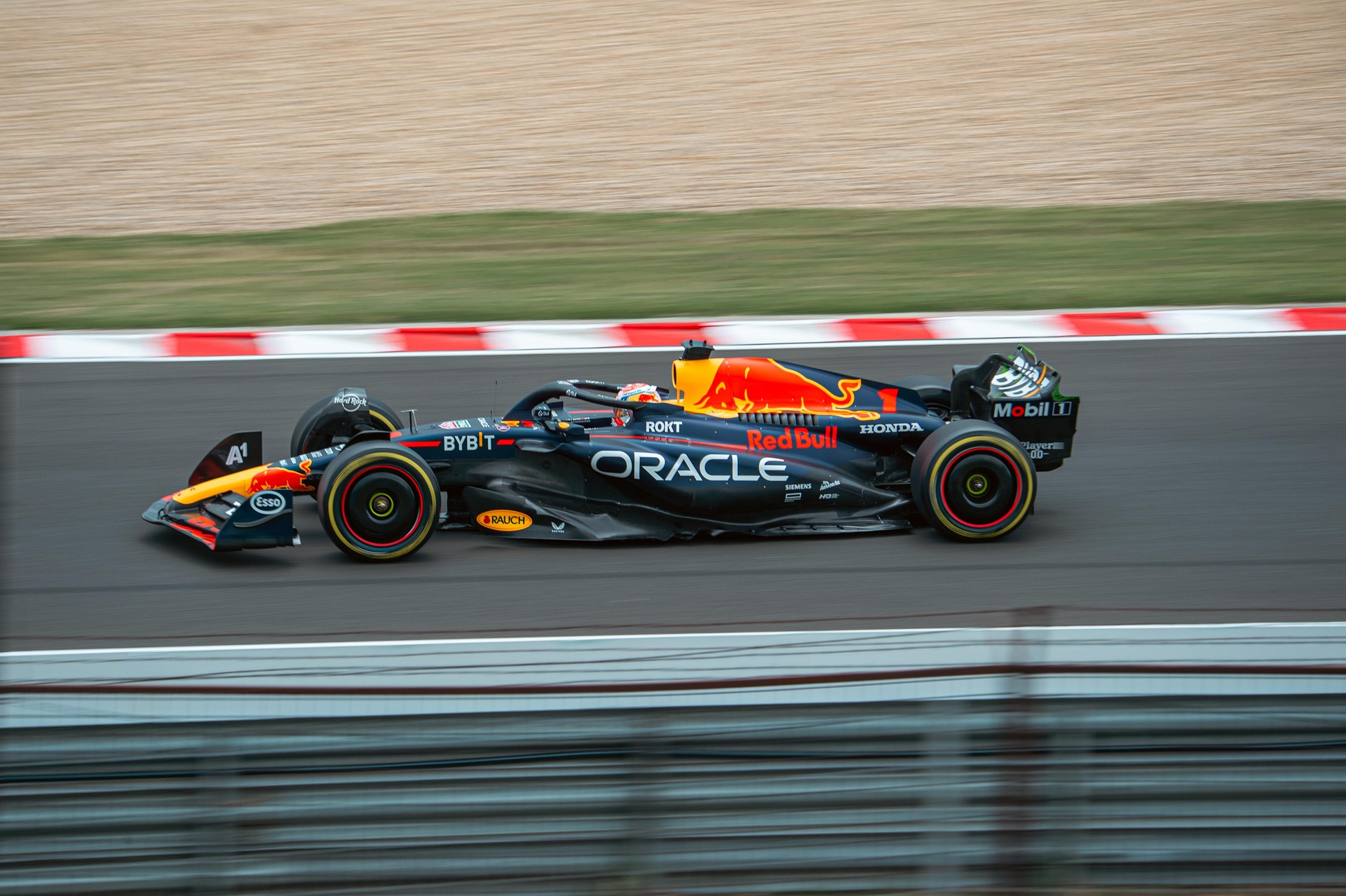
History of Formula 1 and Motorsport
A complete history of motor racing from the 1890s through the founding of Formula 1, the legendary drivers and rivalries, and the modern era
Introduction
Motor racing is among the most technologically demanding and most globally distributed of all major sports. The combination of mechanical engineering, driver skill, team strategy, and substantial economic investment that defines the modern sport has produced one of the most complex sporting traditions in the world, with disciplines ranging from the open-wheel Formula 1 championship to the prototype endurance racing at Le Mans, from the oval-track Indianapolis 500 to the stock car racing of NASCAR, from the off-road rally racing of the World Rally Championship to the two-wheeled racing of MotoGP. Each major motor racing discipline has its own distinctive technical, competitive, and cultural traditions, but all of them share a common origin in the late nineteenth-century invention of the internal combustion automobile and the immediate emergence of competitive racing as one of the principal cultural responses to the new technology.
Formula 1, the leading international single-seater motor racing championship, was founded as the Formula 1 World Championship for Drivers in 1950 by the Fédération Internationale de l'Automobile (FIA). The championship has been contested annually since then with the exception of various minor seasonal interruptions, making it one of the longest-running annual world championship competitions in any sport. The championship has been contested at famous circuits including Monaco's street course in the Principality of Monaco, the Spa-Francorchamps circuit in the Belgian Ardennes, Silverstone in central England, the Nürburgring in the German Eifel mountains, Suzuka in Japan, the Circuit Gilles Villeneuve in Montreal, Interlagos in São Paulo, Brazil, and various other circuits across approximately twenty-five host nations.
This article surveys the full history of motor racing from the 1890s city-to-city Paris-Madrid races through the pre-war Grand Prix tradition, the founding of the Formula 1 World Championship in 1950, the era-by-era champions from Juan Manuel Fangio through Jim Clark and Jackie Stewart to Niki Lauda and James Hunt to Ayrton Senna and Alain Prost to Michael Schumacher to Lewis Hamilton to Max Verstappen in the present day, the great rivalries that have defined the sport, the technical and safety transformations that have continued through more than seventy years of competition, the iconic circuits where the championship has been contested, the broader international motor racing tradition including Le Mans and the Indianapolis 500 and NASCAR and rally racing and MotoGP, and the future of a sport now transitioning to electric and sustainable propulsion technologies. Motor racing is among the most consequential technological and cultural traditions of the twentieth century, and its history is among the great cultural narratives of modern engineering, athletic competition, and national rivalry.
Origins of Motor Racing (1890s-1900s)
Motor racing emerged in the 1890s as soon as the internal combustion automobile became practically functional and reliable enough for sustained operation at speeds higher than horse-drawn vehicles could achieve. The first organized motor race was the 1894 Paris-Rouen Trial, organized by the French sporting newspaper Le Petit Journal on July 22, 1894, with the route covering 126 kilometers between the two French cities. The race was won jointly by Jules-Albert de Dion and Émile Levassor, with the official first prize going to Peugeot and Panhard et Levassor whose cars had completed the course in the best technical condition. The Paris-Rouen race established the basic format of the long-distance road race that would dominate motor racing through the following decade.
The great early motor races were the long-distance city-to-city races held across Europe through the 1890s and early 1900s. The 1895 Paris-Bordeaux-Paris race, the 1896 Paris-Marseille-Paris, the 1898 Paris-Amsterdam-Paris, the 1899 Tour de France Automobile, the 1900 Paris-Toulouse-Paris, the 1901 Paris-Berlin, the 1902 Paris-Vienna, and various other races provided the early competitive structure of motor racing. These races were held on open public roads, with the racers driving alongside ordinary horse-drawn traffic and pedestrians. The races attracted vast crowds of spectators who lined the routes, and the racing was extraordinarily dangerous by modern standards.
The 1903 Paris-Madrid race ended in catastrophe with multiple fatalities and was the last great open-road city-to-city race held in Europe. The French government banned similar races on public roads after the disaster, citing the impossibility of providing adequate safety for racers and spectators. The 1903 disaster led to the development of closed-course racing on dedicated circuits, beginning with the construction of various banked oval and road circuits across Europe and the United States during the 1900s. The Brooklands circuit in England, opened in 1907, was one of the earliest purpose-built motor racing circuits and would become the principal British racing venue for several decades. The Indianapolis Motor Speedway in the United States was opened in 1909 with a brick surface and a 2.5-mile oval design, the brick eventually replaced with concrete and asphalt while the iconic four turns of the oval remained.
The early professional motor racing of the 1900s was dominated by manufacturers including Mercedes, Peugeot, Fiat, Mors, Renault, and various others. The races provided substantial commercial promotion for the manufacturers and drove the development of automotive technology. The drivers of the early races were often factory technicians and engineers rather than professional racing drivers in the modern sense. The early racing tradition included drivers such as Camille Jenatzy of Belgium (the first to break 100 km/h in 1899 in his electric La Jamais Contente), Vincenzo Lancia of Italy, Henri Fournier of France, Léon Théry of France, and various others whose careers established the tradition of professional motor racing.
The Grand Prix Tradition (1906-1939)
The Grand Prix tradition emerged in 1906 with the first French Grand Prix held at Le Mans on June 26-27, 1906. The race was organized by the Automobile Club de France and was intended to be the principal French national motor race for which the French manufacturers would compete. The race covered 770 miles over two days at the circuit near Le Mans and was won by the Hungarian driver Ferenc Szisz driving for Renault. The Grand Prix format — a single race for the leading manufacturers and drivers, held at a fixed location and date — became the dominant form of European motor racing through the following decades.
The Grand Prix tradition spread quickly through Europe and the United States. The Italian Grand Prix was first held in 1921 at the Brescia circuit and was moved to the Monza Autodrome in 1922. The German Grand Prix was first held in 1926 at the AVUS circuit in Berlin and was moved to the Nürburgring in 1927. The Belgian Grand Prix was first held in 1925 at Spa-Francorchamps. The Monaco Grand Prix was first held in 1929 on the street circuit through the Principality. The British Grand Prix was first held in 1926 at Brooklands and was moved to Donington Park in 1935 before settling at Silverstone after the war. The European Drivers' Championship was instituted in 1931, the first international championship for Grand Prix drivers, and was contested annually through 1939.
The pre-war Grand Prix tradition was dominated by Italian manufacturers including Alfa Romeo and Maserati, by the French manufacturer Bugatti, and from 1934 onward by the German manufacturers Mercedes-Benz and Auto Union (which would become Audi after the war). The Mercedes-Benz Silver Arrows and the Auto Union Silver Arrows, supported by the Nazi German government as part of the regime's broader sports program, dominated European Grand Prix racing from 1934 to 1939 with technology far in advance of the rest of the field. The brilliant Italian driver Tazio Nuvolari, considered by many to be one of the greatest drivers of any era, produced famous performances against the German cars including his 1935 German Grand Prix victory at the Nürburgring driving an outdated Alfa Romeo P3.
The drivers of the pre-war Grand Prix era included Nuvolari, the Italian Achille Varzi, the German Rudolf Caracciola (winner of the European Championship in 1935, 1937, and 1938), the German Bernd Rosemeyer (winner of the European Championship in 1936, killed in a 1938 record attempt), the British Dick Seaman, the German Hermann Lang (winner of the European Championship in 1939), the French Robert Benoist, the British Sir Henry Birkin, and various other drivers. The pre-war Grand Prix tradition was substantially interrupted by World War II in 1939, and the European Championship was discontinued. Several pre-war drivers including Robert Benoist (executed by the Nazis in 1944 for Resistance activities) and Bernd Rosemeyer (killed in 1938) did not survive the war years.
The Founding of Formula 1 (1950)
The Formula 1 World Championship for Drivers was instituted by the Fédération Internationale de l'Automobile (FIA) in 1950 as the post-war successor to the pre-war European Championship. The new championship would be contested under a specific technical formula (hence the name Formula 1) governing the engines, chassis, and broader car specifications of the eligible vehicles. The 1950 Formula 1 specifications allowed 1.5-liter supercharged engines or 4.5-liter naturally aspirated engines, a formula intended to balance the competition between the European manufacturers using their pre-war 1.5-liter supercharged designs and the new American naturally aspirated designs that were beginning to be exported to European racing.
The 1950 Formula 1 World Championship consisted of seven races: the British Grand Prix at Silverstone (the first race, on May 13, 1950), the Monaco Grand Prix, the Indianapolis 500 (which was nominally included in the Formula 1 championship through 1960 but was contested under different technical regulations and was effectively a separate competition), the Swiss Grand Prix at Bremgarten, the Belgian Grand Prix at Spa-Francorchamps, the French Grand Prix at Reims, and the Italian Grand Prix at Monza. The championship was won by the Italian driver Giuseppe Farina driving an Alfa Romeo 158, the first Formula 1 World Champion. Farina had won three of the European races and accumulated 30 points in the championship scoring system.
The early Formula 1 cars were essentially developments of the pre-war Grand Prix designs. Alfa Romeo dominated the 1950 and 1951 championships with their 158 and 159 designs, until the supercharged engine formula was phased out at the end of 1951. The 1952 and 1953 championships were contested under Formula 2 regulations (2-liter naturally aspirated engines) because of the inadequate number of cars meeting the Formula 1 specifications. The full Formula 1 specification was restored for the 1954 season with the new 2.5-liter naturally aspirated engine formula. The 1954 season produced the championship victory of the Argentine driver Juan Manuel Fangio driving for Mercedes-Benz.
The 1950s Formula 1 championship was dominated by Fangio, the Italian Alberto Ascari, the British driver Stirling Moss (regarded by many as the greatest driver never to win a World Championship), and various other leading drivers. The 1955 Le Mans disaster, in which the Mercedes-Benz of Pierre Levegh collided with another car and broke up across the spectator areas killing more than eighty people, produced a substantial reassessment of motor racing safety. Mercedes-Benz withdrew from racing at the end of the 1955 season and would not return as a constructor until 2010. The 1958 season produced the first Constructors' Championship alongside the Drivers' Championship, with the British constructor Vanwall winning the inaugural title.
The 1950s — Fangio Era
The 1950s Formula 1 was dominated by the Argentine driver Juan Manuel Fangio, who won five World Championships (1951, 1954, 1955, 1956, 1957) driving for four different manufacturers (Alfa Romeo, Mercedes-Benz, Ferrari, Maserati). Fangio's five championships established a record that would stand for four decades until Michael Schumacher won his sixth title in 2003. Fangio's combination of mechanical sympathy with the car, exceptional racing intelligence, and the ability to extract maximum performance from a variety of different chassis and engine combinations made him the most accomplished driver of his era and one of the greatest drivers in the history of any motorsport discipline.
Fangio was born in 1911 in Balcarce, Argentina, the son of an Italian immigrant family. He had begun his racing career in long-distance South American road races, winning the 1940 Gran Premio del Norte (an 11,000-kilometer race across South America). His European racing career began after the Second World War, with his FIA Drivers' Championship debut in 1948 at age 37. His first Formula 1 World Championship came in 1951 at age 40. He won his second Formula 1 World Championship in 1954 at age 43 and continued to win at age 44, 45, and 46. Fangio's late-career dominance has been the subject of substantial subsequent discussion in motor racing analysis.
Fangio's most famous individual performance was the 1957 German Grand Prix at the Nürburgring, where he won the race in his last Formula 1 victory at age 46. Fangio's Maserati had a poor pit stop that had cost him substantial time, but he produced an extraordinary final stint in which he broke the lap record nine times across the race's final laps to catch and pass the leaders Mike Hawthorn and Peter Collins. The performance has been the subject of countless subsequent retrospectives and is widely cited as one of the greatest individual drives in Formula 1 history.
Fangio's contemporary rivals included the Italian Alberto Ascari (1952 and 1953 World Champion), the British Stirling Moss (four times runner-up in the World Championship in 1955, 1956, 1957, 1958), the British Mike Hawthorn (1958 World Champion), and various other drivers. Stirling Moss has been frequently cited as the greatest Formula 1 driver never to win a World Championship, an absence that has become a touchstone of motor racing discussion. The 1950s Formula 1 was also dominated by the Italian Ferrari team, which was emerging as the most prestigious of the Formula 1 manufacturers. The Ferrari tradition of red cars on the grid, the Italian language as the team's working tongue, and the substantial Italian national investment in the team's racing prestige were all established during the 1950s and have continued through the modern era.
The 1960s — Jim Clark and the British Era
The 1960s Formula 1 was dominated by the British driver Jim Clark, who won the World Championship in 1963 and 1965 with the British constructor Lotus. Clark, born in 1936 in Kilmany in Scotland's Fife region, was widely regarded as the most technically gifted Formula 1 driver of his era and one of the greatest of any era. His combination of natural racing skill, mechanical sympathy with the car, and the ability to extract performance from the Lotus chassis even in unfavorable conditions made him the dominant Formula 1 driver of the early to mid 1960s. Clark won 25 of his 72 Formula 1 races, a winning percentage of 35 percent that has been matched by very few drivers in the history of the sport.
The 1960s Formula 1 was also defined by the rise of the British constructors. The British manufacturers Lotus, Cooper, BRM, and Brabham, supported by the broader British motor racing industry that had developed in the post-war period around the various Formula 1 teams and component suppliers, established British engineering as the dominant force in Formula 1. The British driver tradition included Clark, Stirling Moss (whose Formula 1 career ended after a major 1962 crash at Goodwood), Graham Hill (1962 and 1968 World Champion), Jackie Stewart (1969, 1971, 1973 World Champion), Jim Watson, Innes Ireland, Tony Brooks, and various others. The British dominance of Formula 1 through the 1960s and early 1970s produced what has been called the British Grand Prix era of the sport.
Jim Clark died on April 7, 1968 at the Hockenheim circuit in West Germany during a Formula 2 race. His Lotus 48 left the track at high speed for unknown reasons (possibly a tire failure) and struck a tree. Clark was killed instantly at age 32. His death was widely mourned across motor racing and beyond, with the world champion remembered as the most gifted driver of his generation. Clark's death came at a particularly dangerous period in Formula 1 history, with multiple driver fatalities in the late 1960s and early 1970s producing substantial pressure for safety improvements.
The 1960s also produced major technical innovations in Formula 1. The introduction of monocoque chassis (replacing the older space-frame construction) in 1962 substantially improved structural rigidity and reduced weight. The introduction of mid-engine layouts had become standard by 1962. The introduction of various aerodynamic devices including wings beginning in 1968 transformed the basic technical character of Formula 1 cars. The introduction of the rear-engine layout by Cooper in 1959, which had won the 1959 and 1960 World Championships, established the basic rear-engine configuration that has continued through the present day.
The 1970s — Stewart, Lauda, Hunt, Andretti
The 1970s Formula 1 was defined by a series of brilliant championship-winning drivers and by the substantial transformation of the sport's safety standards under pressure from the leading drivers themselves. The Scottish driver Jackie Stewart won three World Championships (1969, 1971, 1973) and emerged as the leading public advocate for driver safety. Stewart's campaigns for improvements in track safety, in driver protective equipment, and in the broader institutional response to fatal accidents in Formula 1 were sometimes resented by the broader Formula 1 establishment but produced substantial improvements that have continued through subsequent decades.
Stewart's 1973 World Championship was his last, with the driver retiring at the end of the season at age 34. He had been on track to retire during the season, but the fatal accident of his teammate François Cevert at the US Grand Prix in October 1973 (in which Cevert was killed in qualifying) accelerated Stewart's decision to retire. Stewart's contemporaneous drivers included the Brazilian Emerson Fittipaldi (1972 and 1974 World Champion), the Austrian Niki Lauda (1975 World Champion, then 1977, 1984 — making his post-1976-Nürburgring-accident comeback one of the great recovery stories in any sport), the British James Hunt (1976 World Champion), the American Mario Andretti (1978 World Champion, the only American to win the Formula 1 title), the South African Jody Scheckter (1979 World Champion driving for Ferrari), and the Australian Alan Jones (1980 World Champion).
The 1970s also saw the emergence of the Brazilian driver Nelson Piquet (1981, 1983, 1987 World Champion) and the rising French driver Alain Prost (eventual four-time World Champion in 1985, 1986, 1989, 1993). The 1970s technical developments included the introduction of ground effect aerodynamics by Lotus in 1977-78 with the Lotus 78 and 79 designs, which produced enormous mechanical grip through the use of side skirts that sealed the venturi tunnels beneath the cars. The ground effect era transformed Formula 1 racing, with cornering speeds increasing substantially through 1980-82 before the FIA banned ground effect skirts after the 1982 season because of safety concerns.
The 1976 season was perhaps the most dramatic single Formula 1 season of the 1970s. The Austrian Niki Lauda had won the 1975 championship driving for Ferrari and was leading the 1976 championship. The British driver James Hunt was driving for McLaren and was Lauda's main challenger. On August 1, 1976 at the Nürburgring's Nordschleife layout, Lauda crashed his Ferrari at the Bergwerk corner. The car burst into flames and Lauda was trapped in the cockpit for approximately a minute before he was rescued by other drivers. Lauda was severely burned and inhaled toxic gases, with his survival initially uncertain. He was given last rites by a priest in the hospital. Six weeks later, Lauda returned to Formula 1 racing at the Italian Grand Prix at Monza, finishing fourth despite his still-bandaged head. He continued the championship campaign and finished second by just one point to James Hunt after withdrawing from the rain-affected final race in Japan.
The 1980s — Senna, Prost, Mansell, Piquet
The 1980s Formula 1 was dominated by four drivers who together produced one of the most competitive eras in the championship's history: Nelson Piquet (1981, 1983, 1987 World Champion), Alain Prost (1985, 1986, 1989 World Champion), Nigel Mansell (1992 World Champion, with multiple championship runner-up finishes in 1986, 1987), and Ayrton Senna (1988, 1990, 1991 World Champion). The combination of four world-class drivers competing across the same era produced the most intensely competitive Formula 1 of the 1980s and early 1990s.
The 1980s also produced the turbocharged engine era of Formula 1. The 1.5-liter turbocharged engines used by Renault, Ferrari, BMW (in the Brabham), and Honda (in the McLaren) produced extraordinary peak power outputs exceeding 1,400 horsepower in qualifying configurations. The turbocharged cars were nearly twice as powerful as the 3-liter naturally aspirated cars they replaced, with corresponding increases in straight-line speeds. The turbocharged engines were also famously unreliable, with multiple race-winning drives ending in mechanical failures. The turbocharged era ended at the end of the 1988 season when the FIA banned the technology in favor of a return to naturally aspirated engines.
The Brazilian driver Nelson Piquet won the 1981 and 1983 championships for Brabham (designed by the brilliant British engineer Gordon Murray) and the 1987 championship for Williams. Piquet's combination of natural racing skill, mechanical understanding, and tactical patience made him one of the most accomplished drivers of his era. His career was complicated by various public controversies including his criticism of the Brazilian rival Ayrton Senna (calling Senna a paulista taxi driver in a famous 1987 interview) and his subsequent disputes with various teams.
The British driver Nigel Mansell finally won his World Championship in 1992 driving for Williams after multiple championship runner-up finishes during the 1980s. Mansell's combination of aggressive racing style, considerable personal charisma, and the ability to extract performance from the Williams chassis made him one of the leading drivers of his era. His 1992 championship was won by a substantial margin, with Mansell winning nine races. His subsequent career included a brief return to IndyCar racing in the United States, where he won the 1993 PPG IndyCar World Series championship in his rookie year.
The French driver Alain Prost won three World Championships in the 1980s (1985, 1986, 1989) and a fourth in 1993, all driving for McLaren or Williams. Prost's racing style was characterized by exceptional consistency, mechanical sensitivity, and tactical patience. He earned the nickname "The Professor" for his careful and analytical approach to racing. His four World Championships and his 51 Formula 1 race victories made him the most successful French Formula 1 driver in history.
The Senna-Prost Rivalry
The rivalry between the Brazilian Ayrton Senna and the French Alain Prost between 1988 and 1993 produced the most famous and most intense rivalry in Formula 1 history. The two drivers were teammates at McLaren-Honda during the 1988 and 1989 seasons, an arrangement that produced the dominant cars of the era and the most personally combative championship battles in the sport's history. Senna won the 1988 championship over Prost, with the two drivers winning fifteen of the sixteen races between them (the only non-Senna or non-Prost victory being the Italian Grand Prix at Monza, won by Gerhard Berger). Prost won the 1989 championship over Senna, with the championship effectively decided by the Japanese Grand Prix on October 22, 1989.
The 1989 Japanese Grand Prix produced the first of the famous Senna-Prost collision incidents. Senna and Prost collided at the chicane on lap 47, with Senna restarting and ultimately crossing the finish line first. The FIA stewards disqualified Senna for missing the chicane on the restart, awarding the race to the second-placed Alessandro Nannini and the championship to Prost. Senna and the McLaren team protested the disqualification at the FIA Court of Appeal, but the disqualification was upheld. The incident produced lasting bitterness between Senna and Prost and between Senna and the FIA leadership (particularly the FIA president Jean-Marie Balestre, a French national whose actions Senna and the McLaren team believed had been politically motivated).
The 1990 Japanese Grand Prix produced the second of the famous collision incidents. Senna had taken pole position but was angry that the pole position had been positioned on the dirtier side of the track. He had threatened to drive into Prost if Prost reached the first corner first. As the race began, Prost did reach the first corner first, and Senna drove into Prost from behind, taking both cars out of the race and securing Senna's 1990 World Championship. The deliberate nature of the collision was apparent to all observers and was subsequently confirmed by Senna in interviews. The incident produced one of the most controversial championship outcomes in Formula 1 history.
The Senna-Prost rivalry continued through 1991 (won by Senna) and 1993 (won by Prost driving for Williams while Senna struggled with the McLaren). The two drivers were teammates again briefly during the 1993 season when Prost retired and Senna joined Williams for 1994. Their relationship had begun to improve during this period, with the two drivers achieving a degree of professional respect after years of intense rivalry. The 1994 Williams car was significantly less competitive than the previous year's car after rule changes had banned various electronic and aerodynamic devices, and Senna's championship campaign began with disappointment at the South African Grand Prix and the Pacific Grand Prix.
Ayrton Senna's Death at Imola 1994
On May 1, 1994 at the Autodromo Enzo e Dino Ferrari at Imola in Italy, the Brazilian driver Ayrton Senna was killed in a crash at the Tamburello corner during the seventh lap of the San Marino Grand Prix. Senna's death was the most catastrophic event in Formula 1 history and produced fundamental transformations in the sport's safety standards. The accident occurred on a darkening day at Imola that had already produced the death of the Austrian driver Roland Ratzenberger in qualifying the previous day. Senna's Williams FW16 left the track at high speed at the Tamburello, struck the concrete wall at approximately 210 km/h, and the right-front suspension component was forced through the cockpit area, striking Senna's head. Senna died of severe head injuries before he could be airlifted to hospital.
The initial Italian judicial investigation produced lengthy proceedings concerning the technical cause of the crash. The Williams team's modifications to the FW16's steering column were investigated as a potential mechanical cause, but the engineering testimony was disputed. The court proceedings continued for years after the crash, with no definitive criminal verdict produced. The technical investigation by the FIA produced findings that the steering column had failed but did not definitively conclude that this had been the cause of the crash.
Senna's death produced an immediate and substantial transformation of Formula 1 safety. The Tamburello corner at Imola was modified within months to add a chicane reducing entry speed. The FIA initiated a comprehensive safety review under the leadership of the British neurologist and Formula 1 medical chief Professor Sid Watkins. The review produced extensive modifications to the cars (including substantial cockpit safety improvements), to the circuits (with widespread modifications to high-speed corners and the introduction of run-off areas at all major venues), and to driver protective equipment. The HANS (Head and Neck Support) device, originally developed in 1981 but not widely adopted, was made mandatory in Formula 1 in 2003 after the death of the British driver Dale Earnhardt in NASCAR's 2001 Daytona 500.
Senna's death was widely mourned across Brazil and the international Formula 1 community. The Brazilian government declared three days of national mourning. The state funeral in São Paulo on May 5, 1994 attracted more than three million spectators, the largest funeral procession in Brazilian history. Senna was buried at the Cemiterio do Morumbi in São Paulo, and his tomb has become a pilgrimage site for racing enthusiasts. The Ayrton Senna Institute, founded by Senna's sister Viviane after his death, has provided substantial educational support to Brazilian children and has been the principal positive legacy of the driver's career.
The Formula 1 World Championship continued after Senna's death. The 1994 championship was won by the German driver Michael Schumacher in his first World Championship, with various controversial incidents including the final-race collision with the British driver Damon Hill at the Australian Grand Prix. Schumacher's emergence as the dominant Formula 1 driver of the 1990s and 2000s would define the post-Senna era of the sport.
The 1990s — Schumacher's Rise and Williams Dominance
The 1990s Formula 1 was dominated through the early years by the German driver Michael Schumacher and the Williams team's brief but spectacular period of championship dominance. Schumacher won the 1994 World Championship in his Benetton-Ford and the 1995 championship in his Benetton-Renault. He moved to Ferrari in 1996 and would eventually establish what would become the longest championship-winning run in Formula 1 history. The 1994 championship was particularly controversial because of the final-race collision with Damon Hill at the Australian Grand Prix in Adelaide, in which Schumacher had attempted to defend a championship lead from Hill's challenge.
The Williams team won the Constructors' Championship in 1992, 1993, 1994, 1996, and 1997, producing the most dominant Formula 1 constructor of the early to mid 1990s. The Williams cars combined the brilliant aerodynamic designs of Adrian Newey (who would later become technical director at McLaren and Red Bull) with the powerful Renault engine. The Williams driving lineup included Nigel Mansell, Alain Prost, Damon Hill, David Coulthard, and the rising Canadian driver Jacques Villeneuve, who won the 1997 World Championship in his second Formula 1 season.
Damon Hill, the son of the two-time World Champion Graham Hill, won the 1996 World Championship driving for Williams. Hill's championship victory came after years of disappointing seasons in which he had been a strong but not quite winning candidate. His 1996 championship was Hill's only Formula 1 title, with his father Graham Hill having won two titles (1962 and 1968) — making the Hills the only father-son pair to have both won Formula 1 World Championships. Damon Hill subsequently moved to Jordan in 1998 and 1999 before retiring at the end of the 1999 season.
Jacques Villeneuve, the son of the Canadian Gilles Villeneuve who had been killed in qualifying at the 1982 Belgian Grand Prix, won the 1997 World Championship driving for Williams. Villeneuve's championship was decided at the final race of the season, the European Grand Prix at Jerez in Spain on October 26, 1997. Michael Schumacher had been leading the championship by one point and had passed Villeneuve in the early laps. As Villeneuve attempted to overtake Schumacher at the Curva Dry Sack corner on lap 48, Schumacher turned into him in an apparent deliberate attempt to take Villeneuve out of the race. Villeneuve's car survived the contact and continued; Schumacher's car was damaged in the contact and he retired. Schumacher was disqualified from the 1997 World Championship after the race, with the FIA ruling that he had deliberately collided with Villeneuve.
The rest of the 1990s saw the emergence of the McLaren-Mercedes partnership with the Finnish driver Mika Häkkinen (1998 and 1999 World Champion) and the brilliant German engineer Norbert Haug as the team principal. Häkkinen's championships came after his serious 1995 crash at the Adelaide Grand Prix, in which he had been near death from head injuries before being saved by a tracheotomy performed by Professor Sid Watkins. Häkkinen's subsequent comeback and championships established him as one of the great driver redemption stories of the era. His partnership with Schumacher produced some of the most competitive Formula 1 racing of the late 1990s.
The Schumacher-Ferrari Dominance (2000-2004)
The German driver Michael Schumacher and the Ferrari team dominated Formula 1 from 2000 to 2004, winning five consecutive Drivers' Championships and six consecutive Constructors' Championships (2000 onward). The Ferrari team had been rebuilt around Schumacher from his 1996 arrival, with the Italian president Luca di Montezemolo, the team principal Jean Todt (French), the technical director Ross Brawn (British), and the chief designer Rory Byrne (South African) producing the most successful team in Formula 1 history. The Ferrari F2002 and Ferrari F2004 designs were widely regarded as among the most dominant Formula 1 cars of any era.
Schumacher won the 2000 World Championship with eleven race victories. He won the 2001 championship with nine wins. He won the 2002 championship with eleven wins, becoming the first driver to win five Formula 1 championships since Juan Manuel Fangio in 1957. He won the 2003 championship with six wins, in a closer competition with the Finnish driver Kimi Räikkönen. He won the 2004 championship with thirteen wins, the most wins in a single Formula 1 season until 2023.
The Schumacher-Ferrari dominance was so complete during 2002-2004 that the FIA introduced multiple rule changes intended to disrupt the team's competitiveness. Tire regulations were changed in 2003 to favor Michelin (Williams and McLaren) over Bridgestone (Ferrari). Aerodynamic regulations were changed multiple times. Various other technical regulations were modified. The Ferrari team and Schumacher generally adapted to the rule changes and continued to win, though the 2003 championship was decided at the final race when Schumacher narrowly defeated Räikkönen.
Schumacher's personal records during the 2000-2004 period included his 50th, 60th, 70th, and 80th Formula 1 career victories. He passed Alain Prost's previous record of 51 career wins in 2001 and continued to accumulate victories at a rate that was substantially faster than any previous Formula 1 driver. His seventy-fourth career victory at the 2003 Italian Grand Prix produced one of his most emotional moments after the death of Ferrari's principal sponsor Marlboro's representative the previous week. His final career victory at the 2006 Chinese Grand Prix established his record of 91 career Formula 1 victories that has not been surpassed by any subsequent driver.
Schumacher's racing style was characterized by aggressive defensive driving (sometimes blocked toward overtaking opponents), exceptional consistency across an entire season, brilliant qualifying speed, and tactical patience during races. His various controversies included the 1994 Australian Grand Prix collision with Hill, the 1997 European Grand Prix collision with Villeneuve, the 2006 Monaco Grand Prix qualifying incident where Schumacher had parked his car at Rascasse during qualifying to prevent Fernando Alonso from setting a competitive lap time (Schumacher was demoted to the back of the grid as a penalty), and various other incidents. The Schumacher legacy in Formula 1 has been substantially complicated by these incidents alongside his exceptional racing performances.
The Mid-2000s — Alonso, Räikkönen, Hamilton's Debut
The mid-2000s Formula 1 saw the end of the Schumacher-Ferrari dominance and the emergence of new champions. The Spanish driver Fernando Alonso won the 2005 and 2006 World Championships driving for Renault, becoming the first Spanish Formula 1 World Champion and breaking the Ferrari dominance. The Finnish driver Kimi Räikkönen won the 2007 championship driving for Ferrari. The British driver Lewis Hamilton, in his rookie 2007 season at McLaren, narrowly missed winning the championship at his first attempt, finishing equal second with Alonso in a season that came down to the final race.
Fernando Alonso, born in 1981 in Oviedo, Spain, had emerged from Formula Renault and Formula 3000 to begin his Formula 1 career at Minardi in 2001. He moved to Renault for 2003 and became the team's number one driver, winning his first Grand Prix at the 2003 Hungarian Grand Prix. His 2005 World Championship was won at age 24, making him then the youngest Formula 1 World Champion in history (a record subsequently broken by Hamilton, Vettel, and Verstappen). Alonso's championships were the first Spanish Formula 1 championships in history and provided the foundation for the broader Spanish motor racing tradition. He subsequently moved to McLaren for 2007, then back to Renault for 2008-09, then to Ferrari from 2010-14, then to McLaren-Honda from 2015-18, then taking a sabbatical for 2019-20, and then returning to Renault/Alpine from 2021 and to Aston Martin from 2023.
Kimi Räikkönen, born in 1979 in Espoo, Finland, had emerged from karting and Formula Renault to begin his Formula 1 career at Sauber in 2001. He moved to McLaren for 2002, then to Ferrari for 2007, where he won his only World Championship in the season that Schumacher had retired (Räikkönen's championship was decided at the final race, where Räikkönen passed Hamilton in the wet to win the race). Räikkönen subsequently raced in NASCAR and the World Rally Championship before returning to Formula 1 in 2012, racing for Lotus, Ferrari, and Alfa Romeo through 2021.
Lewis Hamilton's 2007 debut Formula 1 season was one of the most exceptional rookie campaigns in the sport's history. Hamilton, born in 1985 in Stevenage, England, had been supported by McLaren since age 13 and had moved through karting, Formula 3, and GP2 series. His McLaren debut at the 2007 Australian Grand Prix produced a third-place finish, and his subsequent campaign produced four wins and a total of nine podium finishes. He led the championship for much of the season before a complicated final two races at China and Brazil produced his championship loss. Hamilton would win his first Formula 1 World Championship in 2008 in dramatic style, with a final-lap overtake at the Brazilian Grand Prix that secured the championship over Felipe Massa.
The mid-2000s Formula 1 also produced various other notable events. The McLaren-Mercedes team was banned from the 2007 Constructors' Championship and fined $100 million after the famous Spygate scandal in which a McLaren employee was found to have received confidential Ferrari technical data. The team was permitted to continue racing but with all team-related Constructors' Championship points removed. The Hamilton and Alonso individual championship campaigns continued in the Drivers' Championship. The Spygate scandal produced one of the largest single fines in any sport's history.
The Hybrid Era and Mercedes Dominance (2014-2021)
The 2014 Formula 1 season introduced a new technical formula based on 1.6-liter turbocharged hybrid power units, replacing the previous 2.4-liter naturally aspirated V8 engines. The new hybrid power units combined a turbocharged internal combustion engine with two energy recovery systems (one harvesting energy from the turbocharger and another harvesting energy from the rear brakes) and a battery storage system. The new power units were substantially more thermally efficient than the previous generation and produced more total power despite using less fuel. The Mercedes-AMG Petronas team produced the dominant power unit of the new era, and Mercedes won the Constructors' Championship in every season from 2014 through 2021.
Lewis Hamilton won the 2014, 2015, 2017, 2018, 2019, and 2020 Drivers' Championships driving for Mercedes. His teammate Nico Rosberg won the 2016 championship before immediately retiring at the end of the season. Hamilton's six championships during the Mercedes era (combined with his 2008 championship at McLaren) gave him seven total World Championships, tying Michael Schumacher's previous record. The Hamilton-Mercedes dominance through 2014-2020 produced one of the most consistently dominant constructor periods in Formula 1 history, with the team winning 80 of the 138 races during the period (a 58 percent winning rate).
The Hamilton-Mercedes dominance was characterized by extraordinary reliability of the Mercedes power unit, brilliant aerodynamic design by the technical director James Allison (and previously Geoff Willis and others), exceptional driving by Hamilton and his teammates Nico Rosberg and Valtteri Bottas, and the substantial financial investment by Mercedes parent company Daimler in the team. The German manufacturer's commitment to the sport had been substantial since the 2010 return to Formula 1 (after the 1955 Le Mans-related withdrawal), and the rewards of the 2014-2021 dominance had been substantial in terms of brand promotion.
The Mercedes dominance was challenged by Ferrari (with various drivers including Sebastian Vettel, Kimi Räikkönen, and Charles Leclerc) and by Red Bull (with the German driver Sebastian Vettel until 2014, then Daniel Ricciardo, then Max Verstappen). The Ferrari challenge produced strong performances in 2017 and 2018 with Vettel leading the championship at various points before falling away. The Red Bull challenge produced the rising career of Max Verstappen, who had debuted in Formula 1 in 2015 at age 17 (making him the youngest Formula 1 driver in history) and had won his first race at the 2016 Spanish Grand Prix at age 18.
Lewis Hamilton's 2017, 2018, 2019, and 2020 championships were all dominant seasons in which his Mercedes was the fastest car. His 2014 championship had been against his teammate Rosberg in a much closer competition, while the 2015 championship had been a comfortable victory. The 2020 championship was won during the COVID-affected season, with the calendar substantially restructured around the available European circuits. Hamilton's seven World Championships ranked equal with Schumacher in the all-time list and made him the most decorated Formula 1 driver in history if measured by total race wins (with Hamilton's 103 career wins as of late 2024 exceeding Schumacher's 91).
Max Verstappen and the Red Bull Era (2021-present)
Max Verstappen of the Netherlands, born in 1997 in Hasselt, Belgium, has dominated Formula 1 from 2021 to the present. Verstappen's career began at age 17 in the 2015 Formula 1 season driving for Toro Rosso (the junior Red Bull team), making him the youngest Formula 1 driver in history. He moved to Red Bull Racing for 2016 and won his first race at the 2016 Spanish Grand Prix. His subsequent career has been characterized by exceptional racing intelligence, brilliant car control in difficult conditions, and aggressive on-track combat with opposing drivers.
Verstappen's 2021 World Championship was won in one of the most controversial finishes in Formula 1 history. The championship was decided at the final race of the season, the Abu Dhabi Grand Prix on December 12, 2021. Lewis Hamilton, who had been leading the race throughout, was caught by Verstappen on the final lap after the race director Michael Masi controversially released only the cars between Hamilton and Verstappen during the safety car restart, allowing Verstappen to catch Hamilton on the final lap and overtake him for the championship. The FIA subsequently dismissed Masi from his position and changed the safety car protocols. The Mercedes team protested the championship outcome but the protest was rejected.
Verstappen won the 2022 championship with fifteen race victories, surpassing the previous record of thirteen wins in a single season set by Michael Schumacher in 2004. He won the 2023 championship with nineteen race victories, the all-time single-season record. He won the 2024 championship in a closer competition with the McLaren driver Lando Norris and the Ferrari driver Carlos Sainz, with the championship decided in the final races of the season. Verstappen's combined four consecutive World Championships from 2021 to 2024 established his position as one of the dominant drivers of the modern era.
The Red Bull team's dominance during 2021-2024 was based on the brilliant chassis design under the technical leadership of Adrian Newey, the Honda hybrid power unit (rebranded as Honda Racing Corporation power units after Honda's 2021 official withdrawal from Formula 1, and now as Red Bull Powertrains), and the exceptional driving of Verstappen. The team won the Constructors' Championship in 2022, 2023, and 2024, ending the long Mercedes dominance. The team's success during this period included the introduction of the RB19 chassis in 2023 that was widely regarded as one of the most dominant Formula 1 designs in the sport's history.
The Verstappen-Hamilton rivalry of 2021 produced the most intense single championship battle of the modern Formula 1 era. The two drivers met in multiple on-track collisions across the 2021 season, with various incidents at the British Grand Prix at Silverstone, the Italian Grand Prix at Monza, and the Brazilian Grand Prix at Interlagos all producing investigations by the FIA stewards. The intensity of the rivalry and the controversial Abu Dhabi finish produced lasting bitterness between the two drivers and the two teams. Hamilton's subsequent move to Ferrari for the 2025 season was widely interpreted as a major narrative event for the sport, with the seven-time World Champion attempting to win an eighth championship in his final years driving for the Scuderia.
The Monaco Grand Prix Tradition
The Monaco Grand Prix has been held at the street circuit through the Principality of Monaco since 1929 and is widely regarded as the most prestigious and most distinctive race on the Formula 1 calendar. The circuit, approximately 3.337 kilometers long, runs through the streets of Monte Carlo with the cars passing the famous casino, the Hotel de Paris, the Mirabeau corner, the Loews hairpin (the slowest corner in Formula 1, at approximately 50 km/h), the swimming pool section, the Rascasse corner, and the finish straight at the harbor. The circuit is the most demanding street circuit in motor racing, with the cars driving at high speed between concrete walls with virtually no run-off area for mistakes.
The Monaco Grand Prix has been won by many of the greatest Formula 1 drivers across the years. Ayrton Senna won the race six times (1987, 1989, 1990, 1991, 1992, 1993), the most by any driver. Michael Schumacher won the race five times (1994, 1995, 1997, 1999, 2001). Graham Hill won the race five times (1963, 1964, 1965, 1968, 1969), earning the nickname "Mr. Monaco." Alain Prost won the race four times. Sebastian Vettel and Lewis Hamilton each won the race twice. Max Verstappen won the race in 2023. The Spanish driver Fernando Alonso has won the race twice. The various other winners include drivers from many nations.
The Monaco Grand Prix has been the subject of various controversies through its history. The 2006 qualifying incident in which Michael Schumacher had parked his Ferrari at Rascasse during qualifying to prevent Fernando Alonso from setting a competitive lap time produced a substantial controversy. Schumacher was demoted to the back of the grid as a penalty. The 1996 Monaco Grand Prix was widely considered the most chaotic race in the circuit's history, with only three cars finishing the race because of the consistent wet-weather conditions and the resulting crashes. The 1982 Monaco Grand Prix was also notable for the closely contested final laps, with the lead changing hands multiple times in the final laps before the Italian driver Riccardo Patrese won.
The Monaco Grand Prix's combination of glamorous setting, technical difficulty, and competitive intensity has made it one of the most celebrated single events in motor racing. The harbor full of yachts (with various celebrities and corporate guests in attendance), the famous Hotel de Paris where the leading drivers, team principals, and sponsors gather for the various pre- and post-race events, and the broader social calendar of the Monaco Grand Prix week have produced the most elaborate single event in the Formula 1 calendar. The race weekend has been the principal commercial event for various luxury brand sponsorships and provides a substantial portion of Formula 1's broader commercial activity each year.
The 24 Hours of Le Mans
The 24 Hours of Le Mans is the most prestigious endurance race in motor racing and has been contested annually since 1923 at the Circuit de la Sarthe near Le Mans in northwestern France. The race is held on the second weekend of June and consists of 24 continuous hours of racing, with teams of three drivers sharing duties across the 24-hour period. The race has been the principal competitive event for the prototype racing class through most of its history, with various manufacturer entries from Bentley, Bugatti, Alfa Romeo, Ferrari, Jaguar, Aston Martin, Ford, Porsche, Audi, Toyota, and various others.
The pre-war Le Mans races were dominated by Bentley (winning in 1924, 1927, 1928, 1929, 1930) and various other manufacturers. The 1953 Le Mans race was the most famous early postwar race, won by the Jaguar C-Type. The 1955 Le Mans disaster, in which the Mercedes-Benz of Pierre Levegh collided with the Austin-Healey of Lance Macklin and broke up across the spectator areas, killed more than 80 spectators and produced the most catastrophic accident in motor racing history. Mercedes-Benz withdrew from racing at the end of the 1955 season and would not return as a constructor until 2010.
The 1960s Le Mans was famously contested between Ferrari and Ford, with the Ford GT40 producing the only American victory at the race in 1966 (and winning subsequently in 1967, 1968, 1969). The 1966 race was the subject of the 2019 American film Ford v Ferrari (titled Le Mans '66 in some markets), which dramatized the Ford team's challenge to Ferrari at the race. The 1970s Le Mans was dominated by the Porsche 917, the brilliant German prototype that won the race in 1970 and 1971 and which would inspire the 1971 Steve McQueen film Le Mans. The Porsche 956 and Porsche 962 dominated the 1980s Le Mans, with Porsche winning seven consecutive Le Mans races from 1981 to 1987.
The modern Le Mans has been dominated by Audi, who won the race fifteen times between 2000 and 2014 with the Audi R8, R10, R15, R18, and R18 e-tron designs. The Audi diesel and hybrid prototypes produced exceptional fuel efficiency that allowed the team to run longer between pit stops than competitors. Toyota won the race for the first time in 2018 and has won every Le Mans race subsequently through 2024. The Toyota TS050 Hybrid and TS010 Hybrid have continued the dominance. The Ferrari 499P returned the prestigious Italian manufacturer to Le Mans winning success in 2023, marking Ferrari's first Le Mans victory since 1965.
The Le Mans race weekend is the principal commercial event of the French motorsport calendar and one of the most prestigious annual events in any sport. The race attracts approximately 250,000 spectators at the venue and substantial television audiences globally. The combination of mechanical engineering, driver endurance, and team strategy required for success at Le Mans produces a competitive challenge substantially different from the sprint-focused Formula 1 racing. The race's 24-hour format means that the race begins on Saturday afternoon and ends on Sunday afternoon, with drivers and teams operating continuously through the night.
The Indianapolis 500 and IndyCar
The Indianapolis 500 has been contested annually since 1911 (with brief wartime interruptions) at the Indianapolis Motor Speedway in Speedway, Indiana, and is the most prestigious race in American open-wheel motor racing. The race is held on Memorial Day weekend in May, consists of 200 laps of the 2.5-mile oval circuit (500 miles total), and has been the centerpiece of American motor racing throughout its history. The race attracts approximately 300,000 spectators at the venue and substantial television audiences across the United States.
The Indianapolis 500 has been won by many of the greatest American racing drivers across the years. A.J. Foyt won the race four times (1961, 1964, 1967, 1977) and was the first driver to win it four times. Al Unser won the race four times (1970, 1971, 1978, 1987). Rick Mears won the race four times (1979, 1984, 1988, 1991). Hélio Castroneves won the race four times (2001, 2002, 2009, 2021) and is the most recent four-time winner. Other multiple winners have included Mario Andretti (1969), the Unser family (with Bobby, Al Sr., and Al Jr. all winning), and various others.
The Indianapolis 500 has been the principal qualifying race of the American open-wheel racing tradition, with the various series including CART (Championship Auto Racing Teams, 1979-2003), the Indy Racing League (1996-2007), and the modern IndyCar Series (since 2008) providing the broader competitive structure of American open-wheel racing. The various series have included races at oval tracks (including the iconic Indianapolis Motor Speedway, Texas Motor Speedway, Auto Club Speedway, and various other ovals) and road courses (including the Indianapolis Motor Speedway road course used for the 2014-2020 Indianapolis Grand Prix that runs alongside the Indianapolis 500 in the same May week).
The relationship between the Indianapolis 500 and Formula 1 has been complicated through the years. The Indianapolis 500 was nominally part of the Formula 1 World Championship from 1950 to 1960, with the race counted toward the World Championship though contested under different technical regulations and largely by different drivers. The race was removed from the Formula 1 calendar after 1960. Various Formula 1 drivers have competed at the Indianapolis 500 across the years, with the most successful crossover performances coming from Mario Andretti (who won the 1969 Indianapolis 500 and the 1978 Formula 1 World Championship), Emerson Fittipaldi (who won the 1989 and 1993 Indianapolis 500s after his 1972 and 1974 Formula 1 World Championships), Jacques Villeneuve (who won the 1995 Indianapolis 500 before his 1997 Formula 1 World Championship), and Juan Pablo Montoya (who won the 2000 Indianapolis 500 before his Formula 1 career and won the race again in 2015 and 2024 after his Formula 1 career).
The modern IndyCar series has continued to provide one of the principal alternative open-wheel racing series outside Formula 1. The series includes approximately 17 races each season at oval tracks and road courses across the United States and Canada. The leading drivers of the modern IndyCar era have included Scott Dixon of New Zealand (six-time IndyCar champion), Sébastien Bourdais of France, Will Power of Australia, Josef Newgarden of the United States, Alex Palou of Spain, and various others. The series has continued to attract talented drivers from international racing backgrounds, providing a substantial competitive alternative to Formula 1.
NASCAR and Stock Car Racing
NASCAR (the National Association for Stock Car Auto Racing) is the dominant American stock car racing organization and one of the most popular spectator sports in the United States. NASCAR was founded in 1948 by Bill France Sr. in Daytona Beach, Florida, and has organized stock car racing competitions since then. The principal NASCAR series is the NASCAR Cup Series (formerly the Winston Cup, Nextel Cup, Sprint Cup, and Monster Energy Cup), which is contested annually with 36 races at oval tracks (mostly) and road courses across the United States.
The NASCAR Cup Series has been dominated by various drivers across its decades. Richard Petty won 200 NASCAR races across his career, an all-time record. Dale Earnhardt won seven NASCAR Cup championships (matching Petty's seven championships). Jeff Gordon won four NASCAR Cup championships. Jimmie Johnson won seven NASCAR Cup championships, matching Petty and Earnhardt. The seven-time champions hold the all-time championship record, with various drivers having won between two and four championships.
The Daytona 500, NASCAR's principal annual event, has been contested at Daytona International Speedway since 1959 and has been the principal cultural event of American stock car racing. The race has been won by many of the greatest NASCAR drivers across the years. The 2001 Daytona 500 was the most tragic event in NASCAR history, with Dale Earnhardt killed on the final lap of the race in a crash at the wall in turn four. Earnhardt's death produced a substantial transformation of NASCAR safety standards, including the introduction of the HANS (Head and Neck Support) device, the SAFER (Steel and Foam Energy Reduction) barriers at the tracks, and various other safety improvements.
NASCAR's cultural significance in the United States has been substantial, particularly in the Southeast where the racing has its origins in the moonshine-running cultures of the 1930s and 1940s. The various NASCAR teams and drivers have been the subject of substantial regional pride, with rivalries between drivers from different American regions producing recurring cultural narratives. The NASCAR fan base has been one of the most loyal in any sport, with substantial in-person attendance at races and substantial television audiences across the United States.
The broader American stock car racing tradition has included multiple other series including the NASCAR Xfinity Series (the secondary NASCAR series), the NASCAR Craftsman Truck Series, the various ARCA stock car series, and the smaller regional dirt track racing series. The American stock car racing tradition is substantially distinct from European motor racing in technical regulations, racing format, and cultural traditions, with the oval-track racing producing a competitive challenge quite different from the road-course racing of Formula 1, Le Mans, and the other major international racing disciplines.
Rally Racing and the World Rally Championship
Rally racing is a substantially distinct motor racing discipline from circuit racing, with the cars driven at high speed on closed-off public road sections (stages) on a variety of surfaces including gravel, asphalt, snow, ice, and dirt. The World Rally Championship (WRC) was instituted by the FIA in 1973 as the international championship for rally drivers and manufacturers and has been contested annually since then. The WRC consists of approximately 13 rally events each season, with each event covering 300-450 kilometers of competitive stage distance across three or four days of competition.
The early WRC was dominated by various manufacturers and drivers. The Finnish driver Ari Vatanen and the Italian driver Walter Röhrl produced multiple championship victories. The Italian driver Sandro Munari and the Swedish Stig Blomqvist won multiple titles. The Group B rally cars of the 1980s, which produced extraordinarily powerful rally cars including the Lancia Delta S4, the Audi Quattro S1, the Ford RS200, and the Peugeot 205 T16, were among the most powerful and most dangerous rally cars ever built. The Group B class was banned after the death of the Portuguese rally fan Pero Ortega at the 1986 Portugal Rally and the deaths of the Italian rally driver Henri Toivonen and his co-driver Sergio Cresto at the 1986 Tour de Corse rally.
The post-Group B WRC introduced the Group A class, which used production-based cars with limited modifications. The 1990s WRC was dominated by Lancia (under the Italian driver Juha Kankkunen and the Spanish driver Carlos Sainz Sr.) and Toyota. The Finnish driver Juha Kankkunen won the World Rally Championship four times (1986, 1987, 1991, 1993). The 2000s WRC saw the dominance of Citroën with the French driver Sébastien Loeb winning a record nine consecutive World Rally Championships (2004-2012). Loeb's brilliant rally driving has been the subject of substantial subsequent discussion, with his nine consecutive titles unmatched by any other driver in WRC history.
The modern WRC has been dominated by the French driver Sébastien Ogier (winning the championship in 2013, 2014, 2015, 2016, 2017, 2018, 2020, 2021) and the Finnish driver Kalle Rovanperä (the 2022 and 2023 World Rally Champion, the youngest WRC champion in history at age 22). The current WRC technical regulations produce hybrid rally cars with combustion engines and electric motors, reflecting the broader motor racing transition to hybrid and electric propulsion technologies.
The Dakar Rally is a substantially different rally event, with the race traditionally contested from Paris to Dakar, Senegal (1979 to 2008) and subsequently in various South American (2009-2019) and Saudi Arabian (2020 to present) locations. The Dakar is the most extreme cross-country rally, with the race covering approximately 8,000-10,000 kilometers across two weeks of racing through deserts and various other terrain. The Dakar has been won by various drivers across the years, with multiple French drivers (including Hubert Auriol, Cyril Despres, and Stéphane Peterhansel) winning multiple titles. Peterhansel has won the Dakar a record fourteen times across the car and motorcycle classes.
MotoGP and Motorcycle Racing
MotoGP, the international motorcycle racing championship, has been the principal international motorcycle road racing competition since 1949, when the FIM (Fédération Internationale de Motocyclisme) established the Grand Prix Motorcycle Racing World Championship. The championship has been contested under various technical regulations across the decades, with the current MotoGP class (since 2002) using 1,000cc four-cylinder motorcycles, the Moto2 class using 765cc Triumph engines, and the Moto3 class using 250cc single-cylinder engines. The championship consists of approximately 22 races each season at famous circuits including Mugello, Assen, Brno, Silverstone, Phillip Island, Sepang, and various others.
MotoGP has been dominated by various riders and manufacturers across its history. The Italian rider Giacomo Agostini won fifteen MotoGP World Championships (eight 500cc and seven 350cc championships between 1966 and 1975), the all-time record. The British rider Mike Hailwood won nine World Championships across various classes between 1961 and 1967. The Australian Wayne Gardner, the American Wayne Rainey, the American Kevin Schwantz, and the Australian Mick Doohan (five consecutive 500cc championships 1994-1998) dominated the late 1980s and 1990s. The Italian Valentino Rossi won nine MotoGP World Championships (one 125cc, one 250cc, one 500cc, and six MotoGP titles between 1997 and 2009), making him one of the most successful and most beloved motorcycle racers in history.
The modern MotoGP era has been dominated by the Spanish riders Marc Márquez (six MotoGP World Championships between 2013 and 2019, plus 125cc and Moto2 championships) and Pol Espargaró, the Italian Andrea Dovizioso, the British Cal Crutchlow, the French Fabio Quartararo (2021 World Champion), the Spanish Joan Mir (2020 World Champion), the Italian Francesco Bagnaia (2022 and 2023 World Champion), and various others. The Spanish national motorcycle racing tradition has produced extraordinary dominance of recent MotoGP, with multiple Spanish riders accounting for the substantial majority of recent championships.
The Isle of Man TT (Tourist Trophy) is the most famous and most dangerous motorcycle road race in the world, contested annually on a 37.7-mile (60.7-kilometer) closed-road course around the Isle of Man. The TT has been contested since 1907 (with brief wartime interruptions) and has been the cultural pinnacle of motorcycle road racing throughout its history. The race has produced approximately 270 deaths during competition since its founding, the highest death toll of any annual sporting event. The TT was removed from the MotoGP World Championship calendar in 1977 because of safety concerns but has continued to be contested independently. The TT champions Dave Molyneux (sidecar), Joey Dunlop (twenty-six wins, the most by any rider), and Michael Dunlop have been the most successful TT competitors.
The broader motorcycle racing tradition includes the Superbike World Championship (SBK), the Endurance World Championship, the Motocross World Championship, the Speedway World Championship, and various other series. The motorcycle racing tradition has produced its own technical and cultural traditions distinct from car racing, with the various disciplines reflecting the substantial diversity of motorcycle motorsport globally.
Safety Evolution in Formula 1
The history of Formula 1 has been substantially shaped by the sport's pattern of fatal accidents and the institutional responses to those accidents. The early decades of the World Championship produced regular driver fatalities, with multiple champions including Wolfgang von Trips (1961), Jim Clark (1968), Jochen Rindt (1970, posthumous champion), François Cevert (1973), Mark Donohue (1975), Tom Pryce (1977), Ronnie Peterson (1978), Gilles Villeneuve (1982), Roland Ratzenberger (1994), and Ayrton Senna (1994) killed during their racing careers. The cumulative death toll of Formula 1 drivers killed during competition reached approximately 33 across the sport's history.
The primary safety transformations have come in waves, often in response to specific catastrophic incidents. The 1960s safety improvements came largely under the leadership of Jackie Stewart, who campaigned for circuit safety improvements, mandatory seat belts (which Stewart had popularized after his own near-drowning at the 1966 Belgian Grand Prix at Spa), and various other measures. The 1970s saw the introduction of more sophisticated cockpit protection, fire-resistant racing suits, and improved circuit safety standards. The 1980s and 1990s saw the introduction of higher cockpit sides, more elaborate run-off areas at the circuits, and various other improvements.
The 1994 Senna and Ratzenberger deaths produced the most substantial single safety transformation in the sport's history. The FIA's safety review under Professor Sid Watkins produced comprehensive modifications to the cars, the circuits, and the driver protective equipment. The Tamburello corner at Imola was modified within months. The Eau Rouge corner at Spa was modified after subsequent fatal accidents. The Monte Carlo street circuit was upgraded with various run-off improvements. The cars themselves were modified with stronger crash structures, higher cockpit sides, and various other improvements.
The 2014 Jules Bianchi accident at the Japanese Grand Prix produced the next major safety transformation. Bianchi had collided with a recovery vehicle that had been brought onto the track during a rain shower to recover the crashed car of Adrian Sutil. Bianchi suffered severe brain injuries and died in July 2015 after nine months in a coma. His death produced the FIA's investigation of cockpit safety options, leading to the introduction of the Halo cockpit protection device in 2018. The Halo, a titanium structure positioned over the cockpit to deflect debris, has subsequently been credited with saving the lives of multiple drivers including Charles Leclerc (2018 Belgian Grand Prix), Lewis Hamilton (2021 Italian Grand Prix), Max Verstappen (multiple incidents), Romain Grosjean (2020 Bahrain Grand Prix in his miraculous escape from a fireball), and Zhou Guanyu (2022 British Grand Prix).
The Romain Grosjean accident at the 2020 Bahrain Grand Prix produced one of the most dramatic survival stories in recent Formula 1 history. Grosjean's Haas car crashed into the barrier at the first turn at approximately 220 km/h. The car broke in two pieces and burst into flames, with Grosjean trapped in the cockpit. He extracted himself from the burning car after approximately 28 seconds, with the Halo cockpit protection device having protected his head from the barrier. He suffered severe burns to his hands but otherwise survived. The accident produced substantial subsequent discussion of the Halo's safety benefits and the broader effectiveness of the modern Formula 1 safety systems.
Formula 1 Teams and the Constructors' Championship
Formula 1 is contested by teams (called constructors) that design and build their own chassis and operate the team's race operations. Each team enters two cars in the championship, with two regular drivers plus various reserve drivers. The Constructors' Championship rewards the team with the highest combined points total from both drivers across the season. The Constructors' Championship was first contested in 1958 and has been a parallel competition to the Drivers' Championship since then.
The most successful Formula 1 constructors have been Ferrari (sixteen Constructors' Championships through 2024), Williams (nine), McLaren (nine), Mercedes (eight, with the recent dominance), Lotus (seven), Red Bull (six), and various others including Cooper, BRM, Brabham, Renault, Benetton, and others. The current Formula 1 constructors include the historically established teams Ferrari, McLaren, Mercedes, Williams, Red Bull, plus the relatively recent entries Aston Martin, Alpine (which evolved from Renault and Lotus), Haas, Visa Cash App RB (formerly AlphaTauri, evolved from Toro Rosso/Minardi), Sauber (which will become Audi for 2026), and the various others.
Ferrari has been the most prestigious and most continuous Formula 1 constructor throughout the championship's history. The Italian team has entered every Formula 1 World Championship since 1950, the only team to maintain continuous participation. The Ferrari team has been the subject of substantial Italian cultural and political investment, with the team's success often being treated as a matter of national prestige in Italy. The Ferrari drivers across the championship's history have included Juan Manuel Fangio (1956 World Champion driving for Ferrari), Mike Hawthorn (1958), Phil Hill (1961), John Surtees (1964), Niki Lauda (1975, 1977), Jody Scheckter (1979), Michael Schumacher (2000-2004), Kimi Räikkönen (2007), and various others. Hamilton's move to Ferrari for 2025 was widely interpreted as the most significant driver transfer in modern Formula 1.
The McLaren team was founded by the New Zealand driver Bruce McLaren in 1963 and has been one of the most consistent Formula 1 constructors throughout its history. McLaren won the 1976 (with James Hunt), 1984 (with Niki Lauda), 1985 (with Alain Prost), 1986 (with Prost), 1988 (with Senna), 1989 (with Prost), 1990 (with Senna), 1991 (with Senna), 1998 (with Häkkinen), 1999 (with Häkkinen), and 2008 (with Hamilton) Drivers' Championships. The team experienced a difficult period during the 2010s but has returned to championship contention under the current leadership, with the 2024 season producing strong performances by Lando Norris and Oscar Piastri.
The Williams team, founded by the British Sir Frank Williams in 1977, dominated Formula 1 during the early 1990s and 2010s. The team has won nine Constructors' Championships (1980, 1981, 1986, 1987, 1992, 1993, 1994, 1996, 1997). The team's recent decline through the 2010s has been substantial, though the new ownership under Dorilton Capital from 2020 has continued investment in the team's recovery.
Iconic Circuits and Race Tracks
Formula 1 has been contested at approximately 75 different circuits across the world during its history. The most prestigious and most enduring circuits have included Monaco (street circuit, contested since 1929), Spa-Francorchamps (Belgium, since 1925, with the modern shortened version since 1979), Silverstone (Britain, since 1948), Monza (Italy, since 1922, the host of the first Italian Grand Prix), Nürburgring (Germany, since 1927, with the modern Grand Prix layout since 1984), the Suzuka Circuit (Japan, since 1987), Interlagos (Brazil, in São Paulo, with the current layout since 1990), and various others.
Spa-Francorchamps has been one of the most demanding circuits in motor racing throughout its history. The current Spa circuit is approximately 7 kilometers long with substantial elevation changes through the Belgian Ardennes forest. The famous Eau Rouge-Raidillon complex (a series of high-speed corners producing a vertical climb through the forest) has been one of the most iconic challenges in motor racing. The 2021 Belgian Grand Prix was particularly memorable for being decided by formation laps in pouring rain without a single competitive lap being completed.
The Nürburgring Nordschleife, the original 20.8-kilometer layout used through 1976, was one of the most dangerous and most beautiful circuits in motor racing. The circuit's 173 corners through the German Eifel mountains produced spectacular racing but also numerous fatal accidents. The Niki Lauda crash at the Bergwerk corner during the 1976 German Grand Prix was the catalyst for the Nordschleife's removal from the Formula 1 calendar after Lauda boycotted the race in protest at the conditions. The shorter Nürburgring Grand Prix layout has been used since 1984 with various subsequent modifications.
Suzuka has been the most prestigious circuit in Japanese motor racing throughout the modern era. The figure-8 layout, designed by the Dutch engineer John Hugenholtz, includes the famous esses, the 130R high-speed corner, and the chicane at the end of the start-finish straight. Suzuka has hosted Formula 1 since 1987 and has been the site of multiple championship-deciding races, including the 1989 and 1990 Senna-Prost collisions, the 2014 Bianchi accident, and various other memorable moments.
The Circuit de Spa-Francorchamps has hosted the Belgian Grand Prix since 1925, with the original 14-kilometer layout used through 1970 and the modern 7-kilometer layout used since 1979 (with various subsequent modifications). The original Spa was one of the most dangerous circuits in the world, with multiple fatal accidents producing pressure for the circuit modifications.
The newer circuits added to the Formula 1 calendar in recent decades have included the Yas Marina Circuit in Abu Dhabi (since 2009), the Marina Bay Street Circuit in Singapore (since 2008, the first night race in Formula 1), the Baku City Circuit in Azerbaijan (since 2016), the Hermanos Rodríguez circuit in Mexico City (returned to the calendar in 2015), the Circuit of the Americas in Austin, Texas (since 2012), the Las Vegas Strip Circuit (since 2023), and various others. The continued expansion of the Formula 1 calendar has produced a more globalized racing schedule than at any previous point in the sport's history.
The Economics of Modern Formula 1
Formula 1 is one of the most expensive sports in the world to operate. The total annual revenue of Formula 1 in 2023 was approximately 3 billion dollars, distributed among the various teams, the F1 commercial rights holder (Liberty Media since 2017), and the FIA. The team budgets have continued to grow substantially across the decades, with the leading teams now operating budgets of 400-500 million dollars annually. The introduction of the 2021 budget cap, limiting team spending to 145 million dollars annually (subsequently raised to 145 million euros), has been intended to control the financial arms race that had been threatening the sport's sustainability.
The Formula 1 commercial revenue is generated primarily through broadcast rights (approximately 1 billion dollars annually), race hosting fees (approximately 600 million dollars annually), sponsorship (approximately 400 million dollars annually), and various other commercial activities including the Formula 1 Esports series, the F1 streaming service, and licensed merchandise. The race hosting fees vary substantially across host countries, with the most expensive hosting fees paid by Azerbaijan (approximately 65 million dollars annually), Singapore, Bahrain, and various Middle Eastern and Asian races. The European races including Monaco, Silverstone, and Monza pay substantially lower hosting fees because of their historic importance to the sport.
The team budgets are funded through Formula 1 prize money distributions (approximately 1 billion dollars annually distributed among the ten teams based on Constructors' Championship results), title sponsorship (with brands including Oracle for Red Bull, INEOS for Mercedes, Petronas previously for Mercedes, and various others), various secondary sponsorships, and the personal investment of team owners. The recent acquisition of several Formula 1 teams by various international investment groups has continued to bring additional capital to the sport.
Driver salaries on the leading Formula 1 teams range from approximately 1 million dollars annually for younger drivers to approximately 50 million dollars annually for the very top drivers. Lewis Hamilton's contract with Mercedes through 2024 was reported as worth approximately 50 million dollars annually. Max Verstappen's contract with Red Bull has been reported as worth approximately 70 million dollars annually. The leading drivers including Charles Leclerc (Ferrari), Lando Norris (McLaren), and Oscar Piastri (McLaren) earn substantially less but at amounts that have grown substantially through the recent years.
The broader Formula 1 commercial expansion has been substantial under Liberty Media's ownership since 2017. The Formula 1 calendar has expanded to 24 races in 2024 (the longest in the sport's history) with new races added at Las Vegas (since 2023) and Miami (since 2022). The Netflix documentary series Drive to Survive (since 2019) has substantially expanded the sport's American audience and produced significant new commercial opportunities. The F1 Academy women's championship has been added to develop the female driver pipeline. The continued commercial expansion has produced both opportunities for the sport and concerns about the sustainability of the calendar's growth.
Drivers' Championship Records
The Formula 1 Drivers' Championship has produced a series of records that summarize the careers of the most successful drivers in the sport's history. Michael Schumacher and Lewis Hamilton each hold the all-time record with seven World Championships (Schumacher in 1994, 1995, 2000-2004; Hamilton in 2008, 2014, 2015, 2017, 2018, 2019, 2020). The Argentine Juan Manuel Fangio's five championships (1951, 1954, 1955, 1956, 1957) ranked first for nearly five decades before being surpassed by Schumacher. Other multiple champions have included Alain Prost (four — 1985, 1986, 1989, 1993), Sebastian Vettel (four — 2010, 2011, 2012, 2013), Max Verstappen (four through 2024), Niki Lauda (three — 1975, 1977, 1984), Nelson Piquet (three — 1981, 1983, 1987), Ayrton Senna (three — 1988, 1990, 1991), Jack Brabham (three — 1959, 1960, 1966), and Jackie Stewart (three — 1969, 1971, 1973).
The most race victories in a career are held by Lewis Hamilton with 103 victories through 2024. Michael Schumacher held the record with 91 victories from 2006 until Hamilton surpassed it in 2020. Max Verstappen has 63 career victories through 2024 and is climbing the all-time list. Sebastian Vettel won 53 career races. Alain Prost won 51 career races. Ayrton Senna won 41 career races. Fernando Alonso has 32 career victories.
The most pole positions in a career are held by Lewis Hamilton with 104 through 2024. Michael Schumacher held the record with 68 until Hamilton surpassed it in 2017. The most fastest laps in a career are held by Michael Schumacher with 77, with Hamilton at 67 through 2024. The most race wins in a single season is shared by Max Verstappen (19 in 2023). The most championship points in a season is held by Verstappen (575 in 2023).
The youngest Formula 1 World Champion is Max Verstappen, who won his first title at age 24 in 2021. Sebastian Vettel's 2010 championship at age 23 had previously been the youngest. The oldest World Champion is Juan Manuel Fangio, who won his fifth title at age 46 in 1957. Nigel Mansell's 1992 championship at age 39 made him the oldest World Champion of the modern era until Fernando Alonso's 2006 championship (age 25, younger).
The most race victories at a single circuit is held by Lewis Hamilton with eight victories at the Hungarian Grand Prix and the British Grand Prix. Michael Schumacher won eight times at the French Grand Prix and seven times at the San Marino Grand Prix. The various circuits with multiple winners by individual drivers have produced their own statistical records.
The Formula 1 Constructors' Championship records are similarly extensive. Ferrari has won 16 Constructors' Championships, the most of any team. Williams has won 9. McLaren has won 9. Mercedes has won 8. Lotus has won 7. The recent dominance of Red Bull (6 Constructors' Championships including 2022, 2023, 2024) and Mercedes (in 2014-2021) has reshaped the all-time team rankings.
The Future of Motorsport
The future of motor racing faces a series of substantial questions as the broader automotive industry transitions to electric propulsion technologies and as the cultural and political pressures of climate change continue to shape the sport's institutional development. Formula 1 has announced plans to introduce sustainable fuels (using only synthetic e-fuels) for the 2026 technical regulations, replacing the current fossil fuels. The 2026 power units will continue to be hybrid (combining internal combustion and electric motor technology) but will use the new sustainable fuels exclusively. The technical regulations will also include new aerodynamic and chassis specifications intended to reduce car weight and improve sustainability.
Formula E, the all-electric single-seater racing series, has been contested annually since 2014 and provides the principal electric motorsport competition. The series races on temporary street circuits in major cities around the world, with the racing conducted entirely on battery power. The Formula E championship has been won by various drivers including Sébastien Buemi (Switzerland), Lucas di Grassi (Brazil), Jean-Éric Vergne (France, two-time champion), António Félix da Costa (Portugal), Stoffel Vandoorne (Belgium), Nyck de Vries (Netherlands), Jake Dennis (UK), and various others. The series has been the testing ground for various electric racing technologies that have been transferred to road car electric vehicles.
The World Endurance Championship has continued to develop with the introduction of the Hypercar class in 2021. The Hypercar regulations allow various technologies including hybrid power units. The 2024 Le Mans victory by Ferrari with their hybrid prototype has been one of the major recent results. The endurance racing tradition continues to produce some of the most technically demanding and most strategically complex racing in any motorsport discipline.
The NASCAR series has continued to evolve with the introduction of the Next Gen car (in 2022), which has been intended to produce more competitive racing and reduce costs. The NASCAR Cup Series has been opened to various international drivers including Helio Castroneves and various others. The NASCAR Truck Series and Xfinity Series have continued to provide development paths for younger drivers.
The broader motorsport industry has continued to develop in various ways. The introduction of various international racing series including the Drift series, the Time Attack series, and various others has continued to expand the cultural reach of motorsport. The growth of sim racing (computer-simulated racing using sophisticated home racing equipment) has produced new opportunities for driver development and broader cultural engagement with motorsport. The various professional sim racing leagues have produced their own competitive structures and have begun to attract substantial commercial sponsorship.
The continued sustainability concerns about motor racing will continue to shape the sport's institutional development. The carbon footprint of professional motor racing (with race teams traveling internationally throughout the year, with the broader logistics of racing teams and equipment, and with the substantial fuel consumption during racing) has been the subject of growing discussion. The various initiatives to reduce racing's carbon footprint, including the sustainable fuels program in Formula 1, the all-electric Formula E series, and various other measures, have produced some progress. The future of motor racing in a substantially carbon-constrained world remains uncertain, but the continued cultural importance of motorsport across the world suggests that the sport will continue to evolve rather than disappear.
Conclusion
Motor racing is among the most technologically demanding and most globally distributed of all major sports. The Formula 1 World Championship, contested annually since 1950, has been the principal international motor racing competition throughout the modern era and has produced one of the most consistent dramatic sporting narratives of the past seventy-five years. The combination of mechanical engineering, driver skill, team strategy, and substantial economic investment that defines the modern sport has produced an extraordinary tradition of competition that has spanned decades of technical evolution, cultural change, and political transformation.
The history of motor racing has produced individual figures whose performances have entered the permanent memory of the sport. Juan Manuel Fangio in the 1950s with his five World Championships; Jim Clark in the 1960s as the most technically gifted driver of his era; Jackie Stewart in the 1970s with his three championships and his transformational safety advocacy; Niki Lauda with his post-Nürburgring recovery and three championships; Ayrton Senna with his brilliant and tragic career; Alain Prost with his four championships and his rivalry with Senna; Michael Schumacher with his seven championships and his dominant Ferrari era; Lewis Hamilton with his seven championships and his record-breaking statistical achievements; and Max Verstappen with his current four-championship streak — all of these drivers have produced careers that summon decades of subsequent memory and discussion.
The sport has been substantially shaped by its pattern of fatal accidents and the institutional responses to those accidents. The 1955 Le Mans disaster, the various 1960s and 1970s driver fatalities, the 1994 Senna and Ratzenberger deaths, and the various more recent incidents have produced the safety transformations that have made modern Formula 1 substantially safer than the sport of even thirty years ago. The Halo cockpit protection device, the SAFER barriers at NASCAR tracks, the various race director and stewarding reforms, and the continued evolution of safety standards across all motor racing disciplines have produced a substantially safer sport while preserving the competitive intensity that has defined motor racing throughout its history.
The broader international motorsport tradition extends far beyond Formula 1 to include the 24 Hours of Le Mans, the Indianapolis 500, NASCAR, the World Rally Championship, MotoGP, the Dakar Rally, Formula E, and various other major series. Each of these disciplines has its own distinctive technical, competitive, and cultural traditions, but all share the common origin in the late nineteenth-century invention of the internal combustion automobile and the immediate emergence of competitive racing as one of the principal cultural responses to the new technology.
Motor racing will continue to evolve. The continued transition to sustainable propulsion technologies, the continued globalization of the various racing series, the continued evolution of safety standards and regulations, the continued growth of sim racing and electronic motorsport, and the various other changes will all continue to shape the sport in the coming decades. The basic appeal of motor racing — the combination of mechanical engineering excellence with individual athletic skill, the substantial financial and emotional investment of competitive teams and drivers, the dramatic narratives of championship competition, and the cultural importance of racing across many national traditions — has now lasted for more than a century and shows no sign of fading. Motor racing remains one of the great cultural institutions of the modern world.
Sources
Mark Hughes, Speed Addicts: Inside Formula 1 (Quercus, 2008).
Maurice Hamilton, Sir Jackie Stewart: A Restless Life (Frontline, 2017).
Niki Lauda, To Hell and Back (Stanley Paul, 1987).
Christopher Hilton, Ayrton Senna: The Whole Story (Haynes, 2004).
Adam Cooper, Senna versus Prost: The Story of the Most Deadly Rivalry in Formula One (Arrow, 2014).
Tom Bower, No Angel: The Secret Life of Bernie Ecclestone (Faber, 2011).
James Allen, Michael Schumacher: Driven to Extremes (Bantam, 2007).
Sid Watkins, Life at the Limit (Macmillan, 1996).
Sid Watkins, Beyond the Limit (Macmillan, 2001).
Damon Hill, Watching the Wheels: My Autobiography (Macmillan, 2016).
Lewis Hamilton, My Story (HarperSport, 2008).
Joe Saward, The Grand Prix Saboteurs: The Grand Prix Drivers Who Became British Secret Agents (Morienval Press, 2006).
Bruce Jones, Formula 1 Records: A Complete History of Formula One Motor Racing (Carlton, 2013 edition).
Gerald Donaldson, Gilles Villeneuve: The Life of the Legendary Racing Driver (Virgin, 2003).
BBC Sport Formula 1 coverage, bbc.co.uk/sport/formula1 (tournament records and archives).
L'Équipe, lequipe.fr (Formula 1 daily coverage archives).
FIA Yearbook, various editions (official institutional records, FIA Paris).