
 English
 Español
 中文
中文 हिन्दी
 Français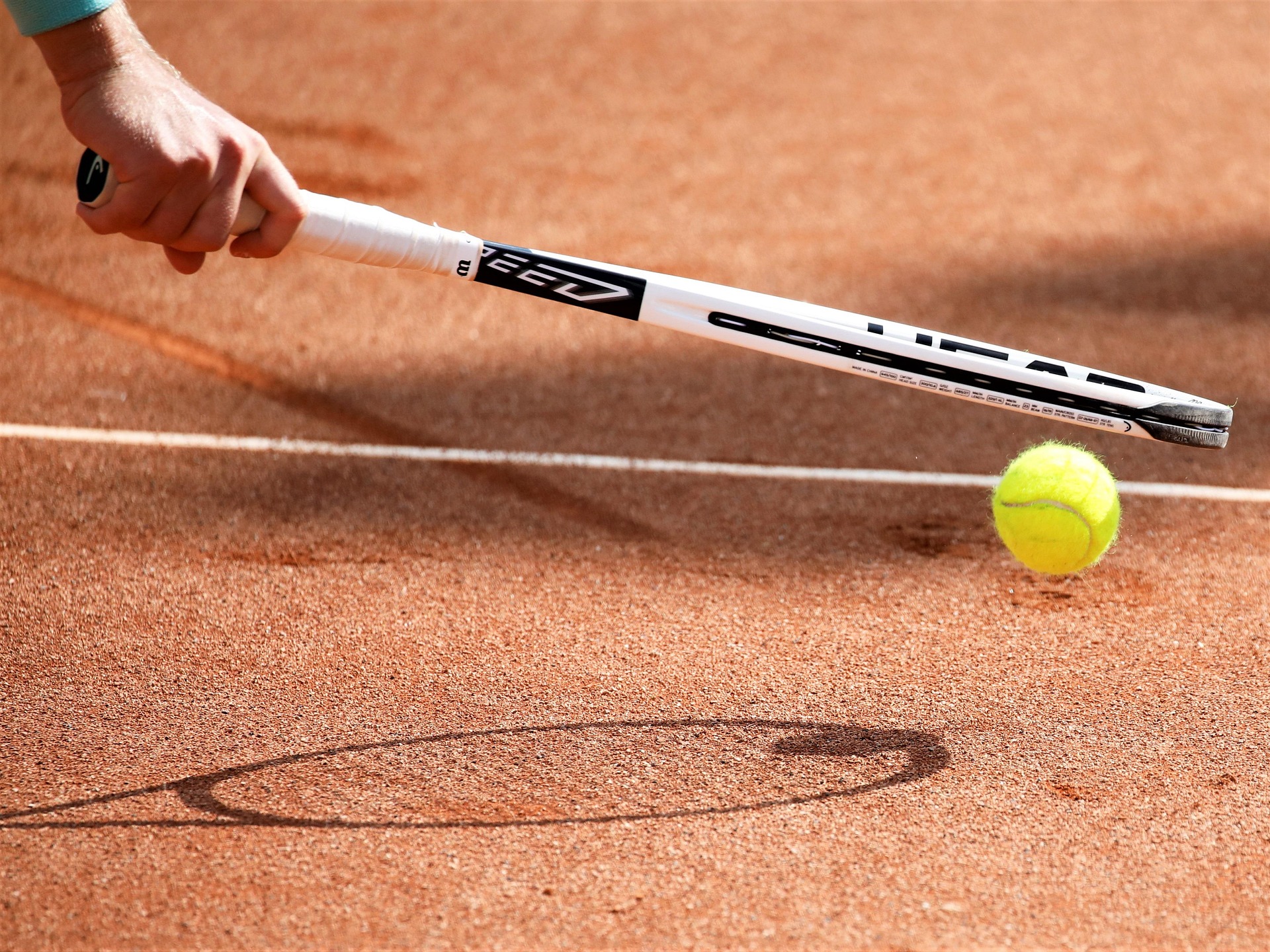
History of Tennis and the Grand Slam Tournaments
A complete history of tennis from medieval jeu de paume through the four Grand Slam tournaments to the modern Big Three era
Introduction
Tennis is one of the most widely played and most internationally recognized individual sports in the world. The professional tour reaches every inhabited continent in a calendar that runs essentially without interruption from January through November, with tournaments contested in more than thirty countries each year and with prize money totals across the men's and women's tours exceeding three hundred million dollars annually. The four Grand Slam tournaments — the Australian Open in Melbourne, the French Open at Roland-Garros in Paris, Wimbledon in London, and the US Open at Flushing Meadows in New York — represent the four pinnacles of the sport, contested every year on three different surfaces with formats and traditions that have evolved over more than a century but have preserved a remarkable degree of continuity with their nineteenth-century origins.
The history of tennis is also a history of the modern world. The game's medieval ancestor jeu de paume, developed in the cloister courtyards of French monasteries during the twelfth and thirteenth centuries, was the favorite leisure activity of European royalty for several hundred years before lawn tennis was invented in Victorian England in the 1870s. The new outdoor sport, played on grass with rubber balls produced by the new vulcanization process, spread rapidly through the British Empire and the wider Anglophone world during the late nineteenth century. The four Grand Slam tournaments were established in their original forms between 1877 and 1905, the international competition between national teams developed through the Davis Cup beginning in 1900, and tennis became established as a major sport on multiple continents during the early twentieth century.
This article surveys the full history of tennis from its medieval origins through the invention of lawn tennis, the founding and evolution of the four Grand Slam tournaments, the long and contentious separation of amateur and professional tennis, the transformative arrival of the open era in 1968, the great rivalries that have defined the sport across eight decades of competitive history, the rise of women's tennis to commercial and cultural parity with the men's game, the modern era of the Big Three on the men's side, the contemporary state of professional tennis, and the economic and technological changes that are reshaping the game in the third decade of the twenty-first century. Tennis is among the most consequential individual sporting traditions of the modern world, and its history is among the great cultural narratives of the late nineteenth and twentieth centuries.
The Origins of Tennis — Jeu de Paume and Real Tennis
The earliest documented ancestor of tennis is jeu de paume, the game of the palm, played in the cloister courtyards of medieval French monasteries during the twelfth and thirteenth centuries. The game involved hitting a ball back and forth across a barrier using the open hand, with the ball composed initially of hair, leather, or cloth and later of more elaborate stuffed materials. The game spread rapidly through medieval France and into England, where it was played by both clergy and royalty. By the fifteenth century, jeu de paume was being played in purpose-built indoor courts with elaborate rules concerning the height and angle of the ceiling, the placement of buttresses and galleries along the walls, and the scoring system that incorporated the medieval reference points of 15, 30, 40 (originally 45), and 60, derived possibly from the markings on a medieval clock face.
The French and English royalty of the fifteenth and sixteenth centuries were enthusiastic players of jeu de paume. King Henry V of England was a notable player, and a famous diplomatic incident in 1414 involved a gift of tennis balls from the French dauphin to the young English king. King Henry VIII of England was a serious enthusiast who built indoor courts at multiple of his palaces, including the Hampton Court Palace court that still stands and that is among the oldest sporting venues in continuous use anywhere in the world. King François I of France maintained a personal tennis instructor and played enthusiastically. The game was the dominant leisure activity of European royalty for more than two centuries.
The French Revolution of 1789-99 included one of the most famous moments in the history of tennis. On June 20, 1789, when King Louis XVI's officials had locked the deputies of the Third Estate out of their meeting hall, the deputies gathered in the royal tennis court at the Palace of Versailles and swore the Tennis Court Oath, the famous serment du jeu de paume, in which they vowed not to disperse until a new constitution had been written for France. The Tennis Court Oath is one of the founding moments of the French Revolution and of modern French democracy, and the location was a tennis court because the indoor tennis court was one of the few buildings on the Versailles grounds large enough to accommodate the assembled deputies.
Jeu de paume was renamed real tennis in English during the nineteenth century, a name probably derived from royal tennis to distinguish the original indoor game from the new outdoor lawn tennis. Real tennis continues to be played today in a small number of historic courts across England, Scotland, France, the United States, and Australia, with about forty active courts globally and a small but devoted community of players. The game's elaborate court structure with its sloping penthouse roofs along three sides of the court, the side galleries and openings called grilles and tambours, and the various winning hazards have remained essentially unchanged for more than five centuries. The Hall of Fame court at Newport, Rhode Island, the Bedford Castle court in England, and the Hampton Court Palace court remain operational, and the real tennis world championships have been contested continuously since 1740, making them the oldest continuous world championship in any sport.
The Invention of Lawn Tennis (1873-1877)
Lawn tennis, the modern outdoor sport that would eventually be called simply tennis, was invented by the Welsh-born Major Walter Clopton Wingfield in late 1873. Wingfield, an officer in the British Indian Army who had retired to North Wales, developed an outdoor variant of real tennis that could be played on a hourglass-shaped court approximately seven feet wide at the net and twenty-one feet wide at the back, separated by a net approximately five feet high. The game was played with rubber balls of the kind that had become commercially available following Charles Goodyear's invention of vulcanized rubber in 1839, balls that could bounce on grass in a way that real-tennis balls of stuffed material could not.
Wingfield patented his invention on February 23, 1874 under the title A Portable Court for Playing Tennis, and he marketed boxed sets through London sports retailers under the brand name Sphairistike, from the Greek word for ball. The boxed sets included a net, posts, a rule book, and an initial supply of rubber balls. The game was an immediate commercial success among the British leisure classes, who took up the game enthusiastically on country house lawns across England and Scotland during the summer of 1874. The product's odd Greek name was rapidly abandoned in favor of the simpler lawn tennis.
The rules of the new game were continuously revised during the 1870s as players experimented with court dimensions, scoring systems, and serving conventions. The Marylebone Cricket Club at Lord's, then the governing body of cricket and tennis among other sports, issued a standardized code of rules in 1875 that established a rectangular rather than hourglass court of seventy-eight feet by twenty-seven feet for singles play. The court dimensions established in 1875 have remained essentially unchanged to the present day, with the addition of the doubles tramlines in 1877 to allow four-player matches. The scoring system was adopted directly from real tennis, with the medieval 15, 30, 40, deuce, advantage, and game structure preserved.
The All England Croquet Club at Wimbledon, established in 1868 on a four-acre site in southwest London, added lawn tennis to its activities in 1875 in response to the growing enthusiasm for the new game. The club was renamed the All England Croquet and Lawn Tennis Club in 1877, and the croquet emphasis gradually diminished as lawn tennis became the dominant activity. The club's decision to add lawn tennis would prove consequential beyond any expectation. In 1877, the club's secretary Henry Jones organized the first lawn tennis tournament, held at Wimbledon from July 9-19, 1877, with a competitor entry fee of one guinea and prize money of twelve guineas plus a silver challenge cup. Twenty-two competitors entered, and the first Wimbledon Championships were under way.
The Founding of Wimbledon (1877)
The first Wimbledon Championships were held in July 1877 at the All England Lawn Tennis and Croquet Club's original ground at Worple Road in southwest London. The tournament was a single-elimination knockout among twenty-two male amateur entrants who paid the one-guinea entry fee to compete for the silver challenge cup and twelve guineas in prize money. The matches were played on the club's grass courts using the recently standardized 78-by-27-foot rectangular court and the 15-30-40 scoring system inherited from real tennis. The tournament was won by Spencer Gore, a former Harrow School cricketer and surveyor by profession, who defeated William Marshall in the final 6-1, 6-2, 6-4. The first Wimbledon final was completed in just forty-eight minutes.
Subsequent Wimbledon Championships established the tournament's traditions during the first decade. Frank Hadow, a Harrow cricketer who had taken up tennis as a leisure pursuit while working in Ceylon as a tea planter, won in 1878 by defeating Gore. The Renshaw brothers Willie and Ernest dominated the tournament during the 1880s, with Willie winning seven Wimbledon titles between 1881 and 1889. The Renshaws are credited with introducing the overhead smash and the modern attacking style of play that would shape lawn tennis for the following century. Their dominance helped establish Wimbledon as the leading tournament in lawn tennis.
The ladies' singles championship at Wimbledon was instituted in 1884 with a field of thirteen competitors. The first ladies' champion was Maud Watson, an English doctor's daughter who won the inaugural championship at age nineteen. The first mixed doubles championship was held in 1913. The men's doubles championship was added in 1884, and the women's doubles in 1913. The complete tournament structure of singles, doubles, and mixed doubles for both men and women, which has continued to the present day with various format changes, was established within the first three decades of the tournament.
The All England Club moved from its original Worple Road site to its current location at Church Road, Wimbledon, in 1922 in response to the growing popularity of the tournament. The new ground included the original Centre Court, designed with an oval seating arrangement and capable of accommodating fifteen thousand spectators. Subsequent expansions have increased Centre Court capacity to nearly fifteen thousand with a retractable roof installed in 2009, and the development of additional courts and facilities has transformed the original four-acre site into a forty-two-acre complex. The Royal Box at Centre Court, the players' lockerrooms, the strawberries and cream tradition, the all-white clothing rule for competitors, and the absence of advertising on Centre Court have all preserved the Victorian character of the tournament across more than a century. Wimbledon remains the only Grand Slam tournament played on grass courts and the only one to maintain the strict dress code requiring all-white attire from competitors.
The Spread of Lawn Tennis Around the World
Lawn tennis spread rapidly through the British Empire and beyond during the 1880s and 1890s. The game required only modest equipment, was suitable for women as well as men in an era when most sports remained largely male preserves, and could be played by mixed groups in social settings, all features that aided its rapid diffusion through the British leisure classes and beyond. By 1890, lawn tennis was established as a fashionable sport in England, Scotland, Wales, Ireland, India, Australia, New Zealand, South Africa, the United States, Canada, France, Germany, Italy, Austria, Hungary, Sweden, Norway, and several other countries.
The United States received lawn tennis from the Bermuda-based military officer Mary Outerbridge, who acquired a Wingfield Sphairistike set during a Bermuda visit in 1874 and brought it back to her family's home on Staten Island, New York. The first lawn tennis match in the United States was played at the Staten Island Cricket and Baseball Club in 1874. The game spread rapidly through American social clubs, with the United States National Lawn Tennis Association founded in 1881 to standardize American rules and organize the first United States National Championships at the Newport Casino in Rhode Island the same year. The first US National Championships was won by Richard Sears, who would win the championship seven consecutive times from 1881 to 1887, the longest winning streak in any of the major tournaments.
France adopted lawn tennis in the late 1870s through a combination of British influence and the existing French enthusiasm for real tennis. The first French national championship was contested in 1891, initially restricted to members of French tennis clubs, and in 1925 was opened to international competition. The Australasian Championships, the precursor to the modern Australian Open, was first held in 1905 in Melbourne with a field that initially included only male competitors. The German national championship was first contested in 1892, the Italian in 1930.
The International Lawn Tennis Federation, the ILTF, was founded in Paris in 1913 by twelve national tennis associations to provide international governance of the sport. The ILTF was renamed the International Tennis Federation, the ITF, in 1977. The ITF has remained the international governing body of tennis throughout the modern era, and the organization administers the Grand Slam tournaments through agreements with the national federations that host them. The ITF also administers the Davis Cup for men and the Billie Jean King Cup (formerly Federation Cup) for women, the two principal international team competitions in tennis.
The Founding of the US National Championships (1881)
The United States National Championships, the precursor to the modern US Open, was first contested at the Newport Casino in Newport, Rhode Island, in August 1881. The Newport Casino was the recreational center of the wealthy Rhode Island summer colony and an ideal venue for the new tournament. The first championship was won by Richard Sears of Boston, a Harvard student from a prominent Boston family who would establish a record by winning the championship seven consecutive times from 1881 to 1887.
The US National Championships remained at the Newport Casino through 1914, when the venue moved to the West Side Tennis Club at Forest Hills in the Queens borough of New York City. The Forest Hills venue would host the US Championships until 1977, a sixty-three-year tenure that made the tournament synonymous with the Forest Hills name in tennis culture. The Forest Hills stadium, the original Tudor-style structure built in 1923, had a capacity of approximately fourteen thousand and hosted some of the most famous matches in tennis history. The Forest Hills tournament was famously won by the American player Bill Tilden seven times during the 1920s, by the French Big Four of Henri Cochet, Rene Lacoste, Jean Borotra, and Jacques Brugnon during the late 1920s and 1930s, and by various American, Australian, and European champions through the postwar period.
The move from Forest Hills to the new Flushing Meadows National Tennis Center in 1978 was driven by the inadequacy of the Forest Hills facilities for the modern tournament and by the financial demands of the increasingly commercial era. The new venue, sited on the former 1939 and 1964 World's Fair grounds in Queens, included the Louis Armstrong Stadium (later renamed Arthur Ashe Stadium for the new main court built in 1997). The current Arthur Ashe Stadium has a capacity of approximately twenty-three thousand, the largest tennis stadium in the world. The US Open at Flushing Meadows has continued to grow into the most commercially developed of the four Grand Slam tournaments, with prize money totals exceeding $75 million annually as of recent tournaments.
The US Open has produced many of the most memorable matches and stories in tennis history. The 1981 women's final between Tracy Austin and Martina Navratilova; the 1984 men's final between John McEnroe and Ivan Lendl that established Lendl's dominance after McEnroe's earlier triumphs; the 1991 women's final between Martina Navratilova and Monica Seles in which Seles defeated the older Navratilova; the 1999 women's final between Serena Williams and Martina Hingis that established Williams as a major figure; and the various Roger Federer matches at the tournament from 2004 onward have all become defining moments. The US Open is unique among the four Grand Slams in being played in late August and early September on hardcourts.
The Founding of the French and Australian Championships
The French Championships were first contested in 1891 as the Championnat de France, restricted initially to members of French tennis clubs. The tournament was held at various Parisian club venues throughout the early years of its existence. The decision to open the tournament to international competition was taken in 1925 as part of France's response to the success of the country's so-called Four Musketeers (Henri Cochet, Rene Lacoste, Jean Borotra, and Jacques Brugnon), who had dominated international tennis and won the Davis Cup for France in 1927. The new international French Championships were initially held at the Racing Club de France and at the Stade Français in Paris.
The French Championships were moved to the new Stade Roland-Garros in 1928, when the Stade Français and the French Tennis Federation built the new tennis stadium on a three-hectare site in the western Paris suburb of Auteuil. The stadium was named in honor of Roland Garros, the French aviator and World War I fighter pilot who had died in 1918 and who had been associated with the Stade Français as a member. The new venue allowed the tournament to be held in a single Parisian location with proper international facilities for the first time. The Roland-Garros venue has remained the home of the French Championships ever since, with continuous expansion and renovation that has produced the current 14,911-seat Philippe Chatrier court and the surrounding complex of nineteen additional courts.
The French Championships is the only Grand Slam played on red clay courts, the natural French clay surface that produces slower play than the hardcourts of the US Open and Australian Open and that emphasizes baseline play, topspin, and physical endurance. The French Open clay surface has rewarded clay-court specialist players including the Bjorn Borg in the late 1970s, the Mats Wilander in the early 1980s, the Sergi Bruguera and Thomas Muster in the early-to-mid 1990s, and above all the Rafael Nadal in the modern era. Nadal has won the French Open fourteen times between 2005 and 2022, more than any player has won any single Grand Slam, an accomplishment widely regarded as one of the most extraordinary in tennis history.
The Australasian Championships, the precursor to the modern Australian Open, was first contested in 1905 at the Albert Ground in Melbourne. The tournament was named the Australasian Championships because it included competitors from both Australia and New Zealand, and from 1922 onward when the New Zealand and Australian associations separated, the tournament was renamed the Australian Championships. The tournament rotated among Australian capital cities through the early decades of its history, with venues in Sydney, Melbourne, Adelaide, Brisbane, and Perth before the tournament was permanently relocated to Melbourne in 1972. The original Melbourne venue at Kooyong was replaced by the modern Melbourne Park in 1988, with the addition of the retractable-roof Rod Laver Arena in 2000. The Australian Open has been the first of the four Grand Slams of each tennis year since 1987, with the tournament held in the second half of January at Melbourne Park.
The Original Grand Slam — Don Budge (1938) and the Pre-War Amateur Era
The concept of the Grand Slam as a calendar-year sweep of the four major championships was introduced by the American tennis writer John Kieran in 1933, when the Australian player Jack Crawford won three of the four tournaments and lost to Fred Perry in the US Championships final. Kieran wrote in the New York Sun that Crawford had come close to winning a Grand Slam, using the term in its bridge sense to refer to the winning of all the tricks. The term Grand Slam was new to tennis at that time but quickly became standard terminology for the achievement of winning all four major tournaments in a single calendar year.
The first player to actually accomplish the Grand Slam was the American Donald Budge in 1938. Budge, a tall left-handed player from California, won the Australian Championships in February 1938 against the Australian John Bromwich, the French Championships in June against the Czech Roderich Menzel, Wimbledon in July against the German Henner Henkel, and the US Championships in September against the American Gene Mako. Budge's Grand Slam was achieved at a moment when the four tournaments were less integrated as a competitive structure than they would later become, but the achievement was recognized at the time as exceptional. Budge himself was a brilliant player whose career was interrupted by World War II military service and who returned to professional tennis in 1942.
The pre-war amateur era of tennis was dominated by a small number of players who could afford to play tennis without the financial support that professional players received. The Wimbledon champions of the 1920s and 1930s included the French Four Musketeers (Cochet, Lacoste, Borotra, Brugnon) who dominated international tennis from 1924 to 1932, the American Bill Tilden whose dominance had begun before the Musketeers' rise, the English Fred Perry whose three Wimbledon titles between 1934 and 1936 produced a celebrity that lasted into his subsequent professional career and his shirt-manufacturing business, the German Gottfried von Cramm whose career was interrupted by his arrest by the Nazi regime in 1938 on a charge of homosexual relations, and the American Donald Budge whose 1938 Grand Slam represented the peak of the pre-war amateur era.
The women's tennis of the pre-war era was dominated by the French Suzanne Lenglen, the most successful and most celebrated female tennis player of any era to that point. Lenglen won six Wimbledon singles titles between 1919 and 1925, became the first woman to win a Wimbledon title without dropping a set, and produced a glamorous public image that elevated women's tennis to a level of cultural visibility it had not previously enjoyed. Lenglen turned professional in 1926, ending her amateur career and becoming the highest-paid professional tennis player of any era to that point. The American Helen Wills Moody dominated the late 1920s and 1930s, winning eight Wimbledon singles titles between 1927 and 1938 and producing a contrasting style of grinding consistency that differed substantially from Lenglen's more flamboyant approach.
The Amateur-Professional Divide
The history of tennis from the 1920s through 1968 was shaped by the contentious division between amateur and professional tennis. The four Grand Slam tournaments and the Davis Cup were restricted to amateur players, a restriction that the International Lawn Tennis Federation justified on the grounds of preserving the gentlemanly amateur spirit of the sport. The amateur status of the leading players was strictly policed, with players who accepted any payment beyond their formal allowance for tennis expenses subject to lifetime bans from amateur competition.
In practice, the amateur status of leading players was widely violated through under-the-table payments by tournament organizers, by national federations, and by commercial sponsors. The system was called shamateurism by its critics and was widely understood by tennis observers to be a fiction maintained for institutional convenience rather than as a genuine principle. The most successful amateur players were typically able to earn substantial incomes through unofficial payments while preserving their amateur status, while professionals who openly accepted payment were banned from the Grand Slams and the Davis Cup.
The alternative professional tour was established in the 1920s by promoters who organized barnstorming exhibitions of the leading professional players. The first major professional tour was organized in 1926 by the American promoter Charles Pyle, who hired Suzanne Lenglen and several leading male professionals for a tour of the United States and Canada. Subsequent professional tours under various promoters maintained a continuous if commercially modest professional tennis circuit through the following four decades. The professional tour was dominated successively by the American Bill Tilden in the late 1930s, the American Don Budge after he turned professional in 1942, the Czech-American Pancho Gonzalez in the 1950s, the Australian Ken Rosewall and Lew Hoad in the late 1950s and 1960s, and the Australian Rod Laver after he turned professional in 1962.
The quality of professional tennis during this period was widely understood to be substantially higher than the quality of amateur tennis at the Grand Slam tournaments. Rod Laver, who had completed his amateur Grand Slam in 1962 and then turned professional, was unable to defend his Grand Slam titles for the following five years because of his professional status. Pancho Gonzalez, generally regarded as the best player in the world from approximately 1954 to 1963, was banned from Grand Slam competition throughout his peak years because of his professional status. The artificial separation produced a tennis landscape in which the most celebrated players were not the best players, and the institutional integrity of the Grand Slam tournaments was widely questioned within the sport.
The pressure for change accumulated through the 1960s. Wimbledon's Lance Tingay called for open tennis in his newspaper columns throughout the early 1960s. Pancho Gonzalez and other professional players publicly demanded access to the Grand Slams. The British Lawn Tennis Association, the most progressive of the national federations on the issue, announced in 1967 that it would unilaterally accept professional players at British tournaments beginning in 1968. The ILTF, faced with the prospect of a British rebellion that would undermine its institutional control, agreed in March 1968 to permit open tennis, the participation of both amateur and professional players in the Grand Slams and all major tournaments.
Open Tennis (1968) — The End of the Amateur Era
The open era of tennis began on April 22, 1968 with the British Hard Court Championships at Bournemouth, the first tournament in tennis history to permit both amateur and professional players to compete. The Bournemouth tournament was won by Ken Rosewall, the professional player who at age thirty-three was at the peak of his career and who had been unable to compete at Wimbledon and other major tournaments for the previous decade and a half because of his professional status. The Bournemouth victory was symbolic of the broader institutional change that the open era represented.
The first open Wimbledon was held in June and July 1968, with both amateur and professional players competing for the first time. The men's singles was won by Rod Laver, the Australian professional who had completed the amateur Grand Slam in 1962 and who was now reclaiming his rightful place at the top of the tennis world. Laver would go on to win the second of his two Grand Slams in 1969, the only player ever to complete two calendar-year Grand Slams across the open era. The women's singles at the first open Wimbledon was won by the American Billie Jean King, whose subsequent career would shape both the competitive and the political development of women's tennis.
The other Grand Slam tournaments adopted open competition over the following years. The French Championships became open in 1968, the same year as Wimbledon. The US Championships became open in 1968 and was renamed the US Open. The Australian Championships became open in 1969 and was eventually renamed the Australian Open. By 1969, the entire four-tournament Grand Slam structure was open to professional players, and the artificial division of amateur and professional tennis was effectively ended.
The transition to open tennis produced a substantial commercial expansion of the sport. Prize money at the Grand Slams grew rapidly during the 1970s, from approximately twenty thousand dollars at the first open Wimbledon to several hundred thousand dollars by the late 1970s and to several million dollars by the late 1980s. Sponsorship revenue grew similarly. The leading players including Laver, Rosewall, Tony Roche, John Newcombe, Stan Smith, Arthur Ashe, and the rising group of American players who emerged in the early 1970s including Jimmy Connors and Stan Smith became substantially more financially rewarded than any previous generation of tennis players. The transformation of tennis from a gentleman's pastime into a major professional sport was complete by approximately 1975.
The Davis Cup and the Federation Cup
The Davis Cup, the major international team competition in men's tennis, was instituted in 1900 by the American player Dwight Davis as the International Lawn Tennis Challenge between teams representing the United States and the British Isles. The first competition was held at the Longwood Cricket Club in Boston, Massachusetts, with the United States team defeating the British Isles three matches to none. Davis donated a silver trophy that has remained the prize for the competition ever since, hence the name Davis Cup. The competition expanded gradually through subsequent decades to include teams from Australia, France, Germany, and other nations.
The Davis Cup format consisted of a knockout competition culminating in a Challenge Round in which the defending champion played a single match against the qualifying challenger nation. The format was modified periodically through the early decades and was reorganized into a world group competition with promotion and relegation in 1981. Subsequent reorganizations have produced the current Davis Cup Finals format, in which the world group teams compete in a multi-week competition at neutral venues. The competition has been won most often by the United States (32 times), Australia (28 times), Great Britain (10 times), France (10 times), Sweden (7 times), and Spain (6 times).
The most famous Davis Cup matches have included the 1937 final between the United States and Germany, in which the German team led by Gottfried von Cramm narrowly lost; the 1990 final between the United States and Australia, in which Andre Agassi defeated Boris Becker in the deciding match; the 2003 final between Australia and Spain, in which Lleyton Hewitt led Australia to victory over Juan Carlos Ferrero and the Spanish team; and the 2008 final between Spain and Argentina, in which the Spanish team led by Rafael Nadal defeated Argentina at home in Mar del Plata.
The Federation Cup, now called the Billie Jean King Cup, was instituted in 1963 as the women's equivalent of the Davis Cup. The competition was originally called the Federation Cup in honor of the International Lawn Tennis Federation, and the name was officially changed to the Billie Jean King Cup in 2020 in honor of the American player who had been a central figure in establishing women's professional tennis. The competition has been won most often by the United States (18 times), Australia (7 times), the Czech Republic and Czechoslovakia (11 times combined), and Spain (5 times). The most famous Federation Cup matches have included the United States teams of the 1970s led by Billie Jean King and Chris Evert, the Spanish teams of the 1990s led by Arantxa Sanchez-Vicario, the Italian teams of the early 2000s led by Francesca Schiavone and Flavia Pennetta, and the Czech teams of the 2010s led by Petra Kvitova and Karolina Pliskova.
The Rise of Women's Tennis — Billie Jean King and the Original 9
Women's tennis emerged from the early 1970s as one of the major institutional and commercial transformations of professional sport. The American player Billie Jean King, who had won the first open Wimbledon in 1968 and who was the dominant female player of the early 1970s, was the central figure in establishing women's professional tennis as a sport on commercial parity with the men's game. The transformation involved difficult negotiations with tournament organizers, the founding of a separate women's professional tour, the development of independent commercial sponsorship for women's tennis, and the elevation of women's tennis to a position in the cultural and commercial landscape that no women's professional sport had previously occupied.
The key moment in the establishment of women's professional tennis was the founding of the Virginia Slims circuit in September 1970. King and eight other leading women players (Rosemary Casals, Nancy Richey, Julie Heldman, Peaches Bartkowicz, Kerry Reid, Kerry Melville, Judy Tegart Dalton, and Valerie Ziegenfuss), known subsequently as the Original 9, signed one-dollar contracts with the tournament organizer Gladys Heldman to participate in a women-only professional tennis circuit sponsored by the Virginia Slims tobacco brand. The Virginia Slims circuit was a direct response to the systematic underpayment of women in the existing tennis tournaments, where women's prize money was typically one-fifth to one-third of men's prize money for the equivalent achievement.
The Virginia Slims tour was a commercial and cultural success. The tour grew rapidly through the 1970s into the dominant women's tennis competition. Sponsorship from Virginia Slims provided financial stability while the tour established its independent commercial relationships. King won the first Virginia Slims championship in October 1970. By the mid-1970s, the women's tour had developed enough commercial momentum to negotiate prize-money parity at some of the Grand Slam tournaments. The US Open became the first Grand Slam to offer equal prize money for men's and women's singles champions in 1973. The Australian Open offered equal prize money in 2001, the French Open in 2006, and Wimbledon in 2007.
Billie Jean King's role in establishing women's professional tennis went beyond her own playing accomplishments, although those were substantial — King won 12 Grand Slam singles titles and 39 Grand Slam titles overall across her career. King's other contributions included the founding of the Women's Tennis Association (WTA) in June 1973 as the players' association of the women's tour, the development of the Federation Cup as a major team competition, and the public advocacy for women's sports through King's media platform and political engagement. The famous Battle of the Sexes match on September 20, 1973, in which King defeated the former men's champion Bobby Riggs at the Houston Astrodome before a worldwide television audience, became one of the most-watched single tennis matches in history and a moment of cultural significance for the women's movement of the 1970s.
The subsequent development of women's tennis through the late 1970s and 1980s saw the emergence of the Chris Evert-Martina Navratilova rivalry that would dominate the sport for more than a decade. Evert, the consistent American baseliner, and Navratilova, the explosive Czech-born serve-and-volley player who defected to the United States in 1975, met sixty times across their careers in one of the most famous rivalries in any sport. Navratilova won the rivalry 43-37 across all matches, and the two players combined to win twenty-six Grand Slam singles titles. Their professionalism, athletic excellence, and personal relationship (which evolved from competitive opposition to genuine friendship) helped establish women's tennis at a cultural level that the leading American women's professional sports stars including basketball and soccer players have not subsequently matched.
The Wimbledon Championships
Wimbledon, the senior of the four Grand Slam tournaments and the only one of the four still played on grass courts, has retained more of its original character across nearly a century and a half than any other major tennis tournament. The current Wimbledon venue at Church Road, Wimbledon, occupies approximately forty-two acres in southwest London and includes the famous Centre Court with retractable roof installed in 2009, the No. 1 Court, the No. 2 and No. 3 Courts, and approximately twenty additional grass match courts and a number of practice courts. The tournament is held annually in late June and early July across two weeks of competition.
The traditions of Wimbledon have been preserved with deliberate care. The all-white clothing rule for competitors, which forbids competitors from wearing any colored clothing during matches, has been maintained continuously since the original 1877 tournament. The royal box on Centre Court reserved for members of the British royal family and other distinguished guests has remained a continuous feature. The strawberries and cream tradition, in which approximately 142,000 portions of strawberries with cream are sold during each tournament, has been maintained. The Wimbledon ball boys and girls, recruited from local schools, have remained a feature. The absence of advertising on Centre Court is unique among the four Grand Slams. The opening day Manic Monday in which all sixteen quarterfinal matches were originally scheduled has been replaced in recent years by a more spread-out final week.
The championship has been won by the players who have come to define each era of tennis. The pre-open-era champions included the Renshaw brothers in the 1880s, Reginald Doherty and Laurence Doherty in the 1890s and 1900s, Norman Brookes of Australia in 1907 and 1914, Bill Tilden in 1920-21, Henri Cochet of France in 1927 and 1929, Jean Borotra of France in 1924, 1926, and 1930, Rene Lacoste of France in 1925 and 1928, Helen Wills Moody of the United States in 1927-30 and 1932-33 and 1935 and 1938, Fred Perry of Great Britain in 1934-36, Don Budge of the United States in 1937-38, and various postwar champions.
The open era champions have included Rod Laver in 1968-69, John Newcombe in 1970-71 and 1973, Stan Smith in 1972, Jimmy Connors in 1974 and 1982, Arthur Ashe in 1975, Bjorn Borg in 1976-80 (five consecutive titles), John McEnroe in 1981, 1983-84, Boris Becker in 1985-86 and 1989, Stefan Edberg in 1988 and 1990, Andre Agassi in 1992, Pete Sampras in 1993-95 and 1997-2000 (seven titles), Goran Ivanisevic in 2001, Roger Federer in 2003-07 and 2009 and 2012 and 2017 (eight titles), Rafael Nadal in 2008 and 2010, Novak Djokovic in 2011, 2014-15, 2018-19, 2021-22 (seven titles), Andy Murray in 2013 and 2016, and Carlos Alcaraz in 2023-24.
The women's open-era champions have included Billie Jean King in 1968 and 1972-73, Margaret Court in 1970, Evonne Goolagong in 1971 and 1980, Chris Evert in 1974 and 1976 and 1981, Virginia Wade in 1977 (winning at home as the British player in the Queen's silver jubilee year), Martina Navratilova in 1978-79 and 1982-87 (nine titles), Steffi Graf in 1988-89 and 1991-93 and 1995-96, Lindsay Davenport in 1999, the Williams sisters dominance with Serena winning in 2002-03 and 2009 and 2010 and 2012 and 2015-16 (seven titles), Venus Williams in 2000-01, 2005 and 2007-08 (five titles), and various other champions including Maria Sharapova in 2004, Amelie Mauresmo in 2006, Petra Kvitova in 2011 and 2014, Marion Bartoli in 2013, Garbiñe Muguruza in 2017, Angelique Kerber in 2018, Simona Halep in 2019, Ashleigh Barty in 2021, Elena Rybakina in 2022, Marketa Vondrousova in 2023, and Barbora Krejcikova in 2024.
The French Open — Roland-Garros
The French Open at Roland-Garros is the only Grand Slam tournament played on red clay courts and is widely regarded by tennis professionals as the most physically demanding of the four major tournaments. The clay surface produces slower play than the hardcourts of the Australian and US Opens or the grass of Wimbledon, with the ball bouncing higher and more slowly and with rallies that can extend to dozens of strokes between point-ending shots. The combination of physical endurance, technical skill in playing high-bouncing balls, and tactical patience required at Roland-Garros has rewarded a specific style of clay-court play that has produced a distinct tradition of French Open champions different from the dominant grass-court or hardcourt players of each era.
The Roland-Garros venue in the western Paris suburb of Auteuil has been continuously expanded since the original 1928 construction. The current complex includes the 14,911-seat Philippe Chatrier court (named for the French Tennis Federation president of the 1980s), the 10,068-seat Suzanne Lenglen court, the 5,000-seat Simonne Mathieu court, and approximately seventeen additional match courts. The Philippe Chatrier court was rebuilt with a retractable roof in 2020. The Roland-Garros complex is approximately twelve hectares, smaller than the Wimbledon complex but located in central Paris and surrounded by historic Parisian neighborhoods.
The history of French Open champions has produced a distinctive tradition of clay-court specialists. The early French champions Henri Cochet and Rene Lacoste were brilliant clay-court players. The post-war era produced a series of European clay-court specialists including the Frenchmen Marcel Bernard and Pierre Pellizza, the Spanish Manuel Santana, and the Italian Nicola Pietrangeli. The early open era was dominated by the Australian Rod Laver and the American Jimmy Connors in their respective championship years. The Swedish Bjorn Borg won the French Open six times between 1974 and 1981, the first dominant clay-court champion of the open era. The Argentine Guillermo Vilas and the Czech-American Ivan Lendl produced multiple titles in the late 1970s and 1980s.
The modern era of French Open champions has been dominated above all by the Spanish Rafael Nadal, who has won the French Open fourteen times between 2005 and 2022. Nadal's dominance at Roland-Garros is unmatched at any single tournament in the history of any sport. His combination of left-handed topspin, physical endurance, and tactical clay-court intelligence has produced a record at the French Open of 112 wins and just four losses across nearly two decades of competition. Other modern champions have included the Spanish Sergi Bruguera in 1993-94, the Austrian Thomas Muster in 1995, the Brazilian Gustavo Kuerten in 1997 and 2000-01, the Spanish Carlos Moya in 1998, the Spanish Albert Costa in 2002, the Spanish Juan Carlos Ferrero in 2003, the Argentine Gaston Gaudio in 2004, the Roger Federer in 2009 (his only French Open title), the Novak Djokovic in 2016, 2021, and 2023, the Carlos Alcaraz in 2024, and the Jannik Sinner in his rising years.
The women's French Open has been dominated by various champions across different eras. The pre-war era was dominated by Suzanne Lenglen with seven titles. The post-war era produced the American Maureen Connolly with three titles in the early 1950s. The open era champions have included Chris Evert with seven titles between 1974 and 1986, Steffi Graf with six titles between 1987 and 1999, the Belgian Justine Henin with four titles between 2003 and 2007, Serena Williams with three titles between 2002 and 2015, the Polish Iga Swiatek with four titles between 2020 and 2024, and various other champions.
The US Open
The US Open, held in late August and early September at the Billie Jean King National Tennis Center in Flushing Meadows, Queens, New York, is the final Grand Slam of each tennis year and has come to be the most commercially developed and the most overtly entertainment-oriented of the four Grand Slam tournaments. The Arthur Ashe Stadium, the largest tennis stadium in the world with a capacity of 23,200, was opened in 1997 and provides the main court for the tournament. The smaller Louis Armstrong Stadium provides a second main venue, supplemented by approximately twenty additional courts in the tennis center complex. The tournament's late-summer scheduling, hot weather, hardcourt surface, and famously partisan New York crowds combine to produce a tournament atmosphere distinct from the other three Grand Slams.
The US Open champions have included most of the major figures of tennis history. The pre-Forest Hills era produced Richard Sears (seven titles between 1881 and 1887), the Doherty brothers Reginald and Laurence in the 1890s and 1900s, Bill Tilden (seven titles in the 1920s), and Don Budge (1937-38). The Forest Hills era of 1915-77 produced the French Four Musketeers (Henri Cochet, Rene Lacoste, Jean Borotra, Jacques Brugnon), the Englishman Fred Perry (1933-34, 1936), and various American and Australian champions through the postwar period. The Flushing Meadows era from 1978 onward has produced Jimmy Connors (five titles), John McEnroe (four titles), Ivan Lendl (three titles), Pete Sampras (five titles), Andre Agassi (two titles), Roger Federer (five consecutive titles 2004-08), Rafael Nadal (four titles), Novak Djokovic (four titles), and various other champions including Andy Murray in 2012, Marin Cilic in 2014, Stan Wawrinka in 2016, Dominic Thiem in 2020, Daniil Medvedev in 2021, Carlos Alcaraz in 2022, and Jannik Sinner in 2024.
The women's US Open champions of the open era have included Billie Jean King (four titles), Chris Evert (six titles between 1975 and 1982), Tracy Austin (1979 and 1981), Martina Navratilova (four titles), Steffi Graf (five titles between 1988 and 1996), Monica Seles (1991-92), Lindsay Davenport (1998), Martina Hingis (1997), Serena Williams (six titles between 1999 and 2014), Venus Williams (two titles), Maria Sharapova (2006), Kim Clijsters (2005, 2009, 2010), Samantha Stosur (2011), Sloane Stephens (2017), Naomi Osaka (2018, 2020), Bianca Andreescu (2019), Emma Raducanu (2021), Iga Swiatek (2022), Coco Gauff (2023), and Aryna Sabalenka (2024).
The US Open has hosted many of the most famous matches and stories in tennis history. The 1979 final between John McEnroe and Vitas Gerulaitis that lasted until late at night; the 1980 final between McEnroe and Bjorn Borg in which McEnroe defeated the Swedish champion in a five-set match that effectively ended Borg's career at the highest level; the 1991 final between Stefan Edberg and Jim Courier in which both players collapsed in the New York heat; the 2001 final between Pete Sampras and Andre Agassi played just days after the September 11 attacks; the 2002 final between Serena Williams and her sister Venus that confirmed Serena as the dominant player of her generation; the 2009 women's semifinal between Serena Williams and Kim Clijsters that produced the famous foot-fault controversy at match point; the 2014 final between Marin Cilic and Kei Nishikori that produced the first all-non-Big Three Grand Slam final in a decade; and various Roger Federer late-career runs at the tournament have all become permanent stories in the tournament's culture.
The Australian Open
The Australian Open is the first Grand Slam of each tennis year, held in the second half of January at Melbourne Park in Melbourne, Australia. The tournament has been held at Melbourne Park since 1988, when the tournament was permanently relocated from Kooyong Lawn Tennis Club following decades of rotation among Australian capital cities. Melbourne Park is a purpose-built tennis venue with three main stadiums: the 14,820-seat Rod Laver Arena (with a retractable roof opened in 2000), the 10,500-seat Margaret Court Arena, and the 5,000-seat John Cain Arena, plus approximately fifteen additional match courts.
The Australian Open has historically been the least prestigious of the four Grand Slams in tennis culture because of its remote location from European and North American population centers, its summer-vacation timing in late January when many leading European players preferred to rest, and its uneven prize money before the equal-money policy was adopted in 2001. The tournament's prestige has grown substantially since the move to Melbourne Park in 1988 and the various subsequent improvements to facilities, prize money, and tournament infrastructure. The Australian Open is now generally regarded as the equal of the other three Grand Slams in prestige and prize money.
The pre-open era Australian Championships were dominated by Australian players, with the most successful champions including Roy Emerson (six titles), Rod Laver (three titles before turning professional), and Lew Hoad. The open era champions have included Rod Laver (1969), Ken Rosewall (1971-72), John Newcombe (1973, 1975), Mark Edmondson (1976, the last Australian to win), Vitas Gerulaitis (1977), Guillermo Vilas (1978-79), Brian Teacher (1980), Johan Kriek (1981-82), Mats Wilander (1983-84, 1988), Stefan Edberg (1985, 1987), Ivan Lendl (1989-90), Boris Becker (1991, 1996), Jim Courier (1992-93), Pete Sampras (1994, 1997), Andre Agassi (1995, 2000-01, 2003), Yevgeny Kafelnikov (1999), Thomas Johansson (2002), Roger Federer (six titles between 2004 and 2018), Marat Safin (2005), Rafael Nadal (two titles), Novak Djokovic (ten titles between 2008 and 2023), Stan Wawrinka (2014), Dominic Thiem (2020), Daniil Medvedev (2021 final lost), Jannik Sinner (2024), and various others. Djokovic's ten Australian Open titles represent the most of any player at any single Grand Slam tournament outside Nadal's fourteen at the French Open.
The women's Australian Open champions of the open era have included Margaret Court (1969-71, 1973), Evonne Goolagong (1974-77), Chris Evert (1982, 1984), Steffi Graf (1988-90, 1994), Monica Seles (1991-93, 1996), Mary Pierce (1995), Martina Hingis (1997-99), Lindsay Davenport (2000), Jennifer Capriati (2001-02), Serena Williams (seven titles between 2003 and 2017), Justine Henin (2004), Amelie Mauresmo (2006), Maria Sharapova (2008), Victoria Azarenka (2012-13), Li Na (2014), Angelique Kerber (2016), Caroline Wozniacki (2018), Naomi Osaka (2019, 2021), Sofia Kenin (2020), Ashleigh Barty (2022), Aryna Sabalenka (2023-24), and Madison Keys (2025).
The Australian Open has produced its share of memorable matches. The 2009 men's final between Rafael Nadal and Roger Federer in which Nadal won a 5-set match that lasted over four hours and produced the famous emotional moments at the trophy ceremony; the 2012 men's final between Novak Djokovic and Rafael Nadal that lasted 5 hours and 53 minutes, the longest Grand Slam final ever; the 2022 women's final won by Ashleigh Barty as the first Australian to win at home since 1978; and various Novak Djokovic matches that have been part of his domination of the tournament have all become permanent stories in the Australian Open's culture.
The Grand Slam Concept and Calendar Year Slams
The Grand Slam in tennis refers most strictly to the winning of all four major tournaments in a single calendar year. The term originated in 1933 when the American tennis writer John Kieran applied the bridge term to Jack Crawford's near-Slam, but it was first actually achieved by Don Budge in 1938. Subsequent calendar-year Grand Slams have been completed by Maureen Connolly in 1953 (women's singles), Rod Laver in 1962 and 1969 (amateur and open-era), and Margaret Court in 1970 (women's singles). The men's calendar-year Grand Slam has not been completed in the open era since Laver in 1969, an absence of more than five decades.
The distinction between calendar-year Grand Slam and career Grand Slam has become important in modern tennis discussion. The career Grand Slam refers to the winning of all four majors across the player's career, regardless of the calendar order. The career Grand Slam has been completed by a number of players including Don Budge, Rod Laver, Roy Emerson, Andre Agassi, Roger Federer, Rafael Nadal, Novak Djokovic, Maureen Connolly, Doris Hart, Shirley Fry Irvin, Maria Bueno, Margaret Court, Billie Jean King, Chris Evert, Martina Navratilova, Steffi Graf, Serena Williams, and Maria Sharapova.
Graf's 1988 calendar-year Grand Slam in women's singles, which she completed with an additional Olympic gold medal at the Seoul Olympics that same year, has been called the Golden Slam, a term used since then to describe the rare combination of all four majors plus Olympic gold within a single year. Only Steffi Graf has accomplished the Golden Slam, although Serena Williams completed a non-calendar Golden Slam between 2012 and 2013, which has been called the Serena Slam in honor of her four-consecutive Grand Slam achievement.
The career achievements of the modern Big Three of Roger Federer (20 Grand Slam singles titles), Rafael Nadal (22), and Novak Djokovic (24) have transformed tennis discussion of the Grand Slam achievement. The accumulation of Grand Slam titles across the players' careers has produced a different measure of greatness than the calendar-year Slam that was the original benchmark. Djokovic's 24 Grand Slam titles is the all-time record in tennis (men's singles) as of 2025. Serena Williams's 23 Grand Slam singles titles is the open-era women's record, behind only Margaret Court's 24 from before and during the open era. The Big Three have together won 66 of the 80 Grand Slam tournaments held between 2003 and 2024, an unprecedented domination of any individual sport.
The Career Golden Slam refers to the combination of career Grand Slam (all four majors) plus an Olympic gold medal in singles. The achievement has been completed by Andre Agassi in 1999, Rafael Nadal in 2010, Serena Williams in 2012, and the men's player Roger Federer has not achieved an Olympic singles gold medal and so has not completed the Career Golden Slam. The achievement has become a benchmark for the most accomplished players of the modern era.
The Open Era 1970s — Court, Evert, Connors, Borg
The 1970s in tennis was a period of rapid commercial expansion and the establishment of the open era as a stable competitive structure. The decade produced four players who came to dominate their respective tours: Margaret Court and Chris Evert in women's tennis, and Jimmy Connors and Bjorn Borg in men's tennis. The four players together won 32 of the 40 Grand Slam singles championships contested during the decade, an indication of how concentrated the top of the sport had become.
Margaret Court of Australia, who had been the dominant women's player of the late 1960s as well, won 24 Grand Slam singles titles across her career, the all-time record across both amateur and open eras. Court's 1970 calendar-year Grand Slam in women's singles was the second of three calendar-year Grand Slams in women's tennis history, after Maureen Connolly in 1953 and before Steffi Graf in 1988. Court's career was concluded by the mid-1970s, after which she became a public figure of Australian Pentecostal Christianity whose public statements on various social issues have produced subsequent controversy.
Chris Evert of the United States, who debuted as a teenager at the 1971 US Open and who reached the semifinals of the tournament at age sixteen, became the leading American women's player of the 1970s and 1980s. Evert's playing style was based on relentless consistency from the baseline, with her two-handed backhand becoming one of the most copied shots in tennis history. Evert won 18 Grand Slam singles titles across her career and was ranked number one in the world for 260 weeks across multiple stints at the top. Her rivalry with Martina Navratilova would dominate women's tennis from the late 1970s through the mid-1980s.
Jimmy Connors of the United States dominated men's tennis from 1974 to 1976. Connors won three Grand Slam singles titles in 1974 (the Australian, Wimbledon, and US Opens) but was barred from the French Open in 1974 because of his commitment to a non-sanctioned team tennis competition. Connors went on to win eight Grand Slam singles titles across his career and to remain a competitive figure on the men's tour for two decades, with his celebrated US Open semifinal run in 1991 at age 39 being one of the great late-career performances in tennis history.
Bjorn Borg of Sweden was the dominant men's player of the late 1970s. Borg's combination of physical conditioning, baseline consistency, and tactical patience produced eleven Grand Slam singles titles between 1974 and 1981, including five consecutive Wimbledon titles between 1976 and 1980 (matching the open-era record subsequently held by Roger Federer) and six French Open titles between 1974 and 1981. Borg's relationship with the more emotional and confrontational John McEnroe produced the most famous tennis rivalry of the 1970s and early 1980s. Borg retired at age 26 in 1981 after losing the US Open final to McEnroe, a retirement that was widely understood at the time as a response to McEnroe's pressure and to Borg's own emotional exhaustion from years of competitive intensity.
The 1980s — Lendl, McEnroe, Navratilova, Graf
The 1980s in tennis saw the emergence of new dominant players in both the men's and women's games and the continued expansion of the sport's commercial scope. The decade produced four players who came to dominate their respective tours: Ivan Lendl and John McEnroe in the men's game during the first half of the decade, with the rising Stefan Edberg, Boris Becker, and Mats Wilander completing the men's elite; and Martina Navratilova and Steffi Graf in the women's game.
John McEnroe of the United States was the most charismatic and most controversial player of the era. McEnroe's combination of brilliant left-handed touch tennis, frequent emotional outbursts at officials and crowds, and combative on-court behavior produced both a brilliant playing career and a recurring cultural drama. McEnroe won seven Grand Slam singles titles between 1979 and 1984, including three consecutive Wimbledon titles in 1981 and 1983-84. His rivalry with the more composed Bjorn Borg in 1980 and 1981 produced two of the most famous Wimbledon finals in tennis history, and the rivalry was extended by McEnroe's matches with Ivan Lendl and Jimmy Connors through the early 1980s.
Ivan Lendl of Czechoslovakia and the United States dominated the men's game from 1985 to 1989. Lendl's combination of physical conditioning, baseline power tennis, and tactical intelligence produced eight Grand Slam singles titles across his career, including three US Open titles in 1985-87, three French Open titles in 1984, 1986, and 1987, and two Australian Open titles in 1989-90. Lendl was the first dominant baseline player of the open era and the first to demonstrate that the modern fitness-based approach to tennis could produce sustained excellence at the highest level. He never won Wimbledon despite reaching the final on two occasions, an absence that has been the subject of recurring discussion in tennis history.
Martina Navratilova dominated women's tennis from 1978 to 1987. Navratilova's combination of serve-and-volley tennis, athletic excellence, and physical conditioning produced eighteen Grand Slam singles titles across her career, including nine Wimbledon singles titles between 1978 and 1990, four US Opens, three Australian Opens, and two French Opens. Navratilova's run of dominance at Wimbledon between 1982 and 1987 produced six consecutive championships, the all-time record at the tournament for any player. Her rivalry with Chris Evert during the 1980s was one of the great sporting rivalries of any era. Navratilova was openly bisexual at a time when public acknowledgment of her sexuality was relatively unusual, and she became a leading public figure for LGBT rights in addition to her tennis accomplishments.
Steffi Graf of West Germany emerged in the late 1980s as the successor to Navratilova and Evert. Graf's combination of brilliant forehand power, exceptional movement, and tactical intelligence produced 22 Grand Slam singles titles across her career, including the calendar-year Golden Slam in 1988 (all four majors plus Olympic gold in Seoul). Graf was ranked number one in the world for a total of 377 weeks, the all-time record across both men's and women's tennis. Her career was extended into the 1990s and included the famous incident in 1993 when a Steffi Graf fan stabbed her rival Monica Seles during a tournament in Hamburg, a knife attack that effectively ended Seles's competitive career at the highest level and gave Graf an unchallenged path to multiple subsequent Grand Slam titles.
The 1990s — Sampras, Agassi, Seles, Hingis
The 1990s in tennis saw the emergence of Pete Sampras and Andre Agassi as the dominant American men's players and the continued evolution of the women's game with Monica Seles, Steffi Graf, and Martina Hingis as the leading figures. The decade was also notable for the continued globalization of tennis, with leading players from Russia, Switzerland, Argentina, and other non-traditional tennis nations beginning to break through to the highest levels of the sport.
Pete Sampras dominated men's tennis from 1993 to 2002. Sampras's combination of brilliant serving, particularly his strong second serve, his elegant serve-and-volley game on grass, and his powerful groundstrokes produced fourteen Grand Slam singles titles across his career, a record that stood until Roger Federer broke it in 2009. Sampras won seven Wimbledon titles between 1993 and 2000, five US Open titles between 1990 and 2002, and two Australian Open titles in 1994 and 1997. He never won the French Open, an absence that became famous in tennis discussion as the missing piece of an otherwise complete career. Sampras's grace under pressure, his quiet professionalism, and his focus on the four Grand Slam tournaments rather than on the smaller events made him the model professional of his era.
Andre Agassi was the contrasting American figure of the era. Agassi's combination of brilliant return-of-serve, sharp groundstrokes, and confrontational on-court personality produced eight Grand Slam singles titles across his career. Agassi's career arc was famously unconventional. He emerged as a teenage prodigy in the late 1980s, became one of the most marketed sports figures of the early 1990s with his long hair and confrontational style, declined into a brief period of personal and competitive crisis in the mid-1990s, and then returned as a more mature professional to win additional Grand Slam titles into his thirties. Agassi completed the career Grand Slam at the 1999 French Open, becoming only the fifth man in history to win all four majors.
Monica Seles emerged in the early 1990s as a brilliant teenage player who briefly challenged Steffi Graf for dominance of the women's game. Seles won eight Grand Slam singles titles between 1990 and 1993, with her aggressive two-handed groundstrokes producing some of the most powerful baseline tennis the women's game had seen. Her competitive career was effectively ended in April 1993 when a deranged Steffi Graf fan stabbed her at a tournament in Hamburg. Seles attempted to return to competitive tennis but never recaptured her previous form. Her injury contributed to the run of Graf's dominance through the mid-1990s.
Martina Hingis of Switzerland emerged as the youngest world number one in women's tennis history at age 16 in 1997. Hingis won five Grand Slam singles titles between 1997 and 1999, including three consecutive Australian Open titles in 1997-99, plus the 1997 Wimbledon and US Open. Her style of brilliant court positioning, sharp angles, and tactical intelligence was an exception to the increasingly power-based women's game of the late 1990s. Hingis's career was complicated by recurring injuries that ended her first competitive period in 2002 at age 22.
The late 1990s also saw the emergence of two American teenage sisters who would dominate the women's game for the following two decades: Venus Williams, who turned professional in 1994 at age 14, and Serena Williams, who turned professional in 1995 at age 14. The Williams sisters, the daughters of Richard and Oracene Williams of Compton, California, had been homeschooled and home-coached in tennis through their childhoods, an unusual approach that produced two of the most accomplished tennis players of any era.
The Roger Federer Era Begins (2003)
Roger Federer of Switzerland emerged in 2003 as the player who would come to be widely regarded as the most elegant and most beautiful tennis player of any era. Federer's combination of brilliant serving, complete groundstroke command across both wings, exceptional movement, tactical intelligence, and the apparent absence of physical or technical limitations produced a playing style that has been described by tennis observers as the most aesthetically perfect tennis ever played. Federer was widely regarded by both critics and other professionals as having transcended the technical demands of the game in a manner that no previous player had matched.
Federer's first Grand Slam singles title came at Wimbledon in 2003, when he defeated the Australian Mark Philippoussis in straight sets to win the championship at age 21. He would go on to win the championship in 2003, 2004, 2005, 2006, 2007, 2009, 2012, and 2017, a total of eight Wimbledon singles titles that surpassed Pete Sampras's open-era record. Federer's combination of grass-court mastery and serve-and-volley elegance made him the natural successor to Sampras's Wimbledon throne.
Federer's dominance extended across all four Grand Slams. He won the US Open in 2004, 2005, 2006, 2007, and 2008, a five-consecutive-titles run that matched Sampras's late-1990s dominance at the tournament. He won the Australian Open in 2004, 2006, 2007, 2010, 2017, and 2018, a six-title total that established his record at the tournament until Novak Djokovic surpassed him. His French Open title at Roland-Garros in 2009, where he defeated the Robin Soderling in the final after Soderling had defeated the heavily favored Rafael Nadal in the fourth round, completed his career Grand Slam and made Federer only the sixth man in history to win all four majors.
Federer's total of 20 Grand Slam singles titles was the all-time record from his win at the 2009 French Open until Nadal won his 21st title at the 2022 Australian Open. Federer's playing career extended into 2022 before he retired at the Laver Cup in London at age 41. His final professional match was a doubles match alongside Rafael Nadal, his greatest career rival, in an emotional ceremony at the O2 Arena that was attended by Federer's family and by many of the world's leading players.
Federer's cultural impact extended beyond his playing accomplishments. He became one of the most marketed athletes of any era, with sponsorship deals from Rolex, Mercedes-Benz, Nike (and later Uniqlo), and other brands generating estimated annual income exceeding one hundred million dollars at the peak of his career. Federer's elegant playing style, gentleman's behavior on and off the court, and consistent professionalism produced a cultural figure unmatched in tennis since the era of the Australian players Rod Laver and John Newcombe. The widespread cultural admiration for Federer was reflected in the famous 2006 essay by the American writer David Foster Wallace, who wrote about the Federer playing style at Wimbledon as Religious Experience and who produced one of the most-quoted pieces of tennis writing in the modern era.
Rafael Nadal at Roland-Garros
Rafael Nadal of Spain emerged in 2005 as the player who would come to define clay-court tennis for two decades. Nadal's combination of left-handed heavy topspin, exceptional physical conditioning, mental toughness, and tactical clay-court intelligence produced one of the most dominant performances at any single tournament in the history of any individual sport. Nadal won the French Open at Roland-Garros fourteen times between 2005 and 2022, with a tournament record of 112 wins and just four losses.
Nadal's first Grand Slam title came at the 2005 French Open at age 19, defeating the Argentine Mariano Puerta in the final after defeating Roger Federer in the semifinal. Nadal's early dominance of the French Open was so complete that he was widely regarded as the best clay-court player ever from the time of his second championship in 2006. He won the tournament in 2005, 2006, 2007, 2008, 2010, 2011, 2012, 2013, 2014, 2017, 2018, 2019, 2020, and 2022 — fourteen French Open titles, with a maximum gap of just two years between victories during his peak.
Nadal's dominance extended beyond Roland-Garros. He won 22 Grand Slam singles titles across his career, including two Australian Open titles (2009, 2022), two Wimbledon titles (2008, 2010), and four US Open titles (2010, 2013, 2017, 2019). Nadal's rivalry with Roger Federer produced one of the most famous rivalries in tennis history. The two players met in nine Grand Slam finals between 2006 and 2017, with Nadal winning six and Federer winning three. The 2008 Wimbledon final between Nadal and Federer was widely regarded as the greatest tennis match ever played: a five-set affair lasting almost five hours that was interrupted by rain and ended in semi-darkness with Nadal winning 9-7 in the fifth set. The match has been the subject of countless retrospective articles and a feature documentary, and is widely cited as the high point of the Federer-Nadal era.
Nadal's playing style was substantially different from Federer's. Federer's tennis was elegant and apparently effortless. Nadal's tennis was muscular, physically demanding, and visibly exhausting. Nadal's footwork was extraordinarily quick and his ability to retrieve apparently lost balls produced rallies of extreme length on clay surfaces. His left-handed forehand was the most damaging single shot in tennis of his era, producing both extreme topspin and exceptional pace. His physical conditioning, with its emphasis on strength and explosive power, was substantially different from the more flowing athleticism of Federer.
Nadal's career was complicated by recurring injuries to his foot, his knees, and various other body parts that produced repeated multi-month absences from the tour. The intensity of his physical approach produced the wear and tear that eventually limited his career. His retirement was announced in October 2024 and was effectively complete at the end of the 2024 season, after he played at the Davis Cup Finals in November 2024 before a final retirement ceremony. The Nadal-Federer rivalry will likely remain one of the defining rivalries of any individual sport, and the contrast between Federer's apparent ease and Nadal's apparent effort has produced a body of tennis writing and analysis that few rivalries in any sport have matched.
Novak Djokovic and the Big Three
Novak Djokovic of Serbia emerged in the late 2000s as the third member of what came to be called the Big Three of men's tennis. Djokovic's combination of flexible movement, exceptional return-of-serve, mental toughness in long matches, and tactical intelligence across all surfaces produced a career that would eventually surpass both Federer and Nadal in Grand Slam singles totals. Djokovic has won 24 Grand Slam singles titles, the all-time record in men's tennis, as of late 2024.
Djokovic's first Grand Slam title came at the 2008 Australian Open, where he defeated the French player Jo-Wilfried Tsonga in the final. His subsequent career was initially shadowed by the Federer-Nadal duopoly, and Djokovic was widely regarded for several years as the third member of an elite trio rather than a serious challenger to its top two members. Djokovic's transformation into the leading player of the Big Three came around 2011, after he made substantial changes to his diet (eliminating gluten and adopting a strict eating routine) and worked extensively on his mental approach with the help of various performance specialists.
Djokovic's dominant period of 2011 produced three Grand Slam singles titles in a single year, the first calendar-year accomplishment of that kind since Mats Wilander's three titles in 1988. Djokovic won the 2011 Australian Open, Wimbledon, and US Open, becoming the new dominant player in men's tennis. His subsequent career has produced ten Australian Open titles (more than any player at any single Grand Slam apart from Nadal's fourteen at Roland-Garros), seven Wimbledon titles, four US Open titles, and three French Open titles. He completed the career Grand Slam at the 2016 French Open by defeating Andy Murray in the final.
Djokovic's rivalry with Federer and Nadal has produced many of the most consequential matches of the era. He defeated Federer in the 2007, 2014, 2015, and 2019 Wimbledon finals and the 2019 ATP Finals championship, with the 2019 Wimbledon final being one of the most dramatic matches of the era — Djokovic won a five-set match in which he saved two championship points against Federer's serve in the fifth set. He defeated Nadal in multiple Grand Slam finals across all four tournaments. His head-to-head record against Federer is 27-23 in his favor, and his head-to-head record against Nadal is 30-29 in his favor as of late 2024.
Djokovic's cultural reception has been substantially more complicated than that of Federer and Nadal. His Serbian background, the political associations of his public statements on various national and historical issues, his anti-establishment relationship with the ATP and the Grand Slam tournaments through the early 2020s on issues including COVID-19 vaccination requirements, and his confrontational on-court behavior have produced a less universally admired public figure than Federer or Nadal. His tennis accomplishments, however, have placed him at the top of any objective ranking of the greatest men's players of the open era. The 2024 Olympic gold medal in singles, which Djokovic won at the Paris Olympics by defeating Carlos Alcaraz in the final, completed his career goals at age 37 and was widely regarded as the final major achievement that had eluded him.
The Big Three of Federer, Nadal, and Djokovic have together won 66 of the 80 Grand Slam tournaments held between the 2003 Wimbledon (Federer's first) and the 2024 US Open. The combined total of 66 Grand Slam titles for three players in a single era is without precedent in tennis history. The next generation of leading men's players, including Alexander Zverev, Daniil Medvedev, Stefanos Tsitsipas, and Andrey Rublev, won occasional titles during this period but never produced a sustained challenge to the Big Three. The emergence of Carlos Alcaraz of Spain and Jannik Sinner of Italy in the early 2020s as the new dominant players has gradually produced the post-Big-Three era of men's tennis.
The Modern Era of Women's Tennis
Women's tennis from the late 1990s through the early 2020s was dominated above all by the Williams sisters, Venus and Serena, of the United States. The sisters, daughters of Richard and Oracene Williams of Compton, California, were homeschooled and home-coached in tennis by their father from their early childhood. Both sisters turned professional in their early teens — Venus in 1994 at age 14, Serena in 1995 at age 14 — and emerged as the dominant figures of women's tennis from approximately 1999 onward.
Serena Williams's career is widely regarded as the most accomplished in women's tennis history. She won 23 Grand Slam singles titles between 1999 and 2017, second only to Margaret Court's 24 (which included pre-open-era titles). Her open-era record of 23 Grand Slam singles titles has not been surpassed. Serena's playing style combined the brilliant serving inherited from her father's coaching, the powerful groundstrokes that defined the modern women's game, and an exceptional competitive intensity that produced many of the great moments in tennis history. She completed the career Grand Slam in 2002-03 by winning four consecutive Grand Slams (called the Serena Slam), and she completed a second career Grand Slam in 2012-13 with another four-consecutive run.
Venus Williams's career produced seven Grand Slam singles titles between 2000 and 2008, including five Wimbledon titles (2000, 2001, 2005, 2007, 2008). Her playing style was based on her exceptional height (six feet one) and her brilliant serve. Venus's career was complicated by her diagnosis of Sjögren's syndrome in 2011, which substantially limited her competitive activities at the highest level. Both sisters continued to play occasional tournaments into the 2020s, with Venus competing into 2023 and Serena producing a final celebratory US Open appearance in 2022.
The broader women's game of the 2000s included Justine Henin of Belgium, who won seven Grand Slam singles titles between 2003 and 2007 in a brilliant career that was cut short by her unexpected mid-career retirement in 2008. Maria Sharapova of Russia won five Grand Slam singles titles between 2004 and 2014, including a celebrated Wimbledon victory at age 17 in 2004. Justine's countrywoman Kim Clijsters won four Grand Slam singles titles. Lindsay Davenport of the United States, Amelie Mauresmo of France, and Jennifer Capriati of the United States also produced major titles during this era.
The 2010s saw the emergence of a new generation of leading women's players. The Polish-born American Maria Sharapova continued to win major titles. The Belarusian Victoria Azarenka won two Australian Open titles. The Chinese Li Na became the first Asian player to win a Grand Slam singles title at the 2011 French Open and won the 2014 Australian Open. The Australian Ashleigh Barty won three Grand Slam singles titles in the early 2020s before her unexpected retirement at age 25 in 2022. The Japanese Naomi Osaka won four Grand Slam singles titles between 2018 and 2021. The Polish Iga Swiatek emerged as the dominant clay-court player of the early 2020s, winning four French Open titles between 2020 and 2024. The American Coco Gauff won the 2023 US Open at age 19, the youngest American champion at the tournament since Serena Williams.
The 2020s have produced a fragmented competitive landscape with multiple leading players sharing the major titles. The dominance of a small number of leading players that characterized the Williams era of the 2000s has not been replicated. The current leading players include Swiatek, Gauff, Aryna Sabalenka of Belarus, Elena Rybakina of Kazakhstan, Mirra Andreeva of Russia, Madison Keys of the United States, and various others competing across the major tournaments.
The Surfaces — Grass, Clay, Hardcourt
Tennis is played on three principal surface types — grass, clay, and hardcourt — and the differences between the surfaces are fundamental to the strategic and technical character of the modern game. Each surface produces a substantially different bounce and rebound of the tennis ball, requiring different playing techniques and rewarding different player attributes. The four Grand Slam tournaments are contested on three different surfaces, an arrangement that adds substantially to the prestige of the career Grand Slam achievement.
Grass courts produce the fastest playing surface in tennis. The ball bounces low and skids forward, with relatively little vertical bounce. Grass rewards serve-and-volley tennis, fast reflexes, low-bounce groundstrokes, and tactical aggression. Wimbledon is the only Grand Slam contested on grass, although the grass-court season includes various preparatory tournaments in June at venues including Queens Club in London, Halle in Germany, Eastbourne in England, and Newport in Rhode Island. Grass-court specialists have included Pete Sampras and Roger Federer in the modern era and Bjorn Borg, John McEnroe, and Boris Becker in earlier eras. The maintenance of grass courts requires extensive horticultural expertise and substantial resources, which has limited the use of grass to the small number of traditional grass-court tournaments.
Clay courts produce a substantially slower playing surface than grass. The ball bounces high and with significant friction from the clay surface, producing relatively slow groundstroke exchanges and rewarding baseline play. Clay rewards physical endurance, topspin shots, sliding into shots, and tactical patience. The French Open at Roland-Garros is the only Grand Slam contested on red clay. The clay-court season takes place in April and May, with preparatory tournaments at venues including Monte Carlo, Madrid, and Rome before the French Open at the end of May. Clay-court specialists have included Bjorn Borg, Guillermo Vilas, Ivan Lendl, Sergi Bruguera, Thomas Muster, Gustavo Kuerten, and above all Rafael Nadal.
Hardcourt tennis is played on a wide variety of synthetic surfaces, all of which produce intermediate-speed play with consistent bounce and reasonable durability. The two non-grass non-clay Grand Slams, the Australian Open and the US Open, are contested on hardcourts. The Australian Open uses GreenSet acrylic hardcourt, while the US Open uses DecoTurf hardcourt; both produce relatively medium-paced play with high but consistent bounce. Hardcourt rewards versatile players who can combine baseline power with the ability to come forward when opportunities arise. The leading hardcourt players have included Pete Sampras, Roger Federer, Novak Djokovic, Andre Agassi, and the modern stars including Daniil Medvedev and Jannik Sinner.
The distribution of Grand Slam titles among the three surfaces has been part of the conversation about the greatest players in tennis history. Roger Federer's twenty Grand Slam titles included eight on grass, six on hardcourt, and only one on clay, reflecting his dominance on the faster surfaces but his relative weakness on clay during the Nadal era. Rafael Nadal's twenty-two Grand Slam titles included fourteen on clay (all at Roland-Garros), four on hardcourt (US Open), and two each on Australian hardcourt and grass. Novak Djokovic's twenty-four Grand Slam titles have been distributed across all three surfaces, with ten on Australian hardcourt, seven on grass, four on US hardcourt, and three on clay. The Djokovic distribution across all four Grand Slams has been used by some observers to argue for Djokovic's status as the greatest player of any surface, although the question of Nadal's clay dominance versus Djokovic's broad consistency has continued to be debated.
The Modern WTA and ATP Tours
Professional tennis is administered by two main professional tours: the Association of Tennis Professionals (ATP), which administers men's professional tennis, and the Women's Tennis Association (WTA), which administers women's professional tennis. Both organizations were founded in the early 1970s and have grown substantially in commercial and institutional scale across the following five decades. The two tours, along with the International Tennis Federation that administers the Grand Slams and the Davis Cup, constitute the principal institutional structure of professional tennis.
The ATP was founded in June 1972 by a group of male professional players led by Donald Dell, Cliff Drysdale, and Jack Kramer. The organization was initially established to represent the interests of male professional players against the various tournament organizers and the ILTF. The ATP's first major action was the boycott of the 1973 Wimbledon Championships in support of the Yugoslav player Niki Pilic, who had been suspended by his national federation. The boycott was widely seen as a successful demonstration of the players' collective power and as the moment when the ATP became a serious institutional force in tennis.
The ATP Tour, the structure of weekly professional tennis tournaments that the ATP administers, was reformed in 1990 to produce the current Masters 1000 series of nine premier tournaments (Indian Wells, Miami, Monte Carlo, Madrid, Rome, Canada, Cincinnati, Shanghai, Paris) plus a year-ending Tour Finals in Turin, alongside the various smaller ATP 500 and ATP 250 events. The ATP also administers the men's portion of the Davis Cup and works with the ITF on the development of the men's professional game. The ATP rankings, the official world rankings of men's professional players, are calculated weekly on a 52-week rolling basis with points awarded for performance at each tournament.
The WTA was founded in June 1973 by Billie Jean King at a meeting at the Gloucester Hotel in London just before Wimbledon. The organization was established to represent the interests of women's professional tennis and to negotiate with tournament organizers, broadcasters, and sponsors. The WTA's establishment in 1973 was directly tied to the broader feminist movement of the early 1970s and to the specific demands of women's tennis for prize money parity with the men's game. The WTA Tour structure has evolved similarly to the ATP Tour, with WTA 1000 premier tournaments, WTA 500 tournaments, WTA 250 tournaments, and a year-ending WTA Finals.
The two tours have continued to operate as separate institutions, despite the common administrative needs and the shared interests of male and female professional players. The two tours occasionally hold combined tournaments at the Grand Slam venues and at some of the Masters and 1000-level events. The integration of men's and women's tennis at the same venues has been welcomed by many tennis observers as a sign of the equality of the two professional traditions, although the financial economics of the two tours differ substantially because the men's game continues to generate larger broadcast and sponsorship revenue at the level below the Grand Slams.
The modern WTA and ATP Tours have produced substantial commercial growth across the past two decades. Prize money at the various tournaments has continued to grow, with the leading tournaments now offering prize money pools comparable to those of major professional sports events. The number of professional tournaments per year has increased substantially, with both tours operating essentially without interruption from January through November. The geographical distribution of tournaments has expanded substantially, with new events in China, the Middle East, Latin America, and various other markets joining the traditional European, American, and Australian events. The continued commercial growth of tennis has produced both opportunities for players and concerns about the demands of an essentially year-round professional calendar.
Tennis at the Olympics
Tennis was included in the modern Olympic Games from the 1896 Athens Olympics, the inaugural modern Olympics. The first Olympic tennis competition included a men's singles and a men's doubles event, won by the Irishman John Pius Boland in the singles and by Boland and the German Friedrich Traun in the doubles. The early Olympic tennis competitions were held at various Grand Slam venues and were widely regarded at the time as significant competitive events.
Tennis was removed from the Olympic program after the 1924 Paris Olympics, following a dispute between the International Lawn Tennis Federation and the International Olympic Committee about amateur eligibility and the conditions for Olympic tennis. The dispute was rooted in the broader amateur-professional divide of tennis at the time. Tennis was a leading example of the contradictions of the amateur ideal, and the IOC's strict amateur requirements were incompatible with the de facto professional status of most leading tennis players.
Tennis was reinstated as an Olympic medal sport at the 1988 Seoul Olympics after the broader IOC reforms that removed strict amateur restrictions from most Olympic sports. The Seoul Olympics tennis competition was held at the Olympic Park Tennis Center, with both men's and women's singles and doubles events. The men's singles was won by the Czech Miloslav Mečíř, and the women's singles by Steffi Graf, who completed the Golden Slam by winning the gold medal in the same year she completed the calendar-year Grand Slam. Tennis has been an Olympic medal sport at every subsequent Olympics through Paris 2024.
The Olympic tennis competition has been the subject of recurring debate within tennis about its prestige relative to the Grand Slams. The Olympic gold medal in tennis singles has been won by various leading players (Steffi Graf 1988, Jennifer Capriati 1992, Lindsay Davenport 1996, Venus Williams 2000, Justine Henin 2004, Elena Dementieva 2008, Serena Williams 2012, Monica Puig 2016, Belinda Bencic 2020, Zheng Qinwen 2024 women's; Miloslav Mečíř 1988, Marc Rosset 1992, Andre Agassi 1996, Yevgeny Kafelnikov 2000, Nicolas Massu 2004, Rafael Nadal 2008, Andy Murray 2012 and 2016, Alexander Zverev 2020, Novak Djokovic 2024 men's). The Olympic gold medal has been the subject of substantial career significance for several players whose Grand Slam records were less complete. Andy Murray's Olympic gold medal in 2012 in his home country was particularly celebrated, and the recent Djokovic gold medal at Paris 2024 was widely regarded as completing his career objectives.
The return of tennis to the Olympic program has produced a kind of fifth tournament alongside the four Grand Slams in the tennis calendar. The Olympic tennis tournament is held in the summer of each Olympic year and is fitted into the otherwise crowded tennis calendar between the French Open and Wimbledon (for the Paris 2024 Olympics that fell in this position) or between Wimbledon and the US Open (for previous Olympics). The Olympic competition has produced its own competitive moments and is generally regarded as a significant but somewhat secondary event in the modern tennis calendar.
Doping and Integrity in Tennis
Tennis has had its share of doping and integrity issues, though the sport has historically been less affected by major scandals than some other professional sports. The International Tennis Federation administers the Tennis Anti-Doping Program in cooperation with the World Anti-Doping Agency (WADA) and the various national anti-doping organizations. The program tests professional players in competition and out of competition through urine and blood sample collection, with violations resulting in sanctions ranging from short suspensions to multi-year bans.
The most prominent doping case in modern tennis history was the suspension of the Russian player Maria Sharapova in 2016. Sharapova tested positive for meldonium at the Australian Open in January 2016. Meldonium had been added to the WADA prohibited list on January 1, 2016, and Sharapova had been taking the substance under medical supervision for what she described as health conditions including a magnesium deficiency. Sharapova was initially banned for two years, reduced to fifteen months on appeal. She returned to competitive tennis in 2017 and continued to compete until her retirement in 2020.
Other tennis players who have served doping suspensions include the Czech player Petr Korda (1998, banned for ten years for nandrolone), the French player Mariano Puerta (2005, banned for eight years for etilefrine), the French player Richard Gasquet (2009, banned for one year for cocaine, later reduced to time served after he successfully argued that the trace cocaine in his sample came from kissing a woman who had used cocaine), the Spanish player Marin Cilic (2013, banned for nine months for nikethamide), and various others. The current sanction system imposes between two and four years of suspension for first-time violations of the substances list, with reduced or stricter sanctions depending on circumstances.
Match-fixing has been a recurring concern in tennis, particularly at the lower levels of the professional tour where players' competitive earnings are insufficient to disincentivize illegal financial arrangements with betting interests. The Tennis Integrity Unit, established in 2008 by the ITF, the ATP, the WTA, and the four Grand Slam organizing bodies, investigates match-fixing allegations and has suspended numerous lower-tier players for match manipulation. The Independent Review Panel report in 2018 documented credible evidence of widespread match-fixing in the lower professional tiers and recommended substantial structural reforms to address the problem. The principal Grand Slam tournaments have not been substantially affected by match-fixing allegations.
The transgender eligibility issue has produced controversy in women's tennis, particularly with the case of Renee Richards (a transgender woman who played the women's professional tour from 1976 onward) and various subsequent cases. The WTA and ITF have established eligibility rules for transgender women that involve documentation of testosterone suppression and other medical requirements. The transgender eligibility issue has been the subject of ongoing institutional discussion as the broader cultural conversation about gender and sport has evolved.
Iconic Matches
The history of tennis has produced many of the most famous individual sporting matches of the modern era. The 1980 Wimbledon final between Bjorn Borg and John McEnroe is widely regarded as one of the great matches in tennis history. Borg defeated McEnroe 1-6, 7-5, 6-3, 6-7 (16-18), 8-6, with the fourth-set tiebreaker considered one of the great moments in tennis history at 18-16 to McEnroe. The match has been the subject of substantial subsequent literature including the 2017 film Borg vs McEnroe, and the rivalry between the two players became one of the most famous in any sport.
The 2008 Wimbledon final between Rafael Nadal and Roger Federer has been widely identified as the greatest tennis match ever played. Nadal defeated Federer 6-4, 6-4, 6-7 (5-7), 6-7 (8-10), 9-7 in a match that lasted four hours and 48 minutes, that was interrupted by rain twice, and that ended in semi-darkness with Nadal claiming his first Wimbledon title. The match's combination of competitive intensity, technical brilliance, and dramatic length has produced one of the most-watched and most-discussed matches in the history of any sport. The match's setting at Wimbledon's Centre Court in front of a worldwide television audience added to its broader cultural importance.
The 2019 Wimbledon final between Novak Djokovic and Roger Federer was an extraordinary match in which Federer led by a break in the fifth set, served for the championship at 8-7, and held two championship points at 40-15 on his serve. Djokovic saved both championship points, broke back, and won the match in the first ever Wimbledon final to be decided by a final-set tiebreaker. The match's combination of Djokovic's resilience and Federer's near-victory produced a match that defined the Federer-Djokovic rivalry of the late 2010s.
The 1973 Battle of the Sexes between Billie Jean King and Bobby Riggs at the Houston Astrodome on September 20, 1973, was perhaps the most culturally significant single tennis match in history. King defeated the 55-year-old former men's champion Riggs 6-4, 6-3, 6-3 before a crowd of more than 30,000 at the Astrodome and a global television audience of more than ninety million. The match was a moment of cultural significance for the women's rights movement of the 1970s and a celebrated demonstration of women's capacity to compete at the highest level. The match has been the subject of multiple subsequent films and books and was reenacted in the 2017 film Battle of the Sexes with Emma Stone as King.
Other iconic matches have included the 1990 US Open final between Pete Sampras and Andre Agassi (Sampras won, his first Grand Slam title); the 2001 Wimbledon final between Goran Ivanisevic and Pat Rafter (Ivanisevic won in his last opportunity to win the championship, defeating the Australian Rafter); the 2008 Australian Open semifinal between Rafael Nadal and Roger Federer (Nadal won in a match that lasted over four hours); the 2009 Wimbledon final between Roger Federer and Andy Roddick (Federer won 16-14 in the fifth set, then a record final-set score in a Grand Slam final); the 2012 Australian Open final between Novak Djokovic and Rafael Nadal (Djokovic won in five sets and 5 hours 53 minutes, the longest Grand Slam final ever); and the 2022 Wimbledon final between Carlos Alcaraz and Novak Djokovic that established the new generation of leading men's players.
Stadium Architecture and Tournament Atmosphere
The architecture of the four Grand Slam tournaments has been an important part of their identity. Wimbledon's Centre Court, opened in 1922 and substantially renovated in 1979, 1992, and 2009 (with the addition of the retractable roof), is the most architecturally distinguished tennis venue in the world. The Centre Court's combination of an oval seating arrangement, the Royal Box for distinguished guests, the famous strawberries and cream and Pimm's bars in the public concourses, and the all-white competitor dress code produces an aesthetic that is unique to Wimbledon and that has been preserved with deliberate care.
The French Open's Philippe Chatrier court, rebuilt in 2020 with the addition of a retractable roof, is the only Grand Slam main court on red clay. The Roland-Garros venue is located in the western Paris suburb of Auteuil, surrounded by historic Parisian neighborhoods, with the smaller secondary courts spread across the venue's compact twelve hectares. The atmosphere of Roland-Garros has been characterized by the partisan crowd's vocal partisanship for French players (resulting in the famous booing of the Belgian Justine Henin during her 2003 French Open final against Kim Clijsters) and by the unique character of clay-court tennis as a slower, more strategic game.
The US Open's Arthur Ashe Stadium is the largest tennis stadium in the world at 23,200 seats. The stadium was opened in 1997 and was named in honor of Arthur Ashe, the African American tennis player who had won the 1968 US Open in the first open year and who had died of AIDS in 1993. The stadium's massive scale, the New York crowds' partisan support and frequent participation in the matches, the night sessions held under floodlights, and the integration of substantial commercial sponsorship throughout the venue produces a tournament atmosphere distinct from the other three Grand Slams. The US Open is widely regarded as the most overtly entertainment-oriented of the four major tournaments.
The Australian Open's Melbourne Park complex includes the Rod Laver Arena (14,820 seats with retractable roof), the Margaret Court Arena (10,500 seats), and the John Cain Arena (5,000 seats). The Melbourne Park complex is unique among the Grand Slam venues in being purpose-built for tennis only and in offering multiple roofed indoor courts. The Australian Open's late-January timing in the Australian summer produces extreme heat that has required various scheduling adjustments and water-conservation strategies. The tournament's combination of relaxed Australian crowds, the modern Melbourne Park facilities, and the often blazing summer weather produces a tournament atmosphere distinct from the European tournaments.
Beyond the Grand Slam venues, the various Masters 1000 tournaments have their own venue traditions. The Monte Carlo Country Club, the Foro Italico in Rome, the Caja Mágica in Madrid, the Hard Rock Stadium in Miami, the Indian Wells Tennis Garden in Indian Wells (which has produced one of the best-attended single tournaments outside the Grand Slams), and the various other venues have produced their own competitive traditions and cultural identities. The Davis Cup Finals have produced famous matches at venues including Estadio Roberto Bonalumi, Estadio Mary Teran de Weiss, and various other arenas across the years.
The Economics of Modern Tennis
The economic scale of modern professional tennis has grown substantially across the past two decades. The four Grand Slam tournaments together generate approximately $1.5 billion in revenue annually, including ticket sales, broadcast rights, sponsorship, hospitality, and merchandise. The US Open generates the most revenue of the four Grand Slams, with approximately $500 million annually. Wimbledon generates approximately $400 million annually. The Australian Open and French Open each generate approximately $300 million annually.
The prize money pools at the Grand Slams have grown substantially with the broader commercial expansion of tennis. The 2024 US Open prize money pool was approximately $75 million, with the men's and women's singles champions each receiving $3.6 million. The 2024 Wimbledon prize money pool was approximately £50 million, with the singles champions each receiving £2.7 million. The 2024 French Open and Australian Open offered similar prize money pools and singles champion prizes. The implementation of equal prize money for men and women across all four Grand Slams was a multi-decade institutional achievement, completed in 2007 when Wimbledon adopted equal prize money.
Beyond the Grand Slams, the various ATP and WTA tournaments generate additional revenue and prize money. The ATP Tour's nine Masters 1000 tournaments and 11 ATP 500 tournaments together generate approximately $300 million in revenue. The WTA's premier tournaments generate substantially less. The various smaller ATP 250 and WTA 250 tournaments contribute additional revenue. The ATP and WTA Tour Finals at the end of each year offer substantial prize money pools.
The leading professional players generate additional income through endorsement deals with equipment manufacturers, clothing brands, watch companies, automakers, and various consumer brands. Roger Federer's endorsement income at the peak of his career exceeded $100 million annually. Rafael Nadal's endorsement income reached approximately $40 million annually. Novak Djokovic's endorsement income has been approximately $30 million annually. The leading women's players including Serena Williams, Maria Sharapova, and the current stars including Naomi Osaka have generated endorsement income that has approached the men's leaders in several cases — Sharapova was for several years the highest-paid female athlete in the world.
The broader economics of tennis as a business have been substantially shaped by the long careers of the Big Three on the men's side. Federer, Nadal, and Djokovic each played at the highest professional level for approximately twenty years, with the Big Three together extending the period of stable revenue generation for the leading tournaments. The economics of tennis have also been shaped by the rise of new tennis-watching markets in China, the Middle East, and Latin America. The expansion of professional tennis into Saudi Arabia from approximately 2024 onward, with substantial Saudi state investment in tournaments and player retainers, has been the most recent development in the changing geography of tennis's commercial economics.
The Future of Tennis
The future of professional tennis faces a series of significant questions in the post-Big-Three era. The retirement of Roger Federer in 2022 and Rafael Nadal in 2024, and the gradual transition of Novak Djokovic toward his late career, has produced a generational transition in men's tennis. The new dominant players, Carlos Alcaraz of Spain and Jannik Sinner of Italy, have emerged in their early 20s and have together won the major Grand Slam titles of 2023 and 2024. Whether their rivalry will produce the kind of sustained dominance that the Big Three exhibited remains to be seen.
The women's game has been similarly transitioning from the Williams sisters era. The current leading women's players have not produced the sustained dominance of any earlier generation, and the women's tour has had four different number-one players in the recent past. Whether one of the current leading players will emerge as a multi-Grand-Slam winner of the kind seen in earlier eras, or whether the women's game will continue with multiple champions sharing the major titles, is a continuing question.
The Saudi Arabian investment in tennis from 2024 onward has been the most disruptive development in the recent commercial economics of the sport. The Saudi state, through the Public Investment Fund and through Saudi-controlled commercial entities, has begun to invest substantially in tennis tournaments, in individual player retainers, and in the broader institutional structure of professional tennis. The implications of Saudi investment for the integrity, the geographical balance, and the cultural identity of tennis remain to be seen. The previous case of Saudi investment in golf and the resulting LIV Golf-PGA Tour controversy has been studied within tennis as a possible model for how similar dynamics might develop in tennis.
The relationship between tennis as a sport and the broader environmental concerns of the modern era has become more prominent. The clay-court season's reliance on imported red clay from various European sources, the grass-court season's water requirements at multiple grass-court venues, the energy consumption of the air-conditioned major arenas, the carbon footprint of professional players' year-round international travel, and the general environmental impact of professional tennis as a global sporting industry have been the subject of growing discussion within the sport and beyond.
The 2026 and beyond tennis calendar will continue to feature the four Grand Slams, the various Masters 1000 and 500 tournaments, the Davis Cup Finals, the Billie Jean King Cup, and various other competitions. The relationship between the Grand Slams and the other major events has been the subject of recurring institutional negotiation, with the various tournament organizers seeking to balance the competing demands of player workload, broadcaster preferences, and the broader institutional health of the sport. The 2028 Los Angeles Olympic tennis tournament will provide another major occasion at which the future generation of leading players can compete on a global stage.
Conclusion
Tennis is among the most consequential individual sporting traditions of the modern world. The game's medieval origin in the cloister courtyards of French monasteries, its development into the royal entertainment of the European Renaissance courts, its reinvention as outdoor lawn tennis in Victorian England in the 1870s, its rapid spread through the British Empire and the wider Anglophone world, and its modern transformation into a major commercial sport with global reach have produced one of the great cultural narratives of the late nineteenth and twentieth centuries.
The four Grand Slam tournaments — Wimbledon, the French Open, the US Open, and the Australian Open — have remained the central institutional structure of tennis for more than a century. The tournaments' continuity across the changes from amateur to professional tennis, from grass-only to multiple surfaces, from local European or American events to global commercial spectacles, has been preserved with deliberate care by their organizing committees. The Grand Slams continue to produce the most important competitive moments of each tennis year and the most consequential career achievements for the world's leading players.
The history of tennis has produced individual figures whose performances have entered the permanent memory of sport. Suzanne Lenglen and Don Budge in the pre-open era; Rod Laver, Billie Jean King, Chris Evert, Martina Navratilova, Bjorn Borg, John McEnroe, Steffi Graf, and Pete Sampras across the open era; Roger Federer, Rafael Nadal, Novak Djokovic, Venus Williams, and Serena Williams in the modern era; and the rising figures of Carlos Alcaraz, Jannik Sinner, Iga Swiatek, and Coco Gauff in the current era have all produced careers that summon decades of subsequent memory and discussion. The combination of athletic excellence, individual personality, and competitive intensity that tennis can produce has made the game a particularly rich source of dramatic narrative.
Tennis will continue to evolve. The post-Big-Three transition on the men's side, the continued search for a dominant new generation on the women's side, the Saudi Arabian investment that will reshape the commercial economics of the sport, the climate and environmental challenges that all global professional sports must address, the technological changes that will continue to shape how tennis is played and how it is consumed by audiences, and the cultural changes in how individual professional sports operate in a fragmented modern media landscape will all continue to shape the game in the coming decades. Yet the fundamental appeal of tennis, the combination of individual mental and physical challenge with the elegance of well-played strokes and the drama of close matches, has now sustained the sport for more than a century and a half and shows no sign of fading. Tennis remains one of the great cultural institutions of the modern world.
Sources
Gianni Clerici, The Ultimate Tennis Book: 500 Years of the Sport (Skira, 2011).
Heiner Gillmeister, Tennis: A Cultural History (Leicester University Press, 1997).
Bud Collins, History of Tennis: An Authoritative Encyclopedia and Record Book (New Chapter Press, 2010).
Jon Wertheim, Strokes of Genius: Federer, Nadal, and the Greatest Match Ever Played (Houghton Mifflin Harcourt, 2009).
Christopher Clarey, The Master: The Long Run and Beautiful Game of Roger Federer (Twelve, 2021).
Robert J. Lake, A Social History of Tennis in Britain (Routledge, 2014).
L. Jon Wertheim, Venus Envy: A Sensational Season Inside the Women's Tennis Tour (HarperCollins, 2001).
Marshall Jon Fisher, A Terrible Splendor: Three Extraordinary Men, a World Poised for War, and the Greatest Tennis Match Ever Played (Crown, 2009).
Andre Agassi, Open: An Autobiography (Knopf, 2009).
Rafael Nadal and John Carlin, Rafa: My Story (Hyperion, 2011).
Billy Jean King with Johnette Howard and Maryanne Vollers, All In: An Autobiography (Knopf, 2021).
David Foster Wallace, String Theory: David Foster Wallace on Tennis (Library of America, 2016).
Richard Evans, Open Tennis: The First Twenty Years (Bloomsbury, 1988).
BBC Sport tennis coverage, bbc.co.uk/sport/tennis (tournament records and archives).
International Tennis Federation, ITF Annual Report (official institutional records, ITF London).
Tennis Magazine, various issues, the Wimbledon Lawn Tennis Museum archive, the Roland-Garros Museum archive, and the International Tennis Hall of Fame archive at Newport, Rhode Island.