
 English
 Español
 中文
中文 हिन्दी
 Français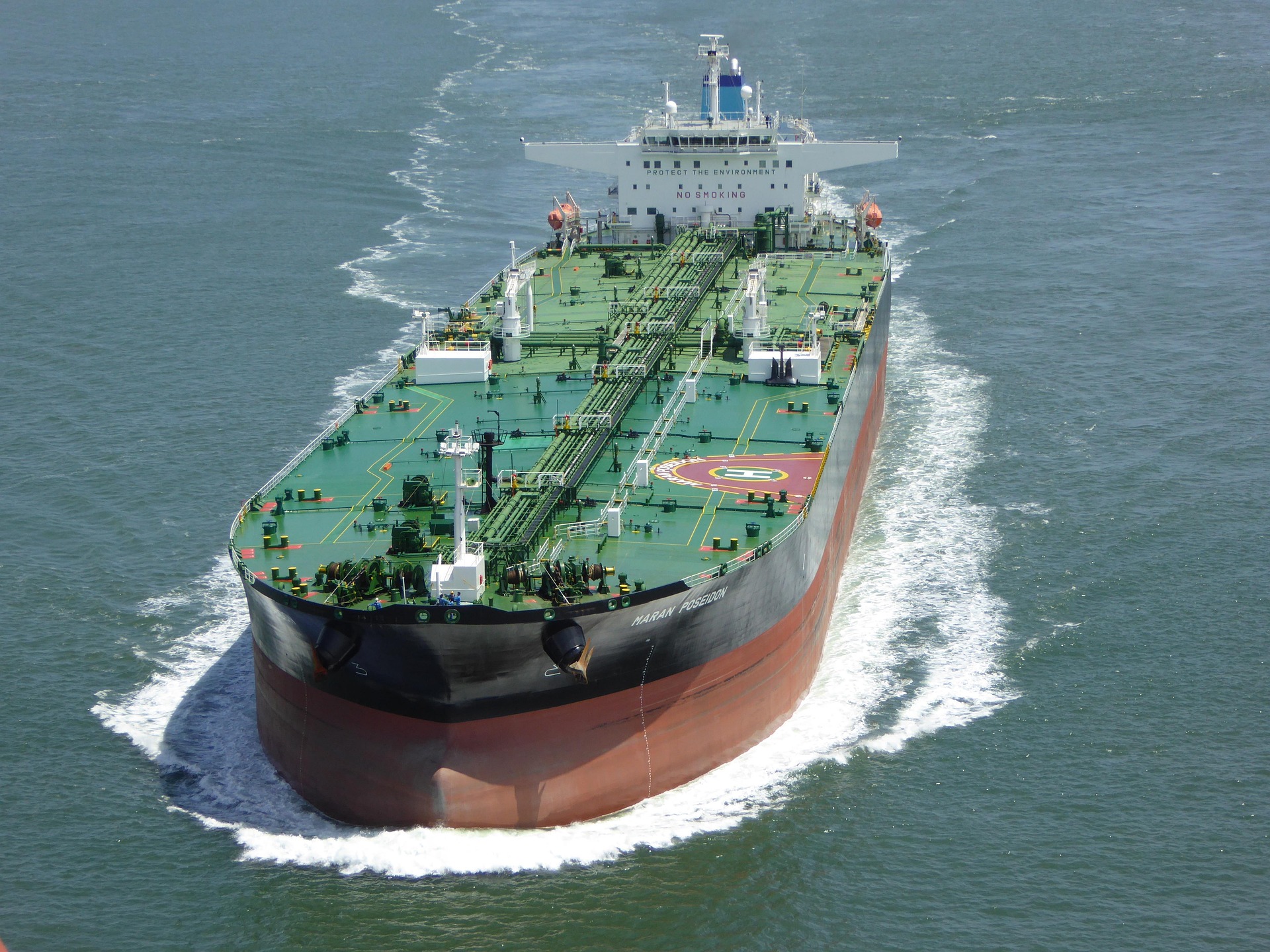
The History of Shipping and Maritime Trade: From Reed Boats to Container Ships
The sea connects. Long before roads or railways, before aircraft or telecommunications, the ocean was humanity's highway — the medium through which civilizations exchanged goods, ideas, diseases, and peoples across thousands of miles. The history of shipping and maritime trade is, in fundamental ways, the history of the world: of the Phoenicians who mastered the Mediterranean, the Arab traders who created an Indian Ocean commercial network that spanned from East Africa to China, the Portuguese who opened oceanic routes to Asia and the Americas, the British who built the world's largest commercial fleet and with it an empire, and the container revolution that created the integrated global economy of the twenty-first century.
Maritime trade has been the most powerful engine of globalization throughout recorded history. The spices on a medieval European nobleman's table, the cotton in a nineteenth-century English mill, the electronics assembled in a twenty-first-century Chinese factory and consumed in an American suburb — all traveled primarily by sea. The port cities through which maritime trade flowed — Venice and Genoa, Amsterdam, London, Hong Kong, Singapore, Rotterdam, Shanghai — became among the wealthiest and most culturally sophisticated places on earth precisely because of their position on the maritime trade routes.
This article traces the history of maritime trade and shipping from the earliest evidence of seaborne commerce through the age of sail, the steam revolution, the container revolution, and the global shipping industry of the present day.
The Earliest Maritime Trade: Ancient and Prehistoric Seafaring
The origins of maritime trade predate written history. Archaeological evidence suggests that Homo sapiens were sailing between islands in Southeast Asia at least 50,000 years ago — the first Australians arrived by sea, and the settlement of the Pacific islands required navigation across thousands of miles of open ocean. The earliest physical evidence of purpose-built watercraft includes dugout canoes dating to approximately 8,000 BCE and planked boats from Egypt dating to approximately 3,000 BCE.
The ancient Egyptians were among the earliest documented maritime traders. Egyptian shipbuilding technology, developed along the Nile and adapted for Mediterranean conditions, produced vessels of increasingly sophisticated construction. The Uluburun shipwreck, discovered off the Turkish coast and dated to approximately 1305 BCE, provides extraordinary evidence of Late Bronze Age maritime trade: the ship was carrying copper ingots from Cyprus, tin ingots from unknown origin, ebony logs from tropical Africa, jars of Canaanite origin containing terebinth resin, Egyptian and Canaanite jewelry, and pottery from across the eastern Mediterranean — a snapshot of commercial exchange across three continents in a single cargo.
The Phoenicians — the seafaring people of the Lebanese coast, centered on the cities of Tyre and Sidon — were the dominant maritime traders of the Mediterranean from approximately 1200 to 300 BCE. Phoenician merchants established trading posts and colonies from Cyprus to the coasts of North Africa (Carthage, founded approximately 814 BCE, became a major maritime power in its own right), Spain, and possibly Britain. They traded in purple dye (derived from the murex sea snail, which gave Phoenicia its Greek name), glass, cedar wood, metalwork, and textiles in exchange for silver, tin, amber, and other commodities unavailable in the Levant. Phoenician sailors are reported to have circumnavigated Africa for the Egyptian pharaoh Necho II around 600 BCE — a voyage that, if accurately reported, preceded the next documented circumnavigation by over 2,000 years.
Ancient Greece's maritime trade was organized around the city-states and their dependencies, with Athens, Corinth, and Rhodes as major trading centers. The Athenian economy of the fifth century BCE depended heavily on imported grain from the Black Sea region (Egypt, the Crimea, and the area around modern Ukraine), financed by silver from the mines at Laurion and manufactured goods from Athenian workshops. The trireme — the warship that defeated the Persians at Salamis in 480 BCE — was distinct from the round-hulled merchant vessels (holkades) that carried the bulk of Athenian trade.
Rome's Mediterranean trade system was the largest and most integrated in the ancient world. The Roman grain trade — supplying the city of Rome and other major cities with food — involved enormous fleets of grain ships from Egypt (the largest single source of Roman grain), North Africa, Sicily, and Sardinia. The Roman economic historian Karl Bücher estimated that Rome's grain imports at their peak exceeded one million tons per year, requiring a merchant fleet of astonishing scale. The amphorae found at Roman archaeological sites across Europe and the Mediterranean — terracotta jars that carried wine, olive oil, garum (fermented fish sauce), and other commodities — provide physical evidence of the extent of Roman maritime trade.
The Indian Ocean Trade Network: Connecting East and West
The Indian Ocean, connected to the Arabian Sea, the Persian Gulf, and the Red Sea, was the world's busiest maritime trading zone for most of the past two millennia — a vast commercial network linking East Africa, Arabia, India, Southeast Asia, and China through the predictable seasonal winds of the monsoon system.
The monsoon — the reversal of wind direction between summer and winter across the Indian Ocean, driven by differential heating of the land and sea — made long-distance sailing practical long before the compass was invented. A merchant sailing from Arabia or India in the summer could ride the southwest monsoon to the coasts of East Africa or South Asia and return on the northeast monsoon in the winter. This predictable seasonal pattern created a rhythm of trade that structured the economic and social life of the Indian Ocean littoral for centuries.
The earliest evidence of systematic Indian Ocean trade comes from archaeological sites in Mesopotamia, the Indus Valley, and Oman dating to approximately 2500 BCE. The Dilmun trade (centered on Bahrain) connected Mesopotamia with the Indus Valley civilization, trading in copper, carnelian, lapis lazuli, and textiles. The ancient Egyptians conducted trade expeditions to the land of Punt (probably in the Horn of Africa region, near modern Eritrea and Djibouti) from at least 2500 BCE, importing myrrh, ebony, gold, and exotic animals.
The Periplus of the Erythraean Sea — a Greek-language commercial guide to the Indian Ocean trade written by an unknown merchant around the first century CE — provides an extraordinarily detailed account of ports and commodities from the Red Sea to India and the East African coast. The Periplus describes established trading relationships, local rulers, currency customs, and the goods available at each port along the route. Its account of ports in East Africa (the "Azanian" coast), Arabia (particularly the port of Muza/Mocha, already a major spice trading center), India (Barygaza, modern Bharuch, and the ports of the Malabar coast), and Sri Lanka reflects a mature commercial system centuries old.
Arab and Persian merchants dominated the Indian Ocean trade from the seventh century CE onward, spreading Islam along the maritime trade routes as they sailed. Siraf (on the Persian Gulf coast of Iran), Hormuz, Aden, and Kilwa (in modern Tanzania) became major entrepôts through which commodities flowed between the producing regions and consuming markets. East African ports exported ivory, gold, slaves, and animal skins; South Asian ports exported textiles, spices, and gems; Southeast Asian ports exported pepper, nutmeg, cloves, camphor, and sandalwood; Chinese ports exported silk, porcelain, and later tea.
China's engagement with the Indian Ocean trade reached its most spectacular expression in the early fifteenth century with the voyages of Zheng He, the Muslim eunuch admiral who commanded seven massive expeditions from China's Yongle and Xuande emperors between 1405 and 1433. Zheng He's fleet — comprising "treasure ships" reportedly over 100 meters long (among the largest wooden ships ever built), accompanied by dozens of supply and escort vessels — visited Southeast Asia, India, Arabia, and East Africa, distributing Chinese goods and collecting exotic animals (including giraffes, presented as mythological "qilin" to the emperor), ambassadors, and tribute. The voyages demonstrated China's maritime capability and cosmopolitan curiosity, but were discontinued after 1433 due to the costs and the Confucian bureaucracy's suspicion of maritime commercial enterprise. Whether China would have launched an age of maritime exploration had the voyages continued is one of history's most intriguing counterfactuals.
The Age of Sail: European Expansion and Global Maritime Trade
The European maritime expansion of the fifteenth and sixteenth centuries — the Portuguese exploration of Africa's coasts and the sea route to India, Columbus's westward voyages to the Americas, and Magellan's circumnavigation — transformed maritime trade from a regional and inter-regional activity into a genuinely global system for the first time in history.
The drivers of European maritime expansion were both commercial and technological. The commercial motivation — finding direct sea routes to the spice-producing regions of Asia, bypassing the Arab and Venetian intermediaries who controlled the overland and Mediterranean routes — was essentially economic: the enormous markups on spices in European markets created powerful incentives for whoever could establish direct access. The technological foundations were the development of the caravel (a small, highly maneuverable sailing vessel capable of sailing into the wind), improvements in navigation (the magnetic compass, astrolabe, and later quadrant, allowing latitude determination by celestial observation), and increasingly accurate charts.
Portugal, under the sponsorship of Prince Henry "the Navigator" and his successors, systematically explored the African coast beginning in the 1420s. Bartolomeu Dias rounded the Cape of Good Hope in 1488, demonstrating that the Atlantic and Indian Oceans were connected. Vasco da Gama's voyage from Lisbon to Calicut (Kozhikode) in India and back in 1497-1499 — the first direct European sea voyage to Asia — established the route that would carry the Portuguese spice trade for the next century. Da Gama's cargo of spices on his return was worth approximately sixty times the cost of the expedition.
The Treaty of Tordesillas (1494), negotiated between Portugal and Spain under papal mediation, divided the world outside Europe between the two Iberian powers along a meridian 370 leagues west of the Cape Verde Islands — giving Spain the Americas and Portugal most of Africa, Asia, and Brazil. The treaty was largely ignored by the other European maritime powers (England, France, the Netherlands) that subsequently challenged Iberian dominance of oceanic trade.
The Dutch rise to maritime commercial supremacy in the seventeenth century was one of the most rapid and complete in history. The United Provinces (modern Netherlands), a small nation with limited natural resources, became the dominant commercial and maritime power in the world through a combination of financial innovation (the Amsterdam stock exchange, the bank of Amsterdam, and the joint-stock company), technological superiority in shipbuilding (the fluyt, a specialized cargo ship that carried more cargo with a smaller crew than competing designs), and aggressive commercial expansion. The Dutch East India Company (VOC, Vereenigde Oostindische Compagnie), founded in 1602 and often described as the world's first multinational corporation, at its peak controlled over half of all European trade with Asia, maintained its own fleet, army, and colonial administration, and paid dividends averaging eighteen percent per year over its nearly 200-year existence.
The British rise to maritime supremacy, which supplanted the Dutch from the late seventeenth century onward, rested on the combination of naval power (the Royal Navy became the world's largest and most effective fighting force), colonial acquisition (Britain's trading posts in India evolved into the territorial British Raj, while its Caribbean colonies produced sugar and its North American colonies produced tobacco and timber), and eventually industrial production (British manufactured goods — textiles, iron products, machinery — gave British merchants something to trade for the raw materials and foodstuffs of the wider world).
The slave trade — the transport of enslaved Africans to the Americas to work on plantations producing sugar, cotton, tobacco, and other commodities — was a major component of Atlantic maritime commerce from the sixteenth through the nineteenth century. The "triangular trade" carried manufactured goods from European ports to West Africa, enslaved people across the Middle Passage to the Americas, and plantation produce back to Europe. Approximately 12.5 million enslaved Africans were transported across the Atlantic between 1500 and 1900 in what was the largest forced migration in human history. The trade was profitable for merchants and colonial economies but inflicted incalculable suffering on its victims.
The Steam Revolution: Iron Ships and the Transformation of Shipping
The application of steam power to maritime transport — beginning in the early nineteenth century — transformed shipping as fundamentally as it transformed land transport, enabling larger, faster, more reliable vessels that were independent of wind and capable of operating on predictable schedules.
The first commercially successful steamboat was Robert Fulton's North River Steamboat (often called the Clermont), which made its inaugural voyage on the Hudson River between New York City and Albany in August 1807, covering 240 kilometers in about 32 hours. Fulton had worked with the Boulton & Watt firm in Britain to develop a practical steam engine installation for a boat, and his New York-Albany service was an immediate commercial success, demonstrating the steamboat's advantages in schedule reliability and weather independence on river and protected coastal routes.
The transition to oceangoing steam vessels was slower, because the early steam engines were so heavy and inefficient that ships could not carry enough coal for extended voyages and still have room for a commercial cargo. The first steamship to cross the Atlantic was the Savannah in 1819 — a sailing ship with auxiliary steam engines that ran under steam for only about 85 hours of its 29-day crossing. Not until the development of the compound expansion engine (which used steam twice, dramatically improving fuel efficiency) in the 1850s and 1860s did steam become economically competitive with sail for deep-sea cargo routes.
The shift from wood to iron (and subsequently steel) as the primary hull material, driven by the depletion of suitable timber for large ships and the increasing availability of cheap rolled iron from the expanding British iron industry, proceeded alongside the steam revolution. Isambard Kingdom Brunel's SS Great Britain (1843) was both the first ocean-going vessel with an iron hull and the first with a screw propeller — two innovations that together defined the future of large ship design. The screw propeller, more efficient than the paddle wheel in rough seas and not vulnerable to submersion during rolling, was adopted rapidly across the industry.
The clipper ship era — the brief golden age of fast, large sailing ships that competed with steamers on the most lucrative long-distance routes — reached its peak in the 1850s and 1860s. The American clipper ships, built in New England shipyards and optimized for the California gold rush and the China tea trade, were the fastest commercial vessels in the world: the Sovereign of the Seas set a 24-hour speed record in 1854 that stood for over a decade. But the clippers required favorable winds, could not match a steamer's schedule reliability, and were rapidly displaced when the opening of the Suez Canal in 1869 cut the distance from Britain to India by 7,000 kilometers — a route on which the canal's disadvantages for sailing ships (unfavorable winds and currents requiring auxiliary power) gave steamers a decisive advantage.
The Suez Canal, opened on November 17, 1869, after ten years of construction under Ferdinand de Lesseps and massive French investment, was one of the most transformative infrastructure projects in the history of maritime trade. By connecting the Red Sea to the Mediterranean, eliminating the need to round Africa's Cape of Good Hope, the canal reduced the sea distance from London to Bombay (Mumbai) from approximately 21,000 kilometers to approximately 11,600 kilometers, cutting voyage times and costs by nearly half. The canal instantly made the steamship economically superior to the sailing ship on the Europe-Asia route, accelerating the transition to steam power.
The Panama Canal, opened in August 1914 after a decade of construction by the United States (following France's failed earlier attempt), transformed Atlantic-Pacific trade by eliminating the need to round Cape Horn at the southern tip of South America. The canal reduced the sea route from New York to San Francisco from approximately 22,500 kilometers (via Cape Horn) to approximately 9,500 kilometers. The canal was initially limited to vessels approximately 275 meters long and 32 meters wide (the original Panamax size); a major expansion opened in 2016, adding a set of larger locks that can accommodate vessels up to approximately 366 meters long and 51 meters wide (the New Panamax or Neopanamax size), significantly expanding the canal's capacity and the size of vessels able to use it.
The development of the ocean liner — large passenger ships providing scheduled service between the world's major ports — created the first mass market for international travel. The White Star Line's RMS Titanic (1912), which sank on its maiden voyage after striking an iceberg with the loss of 1,517 lives, was both a monument to the ambitions of the Edwardian shipping industry and a demonstration of its hubris. The competition between the British Cunard Line and the German Hamburg-Amerika Linie for the Blue Riband (the prize for the fastest transatlantic crossing) drove continuous improvements in ship size, speed, and luxury. The great ocean liners — the Mauritania, the Ile de France, the Queen Mary, the Normandie — became floating symbols of national prestige as well as highly profitable commercial enterprises, until the advent of commercial jet aviation in the late 1950s rendered the ocean liner commercially unviable for passenger transport almost overnight.
The Tanker and Dry Bulk Revolution
The growth of industrial economies in the late nineteenth and twentieth centuries created massive demand for bulk commodities — petroleum, coal, iron ore, grain — that could only be transported economically in large specialized vessels.
The petroleum tanker emerged as a distinct vessel type in the 1880s, as the kerosene and subsequently fuel oil trade required transport of flammable liquids in quantities that made it impractical to ship them in barrels. The first purpose-built oil tanker was the Zoroaster, built in 1878 and operated by the Nobel brothers (of Nobel Prize fame) on the Caspian Sea. The first ocean-going oil tanker was the Glückauf, built in Britain in 1886, which pioneered the design of a vessel with oil-carrying compartments (tanks) integrated into the hull rather than separate containers.
The discovery of oil in the Middle East — Persia (Iran) in 1908, Iraq in 1927, and Saudi Arabia in 1938 — and the enormous growth in petroleum demand for motor vehicles, aviation, and industrial uses created a tanker trade of unprecedented scale. The VLCC (Very Large Crude Carrier) and ULCC (Ultra Large Crude Carrier) — tankers of up to 500,000 deadweight tons, capable of carrying two million barrels of oil — emerged in the 1960s and 1970s as the most efficient means of moving crude oil from the Persian Gulf to consuming countries. The 1973 OPEC oil embargo, which quadrupled oil prices and caused a severe recession in tanker demand as oil consumption fell, demonstrated the cyclical vulnerability of the tanker market.
The dry bulk carrier — designed to transport unpacked, unpackaged bulk commodities such as coal, iron ore, grain, and fertilizer — similarly grew in size and scale through the twentieth century. The post-World War II Japanese economic miracle was powered in part by vast imports of iron ore and coking coal carried in large bulk carriers; Japan invested heavily in both the steel industry that processed the imports and the shipbuilding industry that built the vessels to carry them. Capesize bulk carriers (too large to transit the Suez or Panama Canal and required to round the Cape of Good Hope or Cape Horn) of over 170,000 DWT became standard for iron ore and coal transport on major intercontinental routes.
The liquefied natural gas (LNG) carrier — a highly specialized vessel equipped with insulated tanks capable of maintaining liquefied natural gas at -163°C — became an important vessel type as the global trade in LNG grew from the 1960s onward. LNG carriers are among the most technically complex and expensive commercial vessels, and the LNG trade has become an important component of global energy supply, particularly as countries seek to reduce reliance on coal and oil.
The Container Revolution: Malcom Mclean and the Birth of Modern Shipping
The introduction of the shipping container — a standardized metal box of fixed dimensions that could be loaded once at a factory, transported by truck or rail to a port, loaded directly onto a ship without unpacking, sailed to the destination port, and transferred directly to another truck or train — was the most significant innovation in the history of maritime trade since the development of the deep-sea sailing ship.
Before containerization, the loading and unloading of cargo ships was a labor-intensive, time-consuming, and expensive process. Break-bulk cargo — goods packed in sacks, barrels, bales, boxes, and crates of diverse sizes and shapes — had to be physically handled by gangs of longshoremen who carried, stacked, and unstacked individual pieces of cargo. A ship in port might spend as much time loading and unloading as at sea; the labor costs of cargo handling typically accounted for a significant fraction of total shipping costs; theft of cargo during the handling process was endemic.
Malcom McLean (1913-2001), a North Carolina trucking entrepreneur, conceived the idea of the intermodal container from his own frustrations with the inefficiencies of port operations while waiting for his truck's cargo to be loaded onto ships. McLean's insight was not merely to use boxes for cargo (the concept had been discussed for decades and partially implemented in some domestic shipping operations) but to design an entire integrated system — standardized boxes, specialized container ships with cell guides to stack the boxes, container cranes at ports, and the legal and commercial frameworks to make intermodal transport practical.
McLean sold his trucking company and acquired Pan Atlantic Steamship Company in 1955. On April 26, 1956, his converted tanker Ideal X left the port of Newark, New Jersey, carrying fifty-eight metal container boxes on its deck and four containers below deck — the first successful containership voyage. The cost advantage was immediate and dramatic: the labor cost of loading goods on the Ideal X was approximately $0.16 per ton, compared to approximately $5.83 per ton for conventional break-bulk loading — a cost reduction of roughly 97 percent. By 1966, McLean's Sea-Land Service (as the company had been renamed) was operating transatlantic container services.
The international standardization of container dimensions — 20-foot and 40-foot lengths, 8 feet wide and 8.5 feet high (with variants up to 9.5 feet high for "high cube" containers) — was achieved through the International Organization for Standardization (ISO) in 1968. The TEU (twenty-foot equivalent unit) became the standard measure of container shipping capacity. A container that could be transferred between ships, trains, and trucks without adjustment, using standardized twist locks, cranes, and chassis, created the global intermodal transport system.
The container revolution had profound economic and social effects. The fall in the cost of international shipping — from the equivalent of approximately $420 per TEU in 1960 to approximately $30-50 per TEU in the 1990s (in inflation-adjusted terms) — was a major driver of the growth of international trade. Products that had previously been too expensive to source from distant locations (because the transport cost exceeded the manufacturing cost advantage) could now be economically traded globally. The shift of labor-intensive manufacturing from high-wage countries to low-wage developing countries — particularly in Asia — that drove the economic rise of South Korea, Taiwan, China, and others was dependent on cheap container shipping. Marc Levinson, in his book The Box (2006), argued that the container did as much to create the modern global economy as any policy change or technological innovation.
The containerization of the shipping industry also devastated the traditional port labor force. Longshoremen (dock workers), who had performed break-bulk cargo handling for generations and represented a powerful and militant labor force in port cities from New York to Liverpool to Hamburg, found their work disappearing as container cranes replaced their labor. The transformation of port labor relations — from large, politically powerful longshore unions to smaller workforces of skilled crane operators — was one of the most significant labor market transformations of the postwar decades.
Container shipping stimulated the development of new port facilities designed specifically for container handling. The traditional port, with its wharves and warehouses in the heart of the city, gave way to purpose-built container terminals — often on reclaimed land or in greenfield locations away from city centers — equipped with massive gantry cranes, automated stacking cranes, and vast container yards. Rotterdam (Maasvlakte), Hamburg, Singapore, Busan, Shanghai, and Guangzhou/Yantian developed into the world's busiest container ports, handling tens of millions of TEUs annually.
Modern Shipping: Giant Vessels and Global Supply Chains
The past half-century has seen the relentless growth of container ship size, driven by the economics of scale: larger ships have lower cost per TEU, and operators constantly sought to exploit that advantage by building ever-larger vessels.
The first generation of container ships (1956-1970) carried a few hundred TEUs. By the 1990s, the largest ships were carrying approximately 6,000 TEUs. The early 2000s saw the deployment of 10,000-12,000 TEU vessels; by 2013, the Maersk Triple-E class vessels of 18,000+ TEUs were the largest ships afloat. The current generation of ultra-large container vessels (ULCVs), such as the HMM Algeciras (commissioned in 2020, 23,964 TEUs), represent the practical limit imposed by the dimensions of the Panama Canal's expanded locks.
The scale of modern container shipping is difficult to fully comprehend. A single ULCV can carry enough consumer goods to fill approximately 11,000 trucks. At any given moment, approximately 20 million loaded containers are at sea, carrying virtually every category of manufactured good. The global container shipping fleet handles approximately 2 billion TEUs of cargo per year, accounting for the majority of the world's manufactured goods trade by value.
The shipping industry is dominated by a small number of very large carriers following extensive consolidation. Three alliances — 2M (Maersk and MSC), Ocean Alliance (CMA CGM, COSCO, Evergreen, and OOCL), and THE Alliance (Hapag-Lloyd, ONE, and Yang Ming) — controlled approximately 85 percent of global container capacity by 2022. MSC (Mediterranean Shipping Company) became the world's largest container carrier by capacity in 2022, surpassing A.P. Moller-Maersk (Danish) which had held the top position for years.
The COVID-19 pandemic exposed the fragility of global maritime supply chains in ways that generated major economic disruptions. Port congestion — caused by a surge in consumer goods demand combined with reduced port labor availability during the pandemic — created massive backlogs, particularly at US West Coast ports. Container freight rates, which had been relatively stable at $1,000-2,000 per TEU before the pandemic, surged to over $10,000-15,000 per TEU on major trade lanes in late 2021, contributing significantly to global inflation. The Suez Canal blockage caused by the grounding of the container ship Ever Given in March 2021 — which blocked the canal for six days, holding up an estimated $9.6 billion of trade per day — demonstrated how a single point of failure could affect the global supply chain.
The role of China in the global shipping industry has grown enormously. China is the world's largest exporter and manufacturer of container ships; the COSCO (China Ocean Shipping Company) group is one of the world's three largest container carriers; and Chinese state-owned companies have invested in ports around the world through the Belt and Road Initiative, acquiring stakes in the port of Piraeus in Greece, Hambantota in Sri Lanka, and ports in Africa and Southeast Asia. Western governments have grown increasingly concerned about Chinese strategic interest in global port infrastructure, particularly as commercial ports potentially have military applications.
The Maritime Industry by Region
Maritime trade is inherently global, but the principal shipping nations and maritime clusters have distinct histories and specializations.
GREECE: Greece has been a seafaring nation since antiquity, and Greek shipowners collectively control the world's largest merchant fleet — approximately 16-17 percent of global gross tonnage by 2022. Greek shipping families — Onassis, Niarchos, Livanos, Latsis, and hundreds of others — have operated on the basis of personal ownership, family control, and entrepreneurial risk-taking rather than the corporate model of most other major shipping nations. Athens (specifically, the Piraeus port complex) is the world's leading center for shipping management, with more than half of the world's maritime companies headquartered or represented there.
CHINA: China's rise as a maritime power mirrors its broader economic rise. China is the world's largest shipbuilding nation (building over 40 percent of global tonnage in 2022), the largest exporter (generating an enormous proportion of the container trade), and the operator of major shipping companies (COSCO, China Merchants). China's Belt and Road Initiative has included significant investment in ports around the world, extending Chinese maritime commercial and strategic reach.
JAPAN: Japan was the world's dominant shipbuilding nation from the 1960s through the 1990s, building the massive bulk carriers, tankers, and container ships that powered the global economy. Japanese shipyards (Mitsubishi, IHI, Kawasaki, Hitachi) pioneered many of the most important shipbuilding technologies of the modern era. Japan's shipbuilding position has been progressively challenged by South Korean and Chinese yards since the 1990s.
SOUTH KOREA: South Korean shipyards — Hyundai Heavy Industries, Samsung Heavy Industries, Daewoo Shipbuilding and Marine Engineering (DSME) — are among the world's most technologically advanced, specializing in high-value vessels including LNG carriers, large container ships, and drillships. South Korea overtook Japan as the world's largest shipbuilding nation in terms of order book in the early 2000s.
NORWAY: Norway has been a maritime nation since the Viking age, and modern Norway maintains a disproportionate role in global shipping relative to its size. Norwegian shipowners control a significant share of the world's specialized fleet (offshore vessels, chemical tankers, car carriers), and Oslo is a leading center for maritime law, insurance (the Norwegian Hull Club), and offshore technology.
SINGAPORE: Singapore's position at the Strait of Malacca — through which approximately one-third of global seaborne trade passes — has made it the world's busiest port by vessel calls and a critical hub for ship bunkering, ship repair, and maritime services. The Port of Singapore Authority (PSA) manages multiple container terminals that collectively rank among the world's busiest, and Singapore has developed a sophisticated maritime services cluster including shipbroking, maritime law, and offshore engineering.
Maritime Regulation, Safety, and the Imo
The global maritime industry is regulated primarily through the International Maritime Organization (IMO), a United Nations specialized agency established in 1948 and active from 1959, which develops international conventions and standards for maritime safety, security, and environmental performance.
The IMO's principal conventions include: the Safety of Life at Sea (SOLAS) convention, originally adopted in 1914 following the Titanic disaster and comprehensively updated multiple times, which sets minimum standards for ship construction, equipment, and operation; the International Convention for the Prevention of Pollution from Ships (MARPOL), which regulates oil spills, sewage, garbage, air emissions, and other forms of ship-source pollution; the Standards of Training, Certification and Watchkeeping (STCW) convention, which sets minimum qualifications for seafarers; and the Maritime Labour Convention (MLC), which establishes minimum standards for seafarers' working conditions.
Maritime accidents have driven many of the industry's safety improvements. The MV Derbyshire — a bulk carrier that sank in Typhoon Orchid in the South China Sea in 1980 with the loss of 44 lives, in what was the largest British vessel lost at sea — led to improved understanding of the structural vulnerabilities of large bulk carriers and enhanced hatch cover standards. The MSC Napoli container ship, which broke up and was beached in 2007, revealed the dangers of container ships operating in overloaded or poorly documented cargo conditions. The MOL Comfort — a post-Panamax container ship that broke in two and sank in the Indian Ocean in 2013 while carrying 7,041 TEUs — triggered extensive investigation of container ship structural standards and hull stress monitoring.
The Costa Concordia disaster of January 2012 — in which the cruise ship struck rocks off the island of Giglio, Italy, and capsized, killing 32 people — resulted in significant changes to cruise ship safety requirements, evacuation procedures, and the criminalization of the captain's abandonment of his vessel.
Environmental regulation has become an increasingly important driver of maritime industry change. The IMO's MARPOL Annex VI, which sets limits on sulphur dioxide (SO2) and nitrogen oxide (NOx) emissions from ships, has driven a transition from high-sulphur fuel oil to low-sulphur fuels (or, alternatively, the installation of exhaust gas cleaning systems, known as "scrubbers") as the IMO's global sulphur cap reduced permissible sulphur content from 3.5 percent to 0.5 percent in January 2020. The IMO's Initial GHG Strategy, adopted in 2018 and enhanced in 2023, targets a 50 percent reduction in total greenhouse gas emissions from international shipping by 2050 compared to 2008 levels, and net zero emissions by or around 2050.
PIRACY: The resurgence of maritime piracy — particularly off the coast of Somalia from 2008 to approximately 2012 and in the Gulf of Guinea off West Africa in subsequent years — created major security challenges for the shipping industry. At the peak of Somali piracy in 2011, pirates attacked approximately 237 vessels, took 555 sailors hostage, and collected an estimated $160 million in ransoms. The response — including international naval coalitions (EU NAVFOR, NATO, Combined Maritime Forces), the deployment of armed guards on vessels, and improved security practices — substantially reduced Somali piracy by 2014-2015.
The Economics of Shipping
The shipping industry operates on an extreme cyclical pattern, driven by the interaction between the slow adjustment of fleet supply (ships take 2-3 years to build and last 20-25 years) and the volatile demand created by economic cycles, trade patterns, and commodity price movements.
The Baltic Dry Index (BDI) — a daily index published by the Baltic Exchange in London, reflecting the cost of shipping dry bulk commodities (coal, iron ore, grain) on major routes — is widely followed as a leading indicator of global trade activity and industrial demand. The BDI reached an all-time high of 11,793 in May 2008, just before the global financial crisis; collapsed to 663 within a year; recovered to over 5,000 by 2009; and has cycled through multiple boom-bust cycles since.
Ship finance — the funding of vessel acquisitions, which individually cost between $50 million (a small bulk carrier) and $200+ million (an LNG carrier or ultra-large container ship) — is provided through a combination of bank debt, ship mortgages, export credit agency financing, and equity from owners and investors. The German KG (Kommanditgesellschaft) fund structure, through which retail investors in Germany could fund ship purchases in return for tax benefits and shipping income, channeled enormous amounts of capital into the shipping industry from the 1980s through the early 2010s, contributing to significant overbuilding and the severe freight rate depression of the 2010s.
The shipping industry's labor force — approximately 1.9 million seafarers working aboard international merchant vessels — is one of the most international in any industry. Seafarers from the Philippines, China, Indonesia, and other Asian countries provide the majority of the world's merchant navy labor; Philippine seafarers alone account for approximately 25 percent of the global total. Seafarers typically work on 6-12 month contracts, separated from their families for extended periods, working in physically demanding and sometimes hazardous conditions.
Key Figures in Maritime History
The history of maritime trade and shipping has been shaped by navigators, merchants, engineers, entrepreneurs, and pirates whose contributions define the industry.
Prince Henry the Navigator (1394-1460), the Portuguese prince who sponsored and organized the systematic exploration of Africa's Atlantic coast, established the institutional and organizational framework for European maritime expansion. Henry's school of navigation at Sagres — possibly more legend than reality, but representing a genuine patronage of cartography, navigation, and maritime technology — motivated the explorations that would eventually lead to the Cape Route to India and the European discovery of the Americas.
Vasco da Gama (c. 1460-1524) commanded the first European sea voyage to India (1497-1499), establishing the Cape Route that transformed European access to the spice trade and began the Portuguese commercial empire in Asia. Da Gama's voyages were commercially transformative but also brutal: he is recorded to have burned a ship carrying Muslim pilgrims returning from Mecca with 400 people aboard.
Ferdinand Magellan (c. 1480-1521) commanded the expedition (1519-1522) that first circumnavigated the globe, definitively demonstrating Earth's spherical nature and the continuity of the world's oceans. Magellan did not survive to complete the circumnavigation (he was killed in the Philippines in 1521); his ship and eighteen survivors returned to Spain under Juan Sebastián Elcano, completing the first circumnavigation in history.
Isambard Kingdom Brunel (1806-1859), the Victorian engineer whose work defined the industrial age, built three ships that each represented the largest vessel in the world at their time of launch: the SS Great Western (1838, the first steamship designed for transatlantic service), the SS Great Britain (1843, the first ocean-going iron-hulled, screw-propelled vessel), and the SS Great Eastern (1858, at 211 meters long and 32,000 gross tons the largest ship in the world for 40 years, used to lay the transatlantic telegraph cable). Brunel's ships embodied the engineering principles — iron hulls, screw propellers, larger size — that defined the future of shipping.
Malcom McLean (1913-2001), the trucking entrepreneur who invented the modern shipping container and the containership system, was perhaps the single most economically important figure in the history of transportation. The cost reduction he achieved — from $5.83 per ton for break-bulk handling to $0.16 per ton for containerized loading — multiplied into trillions of dollars of reduced trade costs over subsequent decades and made the global economy possible in its current form.
Arnold Maersk McKinney Møller (1913-2012), the Danish shipping magnate who built A.P. Moller-Maersk into the world's dominant container shipping line, represented the entrepreneurial vision and discipline that transformed the fragmented shipping industry of the mid-twentieth century into the consolidated global giants of the present.
Navigation Technology: from Stars to Gps
Navigation — the determination of a vessel's position, course, and destination — has been one of the most critical technical challenges in the history of seafaring, and the progressive improvement of navigational technology has directly expanded the range and reliability of maritime trade.
Early mariners navigated by landmarks (coastal pilotage), the stars (celestial navigation), and the pattern of winds, currents, waves, and bird sightings that experienced sailors learned to read. Polynesian navigators crossed thousands of miles of open Pacific Ocean to settle Hawaii, Easter Island, and New Zealand using these techniques, without any mechanical instruments. Mediterranean sailors of antiquity used stars (particularly Polaris, the North Star) for latitude determination and maintained close familiarity with coastal routes.
The magnetic compass, introduced to European navigation from China via Arab traders around 1200 CE, allowed sailors to maintain a heading independent of visibility, making navigation possible in fog and cloudy conditions. The compass transformed open-ocean sailing, enabling the European maritime expansion of the fifteenth century.
The measurement of longitude — the east-west position of a vessel — was the great unsolved problem of navigation for centuries. Latitude could be determined by measuring the angle of the North Star (in the northern hemisphere) or the sun above the horizon; longitude required knowing the exact time at a reference meridian and comparing it with local time. The problem was that mechanical clocks of the seventeenth and eighteenth centuries could not maintain accuracy over months at sea (temperature changes, humidity, and motion affected their rate). The prize offered by the British Parliament in the Longitude Act of 1714 — £20,000 for a method that could determine longitude to within half a degree at sea — motivated John Harrison's development of the marine chronometer, a highly accurate clock that could keep Greenwich time throughout a sea voyage. Harrison's H4 chronometer (1759) solved the longitude problem; Captain James Cook used it on his Pacific voyages and praised its accuracy.
The development of radio navigation — which allowed vessels to determine their position by receiving radio signals from known shore stations — began in the early twentieth century. LORAN (Long Range Navigation), developed during World War II, provided positioning coverage over large ocean areas through networks of paired shore-based transmitters. OMEGA, DECCA, and other radio navigation systems were developed through the Cold War era.
The Global Positioning System (GPS), a US Department of Defense satellite constellation that became fully operational in 1995 and was opened to civilian use (with the intentional degradation called "Selective Availability" removed in 2000), transformed maritime navigation as it transformed all geolocation. A GPS receiver anywhere in the world can determine its position to within meters and its velocity to within centimeters per second, at essentially no marginal cost. Modern ships use GPS (or its Russian equivalent GLONASS, Chinese BeiDou, or European Galileo) as the primary position reference, integrated with electronic chart display and information systems (ECDIS) that display the ship's position on digital navigational charts in real time.
Automatic Identification System (AIS), mandatory on most commercial vessels since 2004, broadcasts a vessel's identity, position, course, speed, and other information on VHF radio frequencies, allowing other vessels and coastal authorities to track ship movements in real time. AIS has transformed maritime domain awareness — the ability of authorities to know where ships are and what they are doing — and underpins modern vessel traffic services, collision avoidance, and search and rescue operations.
Shipping and the Environment
The environmental impact of shipping — oil spills, air emissions, noise, ballast water, and climate change — has become an increasing focus of regulation and industry practice.
Oil spills have been among the most dramatic and damaging environmental impacts of maritime trade. The Torrey Canyon disaster of 1967 — in which the tanker ran aground off the Scilly Isles in Britain, spilling 119,000 tonnes of crude oil and contaminating 180 kilometers of French and British coastline — was the world's first major supertanker oil spill and demonstrated the environmental damage that large tanker accidents could cause. The Amoco Cadiz spill of 1978 (230,000 tonnes, off the coast of Brittany) and the Exxon Valdez spill of 1989 (37,000 tonnes, in Prince William Sound, Alaska — far smaller than several other accidents but in particularly ecologically sensitive water) drove major improvements in tanker construction standards (double hulls), oil spill response capabilities, and the international legal regime for oil pollution compensation (the International Oil Pollution Compensation Funds, IOPC Funds).
Shipping's air emissions — sulphur dioxide, nitrogen oxides, and particulate matter from burning heavy fuel oil — are a significant contributor to air quality problems in coastal areas and port cities. The IMO's progressive tightening of sulphur limits in its Emission Control Areas (North Sea, Baltic Sea, North American coasts) and globally has driven the adoption of low-sulphur fuels and scrubber systems. The global 0.5 percent sulphur cap that took effect in January 2020 significantly reduced shipping's SO2 emissions, with estimated health benefits of preventing approximately 570,000 premature deaths per year.
Climate change has emerged as the most significant long-term environmental challenge for the shipping industry. International shipping currently accounts for approximately 2.9 percent of global greenhouse gas emissions. The IMO's 2023 Revised GHG Strategy targets net-zero emissions from international shipping by or around 2050, requiring the adoption of zero- or near-zero-emission fuels and propulsion technologies. The leading candidates include: liquefied natural gas (LNG) as a transitional fuel (lower carbon than fuel oil but still a fossil fuel); ammonia (potentially zero-carbon if produced from renewable energy); methanol (also potentially zero-carbon from renewable sources); and hydrogen. Each of these alternatives presents significant challenges in fuel availability, storage, handling, and the retrofitting or replacement of existing vessel propulsion systems.
Ballast water — seawater taken on by ships to maintain stability when carrying light loads, and discharged at destination ports — poses a major ecological threat by transporting invasive species between ecosystems. The IMO's Ballast Water Management Convention (effective 2017) requires ships to treat their ballast water before discharge to eliminate or reduce the viable organisms transported.
Underwater noise from ships — propeller cavitation and machinery noise transmitted through water — has been identified as a significant source of disturbance to cetaceans (whales and dolphins) and fish, interfering with communication, navigation, and foraging. Slowing ships down (slow steaming) reduces both noise and fuel consumption; the IMO's Carbon Intensity Indicator (CII) regulations (effective 2023) incentivize fuel efficiency measures that also reduce underwater noise.
The Future of Shipping
The shipping industry of the mid-twenty-first century will be shaped by decarbonization imperatives, automation and digitalization, geopolitical realignment, and the continued growth of seaborne trade in Asia and Africa.
The decarbonization of shipping is the industry's most pressing long-term challenge. The IMO's 2050 net-zero target, the EU's inclusion of shipping in its Emissions Trading System from 2024, and the Poseidon Principles (a framework for shipping finance that ties lending to Paris Agreement targets) are creating regulatory and financial pressure for rapid adoption of zero-emission technologies. Maersk, the world's largest container carrier, has ordered vessels designed to run on methanol (a lower-carbon fuel that can be produced from renewable energy) and has set a net-zero 2040 target. MSC, CMA CGM, and other major carriers have similar commitments. The fuel technology that will dominate decarbonized shipping — ammonia, green methanol, green hydrogen, or a combination — remains to be determined by technology costs, infrastructure development, and regulatory signals.
Autonomous and remotely operated ships represent a technology frontier that could transform shipping economics. Rolls-Royce (now Kongsberg Maritime), Yara International (with its Yara Birkeland all-electric, autonomous container ship), and several research projects have demonstrated autonomous vessel operations in coastal and port environments. The full autonomous operation of large ocean-going vessels faces both technical challenges (sensor redundancy, safe behavior in complex environments) and regulatory challenges (the COLREGS collision avoidance rules were written assuming human watchkeepers). The International Maritime Organization has been developing regulatory frameworks for Maritime Autonomous Surface Ships (MASS).
The digitalization of shipping — electronic bills of lading, blockchain-based trade documentation, AI-assisted route optimization, predictive maintenance, and remote vessel monitoring — is progressing, though the conservative culture of maritime trade (paper bills of lading have legal primacy in most jurisdictions) has slowed some digital transitions. The COVID-19 pandemic accelerated adoption of digital documentation and remote inspection practices.
The Belt and Road Initiative's maritime component — the "Maritime Silk Road" — reflects China's strategic ambition to secure and shape the maritime infrastructure through which its trade flows. Chinese investment in ports from Piraeus to Hambantota to Djibouti has raised concerns in Western capitals about the potential military and strategic implications of Chinese control of critical maritime chokepoints.
The enduring fundamental reality of shipping is that it is the arterial system of the global economy. Approximately 80-90 percent of world trade by volume moves by sea; without shipping, the global economy as currently structured would be impossible. The container ship, the bulk carrier, the LNG tanker, and the offshore vessel are as indispensable to twenty-first century civilization as the merchant galleon was to the commercial revolution of the seventeenth century. However the propulsion technology and ownership patterns evolve, the sea lane will continue to be the world's most important highway.
Naval Warfare and Maritime Power
The history of maritime trade has always been intertwined with naval warfare, because control of the sea lanes confers decisive commercial and strategic advantages. Nations that dominated the sea could protect their own trade while disrupting that of their enemies, project military power to distant theaters, and maintain global commercial empires.
The first major naval battle in recorded history was the Battle of the Nile Delta (c. 1175 BCE), in which Egyptian forces under Ramesses III repelled the Sea Peoples — a mysterious confederation of maritime raiders who threatened the eastern Mediterranean. Naval power was central to the conflicts of ancient Greece: the Athenian victory at Salamis in 480 BCE, where a numerically inferior Greek fleet defeated the Persian fleet using superior tactical skill and knowledge of local waters, saved Greek civilization from Persian conquest. The Athenian navy — funded by the silver mines at Laurion, maintained by the tribute of the Delian League — was the foundation of Athenian commercial and political power in the fifth century BCE.
The Roman conquest of the Mediterranean began with the construction of a navy. Rome was fundamentally a land power, and the First Punic War (264-241 BCE) forced Rome to build its first major fleet from scratch, reportedly copying the design of a captured Carthaginian quinquereme. The naval innovations Rome introduced — the corvus (a boarding bridge that allowed Roman soldiers to fight hand-to-hand on enemy ships), better crew training, and eventually numerical superiority — gave Rome mastery of the Mediterranean (the Roman mare nostrum, "our sea") that it would maintain for centuries.
The Battle of Trafalgar (October 21, 1805) — in which the British fleet under Admiral Horatio Nelson defeated the combined French and Spanish fleets off Cape Trafalgar, Spain — secured British naval supremacy for over a century. Nelson's innovative tactics (attacking the combined fleet in two columns perpendicular to its line, "crossing the T" twice) were audacious and decisive; Nelson's death at the moment of victory made Trafalgar one of the most celebrated events in British history. The naval supremacy established at Trafalgar underpinned the British commercial empire for the next hundred years, ensuring that British merchant ships could trade globally without significant threat of interference.
The First World War at sea was dominated by the submarine — the U-boat (Unterseeboot) — which Germany deployed to attack the British merchant shipping on which Britain depended for food and raw materials. Germany's unrestricted submarine warfare campaign of 1917, in which U-boats sank Allied and neutral ships without warning, brought the United States into the war but came close to strangling Britain. Allied countermeasures — the convoy system, improved depth charges, hydrophone detection — eventually reduced U-boat effectiveness, but German submarines sank over 5,700 Allied merchant vessels during the war.
The Battle of the Atlantic in World War II (1939-1945) was the longest continuous campaign in military history, as Germany's U-boats attempted to sever Britain's Atlantic supply lines. In the worst months of 1942, U-boats were sinking Allied shipping faster than it could be replaced; in 1942 alone, 1,161 Allied ships (6.26 million gross tons) were sunk. The Allied response — improved sonar (ASDIC), radar that could detect submarines on the surface, long-range patrol aircraft, aircraft carriers providing air cover across the Atlantic, cryptanalysis of German naval Enigma signals at Bletchley Park, and the convoy system — gradually turned the tide. By May 1943, the Battle of the Atlantic had decisively turned against Germany, with U-boats suffering unsustainable losses.
Contemporary maritime security challenges include state-sponsored piracy (the South China Sea territorial disputes and Chinese coast guard assertiveness against fishing vessels of neighboring states), Iranian attempts to interdict Gulf shipping, and the use of sea-launched cruise missiles in regional conflicts. The continued importance of maritime chokepoints — the Strait of Hormuz (through which approximately 21 percent of global petroleum trade passes), the Strait of Malacca, the Bab el-Mandeb (the Red Sea entrance, through which vessels traveling the Suez route must pass), and the Suez and Panama Canals — makes maritime security a permanent dimension of great power competition.
Port History and the World's Great Ports
Ports are the nodes through which maritime trade meets land transport, and the history of the world's great ports mirrors the history of global commerce.
Venice dominated Mediterranean trade from the ninth through the sixteenth centuries, exploiting its position at the head of the Adriatic and its unique political stability to build a commercial empire that stretched from the Black Sea to Alexandria. The Arsenal (Arsenale di Venezia), established in the twelfth century and reaching its peak in the sixteenth century, was the world's first industrial shipyard — an assembly-line facility capable of fitting out a complete galley in a single day from prefabricated components. The Arsenal gave Venice a naval and commercial capacity that maintained its position as a major maritime power centuries after larger and better-resourced states might have displaced it.
Amsterdam's rise to commercial dominance in the seventeenth century was based on the combination of its port's accessibility, the financial innovations of the Amsterdam Exchange Bank and the Amsterdam Stock Exchange, and the commercial aggression of the VOC. At its peak, Amsterdam handled approximately half of all European seaborne trade, and the Dutch merchant fleet was larger than those of England, France, Scotland, and the German states combined.
Rotterdam became the world's busiest port (by cargo tonnage) from 1962 to 2004, when it was surpassed by Shanghai. Rotterdam's position — at the mouth of the Rhine, providing access to the industrial heartland of Europe — and the construction of the Maasvlakte (a massive reclaimed land port extension built into the North Sea) made it Europe's primary gateway for container and bulk commodity trade. Rotterdam handles approximately 450 million tonnes of cargo per year and is the most important oil refining and chemical industry cluster in Europe.
Shanghai surpassed Rotterdam as the world's busiest port in 2005 and has widened its lead since. The Port of Shanghai — consisting of multiple terminals including the Yangshan Deep Water Port (built on reclaimed islands in Hangzhou Bay, connected to the mainland by the world's longest sea bridge) — handles approximately 47 million TEUs per year, making it the world's busiest container port by a significant margin, a position that reflects China's role as the world's largest exporter and manufacturer.
Singapore's port — the world's second-busiest container port and the world's busiest for ship calls and bunkering — handles approximately 37 million TEUs per year and over 130,000 vessel arrivals annually. Singapore's strategic position at the Strait of Malacca, its free trade policies, world-class port infrastructure, and sophisticated maritime services cluster have made it the hub of Southeast Asian and transoceanic shipping.
The transformation of port technology — from traditional break-bulk wharves to fully automated container terminals — represents one of the most dramatic applications of robotics and automation in any industry. The Port of Rotterdam's Maasvlakte 2 and ECT Delta terminals use automated stacking cranes (ASC) and automated guided vehicles (AGV) to handle containers with minimal human labor; Qingdao Port in China has developed fully automated container terminals in which no human workers are present in the operating area, with operations managed entirely by remote control and AI systems. The "dark terminal" — operating twenty-four hours a day without lighting because no humans are present — represents the leading edge of port automation.
Shipbuilding: the Technology of Building Ships
Shipbuilding — the design and construction of vessels for commercial and military purposes — has been a major industry throughout the industrial age, and the shift of the world's shipbuilding capacity from Europe and North America to East Asia (Japan, South Korea, and China) over the past fifty years is one of the most striking examples of industrial relocation in economic history.
Traditional wooden shipbuilding, which produced the vessels of every age from ancient galleys to the clipper ships of the nineteenth century, was a craft-based industry requiring skilled carpenters, caulkers, riggers, and blacksmiths. The transition to iron and then steel hulls required completely different skills and machinery — rolling mills for plate steel, hydraulic riveters, and later electric welding — and favored large industrial facilities with access to steel and coal.
Britain, with its abundant coal and iron ore, dominated world shipbuilding from the mid-nineteenth century through the early twentieth century. The shipyards of the Clyde (Glasgow), Tyne and Wear (Newcastle and Sunderland), Tees-side, and Belfast produced the majority of the world's merchant and naval tonnage. At the peak of British shipbuilding in the early twentieth century, British yards produced approximately sixty percent of the world's new shipping.
The United States developed a massive shipbuilding industry during World War II to replace merchant shipping lost to U-boat attacks. The Liberty ship — a simple, standardized cargo vessel produced in large numbers by applying Henry Ford's mass production principles to shipbuilding — was built at an extraordinary rate. Kaiser Shipyards in Richmond, California, refined the construction process to the point where a Liberty ship could be launched in as few as four days from keel-laying (the average was considerably longer), with prefabricated sections welded together rather than riveted. Over 2,700 Liberty ships were built between 1941 and 1945.
Japan's shipbuilding industry, rebuilt from the devastation of World War II with American support and investment in modern facilities, grew to dominance in the 1960s and 1970s. Japanese yards developed techniques for building larger and larger vessels — including the VLCC supertankers and large bulk carriers that grew out of the post-war commodity trade boom — and combined high productivity with strong quality. Japan was the world's largest shipbuilder by tonnage from the 1960s through the 1990s, when South Korea began its rapid rise.
South Korean yards — Hyundai Heavy Industries (founded 1972, now the world's largest shipbuilder by capacity), Samsung Heavy Industries, and Daewoo Shipbuilding (now HHI group after acquisition) — achieved dominance through a combination of government industrial policy support, massive scale investment, highly skilled and productive workforces, and a willingness to invest in the most technologically demanding vessel types, including LNG carriers, ultra-large container ships, and offshore drilling units. South Korea overtook Japan as the world's largest shipbuilder by order book in the early 2000s.
China's shipbuilding industry, supported by substantial state investment and subsidies, surpassed both Japan and South Korea by number of vessels built from the late 2000s onward, though South Korean yards retained leadership in higher-value vessel types. Chinese shipbuilders — state-owned groups including CSSC (China State Shipbuilding Corporation), CSIC (China Shipbuilding Industry Corporation, subsequently merged with CSSC), and private yards like COSCO Shipping Heavy Industry — have built increasing shares of global tonnage. China's ambition to be not just the world's largest builder of ships by volume but also the leader in the most sophisticated vessel types (LNG carriers, cruise ships) is reflected in ongoing investment.
Modern shipbuilding combines advanced engineering design software (CAD/CAM), precision steel cutting (plasma and laser cutting), robotic welding, and modular construction (building large sections of a ship in separate locations and assembling them at the dock) to achieve productivity levels that make early-twentieth-century shipbuilding look primitive. A modern container ship of 20,000+ TEU capacity involves approximately 30 million man-hours of labor (though much of this is in component manufacture rather than final assembly), uses over 50,000 tonnes of steel, and requires over 10,000 kilometers of electrical cable.
Shipping's Role in Global Development
Maritime trade has been among the most powerful forces for economic development in modern history, enabling developing countries to access global markets, attract foreign investment, and integrate into global supply chains.
The East Asian development model — pursued by Japan from the 1950s, then South Korea and Taiwan from the 1960s, then coastal China from the 1980s — was fundamentally dependent on maritime trade. Labor-intensive manufacturing for export — initially textiles, shoes, and toys; then electronics and machinery; then sophisticated manufactured goods — required cheap and reliable access to global markets, which only shipping could provide. The container revolution's dramatic reduction in shipping costs was timed almost perfectly to enable the East Asian export-oriented development boom.
The port infrastructure investment that has accompanied this development has been enormous. China's construction of modern deep-water container ports at Shanghai, Shenzhen, Ningbo, Tianjin, Guangzhou, and dozens of other locations has been one of the largest infrastructure investments in human history. India's development of Jawaharlal Nehru Port (Mumbai), Mundra (the largest private port in India), and the proposed new deep-water ports at Vadhvan and elsewhere reflects the same recognition that maritime connectivity is essential for economic development.
For smaller economies — island nations, landlocked countries with access to the sea through transit states, and developing coastal economies — the terms on which they can access global shipping markets can be decisive for their development prospects. The high shipping costs to small island developing states (SIDS), remote Pacific island nations, and landlocked developing countries remain significant barriers to their integration into global trade. The IMO's work on small island and landlocked developing state maritime issues and the WTO's trade facilitation agenda both recognize that reducing the costs of maritime connectivity is a development imperative.
The fishing industry — which provides the primary protein source for over a billion people and directly employs approximately 600 million people worldwide — is an inseparable part of the maritime economy. The world's marine fisheries produce approximately 80-90 million tonnes of fish per year, with an additional 90+ million tonnes from aquaculture (fish farming). The depletion of marine fish stocks through overfishing — driven by the combination of increased fishing capacity, improved technology (sonar fish-finders, freezer vessels, bottom trawls), and inadequate international regulation — is a major environmental crisis. The United Nations' Food and Agriculture Organization (FAO) estimates that over one-third of global marine fish stocks are overfished. International efforts to manage fisheries sustainably — through catch quotas, vessel monitoring systems, and exclusion zones — have achieved some successes (the recovery of North Sea cod stocks from critically depleted levels is one example) but the overall trajectory of global fisheries remains concerning.
Seaborne trade has also been the vector through which invasive species, diseases, and biological contamination have spread globally. The spread of the black rat (Rattus rattus) — the primary host of the plague-carrying flea responsible for the Black Death — to port cities across the world is a historically documented example. Cholera spread globally in the nineteenth century partly through ship-borne transmission. The zebra mussel, native to the Caspian Sea, colonized the North American Great Lakes after being introduced in ballast water from ships in the 1980s, causing billions of dollars of damage to water infrastructure and ecosystem disruption. These biological consequences of maritime connectivity represent a less-discussed dimension of shipping's role in connecting the world's ecosystems.