English
 Español
 中文
中文 हिन्दी
 Français
Government and Politics
Government and Politics of Tokelau
Government structure, leadership, capital, military, and national symbols of Tokelau.
Government Structure
Constitutional foundations, branches, parties, and leadership.
- Government Type
- NA
- Administrative Divisions
- none (territory of New Zealand)
- Legal System
- New Zealand and local statutes
- Suffrage
- 21 years of age; universal
- Citizenship
- see New Zealand
- Executive Branch
- chief of state: King CHARLES III (since 8 September 2022), represented by the Governor-General of New Zealand; New Zealand is represented by an Administrator appointed by the New Zealand Minister of Foreign Affairs and Trade head of government: the head of government is the Ulu o Tokelau, a position that rotates annually among the three Faipule (village leaders) of Atafu, Fakaofo, and Nukunonu cabinet: the Council for the Ongoing Government of Tokelau, consisting of three Faipule (village leaders) and three Pulenuku (village mayors), functions as a cabinet elections: none; the monarch is hereditary; the Administrator is appointed by the New Zealand Minister of Foreign Affairs and Trade; the Ulu o Tokelau is chosen from among the three Faipule and serves a one-year term, rotating among the three atolls
- Legislative Branch
- unicameral General Fono (21 seats; based upon proportional representation from the three islands elected by popular vote to serve three-year terms; Nukunonu has 6 seats, Fakaofo has 7 seats, Atafu has 8 seats); note - the Tokelau Amendment Act of 1996 confers limited legislative power on the General Fono elections: last held January 2005 (next to be held January 2008)
- Judicial Branch
- Supreme Court in New Zealand exercises civil and criminal jurisdiction in Tokelau
- Political Parties
- none
- Head of State
- Queen ELIZABETH II
- Head of Government
- Foura Toloa
- Cabinet
- the Council for the Ongoing Government of Tokelau, consisting of three Faipule (village leaders) and three Pulenuku (village mayors), functions as a cabinet
- Elections
- the monarch is hereditary; administrator appointed by the Minister of Foreign Affairs and Trade in New Zealand; the head of government is chosen from the Council of Faipule and serves a one-year term
- Constitution
- administered under the Tokelau Islands Act of 1948, as amended in 1970
- Independence
- none (territory of New Zealand)
- National Holiday
- Waitangi Day (Treaty of Waitangi established British sovereignty over New Zealand), 6 February (1840)
- International Organization Participation
- UNESCO (associate), WHO (associate)
- Diplomatic Representation in the U.S.
- none (territory of New Zealand)
- U.S. Diplomatic Representation
- none (territory of New Zealand)
Capital City
Seat of government and political history.
- Capital City
- note: there is no designated, official capital for Tokelau; the location of the capital rotates among the three atolls along with the head of government or Ulu o Tokelau
- Time Difference
- UTC+13 (18 hours ahead of Washington, DC during Standard Time)
Military
Branches, service obligations, expenditures, and manpower.
- Military Branches
- defense is the responsibility of New Zealand
National Symbols
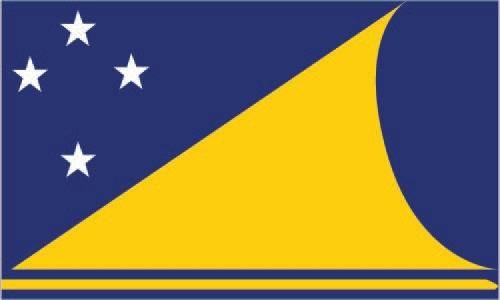
Flag, anthem, and other symbols of national identity.