
 English
 Español
 中文
中文 हिन्दी
 Français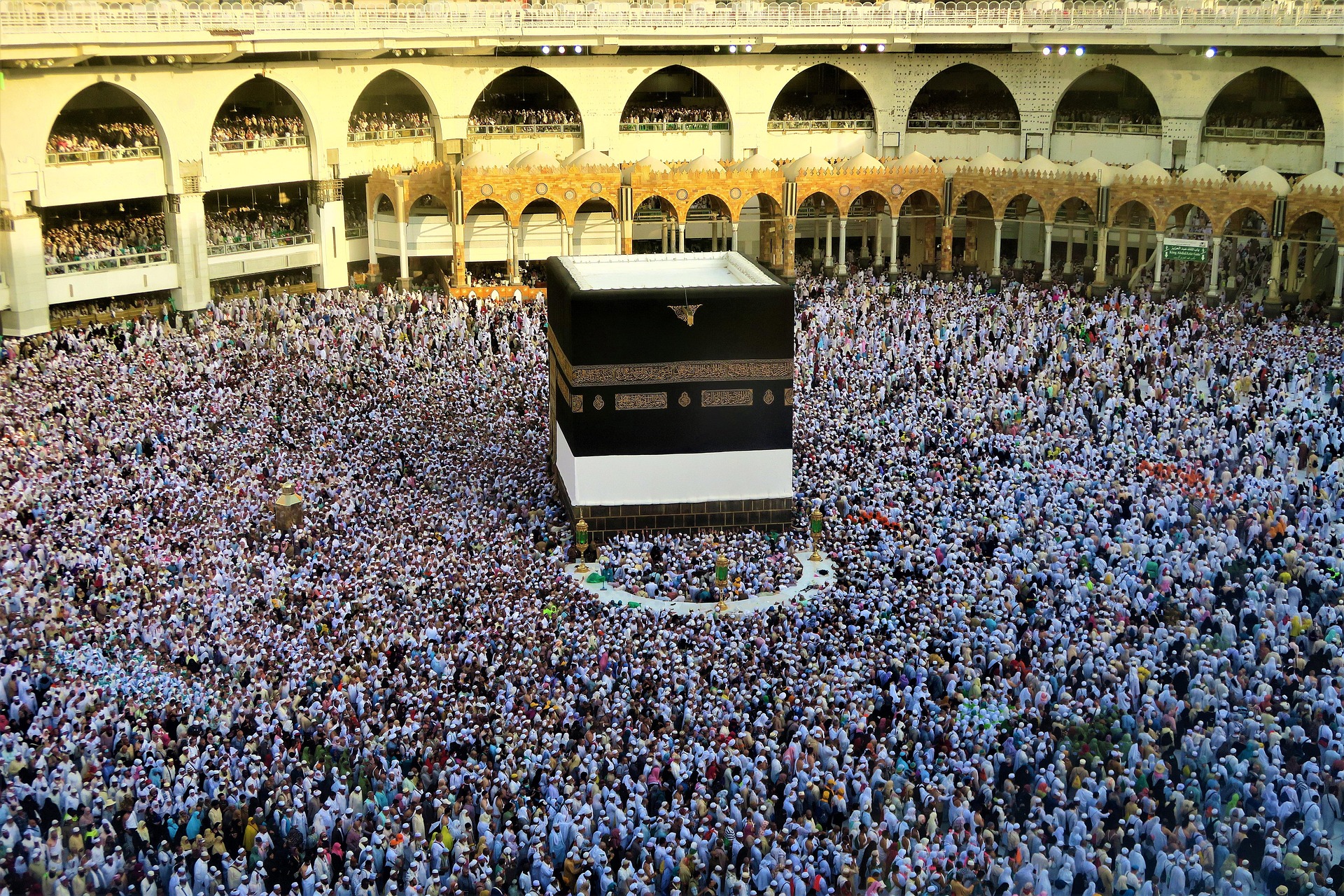
Islam: History, the Quran, and the Five Pillars of the World's Second-Largest Religion
History and beliefs of Islam explained with the Five Pillars and the Quran
The Prophet Muhammad and the Birth of Islam
Islam began in the 7th century CE with the life and ministry of Prophet Muhammad. Born in 570 CE in Mecca, Muhammad was raised by his grandfather and later his uncle. He worked as a merchant and shepherd in his youth, gaining a reputation for honesty and trustworthiness. At age 40, in the year 610 CE, Muhammad experienced his first revelation while meditating in the Cave of Hira, located near Mecca. The Angel Gabriel appeared to him with the command "Iqra!" (Read!), marking the beginning of revelation that would continue for 23 years until Muhammad's death in 632 CE.
The early years of Muhammad's preaching in Mecca were met with fierce opposition. The polytheistic merchants of Mecca, who profited from pilgrims visiting the idols at the Kaaba, viewed his message of monotheism as a direct threat to their economic interests. Muhammad and his followers were persecuted, mocked, and threatened. Some were tortured; others were murdered. Despite the hardships, Muhammad's message attracted believers from all walks of life, including wealthy merchants, slaves, and women. Each convert faced the choice between family loyalty and spiritual conviction.
Among the earliest and most devoted followers were Abu Bakr, a wealthy merchant known for his integrity; Umar ibn al-Khattab, who would later become a powerful caliph; Ali ibn Abi Talib, Muhammad's cousin; and Bilal ibn Rabah, a former slave from Abyssinia who became the first muezzin (caller to prayer). Muhammad's wife Khadijah was also among the first to believe in his message, and her support proved crucial during the early, difficult years. These early companions (Sahaba) formed a tight-knit community bound by shared faith and commitment to Muhammad's mission.
The Night Journey and the Hijra
One of the most profound events in Islamic tradition is the Night Journey, known as Isra and Mi'raj. According to Islamic sources, on a single night, Muhammad traveled from Mecca to Jerusalem and then ascended through the heavens to the presence of God, receiving instructions on the five daily prayers. This mystical experience occurred during the most oppressive period of persecution and is commemorated annually in the Islamic calendar on the 27th night of Rajab. Muslim scholars have written extensively about this miraculous event, analyzing its spiritual significance and its historical context within the broader narrative of Muhammad's mission.
In 622 CE, facing increasingly severe persecution and recognizing that Mecca would never accept his message, Muhammad led approximately 150 followers in the Hijra (migration) to the city of Medina, located north of Mecca. This journey marks year 1 in the Islamic calendar, establishing a new era and fundamentally transforming Islamic history. In Medina, Muhammad established the Constitution of Medina, a groundbreaking document that established principles of governance, defined the rights and responsibilities of citizens, and outlined relationships between Muslim and non-Muslim communities. This document is considered one of history's first written constitutions and reflects Islamic teachings on justice and communal welfare. The constitution protected the rights of minorities, established legal procedures, and created a multi-faith society based on agreed principles.
The Quran: Revelation and Preservation
The Quran is Islam's holiest scripture, believed by Muslims to be the literal word of God (Allah) revealed to Prophet Muhammad through the Angel Gabriel over 23 years. Written in Classical Arabic, the Quran is divided into 114 chapters called surahs, containing 6,236 verses called ayat. The surahs vary greatly in length, from brief chapters of just a few verses to extensive passages containing hundreds of verses. The Quran addresses spiritual guidance, legal matters, historical narratives, moral teachings, and descriptions of heaven and hell. Muslims consider the Quranic text to be inimitable (i'jaz), arguing that its eloquence, structure, and spiritual profundity cannot be replicated or surpassed.
The preservation of the Quran is extraordinary. From the earliest days, Muslims memorized the entire text, a practice that continues to this day. Those who memorize the entire Quran are called hafiz (plural: huffaz). This oral tradition ensured that even if written copies were destroyed, the Quran would be preserved perfectly in the hearts and minds of believers. The first official written compilation occurred during the caliphate of Uthman ibn Affan (644-656 CE), who established a standardized text to prevent variations that had begun to emerge across different regions. Multiple copies of this text were distributed throughout the Islamic world, and the Quranic text has remained virtually unchanged for nearly 1,400 years. This consistency of the text is remarkable when compared to other ancient religious texts that underwent numerous revisions and amendments.
The Quran is the most frequently recited book in the world. Millions of Muslims recite portions of it daily during prayers, and the entire text is recited during Ramadan, Islam's holiest month. Non-Muslims have also recognized the Quran's literary and linguistic sophistication, with scholars noting its poetic structure, rhythmic patterns, and the precision of its Arabic language. Many Muslims perform Quran recitation competitions (Tajweed competitions) where participants demonstrate mastery of proper pronunciation and melodic recitation methods.
The Five Pillars: the Foundation of Islamic Practice
The Five Pillars form the foundation of Islamic religious practice and represent the core obligations that every Muslim must fulfill. These pillars are Shahada, Salat, Zakat, Sawm, and Hajj. Understanding these pillars is essential to comprehending Islamic belief and practice.
The first pillar is Shahada, the declaration of faith. It states: "There is no god but Allah and Muhammad is his messenger." This simple yet profound statement encapsulates Islamic monotheism and acceptance of Muhammad's prophetic mission. By sincerely declaring the Shahada, one enters Islam. The testimony consists of two crucial components: the denial of all deities except God and the affirmation of Muhammad's prophethood. This declaration must come from the heart with full understanding and commitment.
The second pillar is Salat, the five daily prayers performed at specific times: dawn (Fajr), midday (Dhuhr), afternoon (Asr), sunset (Maghrib), and night (Isha). Each prayer consists of prescribed movements and recitations performed while facing toward the Kaaba in Mecca, the direction called the Qibla. Before prayers, Muslims perform Wudu, a ritual purification involving washing of the hands, forearms, face, and feet, symbolizing both physical and spiritual cleansing. Prayers can be performed individually or in congregation. When performed in congregation, Muslims stand shoulder to shoulder in rows, emphasizing equality and community regardless of social status or wealth. The congregational prayer at noon on Friday, called Jumu'ah, is particularly significant and is attended by thousands or millions in large mosques worldwide. The imam (prayer leader) guides the congregation through the prayers while delivering a sermon (khutbah) addressing spiritual and community concerns.
The third pillar is Zakat, often translated as almsgiving or mandatory charity. Muslims with sufficient wealth must donate 2.5 percent of their accumulated wealth annually to help the poor, support those in need, assist the ill, free slaves, and support the cause of Islam. Zakat is not considered charity in the Western sense but rather a mandatory obligation and a right of the poor. This redistribution of wealth strengthens social cohesion and ensures that vulnerable members of society are cared for. Zakat purifies wealth and the soul while promoting social justice and economic equity within Muslim communities.
The fourth pillar is Sawm, the fast observed during Ramadan, Islam's ninth month in the lunar calendar. From dawn until sunset, fasting Muslims abstain from food, water, and other physical needs as an act of devotion to God and solidarity with the poor. Ramadan commemorates the month in which Muhammad first received revelation. Fasting develops self-discipline, spiritual awareness, and empathy for those suffering from hunger. At sunset, the fast is broken with a meal called Iftar, often a communal occasion bringing families and communities together. The Islamic calendar is lunar, so Ramadan occurs at different times each year on the Gregorian calendar. The month concludes with Eid al-Fitr, a celebratory festival marking the end of fasting. Fasting is obligatory for all adult Muslims who are healthy and not traveling, though exemptions exist for the very young, the elderly, the ill, and pregnant or nursing women.
The fifth pillar is Hajj, the pilgrimage to Mecca required of every Muslim at least once in their lifetime, provided they have the physical and financial means. Each year, approximately two million pilgrims from every corner of the globe converge on Mecca to perform a series of rituals that commemorate Abraham's obedience to God and Muhammad's final pilgrimage. Pilgrims wear simple, identical white garments called ihram, symbolizing equality before God. They circumambulate the Kaaba seven times, run between the hills of Safa and Marwa, and stand in prayer at Mount Arafat. The Hajj culminates in the Festival of Sacrifice, called Eid al-Adha, which is celebrated with feasting and giving to the poor. The Hajj represents the spiritual and physical peak of Islamic practice and creates a profound sense of brotherhood and sisterhood among Muslims worldwide. The experience transforms pilgrims spiritually and emotionally, creating lifelong bonds with other believers from diverse backgrounds.
The Early Caliphate and Expansion
After Prophet Muhammad's death in 632 CE, Muslim leadership passed to the Rashidun (Rightly Guided) Caliphs. Abu Bakr, Muhammad's close companion, became the first caliph (632-634 CE). Though his reign was brief, Abu Bakr stabilized the Muslim state and completed the conquest of the Arabian Peninsula. Umar ibn al-Khattab, the second caliph (634-644 CE), oversaw rapid territorial expansion, bringing Syria, Iraq, Egypt, and Persia under Islamic rule. His administrative reforms established a sophisticated governance system that would serve as a model for centuries. Uthman ibn Affan, the third caliph (644-656 CE), compiled the standardized Quranic text. Ali ibn Abi Talib, the fourth caliph (656-661 CE), was revered for his piety and knowledge but faced significant political challenges.
The succession after Ali's death led to one of the most significant divisions in Islamic history. Mu'awiyah, a relative of the slain caliph Uthman, challenged Ali's son Hassan for leadership, initiating the Umayyad dynasty. The conflict eventually resulted in the Battle of Karbala in 680 CE, where Hussein ibn Ali, Muhammad's grandson and Ali's son, was killed along with his followers. The tragedy of Karbala became a defining moment that deepened the theological and political division between Sunni and Shia Islam. This event continues to profoundly influence Islamic religious practice and identity to this day.
The Sunni-Shia Split
The split between Sunni and Shia Muslims represents the primary theological divide within Islam. This division originated from disagreement over succession to the Prophet and evolved into distinct traditions with different practices, jurisprudential schools, and theological emphases. Understanding this split is crucial to understanding modern Islam and its diverse expressions.
Sunni Muslims, comprising 85-90 percent of the global Muslim population, believe that the Prophet did not explicitly appoint a successor and that leadership should pass to the most qualified individual chosen by the community. Shia Muslims, representing 10-15 percent, believe that the Prophet explicitly designated Ali ibn Abi Talib as his successor and that leadership should remain within the Prophet's family (Ahl al-Bayt). This fundamental disagreement evolved into different theological frameworks, especially regarding the concept of Imamah (leadership and guidance).
The Shia tradition subdivides into three main groups: Twelver Shia, who constitute the majority of Shias and believe in twelve divinely guided Imams; Ismaili Shia, who recognize Ismail ibn Jafar as the rightful seventh Imam; and Zaidi Shia, a smaller group. Each group has developed distinct jurisprudential traditions, practices, and theological perspectives. The Battle of Karbala and the martyrdom of Hussein become central to Shia spiritual life, commemorated annually during Ashura with emotionally intense remembrances and religious ceremonies. Despite theological differences, Sunni and Shia Muslims share core beliefs in the Quran, the prophethood of Muhammad, and the fundamental principles of Islam.
The Umayyad and Abbasid Caliphates
The Umayyad Caliphate (661-750 CE) established its capital in Damascus and rapidly expanded Islamic territorial control to include North Africa, Spain, and Central Asia. The Umayyads implemented centralized administration, minted currency, and established postal systems. However, by the 8th century, discontent with Umayyad rule sparked the Abbasid Revolution.
The Abbasid Caliphate (750-1258 CE) moved the capital to Baghdad and inaugurated what is widely considered the Golden Age of Islamic Civilization. Abbasid caliphs, particularly al-Ma'mun (813-833 CE) and al-Mansur (754-775 CE), actively patronized scholarship and science. The House of Wisdom, established in Baghdad by Caliph al-Ma'mun, served as an intellectual center where scholars translated Greek, Persian, and Indian texts into Arabic and conducted original research across multiple disciplines. This institution attracted the greatest minds of the age and represented a commitment to the pursuit of knowledge.
The Golden Age of Islamic Civilization
From the 8th to the 13th centuries, Islamic civilization made extraordinary contributions to human knowledge and culture that shaped the modern world. In mathematics, al-Khwarizmi, a 9th-century scholar in Baghdad, developed algebraic methods that formed the foundation of modern algebra. His name is the origin of the word "algorithm." In medicine, Ibn Sina (980-1037 CE), known in the West as Avicenna, wrote the Canon of Medicine, an encyclopedia of medical knowledge that remained the authoritative medical text in Europe and the Islamic world for centuries. Al-Biruni (973-1048 CE) made groundbreaking contributions to geography, astronomy, and mathematics, accurately calculating Earth's circumference centuries before modern instruments existed.
Islamic scholars made pioneering advances in optics, chemistry, astronomy, and philosophy. They preserved and transmitted Greek philosophical and scientific texts that had been lost in the West, ensuring that knowledge was not permanently lost. Universities including Al-Qarawiyyin in Fez, Morocco, founded in 859 CE, are considered the world's oldest institutions of higher learning. Islamic architecture produced magnificent structures including the Great Mosque of Cordoba with its striking arches, intricate patterns adorning the Alhambra in Granada, and the evolving architectural traditions that would eventually produce the Ottoman style. These achievements demonstrate Islam's commitment to learning, innovation, and cultural development.
Sufism: the Mystical Dimension of Islam
Sufism represents the mystical and spiritual dimensions of Islam, emphasizing direct experiential knowledge of God through spiritual practices, asceticism, and devotion. Sufi orders (tariqah) emerged during the medieval period, each following particular spiritual paths and practices under the guidance of a master (shaykh). Sufism offers Muslims a deeper, more personal connection to the divine through intensive spiritual disciplines.
Al-Ghazali (1058-1111 CE), one of Islam's greatest theologians, wrote The Incoherence of the Philosophers, a critique of Greek philosophy that reasserted the primacy of Islamic theology. Al-Ghazali's work balanced rational inquiry with faith, demonstrating that these need not be in conflict. The Persian poet Rumi (1207-1273 CE) founded the Mevlevi Order, famous for its whirling dervishes who use spinning as a form of prayer and meditation. His spiritual poetry in the Masnavi remains widely read and quoted. The Qadiriyya and Naqshbandiyya orders represent two of the oldest and most widespread Sufi traditions, with millions of followers across the Islamic world. Sufi spirituality has profoundly influenced Islamic culture, art, music, and literature throughout history.
The Hadith and Islamic Jurisprudence
The Hadith comprises collections of the Prophet Muhammad's sayings, actions, approvals, and descriptions of his character. After the Quran, the Hadith is the second most important source of Islamic law and guidance. Scholars spent centuries carefully collecting and authenticating Hadith reports, establishing rigorous standards to determine which traditions were authentic. The most widely respected collections are those compiled by al-Bukhari and Muslim ibn al-Hajjaj in the 9th century. The science of Hadith authentication (ilm al-hadith) developed sophisticated methodologies to verify the accuracy and reliability of reported traditions.
Islamic jurisprudence (Fiqh) developed as scholars worked to apply Quranic principles and Hadith guidance to new situations and societies. Four major schools of Sunni jurisprudence emerged: the Hanafi school, predominant in Central Asia and the Ottoman Empire; the Maliki school, dominant in West and North Africa; the Shafi'i school, strong in East Africa, Southeast Asia, and parts of Egypt; and the Hanbali school, the most conservative, which became influential in Saudi Arabia. Shia jurisprudence developed its own schools, particularly the Twelver tradition with its distinctive methodology. This diversity of jurisprudential schools reflects Islam's flexibility in addressing different cultural and social contexts while maintaining core principles. These schools coexist peacefully, allowing Muslims to choose the approach most suitable to their circumstances.
Islamic Architecture and Sacred Sites
Islamic architecture developed distinctive features including the dome, the minaret, the arch, and elaborate geometric and floral patterns. The Masjid al-Haram in Mecca, centered on the Kaaba, is Islam's holiest site and one of the world's largest mosques, capable of accommodating several million pilgrims during Hajj. The Kaaba, a cubic structure draped in black cloth, contains the Black Stone, believed by Muslims to be a celestial stone given to Abraham by the Angel Gabriel. Inside the Kaaba is the Zamzam well, whose water pilgrims drink during Hajj, commemorating Hagar's search for water when alone in the desert with her son Ishmael. The sanctity of the Kaaba extends to the surrounding area, creating a sacred zone of peace and sanctuary.
The Prophet's Mosque in Medina houses the tomb of Muhammad and is Islam's second-holiest site. Al-Aqsa Mosque in Jerusalem and the Dome of the Rock, completed in 691 CE, are sacred because they mark the site where Muslims believe Muhammad ascended to heaven during the Night Journey. The Great Mosque of Cordoba in Spain showcases the sophistication of Islamic architecture in medieval Europe with its distinctive striped arches. The Blue Mosque, completed in 1616 in Istanbul, represents the pinnacle of Ottoman architecture with its elegant domes and minarets. These structures serve not only as places of worship but as artistic masterpieces that inspire awe and spiritual contemplation.
Islamic Calligraphy and Written Traditions
The Arabic script, with 28 letters written from right to left, became inseparable from Islamic culture. Islamic tradition forbids representational art in religious contexts, viewing idolatry as the ultimate sin. This prohibition led to the elevation of calligraphy to the level of sacred art. Quranic verses and sacred phrases are rendered in elaborate, beautiful scripts that express devotion and spiritual reverence. The phrase "Bismillah ar-Rahman ar-Rahim" (In the name of God, the Most Gracious, the Most Merciful), which begins every chapter of the Quran except one, is rendered in countless calligraphic styles that decorate mosques, homes, and religious texts. Master calligraphers spent lifetimes perfecting their craft, developing personal styles while maintaining readability and aesthetic harmony. Islamic calligraphy has evolved into a major art form recognized worldwide for its beauty and spiritual significance.
Major Denominations and Diversity
While Sunni and Shia represent the primary divisions, Islam encompasses other important groups. The Ibadi tradition, found primarily in Oman and parts of North Africa, developed early in Islamic history and maintains its own jurisprudential school. The Ahmadiyya movement, founded in the 19th century by Mirza Ghulam Ahmad, believes that the Mahdi (the awaited reformer) has already appeared. Most Muslim-majority nations and mainstream Islamic organizations do not recognize Ahmadis as Muslims, though Ahmadis themselves claim to be part of Islam.
Islam is remarkably diverse, with followers from every ethnicity, nationality, and cultural background. Arabs comprise less than 20 percent of the global Muslim population. Muslims from South Asia (Pakistan, Bangladesh, India), Southeast Asia (Indonesia, Malaysia), Turkey, Iran, and sub-Saharan Africa form the majority. Each region has developed distinctive cultural expressions of Islam while maintaining adherence to core theological and legal principles. This diversity demonstrates Islam's universal appeal and its ability to transcend geographic and cultural boundaries.
Ramadan and Islamic Celebrations
Ramadan holds supreme spiritual significance in the Islamic calendar. Beyond fasting, Muslims spend extra time in prayer, particularly the special Taraweeh prayers performed at night. Many Muslims attempt to read the entire Quran during Ramadan. The last ten days of Ramadan are especially sacred, as Muslims believe that the Night of Power (Laylat al-Qadr), when Muhammad received his first revelation, falls within this period. Eid al-Fitr marks the end of Ramadan with feasting, exchanging gifts, and giving charity. During Ramadan, the focus shifts toward spiritual reflection, self-improvement, and strengthening community bonds.
Eid al-Adha commemorates Abraham's willingness to sacrifice his son in obedience to God. Muslims who can afford it sacrifice an animal (typically a sheep, goat, cow, or camel) and distribute the meat to family, friends, and the poor. These two Eids represent the most important celebrations in the Islamic calendar, celebrated by Muslims worldwide regardless of their cultural background. Both celebrations emphasize gratitude, generosity, and community, bringing families and friends together to strengthen social ties and spiritual bonds.
Islam's Global Impact and Contributions
Islamic civilization profoundly influenced world history and continues to shape global culture. Islamic scholars preserved and transmitted ancient Greek and Roman knowledge that otherwise would have been lost during the European Middle Ages. Islamic innovations in agriculture, commerce, and administration influenced European development. The university system has roots in Islamic educational institutions. Islamic geometric patterns, artistic techniques, and architectural styles influenced European and global aesthetics. Islamic contributions to science, mathematics, medicine, and philosophy provided the intellectual foundation for the European Renaissance.
Today, approximately 1.9 billion Muslims live in more than 180 countries, making Islam the world's second-largest religion after Christianity. Muslims comprise majorities in 50 countries and significant minorities in many others. Islam is one of the fastest-growing religions globally due to both high birth rates in Muslim-majority regions and increasing conversion rates in the West. The expansion of Islam across the globe has created diverse Muslim communities with varied cultural expressions and practices.
Islam in the Modern World
Contemporary Islam navigates multiple challenges and debates. The concept of political Islam, including the role of Islamic law in governance, remains contested both within Muslim societies and internationally. Many Muslim-majority nations struggle with reconciling secular governance models with Islamic principles. Questions of human rights, women's rights, freedom of religion, and democratic governance animate discussions within Islamic theology and jurisprudence. Muslim scholars and intellectuals continue to develop interpretations of Islamic teachings that address contemporary issues while remaining true to foundational principles.
Islam in Europe and North America has grown significantly, with Muslims now representing 5-10 percent of the population in Western European countries and smaller but rapidly growing percentages in North America. Muslim diaspora communities maintain connections to their heritage while adapting to Western contexts, leading to new expressions of Islamic identity and practice. Second and third-generation Muslims in the West often create unique syntheses of Islamic tradition and Western culture, contributing to both societies.
Islam has historically been a religion that accommodated diverse cultures and contexts. As Muslims navigate modernity, globalization, and cultural pluralism, Islam continues to evolve while maintaining its foundational principles. The diversity of Muslim thought, the ongoing reinterpretation of Islamic principles for contemporary circumstances, and Islam's capacity to inspire both spiritual devotion and intellectual inquiry demonstrate the religion's enduring relevance and adaptability. The future of Islam will likely see continued development of Islamic thought that engages with modern challenges while preserving the essence of the faith.
Sources
Britannica Encyclopedia — Islam: Pew Research Center — Global Muslim Population: https://www.pewresearch.org/religion/2009/10/07/mapping-the-global-muslim-population/ Oxford Islamic Studies Online: Quran.com: Council on American-Islamic Relations: https://www.countryreports.org