
 English
 Español
 中文
中文 हिन्दी
 Français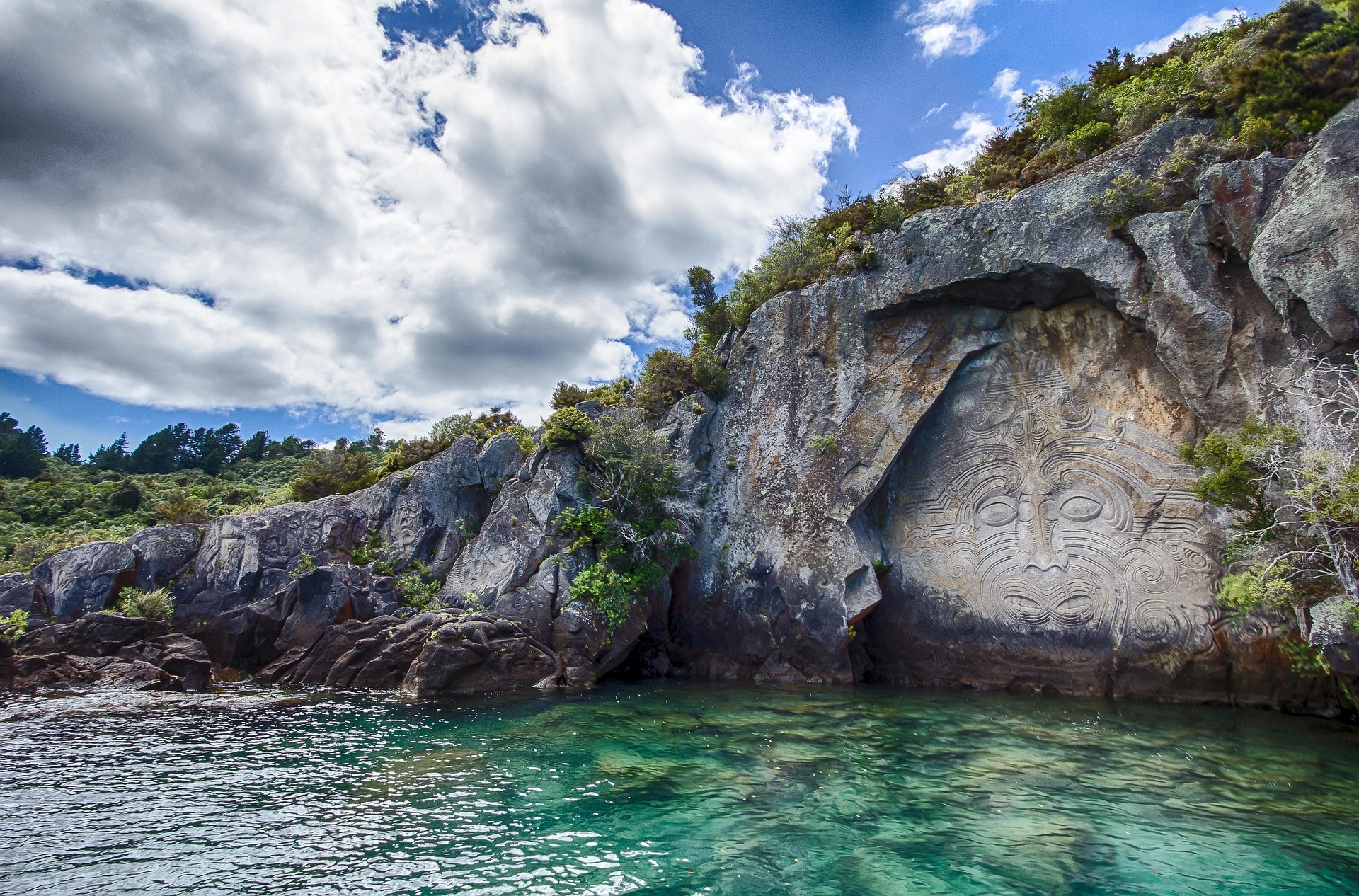
The Maori People of New Zealand: Guardians of an Ancient World
Maori people New Zealand culture history traditions
A CountryReports.org Tier 3 Spotlight Article
Few indigenous peoples on earth have shaped their nation's identity as profoundly, or fought as fiercely to preserve their heritage, as the Maori of Aotearoa New Zealand. They are a people whose ancestors crossed the vast Pacific with nothing but stars to guide them, who built a rich civilization on islands at the bottom of the world, who endured the shattering upheaval of colonization, and who have emerged in the twenty-first century with a renewed sense of pride, political power, and cultural vitality. Today, nearly one million people in New Zealand identify as Maori, and their language, art, spiritual traditions, and political aspirations are woven into the very fabric of the nation. To understand New Zealand, one must understand the Maori.
Origins and Migration: Children of the Great Ocean
The story of the Maori begins far across the Pacific, in the region scholars call Western Polynesia, in the islands that are today Tonga and Samoa. Over many centuries, Polynesian peoples gradually spread eastward through the Pacific in an extraordinary series of voyages, navigating by stars, ocean swells, bird patterns, and wind directions in double-hulled canoes called waka. By approximately 1000 CE, ancestors of the Maori had settled in East Polynesia, likely in the Society Islands near present-day Tahiti. From there, a great migration carried them to the remote archipelago they would call Aotearoa, meaning "the land of the long white cloud."
Archaeological evidence and oral tradition together suggest that Aotearoa was settled in multiple waves of migration, with the earliest arrivals coming around 1280 to 1350 CE, making New Zealand one of the last large land masses on earth to be inhabited by humans. Maori oral histories speak of legendary navigator Kupe, who is credited with being the first to discover Aotearoa and who returned to Hawaiki to guide others toward the new land. These accounts describe the great fleet, a series of ancestral canoes whose names, such as Tainui, Te Arawa, Mataatua, Kurahaupo, Tokomaru, Aotea, and Takitimu, are still used by Maori today to trace descent and tribal affiliation.
When the first settlers arrived, they found a land of extraordinary ecological richness. Dense forests sheltered enormous flightless birds, including the moa, some species of which stood over three meters tall. The forests teemed with birds that had evolved without mammalian predators, and the surrounding seas were abundant with fish, seals, and dolphins. The settlers, known in later tradition as the tangata whenua or people of the land, initially had a subsistence economy focused on hunting, gathering, and fishing. Over time, they developed sophisticated agriculture, cultivating the kumara (sweet potato) and other crops brought from their Polynesian homeland. By the time Europeans arrived in the seventeenth century, the Maori population had grown to an estimated 100,000 to 200,000 people, organized into hundreds of distinct tribes across both the North and South Islands.
The Maori world was never static. Intertribal relations involved complex cycles of trade, alliance, feasting, and warfare. The landscape itself became encoded with meaning: certain mountains, rivers, lakes, and forests were considered the physical embodiment of ancestors and were treated with deep reverence. The relationship between people and land was not merely economic or practical but fundamentally spiritual. People did not own the land in the Western sense; rather, they were descended from it and had responsibilities to care for it.
Te Reo Maori: the Living Breath of a People
Language, for the Maori, is not simply a means of communication. Te Reo Maori, the Maori language, is the living breath of the ancestors, a vessel carrying generations of knowledge, cosmology, and identity. It belongs to the Polynesian branch of the Austronesian language family and shares structural and vocabulary similarities with Hawaiian, Tahitian, Samoan, and Tongan, a linguistic kinship that reflects the common origin of these Pacific peoples.
For much of the twentieth century, Te Reo Maori was in severe decline. Colonial-era policies actively discouraged and in some cases punished the use of Maori in schools. Children were forbidden to speak their language in classrooms, and many Maori parents, believing that English fluency was necessary for their children's advancement, stopped transmitting the language at home. By the 1970s, linguists were warning that Te Reo Maori faced extinction within a generation.
The community-led response to this crisis has been one of the most remarkable language revitalization efforts in the world. In 1982, Maori educators established the first kohanga reo, or language nest, a preschool immersion program designed to immerse very young children in Te Reo Maori in a home-like environment centered around fluent elders. The model proved transformative. It spread rapidly across New Zealand and later inspired similar programs for endangered languages around the globe, from Welsh to Hawaiian to Irish. By the early 1990s, kura kaupapa Maori, primary schools operating entirely in Maori, were being established. Wharekura, Maori-medium secondary schools, followed.
In 1987, Te Reo Maori became an official language of New Zealand alongside English, giving it legal recognition and opening the door to state funding for Maori-language broadcasting, education, and services. Maori Television launched in 2004 and has become a vital platform for the language, broadcasting news, drama, documentaries, and cultural programming entirely in or alongside Maori. The station reaches hundreds of thousands of viewers and has helped normalize Te Reo as a living, modern language.
By 2025, according to Statistics New Zealand, approximately four percent of the total New Zealand population reported being able to hold a conversation in Maori. While that figure represents only a fraction of the population, the direction of change is positive, particularly among younger generations. Government policy has set an ambitious goal of increasing the number of Maori-language speakers to one million by 2040. Schools nationwide now teach basic Maori, and an increasing number of non-Maori New Zealanders are learning the language as part of a broader embrace of Aotearoa's bicultural identity.
The language remains under political pressure, however. In 2024, Education Minister Erica Stanford sparked controversy when her ministry excluded most Maori words from a widely used phonics reading series, drawing sharp criticism from educators, publishers, and Maori communities who described the move as a step backward in the country's commitment to the language.
Spiritual Beliefs and Mythology: a Cosmos of Ancestors
The spiritual world of the Maori is vast, intricate, and inseparable from everyday life. Traditional Maori cosmology begins with Te Kore, the void or nothingness, from which Te Po, the darkness, emerged. From these primordial states came Ranginui, the Sky Father, and Papatuanuku, the Earth Mother, locked in a tight embrace that kept the world in darkness. Their children, confined between them, eventually forced them apart, bringing light and space into the world. This separation is understood not as a violent rupture but as a necessary creative act, and the rain that falls is said to be Rangi's tears of longing for Papa.
The children of Rangi and Papa became the atua, or gods and divine ancestors, who governed different domains of existence. Tane Mahuta was the god of forests and birds and was credited with creating the first human from red ochre earth and breathing life into her. Tangaroa ruled the ocean and all its creatures. Tu, also called Tumatauenga, was the god of war and humanity. Rongo presided over peace, agriculture, and the kumara. Haumia governed wild and uncultivated plants. Each atua had specific protocols, rituals, and knowledge associated with them.
Two of the most fundamental concepts in Maori spiritual life are tapu and noa. Tapu, often loosely translated as sacred or forbidden, refers to a state of restriction and spiritual power that can apply to persons, objects, places, or activities. People of high rank, priests, warriors in battle, and the bodies of the deceased were all considered to be tapu. Noa refers to the ordinary, unrestricted state and can function to neutralize tapu. These concepts governed everything from food preparation and daily movement to the conduct of warfare and the building of meeting houses.
The figure of Maui is among the most beloved characters in Maori and wider Polynesian mythology. A trickster and demigod of extraordinary cunning, Maui is credited with fishing up the North Island of New Zealand from the sea, which is accordingly known as Te Ika-a-Maui, the fish of Maui. He lassoed the sun to slow its journey across the sky so that days would be longer. He obtained fire from his ancestress Mahuika. His most famous and final adventure, his attempt to steal immortality for humanity by crawling into the body of Hine-nui-te-Po, the goddess of death, ended in failure and his death, binding humanity forever to mortality.
The marae, a sacred open-air ceremonial space associated with a carved meeting house, serves as the central spiritual, social, and political institution of Maori communal life. It is here that significant life events are marked, that dead are mourned through the tangihanga (funeral ceremony), that important tribal debates are held, and that guests are welcomed through the powhiri, a formal ceremonial welcome involving challenge, response, song, and the pressing of noses in hongi.
Social Structure: Iwi, Hapu, and Whanau
Maori society is organized around a hierarchy of kinship groups that function simultaneously as social, political, economic, and spiritual units. The whanau, or extended family, is the most immediate unit of belonging, encompassing not only parents and children but grandparents, aunts, uncles, and cousins. It is within the whanau that children are first socialized, receive their first teachings about their genealogy and responsibilities, and learn what it means to be Maori.
The hapu, often translated as subtribe or clan, is a larger grouping of related whanau who share a common ancestor and typically occupy a specific territory. The hapu has traditionally been the primary unit of political and military organization. It is the hapu that organized large-scale collective work projects, coordinated defence and warfare, and managed relationships with neighboring groups. Even today, hapu retain significant roles in governance, resource management, and cultural practice, and decisions affecting hapu lands and resources typically require hapu consent.
The iwi, loosely translated as tribe or nation, is the largest kinship grouping. Each iwi traces descent from a common ancestor, often the captain of one of the ancestral canoes that arrived in Aotearoa. There are approximately 70 recognized iwi in New Zealand today, ranging from large and politically influential groups such as Ngapuhi in Northland, Waikato and Tainui in the central North Island, and Ngai Tahu, the principal iwi of the South Island, to smaller groups whose territory may encompass just a few communities. In the post-Treaty settlement era, iwi have become major economic entities, managing significant financial assets on behalf of their members.
Central to Maori social values is the concept of mana, a term that can be translated variously as prestige, authority, spiritual power, or social standing. Mana is both inherited and earned; it can be enhanced through generosity, eloquence, bravery, and skill, and it can be diminished through cowardly, dishonest, or ungenerous behavior. A person of high mana, a rangatira or chief, was expected to embody the values of the community and to use their power in service of the collective. The concept of manaakitanga, the obligation to show care, generosity, and hospitality to others, derives from mana and remains one of the most deeply valued principles in Maori culture.
Arts and Culture: Carrying the Ancestors Forward
Maori artistic traditions are among the most distinctive and sophisticated in the Pacific world, encompassing woodcarving, weaving, tattooing, dance, song, and oratory. Far from being purely aesthetic, these art forms are deeply functional: they encode genealogy, communicate spiritual power, mark social rank, and preserve knowledge across generations.
Whakairo, or woodcarving, is perhaps the most visually iconic of the Maori arts. The elaborately carved interior and exterior of a wharenui, or meeting house, is not decorative in the Western sense but is rather a three-dimensional representation of the tribe's ancestors. The ridgepole of the house represents the spine of the founding ancestor; the rafters are ribs; the facade represents the face. Every carved figure, spiral, and interlocking pattern has meaning. Master carvers, known as tohunga whakairo, underwent years of training and were considered to be working under the guidance and protection of Tane, the god of forests.
Raranga, or weaving, is traditionally the domain of women and is governed by protocols that reflect its sacred character. Weavers produce kete (baskets), cloaks, mats, and ceremonial objects using flax, feathers, and other natural materials. The korowai, a garment made of twisted flax and adorned with feathers, is among the most prestigious of all Maori garments and is worn on occasions of great ceremony. The patterns woven into these garments carry genealogical and symbolic information and can be read by those with the knowledge to understand them.
Ta moko, the art of facial and body tattooing, has a history reaching back to the earliest Polynesian migrations and carries enormous personal and spiritual significance. Unlike Western tattooing, ta moko is not merely decorative. The patterns of lines, spirals, and whorls that cover the face record the wearer's genealogy, tribal affiliation, rank, and personal history. Traditionally, the ta moko process involved using a chisel rather than a needle to cut the skin, creating grooves that were then filled with pigment. Each moko was unique, an individual's living signature. In the wake of colonization, the practice declined dramatically. Since the 1990s, however, ta moko has undergone a powerful renaissance, with a new generation of Maori men and women reclaiming the practice as an act of cultural affirmation and identity. Contemporary practitioners use both traditional and modern techniques, and the sight of moko on faces at public events, in parliament, and in everyday life has become increasingly common and celebrated.
The haka is probably the most widely recognized expression of Maori culture worldwide. Often described simply as a war dance, this characterization, while not entirely wrong, greatly undersells the haka's range and complexity. A haka is a performed composition of vigorous physical movement, chant, stamping, and facial expression that can express defiance, welcome, celebration, mourning, challenge, or tribute. There are many different types of haka for different contexts. The peruperu was the war haka, performed before battle to intimidate enemies and invoke the protection of the gods. The haka poowhiri is performed to welcome visitors. The Ka Mate haka, composed by the great warrior chief Te Rauparaha in the 1820s, is today performed by the All Blacks national rugby team before international matches and has become known to hundreds of millions of people around the world.
Kapa haka, the performing arts tradition combining haka, waiata (song), dance, and cultural performance, remains one of the most vibrant expressions of Maori culture. The Te Matatini national kapa haka festival, held every two years, is the premier event in the Maori cultural calendar. In February and March 2025, Te Matatini was held at Pukekura Park in New Plymouth, drawing 55 competing groups, attracting 75,000 live audience members, and reaching an estimated 2.5 million viewers through television and online broadcasts.
Traditional Foods: the Gifts of Land and Sea
The traditional Maori relationship with food, known as kai, is grounded in both practical necessity and deep spiritual meaning. The ancestors who settled Aotearoa brought with them a small number of cultivated plants, most importantly the kumara, or sweet potato, a crop that required careful attention in the cooler New Zealand climate. Maori developed sophisticated cultivation techniques, including specially prepared gardens with windbreaks and drainage systems, as well as storage pits called rua that kept kumara through the winter. The taro, yam, hue (gourd), and aute (paper mulberry) were also cultivated, though with varying success in different parts of the country.
Wild foods formed an equally important part of the diet. The forest was hunted for birds, including the huia, kereru (native pigeon), and kaka parrot. The moa, a family of giant flightless birds, was a major early food source; unfortunately, the combination of Maori hunting and habitat modification contributed to the extinction of all moa species within a few centuries of human settlement. The sea, rivers, and lakes provided a vast abundance of resources: fish were caught using nets, traps, and lines; shellfish and crayfish were gathered; eels, or tuna, were trapped in elaborately constructed weirs and were considered a delicacy.
Preservation was essential in a world without refrigeration. Fish and birds were dried, smoked, or preserved in their own fat. Stored in sealed containers, this preserved food provided sustenance through winter months and could be traded over long distances. Fernroot, the starchy rhizome of the bracken fern, was a nutritional staple in areas where kumara cultivation was difficult.
The hangi is the most celebrated of all traditional Maori cooking methods and remains central to communal life today. Food is wrapped in leaves and placed in baskets, which are then lowered into a pit containing stones heated by a large fire. The pit is sealed with wet sacking and earth, and the food is left to steam slowly for several hours. A properly executed hangi produces food of extraordinary flavor and tenderness, imbued with an earthy smokiness unique to this method of cooking. Hangi is prepared for hui (gatherings), tangihanga (funerals), celebrations, and events of community significance, and the shared labor of preparing and sharing hangi is itself an expression of the values of whanaungatanga, or kinship and belonging.
Land Rights and the Treaty of Waitangi
No aspect of New Zealand history carries more weight or ongoing consequence than the Treaty of Waitangi, signed on February 6, 1840, between the British Crown and more than 500 Maori chiefs. The Treaty is now recognized as New Zealand's founding constitutional document and its significance to both national identity and indigenous rights cannot be overstated.
The Treaty was written and signed in two versions: an English text and a Maori text known as Te Tiriti o Waitangi. The two texts differ in important and sometimes fundamental ways, reflecting both the difficulty of translation and what many scholars argue were deliberate ambiguities. The English text ceded sovereignty to the British Crown, while the Maori text, Te Tiriti, used the word kawanatanga, a transliteration of "governorship," to describe what was being granted. Many Maori chiefs believed they were agreeing to share governance and authority while retaining their own rangatiratanga, or chiefly authority, over their lands and people. The second article of Te Tiriti guaranteed Maori the full, exclusive, and undisturbed possession of their lands, estates, forests, fisheries, and other properties.
What followed the signing was, for Maori, a catastrophe. Land was acquired by the Crown and by settlers through a combination of purchase, confiscation, legislation, and fraud on a massive scale. The New Zealand Wars of the 1860s, fought primarily in the Waikato, Taranaki, and Bay of Plenty regions, resulted in the confiscation of millions of acres of land from tribes deemed rebellious. By the early twentieth century, Maori had been dispossessed of the vast majority of their ancestral territory, retained only 3 percent of New Zealand's total land area. Population decline, poverty, cultural suppression, and social marginalization followed.
The Waitangi Tribunal, established in 1975, was the first formal mechanism to address Maori Treaty grievances. The Tribunal is a standing commission of inquiry empowered to make recommendations on Crown actions that breach Treaty principles. Its reports have documented in meticulous detail the historical and ongoing breaches of the Treaty and have formed the basis for a long series of Crown-Maori settlements. The settlement process, while imperfect and often criticized by Maori as inadequate, has returned significant land, financial assets, and resource rights to a number of iwi. The settlement with Ngai Tahu in 1998, for instance, returned approximately NZD 170 million and included the return of specific South Island landmarks and resource rights. The Waikato-Tainui settlement of 1995, worth NZD 170 million, was one of the first and helped establish the model for subsequent negotiations.
The Treaty remains politically contentious in contemporary New Zealand. In 2024 and 2025, the ACT Party, part of New Zealand's coalition government, introduced the Treaty Principles Bill, which sought to redefine the principles of the Treaty of Waitangi through legislation and submit the new definition to a national referendum. The bill provoked the largest public opposition to any proposed law in New Zealand history. Parliament received over 300,000 written submissions, ninety percent of which opposed the bill. In November 2024, tens of thousands of people marched on Parliament in Wellington in what became one of the largest protests in New Zealand history; Maori groups performed haka on the steps of Parliament in scenes broadcast around the world. In April 2025, the bill was defeated on its second reading by a vote of 112 to 11, but the controversy it sparked highlighted the ongoing and unresolved tensions over the Treaty's meaning and application.
Modern Maori Renaissance and Politics
The Maori renaissance is one of the most remarkable stories of indigenous cultural and political revival in the modern era. Beginning in earnest in the 1970s, when a new generation of Maori activists combined indigenous cultural identity with the language of civil rights and decolonization, the renaissance has transformed New Zealand society and the Maori world in profound ways.
The establishment of the Maori Language Act in 1987, the expansion of kohanga reo and kura kaupapa schools, the creation of the Maori Television channel, and the gradual return of land and resources through Treaty settlements have all contributed to a renewed sense of Maori vitality. The growth of iwi as economic entities, managing fisheries, tourism ventures, agricultural businesses, and investment portfolios worth billions of dollars, has created a new Maori professional and business class and given communities a degree of material security and political leverage they had not possessed for generations.
In parliament, Maori representation has grown steadily. New Zealand has seven dedicated Maori electorates, created by the Maori Seats Act of 1867, in which only those on the Maori electoral roll may vote. These seats, once seen as marginalizing Maori by confining them to a separate track, have in the modern era become a significant pathway to parliamentary representation and political power. The Maori Party, established in 2004 as a response to Maori anger over the Foreshore and Seabed Act, has experienced cycles of electoral success and difficulty but has remained an important voice for Maori interests and as of 2025 held seats in coalition negotiations with other parties.
The concept of co-governance, which involves Maori and the Crown jointly managing natural resources and public institutions under Treaty obligations, has become one of the most contested political questions in contemporary New Zealand. Major legislation has established co-governance arrangements for water management, conservation estate management, and specific regional bodies. Proponents argue that co-governance is a practical expression of the Treaty relationship and acknowledges Maori expertise in environmental stewardship. Critics, including the ACT Party and some New Zealand First supporters, argue that co-governance creates race-based governance inconsistent with democratic equality. This debate continues to animate New Zealand politics at every level.
Notable Maori Figures
Across history and into the present, individual Maori have shaped their nation and the world. Sir Apirana Ngata, born in 1874, was one of the towering intellectual and political figures of the twentieth century. The first Maori to graduate from a New Zealand university, Ngata served in Parliament for over forty years, championed the codification of Maori land law, and was the driving force behind an extraordinary effort to revive traditional arts and culture in the 1920s and 1930s, commissioning the carving and building of meeting houses and establishing cultural programs that helped sustain the arts through the darkest decades of colonialism. His portrait appears on the New Zealand fifty-dollar note.
Sir Peter Buck, known by his Maori name Te Rangi Hiroa, was a physician, military officer, and anthropologist of international distinction. A pivotal figure in the study of Polynesian peoples and cultures, he served as director of the Bishop Museum in Honolulu and produced landmark scholarly works on Maori and Pacific cultures that remain influential today.
Whina Cooper, born in 1895, was a formidable activist and community leader who in 1975, at the age of nearly eighty, led a land march of thousands from the Far North to Wellington to protest the continued alienation of Maori land. Her image on the steps of Parliament became one of the defining photographs of twentieth-century New Zealand and led to the establishment of the Waitangi Tribunal.
Dame Kiri Te Kanawa, born in 1944 in Gisborne, became one of the great operatic sopranos of the twentieth century, performing at venues from the Royal Opera House in London to the Metropolitan Opera in New York and singing at the wedding of Prince Charles and Princess Diana in 1981. She remains one of New Zealand's most celebrated cultural ambassadors.
Taika Waititi, born in 1975 in Raukokore, Bay of Plenty, is the most globally prominent Maori creative figure of the twenty-first century. A filmmaker, screenwriter, and actor, Waititi directed Thor: Ragnarok for Marvel Studios in 2017, bringing a distinctly irreverent and culturally resonant sensibility to the superhero genre. In 2020 he won the Academy Award for Best Adapted Screenplay for Jojo Rabbit, becoming the first indigenous person to win an Oscar in that category. His work consistently engages with questions of identity, colonialism, and belonging.
Lisa Carrington, born in 1989 in Opotiki, is considered one of the greatest competitive kayakers in the history of the sport. A member of Te Whanau-a-Apanui iwi, she has won multiple Olympic gold medals and World Championship titles and was promoted to Dame Companion of the New Zealand Order of Merit in 2022. Her achievements have made her one of the most admired athletes in New Zealand history.
Current Challenges and Achievements
As of 2026, the Maori community faces a complex and sometimes contradictory landscape of significant achievement alongside persistent inequality. The Maori ethnic population reached approximately 932,300 at June 2025, representing 17.5 percent of New Zealand's total population, according to Statistics New Zealand. The population is young and growing faster than the national average, and projections suggest the Maori population will surpass one million before 2033. This demographic dynamism represents both a profound opportunity and a pressing responsibility.
Socioeconomic disparities between Maori and non-Maori New Zealanders remain a significant and morally unacceptable reality. Maori are overrepresented in statistics for poverty, unemployment, incarceration, preventable disease, and poor housing. Maori youth face higher rates of school disengagement and lower rates of tertiary education completion than their non-Maori peers, though progress has been made over the past two decades. Life expectancy for Maori remains lower than for non-Maori. These inequalities are widely recognized as the ongoing legacy of colonization, land dispossession, and institutional discrimination, and addressing them remains an urgent challenge for government, communities, and society as a whole.
At the same time, Maori cultural and economic achievements over the past quarter century have been remarkable. Iwi-owned enterprises now represent a significant portion of the New Zealand economy, with Maori asset holdings collectively estimated at over NZD 70 billion. The Maori tourism industry, drawing on cultural experiences, heritage sites, and natural landscapes, is one of New Zealand's most distinctive and economically important attractions. Maori health providers, educational institutions, and social services have developed innovative, culturally grounded models of care and support that are increasingly recognized as more effective for Maori communities than mainstream services.
The international dimension of Maori identity is also growing. Connections with other Polynesian peoples, with indigenous communities worldwide, and with diaspora Maori in Australia and elsewhere have strengthened. The term tikanga Maori, referring to the customs, values, and practices of Maori culture, is increasingly recognized in New Zealand law and public discourse as a legitimate and important framework for governance and social life.
The publication in 2026 of the Aotearoa Maori Who's Who, a comprehensive directory celebrating Maori leadership and achievement across all sectors of society, reflected the depth and breadth of contemporary Maori participation in national life. From the boardroom to the operating theatre, from the concert stage to the rugby field, from the carving studio to the halls of parliament, Maori men and women are shaping Aotearoa in every arena.
The road ahead for the Maori people passes through familiar terrain: the ongoing struggle to reclaim land and resources, to protect and revitalize language and culture, to achieve political self-determination, and to dismantle the structures of inequality that colonization put in place. But the Maori people have navigated far more treacherous waters than these. They crossed the Pacific in open canoes. They survived epidemics, wars, and the attempted destruction of everything they held sacred. They built something precious in Aotearoa, and they are building it still.
#Maori #NewZealand #IndigenousPeoples #AotearoaNZ #TeReoMaori #TreatyOfWaitangi #MaoriCulture #Haka #TaMoko #CountryReports #IndigenousRights #Polynesia #MaoriRenaissance #Waitangi
Sources
https://www.stats.govt.nz/information-releases/maori-population-estimates-at-30-june-2025/ https://teara.govt.nz/en/maori-foods-kai-maori https://www.rnz.co.nz/news/te-manu-korihi/579634/maori-ethnic-population-nears-one-million https://iwgia.org/en/aotearoa-new-zealand/5766-iw-2025-aotearoa-new-zealand.html https://blog.polynesianpride.co/famous-maori-people/ https://www.countryreports.org