
 English
 Español
 中文
中文 हिन्दी
 Français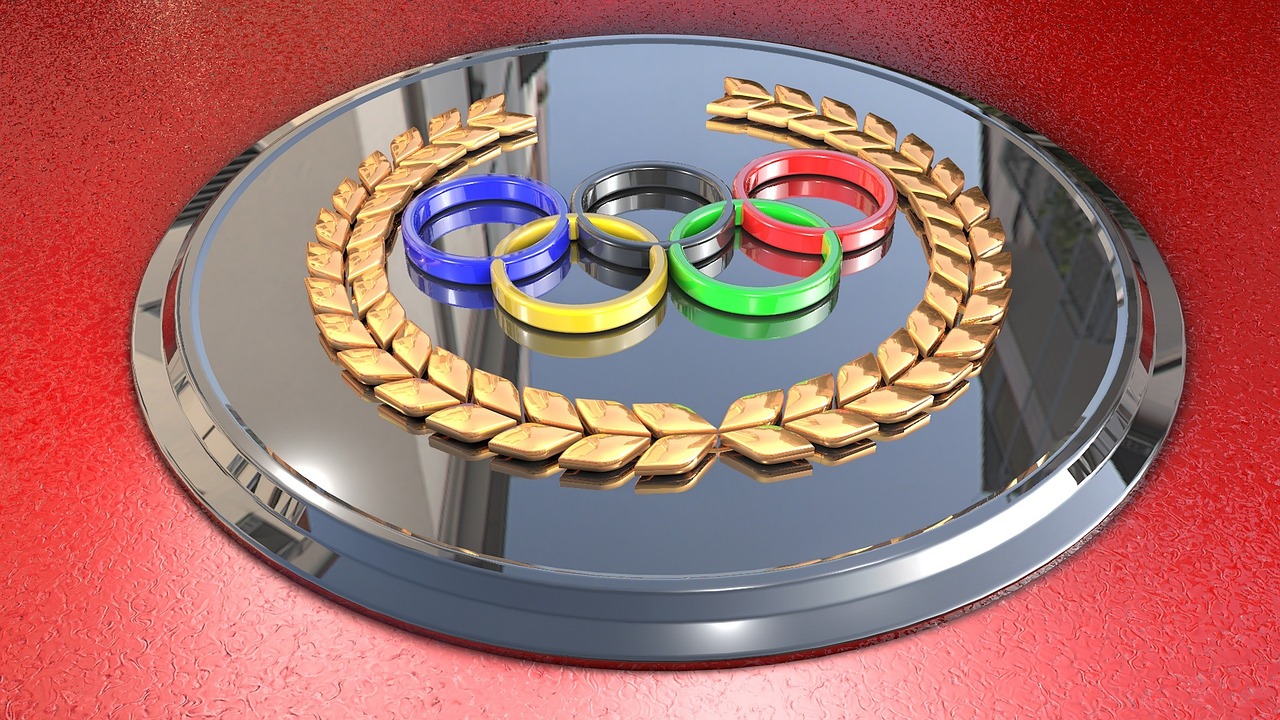
Olympic Games History
From Olympia in ancient Greece to a global movement — the history and evolution of the Games.
The Olympic Games are the world's foremost international multi-sport event, with a lineage that reaches from the sanctuary of Olympia in ancient Greece to a modern movement involving more than two hundred nations. Revived in the late nineteenth century by the French educator Pierre de Coubertin, the Games have grown into a cultural phenomenon that blends athletic competition, civic ceremony, and global diplomacy into a single recurring event.
Overview
The Olympic Games exist in two related senses. The ancient Olympic Games were a religious and athletic festival held at Olympia in the western Peloponnese of Greece, dedicated to Zeus, and celebrated for roughly twelve centuries before being suppressed in late antiquity. The modern Olympic Games are an international sporting event founded in 1894, first staged in Athens in 1896, and governed today by the International Olympic Committee. Although the two are separated by more than fifteen hundred years, the modern Games consciously draw symbolism, vocabulary, and prestige from the ancient festival.
Each four-year span between Summer Games is called an Olympiad, a unit of time used for dating in the ancient Greek world. The modern Summer Olympic Games are held every four years. Since 1994 the Winter Olympic Games have been staged on an offset four-year cycle, so that a Summer or Winter edition opens every two years. The Paralympic Games, organized by the International Paralympic Committee, take place in the same host cities shortly after each Olympic edition. The Youth Olympic Games, launched in 2010, provide a companion event for athletes aged fifteen to eighteen.
The fundamental principles of the modern movement are set out in the Olympic Charter. Central among them is the concept of Olympism, which defines sport as a way of life that blends physical effort, cultural expression, and ethical formation. The Charter enshrines non-discrimination, fair play, respect between athletes and nations, and the pursuit of peaceful international cooperation through sport. These principles are promoted by the International Olympic Committee, by National Olympic Committees in each participating territory, and by the International Federations that govern each sport on the Olympic programme.
Key Facts
- First ancient Games
- Traditionally dated to 776 BCE at Olympia (a conventional date; the earliest Games may be older or partly legendary)
- End of ancient Games
- 393 CE, when Emperor Theodosius I suppressed pagan festivals in the Roman Empire
- Modern revival
- International Olympic Committee founded in Paris on June 23, 1894 by Pierre de Coubertin
- First modern Games
- Athens, April 1896 — fourteen nations, approximately two hundred and forty-one athletes, forty-three events
- Summer Games
- Held every four years from 1896, with cancellations in 1916 (World War I), 1940, and 1944 (World War II)
- Winter Games
- First staged at Chamonix, France in 1924; now on an offset four-year cycle from the Summer Games
- Recognized National Olympic Committees
- Two hundred and six National Olympic Committees recognized by the International Olympic Committee as of 2024 (figure shifts with recognitions and suspensions)
- Athletes at Paris 2024
- Approximately ten thousand five hundred competing athletes (preliminary figures; final accreditation totals vary)
- Sports at Paris 2024
- Thirty-two sports, including the first Olympic appearance of breaking
- Motto
- Citius, Altius, Fortius — Communiter (“Faster, Higher, Stronger — Together”), with Communiter added in 2021
Ancient Olympic Games
The ancient Olympic Games were held at Olympia, a sanctuary in the region of Elis in the western Peloponnese of Greece. Ancient tradition traced the first Games to 776 BCE, the year from which later Greek chronographers dated their Olympiad system. Modern historians treat this date as conventional rather than strictly verified. Archaeological evidence suggests that athletic activity at Olympia may have been older, and the early history of the festival is interwoven with myth and religious practice. The Games were held in honor of Zeus, and the festival centered on the great altar and temple complex at Olympia. Victors were crowned with wreaths of wild olive cut from a sacred tree within the sanctuary.
The festival began as a single day of foot racing and expanded over centuries into a multi-day event featuring wrestling, boxing, the pankration (a severe hybrid of boxing and wrestling), the pentathlon (running, jumping, discus, javelin, and wrestling), and the chariot and horse races in the nearby hippodrome. Only free-born Greek male citizens could compete, and spectators were similarly restricted by gender and status. Competitors trained for months beforehand and swore an oath to compete fairly before the statue of Zeus Horkios.
Around the Games, the Greek city-states observed the ekecheiria, a sacred Olympic truce that guaranteed safe passage for athletes and pilgrims. The truce did not eliminate warfare, but it regulated hostilities around the festival and became a symbol of shared Hellenic identity across competing cities. The ancient Games continued, with gradual Romanization after the Greek world was absorbed into the Roman Empire, until Emperor Theodosius I suppressed non-Christian festivals in 393 CE. Olympia itself was later damaged by earthquakes and buried by river silt, and the site was only rediscovered and systematically excavated from the eighteenth and nineteenth centuries onward.
The Modern Revival (1894–1896)
The modern Olympic movement was founded by Pierre de Coubertin, a French educator and historian who believed that international athletic competition could foster peace, educational reform, and physical culture. Coubertin drew inspiration from the archaeological rediscovery of Olympia, from the English tradition of school sport, and from the earlier Wenlock Olympian Games organized by William Penny Brookes in Shropshire, England. In 1892 he first publicly proposed reviving the Olympic Games at a conference at the Sorbonne in Paris, and in June 1894 a larger congress at the Sorbonne formally established the International Olympic Committee.
The new committee designated Athens as the site of the first modern Games, linking the revival to the ancient Greek heritage of the festival. The Games of the First Olympiad opened in April 1896 at the restored Panathenaic Stadium, a marble arena in the heart of Athens. Fourteen nations sent athletes, most of them men drawn from Greece, Germany, France, the United Kingdom, and the United States. Approximately two hundred and forty-one athletes contested forty-three events across nine sports, including athletics, cycling, fencing, gymnastics, swimming, shooting, tennis, weightlifting, and wrestling. The marathon, a new event inspired by the legendary run from Marathon to Athens, was won by the Greek runner Spyridon Louis and became one of the enduring emotional centers of the Games.
Despite financial difficulties and logistical improvisation, the 1896 Athens Games demonstrated that a recurring international sporting festival was feasible. Coubertin served as president of the International Olympic Committee from 1896 to 1925 and shaped the long-term character of the movement, including its emphasis on ceremony, symbolism, and the principle of regularly rotating host cities.
Early Modern Games (1900–1912)
The four Olympiads that followed Athens gradually established the conventions of the modern Games. The 1900 Paris Games were held as part of the Exposition Universelle, the Paris World's Fair, and stretched over more than five months. The athletic events were dispersed across several venues and sometimes overlapped with fair attractions, which blurred the identity of the Games in the eyes of participants and the public. Nevertheless, the 1900 programme broke new ground by including the first women competitors in modern Olympic history, with events in lawn tennis, golf, sailing, croquet, and equestrian competition.
The 1904 Games in St. Louis were similarly attached to a World's Fair, the Louisiana Purchase Exposition. Transatlantic travel difficulties and the chosen site produced a heavily American field, and many events were dominated by athletes from the United States. The 1906 Intercalated Games held in Athens helped stabilize the format by presenting a compact, athletics-focused festival, although the International Olympic Committee later declined to count 1906 among the official Olympic editions.
London 1908 introduced standard distances, formalized rules for athletics, and included a purpose-built Olympic stadium at White City. It also saw the establishment of the modern marathon distance of forty-two kilometers and one hundred ninety-five meters. Stockholm 1912 is often regarded as the first fully modern Games in organization: the event introduced electronic timing for athletics, photo-finish equipment at the finish line, the decathlon and the modern pentathlon, and women's swimming and diving. Taken together, the four Olympiads from 1900 to 1912 transformed the Games from a novelty attached to world's fairs into an autonomous international institution.
Interwar and World War II Era (1920–1948)
The 1916 Berlin Games were cancelled because of the First World War. When the Games resumed in Antwerp in 1920, the host city had recently been occupied during the war, and the edition carried a strong theme of reconciliation. Antwerp introduced the Olympic flag with its five interlaced rings, the athletes' oath, and the symbolic release of doves at the opening ceremony. The defeated Central Powers were not invited, foreshadowing a recurring pattern in which diplomatic conflicts would shape the Olympic roster.
The 1924 Games in France were held in Paris and featured the first purpose-built Olympic Village for athlete accommodation. Earlier in the same year, Chamonix hosted the International Winter Sports Week, which the International Olympic Committee retroactively recognized as the inaugural Winter Olympic Games. Amsterdam 1928 introduced women's track and field athletics, greatly expanding the range of Olympic events open to women. Los Angeles 1932 refined the concept of the Olympic Village as a permanent feature of the Games and pioneered several timing and photographic innovations.
The 1936 Berlin Games were held under the Nazi regime and were deliberately used as a propaganda platform by the German state. Despite the political context, American athlete Jesse Owens won four gold medals in athletics, and the Berlin edition introduced the modern torch relay from Olympia to the host city. The Games scheduled for Tokyo in 1940 and London in 1944 were cancelled because of the Second World War. When the Games resumed in London in 1948, they were organized under postwar austerity, with athletes housed in military barracks and school dormitories, and Germany and Japan were not invited. The 1948 edition is often remembered as the Austerity Games and set the stage for the accelerated globalization of the Olympic movement in the decades that followed.
Cold War Era (1952–1988)
From 1952 onward, the Olympic Games became a visible arena of competition between the two superpower blocs of the Cold War. The Helsinki 1952 Games marked the Olympic debut of the Soviet Union and prompted a new emphasis on medal tables and national prestige. At Melbourne 1956, the political climate produced sharp confrontations, including the “Blood in the Water” water polo semifinal between Hungary and the Soviet Union, played shortly after the Soviet suppression of the Hungarian Revolution.
The Mexico City 1968 Games were remembered both for athletic breakthroughs, including the first long jump to exceed eight meters and ninety centimeters, and for the Black Power salute performed by United States sprinters Tommie Smith and John Carlos on the medal podium. The Munich 1972 Games were overshadowed by a terrorist attack in which members of the Palestinian group Black September killed eleven Israeli team members and a German police officer. The Games continued after a suspension, and security became a permanent concern at subsequent editions.
Montreal 1976 left its host city with severe financial strain that shaped later debates about the cost of Olympic hosting. The Moscow 1980 Games were boycotted by the United States and sixty-five allied nations in protest of the Soviet invasion of Afghanistan, and the Los Angeles 1984 Games were met with a counter-boycott led by the Soviet Union and most of its allies. Los Angeles 1984 demonstrated the financial viability of a privately funded Olympic model, while Seoul 1988 restored a nearly universal field and set the stage for the post-Cold War era of the movement.
Post-Cold War Globalization (1992–present)
The fall of the Berlin Wall and the dissolution of the Soviet Union opened a new phase for the Olympic movement. Barcelona 1992 was the first Summer Games in two decades without a major boycott, and professional athletes from the National Basketball Association competed in the men's basketball tournament as part of the United States team, setting a template for subsequent Games. In the same year, the Albertville Winter Games were the last held in the same calendar year as the Summer Games; from 1994 the Winter cycle was shifted so that Olympic editions now occur every two years.
Atlanta 1996 marked the centennial of the modern Games, while Sydney 2000 is widely remembered as a successful example of an English-speaking host city using the Games to promote tourism and urban renewal. Athens 2004 returned the Summer Games to Greece for the first time since 1896. Beijing 2008 underscored the emergence of China as a sporting power and featured a spectacular opening ceremony that drew an estimated global television audience of more than a billion viewers. London 2012 became the first city to host the modern Summer Games three times, following earlier editions in 1908 and 1948.
Rio de Janeiro 2016 was the first Summer Games held in South America. Tokyo 2020 was postponed by one year because of the global COVID-19 pandemic and was eventually staged in the summer of 2021, largely without spectators in the venues. Beijing 2022 then became the first city to host both a Summer and a Winter edition of the Games. Paris 2024 restored full spectator capacity, while Milan-Cortina 2026 is scheduled to host the Winter Games across multiple alpine venues. Los Angeles has been awarded the Summer Games for 2028, with Brisbane confirmed for 2032, signaling a continuing rotation among established hosts.
Winter Olympics
The Winter Olympic Games grew out of figure skating and ice hockey events that had appeared at earlier Summer editions and out of nineteenth-century Nordic traditions of winter sport. The International Winter Sports Week, held at Chamonix in the French Alps from January to February 1924, drew athletes from sixteen nations and was retroactively recognized by the International Olympic Committee as the first Winter Olympic Games. The early programme featured bobsleigh, curling, ice hockey, figure skating, Nordic combined, cross-country skiing, ski jumping, speed skating, and the military patrol event that later evolved into the biathlon.
Alpine skiing was added in 1936 at Garmisch-Partenkirchen, and luge joined the programme in 1964 at Innsbruck. Short-track speed skating debuted as a demonstration sport in 1988 and became a medal sport in 1992. The Albertville 1992 and Lillehammer 1994 Games marked the shift to a separate four-year cycle for the Winter Games. Freestyle skiing, snowboarding, and skeleton were added progressively from 1992 onward. More recent additions include ski cross, slopestyle, big air, and mixed-team variants of existing events, all designed to broaden the age and cultural profile of Winter Olympic audiences.
Winter Games have been hosted predominantly in Europe, North America, and Japan, with more recent editions in the Republic of Korea (PyeongChang 2018) and China (Beijing 2022). Host selection has increasingly had to balance the environmental realities of warming winters, the high fixed costs of mountain venues, and concerns about the long-term sustainability of the Winter Games within the broader Olympic movement.
Paralympics
The Paralympic Games originate in the rehabilitation work of Sir Ludwig Guttmann, a German-born neurologist who fled Nazi persecution and established a spinal-injury unit at Stoke Mandeville Hospital in the United Kingdom. In 1948 he organized an archery competition among Second World War veterans with spinal-cord injuries, timed to coincide with the opening ceremony of the London Olympic Games. The Stoke Mandeville Games expanded annually and became international in 1952, drawing athletes from the Netherlands and other European countries.
The first international Games specifically described as Paralympic were staged in Rome in 1960, immediately following the Rome Olympic Games. Rome 1960 drew four hundred athletes from twenty-three nations. Subsequent Paralympic editions were not always held in the Olympic host city, but from Seoul 1988 onward the Paralympic Summer Games have been staged in the same venues as the Olympic Games, typically beginning about two weeks after the Olympic closing ceremony. The Paralympic Winter Games follow the same pattern, starting with Ornskoldsvik in Sweden in 1976.
The International Paralympic Committee was founded in 1989 with headquarters in Bonn, Germany, and now governs elite international sport for athletes with physical, visual, and intellectual impairments. The Paralympic movement has grown from around four hundred athletes at Rome 1960 to more than four thousand athletes at recent Summer Paralympic Games, with a correspondingly expanded media presence and a growing base of sponsorship and public support. The Paralympics are now central to public understanding of disability sport and of the broader Olympic movement.
Women and the Olympics
Women were entirely excluded from the ancient Olympic Games as competitors, with a parallel festival dedicated to the goddess Hera, known as the Heraia, providing a separate foot race for unmarried women at Olympia. The modern Games of 1896 in Athens were contested only by men, reflecting the assumptions of Pierre de Coubertin and many contemporaries that sport was principally a male activity. Women first competed at the Olympic Games in Paris in 1900, initially in lawn tennis, golf, sailing, croquet, and equestrian events, with the British tennis player Charlotte Cooper becoming the first individual female Olympic champion.
The expansion of events open to women accelerated slowly through the interwar period. Amsterdam 1928 introduced women's track and field athletics, though the eight hundred meter race was dropped after finishers at the first edition were portrayed in contemporary press accounts as over-exerted and was not reinstated until 1960. The Los Angeles 1984 Games added the women's marathon, and subsequent editions added women's events in sports including cycling, weightlifting, boxing, wrestling, and ski jumping. In the United States, the 1972 Title IX education amendment greatly expanded female participation in school and collegiate sport and fed directly into the pipeline of Olympic athletes.
London 2012 was the first edition at which women competed in every sport on the programme, after women's boxing was added. The International Olympic Committee has since set a formal target of gender parity in athlete numbers, and Paris 2024 was reported as the first Summer Games to reach approximate gender balance in accredited athletes, although parity in coaching, officiating, and media coverage lags behind the participation figures.
Politics, Boycotts, and Controversies
Although the Olympic Charter describes the Games as independent of political conflict, in practice the Games have frequently been shaped by the political climate of their era. Berlin 1936 was harnessed to Nazi propaganda. Mexico City 1968 saw the Black Power salute on the medal podium, as well as the Tlatelolco massacre of protesters in Mexico City days before the opening ceremony. Munich 1972 was disrupted by a terrorist attack on the Israeli Olympic team. Moscow 1980 and Los Angeles 1984 were each reduced by major boycotts arising from superpower tensions. Seoul 1988 was played against the backdrop of continued partition on the Korean Peninsula, and Beijing 2008 took place under global scrutiny of human rights practices in China.
Doping scandals have repeatedly tested the integrity of the Games. The Canadian sprinter Ben Johnson was stripped of his hundred-meter gold medal at Seoul 1988 after testing positive for an anabolic steroid, marking one of the highest-profile doping cases in Olympic history. The Bay Area Laboratory Cooperative (BALCO) investigation in the early twenty-first century implicated athletes from several countries. The World Anti-Doping Agency, founded in 1999, was later central to the exposure of a state-supported doping programme in Russia that had affected results at the Sochi 2014 Winter Games and other competitions. The resulting sanctions required Russian athletes to compete at subsequent Games as neutral or flag-free participants, and cases continued through the Court of Arbitration for Sport.
Host-city selection has also drawn sustained criticism. Corruption investigations surrounding the Salt Lake City 2002 bid led to structural reforms of the International Olympic Committee's bidding process. Human-rights concerns have accompanied the staging of the Games in several authoritarian or partly authoritarian host states, and environmental and social-displacement issues have recurred across diverse hosts in both the Summer and Winter cycles.
Olympic Symbols and Values
The most widely recognized symbol of the Olympic movement is the five-ring emblem, designed by Pierre de Coubertin in 1913 and first flown as an Olympic flag at Antwerp in 1920. The five interlaced rings, rendered in blue, yellow, black, green, and red on a white field, represent the five inhabited continents of the world as understood in the early twentieth century. At least one of the six colors, including the white background, appears in every national flag recognized at the time the emblem was designed.
The Olympic flame and torch relay add a further layer of symbolism. The flame is kindled in a ceremony at the site of ancient Olympia using a parabolic mirror focused on sunlight, and then carried by a relay of runners to the host city, where it lights the cauldron at the opening ceremony. The torch relay in its modern form was introduced for the Berlin 1936 Summer Games and has since been extended and reshaped for each edition. The Olympic motto, Citius, Altius, Fortius — Latin for “Faster, Higher, Stronger” — was adopted in the early twentieth century from a phrase coined by the Dominican priest Henri Didon, and in 2021 the International Olympic Committee added Communiter, or “Together,” as a formal extension.
Olympic medals follow a convention of gold, silver, and bronze for the first, second, and third finishers in each event, a practice that stabilized during the early modern Games. The opening and closing ceremonies function as national and international showcases, combining the parade of nations, the athletes' oath, the lighting of the cauldron, cultural performance, and the handover of the Olympic flag to the next host. Taken together, these symbols and rituals give the Games much of their distinct civic and ceremonial identity.
Sources
Detailed citations, data references, and institutional sources for all CountryReports content are listed on the Sources page. The following governing bodies, archives, and academic institutions are the primary authorities we rely on for Olympic Games content. Each link points to the institution's homepage.
Olympic and Paralympic Governing Bodies
- International Paralympic Committee (IPC) — Paralympic results, classification rules, and institutional history from the IPC's Bonn headquarters.
- Hellenic Olympic Committee — Greek National Olympic Committee; custodian of many traditions linked to ancient Olympia and the torch lighting ceremony.
- United States Olympic and Paralympic Committee (USOPC) — National Olympic and Paralympic Committee for the United States; Team USA records and institutional reports.
- Japanese Olympic Committee — National Olympic Committee for Japan; institutional history and records for host editions including Tokyo 1964 and Tokyo 2020.
Integrity and Dispute Resolution
- World Anti-Doping Agency (WADA) — World Anti-Doping Code, compliance monitoring, and investigations including those into state-supported doping programmes.
- Court of Arbitration for Sport (CAS) — International court based in Lausanne that rules on disputes involving Olympic eligibility, doping sanctions, and the Olympic Games.
International Federations
- World Athletics (formerly IAAF) — International federation for athletics, with historical records for Olympic track and field events since 1896.
- International Gymnastics Federation (FIG) — International federation for gymnastics, present on every Olympic programme since 1896.
Cultural and Academic Institutions
- UNESCO — Physical Education and Sport — Framework conventions on sport, anti-doping, and physical education, including the International Charter of Physical Education, Physical Activity and Sport.
- Pierre de Coubertin Foundation — Foundation dedicated to the writings, correspondence, and educational legacy of the founder of the modern Olympic movement.
- Library of Congress — Historical newspaper collections, photographs, and published records relating to the early modern Olympic Games, including the 1896 Athens edition.
- American Kinesiology Association — United States academic umbrella for research into exercise science, sport studies, and the physiology of elite athletes.
If you notice an error or would like to suggest a correction, please use our contact page to get in touch.