
 English
 Español
 中文
中文 हिन्दी
 Français
United States of America
Declare Your Relationship to United States of America
CountryReports Community
- Studying16
- From United States of America46
- United States of America heritage8
- Visited5
- Want to visit1
Quick Look Factsheet
A multi-page overview of United States of America.
United States of America FactsheetCustoms and Culture
Customs and Culture
About the People
Americans strongly value their freedom and see America as a country who defends democracy.
People in the United States cherish two things: the ability to own things, and the freedom to do as they wish. These two desires are both a blessing and a challenge. On one hand, they are quite materialistic and may believe that happiness can be bought with money and possessions, which they believe they have a right to do. On the other hand, the drive to own personal property has given them a great incentive to create one of the strongest economies in the world with a great spirit of independence from oppressive powers.
Although people in the United States like to own things and use those things to enjoy life (such as cars, boats, sports equipment, or other hobbies), they work very hard to earn the money needed to buy them. Adults tend to work long hours and take shorter vacations than their counterparts in cities in other countries. Life is fast paced and pressure filled.
Children are taught from an early age to value honesty and openness. Because of this, sometimes people from the United States are thought to be impolite and rude. Their behavior is not intended to be disrespectful of others; in fact, it is often considered to be more correct to respectfully disagree with another person than to agree dishonestly for the sake of politeness.
Although the United States has a reputation of being a land of opportunity, where anyone in the world can move and seek a better life, doing so might be more difficult than you might think. Educational degrees and professional training might not be accepted by the government or by professional organizations, permits to work in the country must be sought, and eventual citizenship can be obtained only by passing a lengthy test of both knowledge and commitment to the United States and its government. Nonetheless, thousands successfully undergo the challenge of obtaining citizenship every year in order to become a resident of what many consider as the most powerful country in the world.
Cultural Attributes
Americans strongly value their freedom and see America as a country that defends democracy.
People in the United States cherish two things: the ability to own things, and the freedom to do as they wish. These two desires are both a blessing and a challenge. On one hand, they are quite materialistic and may believe that happiness can be bought with money and possessions, which they believe they have a right to do. On the other hand, the drive to own personal property has given them a great incentive to create one of the strongest economies in the world with a great spirit of independence from oppressive powers.
Although people in the United States like to own things and use those things to enjoy life (such as cars, boats, sports equipment, or other hobbies), they work very hard to earn the money needed to buy them. Adults tend to work long hours and take shorter vacations than their counterparts in cities in other countries. Life is fast-paced and pressure-filled.
Children are taught from an early age to value honesty and openness. Because of this, sometimes people from the United States are thought to be impolite and rude. Their behavior is not intended to be disrespectful of others; in fact, it is often considered to be more correct to respectfully disagree with another person than to agree dishonestly for the sake of politeness.
Although the United States has a reputation for being a land of opportunity, where anyone in the world can move and seek a better life, doing so might be more difficult than you might think. Educational degrees and professional training might not be accepted by the government or by professional organizations, permits to work in the country must be sought, and eventual citizenship can be obtained only by passing a lengthy test of both knowledge and commitment to the United States and its government. Nonetheless, thousands successfully undergo the challenge of obtaining citizenship every year in order to become a resident of what many consider to be the most powerful country in the world.

Home of the Free, Land of Possibility
Greetings, Gestures & Visiting
Children and adults alike greet one another at all times of the day with “Hello” or the more casual “Hi!” In some areas of the west, “Hi” is replaced by the more cowboy-like “Howdy.” Until late morning, “Good morning” or perhaps even “Morning” are acceptable. Similarly, “Good afternoon” can be heard from just after noon to early evening when “Good evening” becomes appropriate. Interestingly, “Good day” has not become a standard anywhere in the country.
When greeting someone, a handshake is often exchanged for both men and women. Women who are also good friends might also enjoy a brief hug, and family members who have not seen each other for a while are often expected to hug each other both in greeting and farewell. Certain subcultures might exchange hand slaps and variations of handshakes, particularly among young men of various ethnic descents.
Although people from the United States tend towards informality, ceremonies or other public or formal settings will require that you address people by any applicable title (such as Senator, Reverend, Doctor, President, or even Mister). If you are uncertain what to do when meeting someone formally for the first time in the United States, extend your hand for a simple handshake and simply ask, “How should I address you?” In such a situation, the American habit of openness can work in your favor. More than likely, he or she will be happy to give you the help you seek without taking offense.
Citizens of the United States speak English as its official language, but the country is becoming increasingly bilingual with the rapid growth of its Hispanic population, particularly in the southern portions of the country.
Although Americans tend to act more informally, there are a few guidelines that are good to keep in mind when in the United States. For instance, although not all men will stand when a woman enters the room, you will be thought of as being courteous if you adopt this habit. It is acceptable to point at a place or a thing, but avoid pointing directly at people. Instead, point by gesturing slightly with your head in the direction of the person and looking quickly in that direction.
When speaking with another, slightly nodding your head up and down on occasion to show agreement can indicate that you are paying attention. Similarly, a slight movement of the head back and forth in a horizontal direction indicates non-agreement.
Most Americans tend to like personal space. It’s a big country, so don’t feel like you have to crowd an American when having a conversation. Simply shake their hands in greeting--usually with the right hand if possible--and then stand at least an arm’s length away after the greeting while continuing to chat. When an adult winks it to another adult it usually means they are joking. Poor posture is not uncommon among Americans.
When visiting an American home or family, you should not worry as much about doing the right thing as being open and friendly in their home. They will sense your desire to do the right thing and help you along if they believe you are genuinely interested in them and their culture. Nonetheless, here are a few tips that might help you get along for that first American visit.
Impromptu visits may be acceptable, but it is best to call in advance to ensure that the family will be home and in a position to receive guests. When a visit has been arranged, try to arrive on time. Most Americans are fairly time conscious. An American family will not expect you to bring a gift when you arrive. If you want to bring some small gift to the adults of the family, bring a small bouquet of flowers or a light dessert to eat later together. While you are visiting, your hosts may offer you some light refreshments; you may join in the refreshments, or, if you’re just not in the mood, simply politely decline. Doing so is not considered offensive.
Weather permitting, in rural areas youth will often gather on a lawn or front porch of a home to visit. In more urban settings, meeting at the mall, a park, or a similar public place is commonplace.
Americans are typically informal with hospitality taking many forms. A barbecue is served on paper plates, a formal dinner on fine dishes, or a leisurely visit with either a drink or possibly no refreshments.
In general, residents of the United States tend towards more informal, casual dress, particularly in areas outside the eastern seaboard. Of course, business settings require anything from suits, white shirts, and ties for men and equivalent business attire for women to dress slacks and polo shirts or casual blouses. Away from formal settings, blue jeans and T-shirts are the most popular clothing worn by people of all ages, from toddlers to the elderly, although children and younger people will tend to dress more casually than adults. Popular trends may also sweep through the nation from time to time, such as wearing jeans with holes deliberately torn in the knees or the “tie-dye” fashions of the 1970s.
If there is a distinctive traditional dress for the United States, it may well be that resembling Western cowboys, with cowboy boots, western-cut jeans, shirts with pearl buttons, and cowboy hats. This is a look that is perpetuated among recording artists of popular country western music and their fans. The United States is home to large population centers of most cultures of the world, which centers may wear traditional dress at holiday or celebration times, based on their homeland.
Jewelry is often worn casually by women and increasingly by men in the form of a bracelet or gold necklace. Earrings may be worn by both genders, although men from conservative parts of the country are unlikely to wear either necklaces or earrings. Fine jewelry is often worn by women of wealthier means, often as a sort of status symbol. Young children do not typically wear jewelry for everyday use until perhaps their early teenage years.
Diet
Fast food is found in abundance in America reflecting the on-the-go lifestyle of Americans. Many dishes are adopted from the nationality of immigrants including Chinese, Mexican, Japanese, and Italian.
The typical family in the United States eats three meals per day. Breakfast for the adults might often consist of a cup of coffee or fruit juice and a baked pastry or toast. More health conscious adults might eat fresh fruit. Children will likely eat a light breakfast that may include prepared cereal. The midday meal is light and eaten at approximately noon. The fast-paced society typical of most of urban life dictates that “lunch” is eaten fairly quickly and often consists of a light meal with smaller portions, perhaps just a sandwich, small salad, or similar food. The evening meal is the main meal for most families in the United States. Although eating in a restaurant is growing more popular over time, most families continue to eat at home after work and school is concluded. Meals are one course and consist of a meat portion (chicken, beef, pork) and vegetables. Dessert is optional.
When eating in public, the woman traditionally places her order first, then the man. For casual dining or fast food restaurants, there are few strict social requirements. For example, elbows may be placed on the table and hands need not always be placed on top of the table in plain sight. Family restaurants are plentiful and very popular, and children of all ages are welcome.
The United States is a large country with regional food specialties. Seafood is popular on the coasts, beef in the west and Midwest, Hispanic influences are evident in the southwest and in California, and hearty meals from the south will provide an experience in both warm hospitality and memorable home-grown foods.
Fast food is found in abundance in America reflecting the on-the-go lifestyle of Americans. Many dishes are adopted from the nationality of immigrants including Chinese, Mexican, Japanese, and Italian.

Family
Perhaps more than in any other country in the world, the dream of the typical family in the United States is to own their own home. Most families will realize that dream, although apartment dwelling in high-population urban centers can carry the same sense of accomplishment. In suburban and rural areas, single-family houses dominate. Homes in the United States may rightfully be thought of as unusually large and spacious by the rest of the world. Humble “starter” homes will usually have two or three bedrooms, a kitchen, a family room, a bathroom or two, and a carport or garage for one or two cars.
Extended families might choose to live in the same neighborhood, but newly married couples are usually encouraged to move out of their parent's homes and begin to form their own household on their own, although economically that is not always possible. Multi-generational households are becoming less common. Men and women have fairly equal but different responsibilities in family life. Increasingly, women share in supporting the family financially, and men help more with household chores than was the case two or three generations ago.
The typical family has one to three children, though some subcultures have a tradition of quite large families with four to seven (or more) children. Children can begin attending preschool at age three or four, kindergarten at age five, and first grade in elementary school at age six. Most children will attend twelve years of schooling, with the opportunity to then receive further training at a trade or academic school. Most costs of the first twelve years are covered by state funds, but higher education requires a much larger financial commitment from its students (although state and private funds do assist somewhat with higher education).
Families tend to enjoy recreation, such as sports, together, and many families will take a vacation somewhere away from their home for a week every year or two.
A generation ago, the American family was the basic unit of society. Today about 25% of families consist of a single parent with only one or two children. About 50% of families have both parents working. Elderly individuals who can not care for themselves live in retirement communities. The elderly are a rising segment of the population with the “Baby-boomers” reaching retirement age.
Recreation
Sports and recreation play a major role in the social fabric of the United States. Popular national sports include basketball, American-style football, baseball, and soccer (also ice hockey in some areas). For youth, many sports are tied to schools as extracurricular activities, although sports clubs and community-sponsored sports programs are becoming increasingly popular. In addition, individual sports such as hiking, camping, bicycling, running or jogging, and swimming are popular among all ages and is viewed more as recreational activities.
Sports channels and programs on television are very popular and are dominated by the “big money” sports of baseball, football, and basketball, although many other sports do get varying degrees of television air time. It is not unusual for teenage friends--and sometimes adults--to gather at a friend’s home and watch the “big game” of the week, and sports form a significant portion of each evening’s newscast.
An important part of the national culture is vacationing. Vacations increasingly center on entertainment, such as theme parks, cruises, and dedicated resorts. Although Americans like their vacations, they lead such active, busy lives that they tend not to vacation for more than a week at a time, and the adults remain increasingly connected to their offices with the growing popularity of “smartphones,” internet connectivity, and laptop computers, even while vacationing.
Student Life
Breakfast will vary by family preferences and culture. Most children will have a light breakfast before going to school, such as a bowl of cold cereal (i.e., Cheerios) with milk and perhaps toast. A heavier breakfast might include one or more of the following: eggs, hash brown potatoes, hot cereal, muffins, pancakes, and juice or milk. More than 60% of mothers with younger school children work. Because of the growing number of homes where parents are often gone before children leave for school, many elementary schools are developing breakfast programs to ensure that children do not go hungry and will provide free or reduced-cost light breakfasts for qualifying students.
Some children ride bikes to school or walk, some ride buses provided by the school, others will take advantage of the public transportation systems available in many metropolitan areas, and yet others will ride in a carpool or with a parent. The method of transportation often depends on whether the school is in an urban or rural setting, the time of year, and the economic status of the parents.
Because schools are funded at the state and local levels, the quality of the structures and classroom resources can vary significantly. Most schools try to hold their class size to 20 students or less, but occasionally resources require larger class enrollments. Because students are at school for an average of seven to eight hours per day (depending on local guidelines), they will usually eat lunch during school hours. They may bring a lunch from home, or buy lunch at school for a very reasonable cost (about US $2.00). Dietary guidelines for lunches available at the school are established by the national government (administered by the Department of Agriculture), but local schools decide what foods to serve to meet those guidelines. A typical lunch might consist of a hamburger or slice of pizza, a drink, fruit, and a cookie. For lower-income families, the lunches are free or reduced in price. In the 2004-2005 school year, six out of every ten students in the United States received a free or reduced-price lunch.
Children are in school for an average of seven to eight hours per day (depending on state and local regulations), Monday through Friday, for approximately 180 days per year. Most schools have a long break of about two and a half months during the summer season, which is much longer than in many other nations. School uniforms are not required for most public schools in the United States (3% had uniforms in 1997, whereas some studies claimed up to 21% in 2000). However, there is usually some sort of dress code that prohibits clothes that expose too much skin or undergarments, are gang-related, or are otherwise just not safe. In private schools, uniforms are quite common, consisting of collared shirts of specific colors with pants or skirts also of specific colors. Some private schools prefer a more formal uniform of blazer and tie for boys and culottes or skirts for girls. Although the school curriculum changes from state to state, nearly all elementary schools will teach mathematics, language arts (such as reading and writing), science, social studies (including history and geography), and physical education. Most schools today will also teach basic computer skills, which is becoming a critical part of education in all fields of study and general life skills. Secondary schools will teach increasingly focused aspects of these general subject areas and often include additional elective courses such as drama, choral and instrumental music, life skills (such as cooking or personal finances), foreign languages, athletics, publishing, and technical skills (such as auto mechanics, welding, or carpentry). Most states assign performance grades using a series of letters: traditionally A meant exceptional; B, above average; C, average; D, below average; and F was a failing grade that required repetition of the course until mastery was obtained. However, grade inflation has become such a common practice that today a B is more typical of average performance, and a C is passing but substandard work.
Educational and other activities outside the bounds of the regular curriculum but under the direction or jurisdiction of the school can provide significant opportunities for student growth in the United States. Most athletic teams, for example, are sponsored by schools rather than clubs. High school athletic competitions are often significant community events, especially in rural areas. States such as Texas are well-known for their devotion to high school football, and games (with their attendant food vending, shirt sales, and the like) can be a major source of revenue for some schools. Practice for sports, dramatic presentations, music competitions and performances, and similar events can take many hours each week. Schools often have opportunities for less-visible but equally important interests as well, such as student government, computer programming, performing arts, agricultural development, community service, business and marketing, and similar subjects.
Children in the United States enjoy sports (such as soccer, basketball, baseball, football, and skateboarding), going to movies, and, as they get into secondary schools, hanging out with their friends at a local shopping center or at one of their homes. As they get older, many work part-time jobs after school and on weekends. With school, extracurricular activities, jobs, and home responsibilities, some older students can lead lives with schedules as full as top-level executives or professionals.
Many families unwind from the day’s events by watching television together in the evenings. Children often do their homework in the evenings after dinner, which is the major meal of the day for most families in the United States. Homework will often take from 30 to 90 minutes, depending on the student’s academic load and the school. Because increasingly both parents work in a family, or a single parent must work two jobs, evenings and weekends are reserved for family time. Older children are often required to help with household chores such as cooking and cleaning in homes where parents are working long hours. For more information, see “Family” in the “Culture and Customs” section for the United States.
The United States does not have a national school system; however, there are federal support programs and educational guidelines, in addition to state and local guidelines. Between 85 to 90% of children under the age of 18 attend public schools. Although the age limit varies by state, all children in the United States have the right to receive at least 11 years of public-funded education. These public schools are funded by local and state taxes and are under those jurisdictions. A fairly small segment of public schooling consists of charter schools, which are public schools that are turned over to a local community or group of parents to operate. Of those children who do not attend public schools, most enroll in private schools, which must be paid for by the families of the students. 80% of private schools in the United States are operated by religious groups. A third educational option taken advantage of by only a small percentage is a home school, which means that the parents teach the children themselves at home. The number of home-schooled children exceeded one million for the first time in 2003. Kindergarten is usually available for one year prior to entrance into elementary school, which begins at age six. School systems usually include grades one through six in elementary school, seven through eight or nine in junior high (sometimes called middle school), and grades nine or ten through twelve in high school. In smaller, rural communities, it is not uncommon for elementary school to include grades one through eight, with high school covering the remaining grades through twelve. With the influx of non-English-speaking people over the past 20 years, traditional educational models have been expanded to include content and methods from many of the major subcultures of the United States. Like most industrialized nations, approximately one-third of young adults entering the workforce are college educated. Increasingly, a college education is required to obtain a job supporting the standard of living to which many families have become accustomed.
Holidays
Independence Day
7/4Independence Day
Groundhog Day
2/2Other
In Punxsutawney, Pennsylvania, a groundhog named Punxsutawney Phil, predicts when spring will officially come. If he sees his shadow, he goes back into his hole for six more weeks of winter. Groundhog Day is not an official government holiday.
Valentines Day
2/14Other
While it is not an official government holiday, it is a day to express love. Dated back to ancient Roman celebration Lupercalia, a holiday for lovers.
First Day of Spring
3/21Other
First day of spring
World Day
4/22Other
The first Earth Day was in 1970 by Senator Gaylord Nelson of Wisconsin. With over 20 million Americans participating, the goal was to help clean the earth. In 1990, 200 million people in more than 140 countries celebrated the second Earth Day which is now an annual event.
Mother's Day
5/9Other
The first Mother’’s Day observed. In 1907, Anna Jarvis of Philadelphia, Penn. led a campaign for a nationwide observance of Mothers which was given official recognition in 1914 when President Woodrow Wildon signed the resolution.
Memorial Day
5/30Other
The first ovservance of Memorial day was held to honor soldiers killed in the Civil War (1861-1865). Now memorial day is held on the last Monday in May to honor all Americans killed during war time. This became a federal holiday in 1971.
Fathers Day
6/19Other
The first Fathers Day was celebrated in Spokane Washington. Started by Sonora Louise Smart Dodd of Spokane, Wash. after listening to a sermon on Mothers Day, she thought fathers should be honored also. In 1972 President Richiard M. Nixon signed legislation making the third Sunday in June the official holiday.
First Day of Summer
6/21Other
Independence Day
7/4Independence Day
The Declaration of Independence was signed on this date announcing the colonies’ separation from Great Britian to create the United States.
Labor Day
9/1Other
The first Monday in September - Labor Day in honor of working people. This holiday was first suggested by Matther Maguire, a machinist from Paterson, NJ and Petere J. McGuire, a carpenter from New York, NY. The frist Labor Day parade was in New York City in 1882. President Grover Cleveland signed a bill in 1894, proclaiming Labor Day a national holiday.
First Day of Autumn
9/21Other
Halloween
10/31Other
Halloween comes from the ancient Celtic harvest festival Samhain (Sah-wen),
a time when people believed spirits of the dead wandered the earth.
Later during the 8th Century A.D. the Catholic Church decided to make
November 1st a holy day called All Saints or All Hallows Day, the
evening of the day before became "All Hallows Even". Eventually it
became know as just Halloween. The Irish are credited with the
trick-or-treat idea as a result of villagers in Ireland going from
house to house on Halloween to beg for food for a community feast. Halloween
became popular in the United States of America in the early 1800s, when immigrants from
Ireland and Scotland introduced activities such as bobbing for apples
and jack-o’-lanterns. Now children dress up in costume and trick or
treat door to door for candy.
First Day of Winter
12/21Other
New Years Eve
12/31Other
Birth date - Alexander Hamilton
1/11Birthday
Birth date - Alexander Hamilton, patriot, first secretary of the U. S. Treasury. Born in Nevis, British West Indies on Jan. 11, 1755.
American Revolution
4/19Independence
Start of the American Revolution as British fired "the shot heard round the world".
Flag Day
6/14Independence
Flag Day
Birth date - Louis (Satchmo) Armstrong
8/4Birthday
Birth date - Louis (Satchmo) Armstrong, jazz musician, was born on Aug. 4, 1901 in New Orleans.
Birth date - Neil Alden Armstrong
8/5Birthday
Birth date - Neil Alden Armstrong was born on Aug. 5, 1930. On 20 July 1969, Neil Armstrong became the first human being to set foot on the moon.
Christmas
12/25
Dates of Interest
- May and June
The Stanley Cup is the oldest professional sports trophy in North America. Hockey teams compete for the title.
How do people greet each other in the United States of America?
People greet with "Hello" or the casual "Hi" ("Howdy" in parts of the west), often with a handshake for both men and women; time-of-day greetings like "Good morning," "Good afternoon," and "Good evening" are also common.
Do
- Offer a handshake when greeting men or women
- In formal settings, use titles such as Senator, Reverend, Doctor, President, or Mister
- If unsure, extend your hand and ask, "How should I address you?"
- Hug family members you haven't seen in a while in greeting and farewell
Good to know
- "Good day" is not standard anywhere in the country
- English is the official language, though the country is increasingly bilingual with a growing Hispanic population
- Some subcultures exchange hand slaps and variations of handshakes, especially among young men
What are the dining customs in the United States of America?
Families typically eat three meals a day, with a light breakfast and lunch and the evening meal as the main one, usually a single course of meat and vegetables. Casual and fast-food dining has few strict rules.
Do
- Let the woman place her order first, then the man, when eating in public
- Feel free to eat at family restaurants with children of all ages
- Try regional specialties: seafood on the coasts, beef in the west and Midwest, Hispanic-influenced food in the southwest and California, hearty southern meals
Good to know
- Fast food is abundant, reflecting the on-the-go lifestyle
- Many dishes are adopted from immigrant cuisines including Chinese, Mexican, Japanese, and Italian
- In casual or fast-food settings, elbows on the table and hands off the table are acceptable
- The evening meal is the main meal, and most families eat at home
What should I know about etiquette when visiting a home in the United States of America?
Americans are informal, so being open and friendly matters more than doing everything perfectly; hosts will help you along if you seem genuinely interested in them.
Do
- Call in advance to confirm the family is home and able to receive guests
- Arrive on time, as most Americans are time conscious
- Bring a small bouquet of flowers or a light dessert if you wish (though no gift is expected)
- Politely decline offered refreshments if you're not in the mood — it's not offensive
Good to know
- Impromptu visits may be acceptable but calling ahead is best
- Hospitality takes many forms, from paper-plate barbecues to formal dinners on fine dishes
- Value honesty and openness; respectfully disagreeing is often seen as more correct than agreeing dishonestly
How should I dress in the United States of America?
Dress tends toward informal and casual, with blue jeans and T-shirts popular across all ages; business settings call for suits and ties or equivalent business attire.
Do
- Wear business attire such as suits, shirts, and ties (or equivalent for women) in business settings
- Dress casually in jeans and T-shirts away from formal settings
Good to know
- Western cowboy attire — boots, western-cut jeans, pearl-button shirts, and cowboy hats — is a distinctive traditional look
- Jewelry is worn casually by women and increasingly by men; men in conservative areas are unlikely to wear necklaces or earrings
- Young children typically don't wear everyday jewelry until their early teens
- Cultural communities may wear traditional dress at holidays or celebrations
What gestures should I know in the United States of America?
Americans act informally but value personal space; nodding shows agreement and shaking the head side to side shows disagreement.
Do
- Point at places or things, but gesture toward people with a slight head movement instead
- Stand at least an arm's length away after greeting
- Nod slightly to show you're paying attention
Don’t
- Don't point directly at people
- Don't crowd an American during conversation
Good to know
- Men who stand when a woman enters the room are seen as courteous
- A wink between adults usually means they are joking
- Shake hands with the right hand if possible
- Poor posture is not uncommon
What is family life like in the United States of America?
The typical dream is to own a home, and families usually have one to three children; newly married couples are often encouraged to form their own households.
Good to know
- Men and women share fairly equal but different family responsibilities, with women increasingly supporting the family financially and men helping more with chores
- Multi-generational households are becoming less common
- About 25% of families are single-parent, and about 50% have both parents working
- Children start preschool at three or four, kindergarten at five, and typically attend twelve years of schooling
- Elderly individuals who cannot care for themselves live in retirement communities
What do people do for recreation in the United States of America?
Sports and recreation are central to social life, with basketball, American football, baseball, and soccer among the most popular; vacationing is also an important part of the culture.
Good to know
- Individual activities like hiking, camping, bicycling, running, and swimming are popular across all ages
- Youth sports are often tied to schools, with clubs and community programs growing
- Friends often gather at a home to watch the "big game" of the week
- Vacations often center on theme parks, cruises, and resorts, but Americans rarely vacation more than a week at a time
What should I know before visiting the United States of America?
Americans value freedom, independence, and material success, work long hours, and lead fast-paced, pressure-filled lives.
Good to know
- Their directness and honesty may seem rude but isn't meant to be disrespectful
- Life moves quickly and adults often stay connected to work even while vacationing
- Getting educational degrees or professional training recognized, obtaining work permits, and gaining citizenship can be more difficult than expected
Last updated: 2026-07-12 · Sources: CountryReports
Photos of United States of America
Photos of United States of America
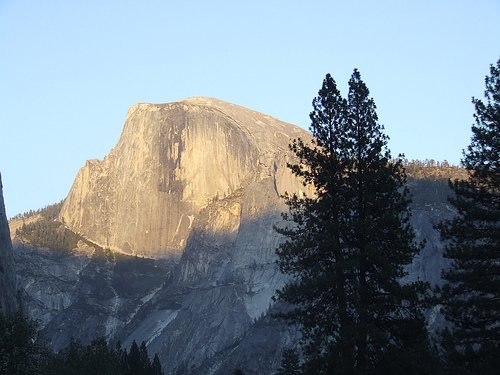
Yosemite National Park
9/11 memorial lights in lower Manhattan, NYC
A family
Alaska Civic Buildings, Anchorage
Alcatraz prison, San Francisco bay
Amish horse and wagon in Lancaster County, PA
Battlefield in Gettysburg
Bethesda Fountain in the Fall, Central Park, New York City,
Big Sur, California, USA
Black Rock, Maui, Hawaii
Boston, USA


Travel and Tourism
Travel and Tourism
- Travel Alert Status
- Level 1: Exercise Normal Precautions
- Currency
- 1
- Time Difference
- UTC-5 (during Standard Time) time zone note: the 50 United States cover six time zones
- Climate
- Mostly temperate, but tropical in Hawaii and Florida, arctic in Alaska, semi-arid in the great plains west of the Mississippi River, and arid in the Great Basin of the southwest; low winter temperatures in the northwest are ameliorated occasionally in January and February by warm chinook winds from the eastern slopes of the Rocky Mountains.
- Airports
- 15079
Read the full travel guide — health, safety, vaccinations, disease risk, sanitation, and transit details.
View full travel guideRecipes
Recipes
Southern Cornbread
Bread
Appetizer
Nacho Supreme
Main Dish
Fast Family Lasagna
Main Dish
Southern-fried Chicken
Main Dish
Corn Dogs
Main Dish
Turkey with Pan Gravy
Main Dish
Barbecued Beef
Main Dish
PremiumBarbecue Pork Roast
Main Dish
PremiumMacaroni and Cheese
Main Dish
PremiumBeef Stew
History
History
Historical Eras
Pre-Colonial Era
600 BCE – 1607
Indigenous peoples including the Adenans and Hopewellians built complex civilizations across North America long before European contact. Christopher Columbus's 1492 voyage initiated sustained European awareness of the continent. Spanish, French, and English explorers subsequently mapped and contested the territory, setting the stage for permanent colonial settlement.
Colonial Period
1607 – 1776
England established its first permanent American settlement at Jamestown, Virginia in 1607, followed by the Pilgrim Fathers' Plymouth Colony in 1620. Thirteen distinct colonies grew along the Atlantic seaboard, developing trade economies and nascent self-governing assemblies. Mounting tensions over British taxation without colonial representation — culminating in the Boston Massacre and Boston Tea Party — ignited revolutionary sentiment.
Founding & Early Republic
1776 – 1820
The Declaration of Independence in 1776 formally severed ties with Britain, and the Treaty of Paris (1783) secured international recognition of the new nation. George Washington became the first president in 1789, and the Bill of Rights enshrined individual liberties in 1791. The Louisiana Purchase (1803) and Lewis and Clark's western expedition dramatically expanded the young republic's territorial ambitions.
Expansion & Civil War
1820 – 1865
Westward expansion under the banner of Manifest Destiny added vast territories but intensified conflicts over slavery's extension into new states. The election of Abraham Lincoln in 1860 triggered Southern secession and the catastrophic Civil War (1861–1865), the nation's deadliest conflict. The Union's victory preserved the federal government and led to the abolition of slavery through the Thirteenth Amendment.
Reconstruction to World Power
1865 – 1945
Post-war Reconstruction reshaped the South while rapid industrialization transformed the broader national economy, drawing millions of immigrants and fueling the rise of major cities. The United States emerged as a global force through victories in the Spanish-American War, World War I, and despite the severe setback of the Great Depression of the 1930s, ultimately World War II. These decades established American industrial, military, and diplomatic preeminence on the world stage.
Superpower & Modern Era
1945 – present
Victory in World War II positioned the United States as a dominant superpower, leading to decades of Cold War rivalry with the Soviet Union that shaped global politics until 1991. Domestically, the Civil Rights Movement dismantled institutionalized segregation, while technological innovation drove sustained economic growth. The United States remains the world's foremost military and economic power, navigating challenges of terrorism, political polarization, and rapid technological change.
Overview
The Adenans appear to have been absorbed or displaced by various groups collectively known as Hopewellians. One of the most important centers of their culture was found in southern Ohio, where the remains of several thousand of these mounds still remain. Believed to be great traders, the Hopewellians used and exchanged tools and materials across a wide region of hundreds of kilometers.
Timeline of Key Events
1492
Christopher Columbus discovers America.
Christopher Columbus discovers America.
1607
Jamestown, the first permanent English settlement in America, is established.
Jamestown, the first permanent English settlement in America, is established by the London Company in southeast Virginia.
1620
Plymouth Colony, near Cape Cod, is founded by the Pilgrim Fathers.
Plymouth Colony, near Cape Cod, is founded by the Pilgrim Fathers, whose example is followed by other English Puritans in New England.
1754 – 1763
French and Indian War.
French and Indian War.
1765 – 1773
The British Parliament bypasses colonial assemblies and imposes taxes.
The British Parliament bypasses colonial assemblies and imposes several internal and external taxes on the outraged colonists.
1770
Boston Massacre.
Boston Massacre. British troops fire into a mob, killing five men and leading to intense public protests.
1773
The colonial response to taxation without representation culminates in the Boston Tea Party.
The colonial response to taxation without representation culminates in the Boston Tea Party. The Sons of Liberty dump 342 chests of tea into Boston harbor.
Read the full history profile — narrative overview, defining eras, and the complete timeline in one place.
View expanded historyInteresting Facts
Interesting Facts
When a child loses a tooth they put tooth under their pillow. While asleep, the Tooth Fairy will come into the room, take the tooth and leave some money in its place.
When an eskimo child loses a tooth the Yupik mother wraps the food in meat or bread. Then they feed it to a female dog and say "replace this tooth with a better one".
Navajo (American Indian Tribe): When a child loses a tooth the mother saves the tooth until their mouth stops hurting. Then they take the tooth to the southeast, away from the house. They bury the tooth on the east side of a healthy young sagebrush, rabbitbrush, or pinyon tree because they believe that east is the direction associated with childhood.
The largest fresh water lake in the world is Lake Superior, one of the Great Lakes in North America. It is 31,700 square miles in size.
The fastest recorded wind spot on earth is atop Mount Washington in New Hampshire. A wind speed of 231 miles per hour has been recorded there.
The snowiest place on earth is Mount Rainier in Washington State. One year, more than 1,200 inches of snow fell there. Mount Rainier is covered in snow the whole year. Some of the snow has formed glaciers, masses of ice that slowly move down the mountain under their own weight.
See every fact — trivia, oddities, and curious tidbits gathered from across the country.
View all interesting factsGeography and Environment
Geography and Environment
- Terrain
- vast central plain, mountains in west, hills and low mountains in east; rugged mountains and broad river valleys in Alaska; rugged, volcanic topography in Hawaii
- Climate
- mostly temperate, but tropical in Hawaii and Florida, arctic in Alaska, semiarid in the great plains west of the Mississippi River, and arid in the Great Basin of the southwest; low winter temperatures in the northwest are ameliorated occasionally in January and February by warm chinook winds from the eastern slopes of the Rocky Mountains
- Natural Hazards
- tsunamis, volcanoes, and earthquake activity around Pacific Basin; hurricanes along the Atlantic and Gulf of Mexico coasts; tornadoes in the midwest and southeast; mud slides in California; forest fires in the west; flooding; permafrost in northern Alaska, a major impediment to development
- Current Environmental Issues
- air pollution resulting in acid rain in both the US and Canada; the US is the largest single emitter of carbon dioxide from the burning of fossil fuels; water pollution from runoff of pesticides and fertilizers; limited natural fresh water resources in much of the western part of the country require careful management; desertification
Read the full geography and environment profile — terrain, climate, natural resources, hazards, land use, and international agreements.
View full geographyPeople & Demographics
People & Demographics
Religion
Languages Spoken
English 82.1%, Spanish 10.7%, other Indo-European 3.8%, Asian and Pacific islands 2.7%, other 0.7%
Note: the US has no official national language, but English has acquired official status in 28 of the 50 states; Hawaiian is an official language in the state of Hawaii
- English
Population
- Population
- 310,232,863
- Population: Male/Female
- male: 168,598,780 female: 173,364,628
- Population Distribution
- large urban clusters are spread throughout the eastern half of the US (particularly the Great Lakes area, northeast, east, and southeast) and the western tier states; mountainous areas, principally the Rocky Mountains and Appalachian chain, deserts in the southwest, the dense boreal forests in the extreme north, and the central prarie states are less densely populated; Alaska's population is concentrated along its southern coast - with particular emphasis on the city of Anchorage - and Hawaii's is centered on the island of Oahu
- Urban Population
- urban population: 83.3% of total population rate of urbanization: 0.96% annual rate of change
- Population in Major Urban Areas
- 18.937 million New York-Newark, 12.534 million Los Angeles-Long Beach-Santa Ana, 8.937 million Chicago, 6.707 million Houston, 6.574 million Dallas-Fort Worth, 5.490 million WASHINGTON, D.C. (capital)
- Nationality Noun
- noun: American(s) adjective: American
- Ethnic Groups
- White 61.6%, Black or African American 12.4%, Asian 6%, Indigenous and Alaska native 1.1%, Native Hawaiian and Other Pacific Islander 0.2%, other 8.4%, two or more races 10.2%
- Language Note
- English only 78.2%, Spanish 13.4%, Chinese 1.1%, other 7.3%
Education
- Literacy Definition
- Age 15 and over can read and write
Because schools are funded at the state and local levels, the quality of the structures and classroom resources can vary significantly. Most schools try to hold their class size to 20 students or less, but occasionally resources require larger class enrollments.
Because students are at school for an average of seven to eight hours per day (depending on local guidelines), they will usually eat lunch during school hours. They may bring a lunch from home, or buy lunch at school for a very reasonable cost (about US $2.00). Dietary guidelines for lunches available at the school are established by the national government (administered by the Department of Agriculture), but local schools decide what foods to serve to meet those guidelines. A typical lunch might consist of a hamburger or slice of pizza, a drink, fruit, and a cookie. For lower-income families, the lunches are free or reduced in price. In the 2004-2005 school year, six out of every ten students in the United States received a free or reduced-price lunch.
Health Information
- Life Expectancy at Birth
- total population: 80.9 years male: 78.7 years female: 83.1 years
- Alcohol consumption per capita
- total: 8.93 liters of pure alcohol beer: 3.97 liters of pure alcohol wine: 1.67 liters of pure alcohol spirits: 3.29 liters of pure alcohol other alcohols: 0 liters of pure alcohol
- Tobacco Use
- total: 23% male: 28.4% female: 17.5%
- Infant Mortality Rate
- total: 5.1 deaths/1,000 live births male: 5.4 deaths/1,000 live births female: 4.7 deaths/1,000 live births
Life Expectancy
- Life Expectancy at Birth
- total population: 80.9 years male: 78.7 years female: 83.1 years
- Median Age
- total: 38.9 years male: 37.8 years female: 40 years
- Age Structure
- 0-14 years: 18.1% (male 31,618,532/female 30,254,223) 15-64 years: 63.4% (male 108,553,822/female 108,182,491) 65 years and over: 18.5% (2024 est.) (male 28,426,426/female 34,927,914)
- Infant Mortality Rate
- total: 5.1 deaths/1,000 live births male: 5.4 deaths/1,000 live births female: 4.7 deaths/1,000 live births
Read the full people and society profile — demographics, health, education, religion, languages, and notable people.
View full people and societyGovernment & Politics
Government & Politics
Country Identity
- Country Name
- UnitedStatesofAmerica
- Full Country Name
- United States of America
Government Structure
- Government Type
- Constitution-based federal republic; strong democratic tradition
- Legal System
- federal court system based on English common law; each state has its own unique legal system, of which all but one (Louisiana's) is based on English common law; judicial review of legislative acts; accepts compulsory ICJ jurisdiction with reservations
- Executive Branch
- chief of state: President Donald J. TRUMP (since 20 January 2025); Vice President JD VANCE (since 20 January 2025); note - the president is both the chief of state and head of government head of government: President Donald J. TRUMP (since 20 January 2025); Vice President JD VANCE (since 20 January 2025); note - the president is both the chief of state and head of government cabinet: Cabinet appointed by the president with Senate approval elections: president and vice president elected on the same ticket by an Electoral College composed of electors allocated to each state based on its congressional representation; president and vice president serve four-year terms (eligible for a second term); election last held 5 November 2024 (next to be held 3 November 2028) election results: Donald J. TRUMP elected president; percent of popular vote - Donald J. TRUMP (Republican Party) 49.8%, Kamala D. HARRIS (Democratic Party) 48.3%, other 1.9%; Electoral College results - TRUMP 312, HARRIS 226
- Legislative Branch
- bicameral Congress consists of the Senate (100 seats, one-third are renewed every two years; 2 members are elected from each state by popular vote to serve six-year terms) and the House of Representatives (435 seats; members are directly elected by popular vote to serve two-year terms) elections: Senate - last held 2 November 2004 (next to be held on 7 November 2006); House of Representatives - last held 2 November 2004 (next to be held on 7 November 2006) election results: Senate - percent of vote by party - NA; seats by party - Republican Party 55, Democratic Party 44, independent 1; House of Representatives - percent of vote by party - NA; seats by party - Republican Party 231, Democratic Party 200, undecided 4
- Judicial Branch
- Supreme Court (its nine justices are appointed for life on condition of good behavior by the president with confirmation by the Senate); United States Courts of Appeal; United States District Courts; State and County Courts
- Suffrage
- 18 years of age; universal
- Constitution
- 17 September 1787, effective 4 March 1789
- Independence
- 4 July 1776
- National Holiday
- Independence Day, 4 July (1776)
Capital City
- Capital Name
- Washington, DC
- Capital - geographic coordinate
- 38 53 N, 77 02 W
- Capital Time Difference
- UTC-5 (during Standard Time) time zone note: the 50 United States cover six time zones
named after George WASHINGTON (1732-1799), the first president of the United States
Military
Branches: The United States Armed Forces: US Army, US Navy (includes Marine Corps), US Air Force, US Coast Guard; note - Coast Guard administered in peacetime by the Department of Homeland Security, but in wartime reports to the Department of the Navy
Read the full government profile — flag symbolism, national anthem, and other national symbols.
View full government detailsEconomy
Economy
The United States has the largest and most technologically advanced economy in the world, with a nominal GDP of approximately $29 trillion and a per capita GDP of around $86,000. In this market-oriented economy, private individuals and business firms make most of the decisions, while federal, state, and local governments procure needed goods and services predominantly in the private marketplace. US business firms enjoy considerably greater flexibility than their counterparts in Western Europe and Japan in decisions to expand capital, lay off surplus workers, and develop new products. At the same time, they face higher barriers to entry in their rivals' home markets than foreign firms encounter in US markets. American firms remain at or near the forefront of technological advances, particularly in computing, artificial intelligence, biotechnology, pharmaceuticals, aerospace, and military equipment, though global competition—especially from China—has intensified.
The accelerating pace of technological change has contributed to the entrenchment of a "two-tier labor market," in which workers at the bottom lack the education and professional or technical skills of those at the top and increasingly fail to receive comparable wage gains, health insurance coverage, and other benefits. Since the 1970s, the majority of gains in household income and wealth have accrued to the top 20% of households, with income inequality reaching levels not seen since before the Great Depression.
Long-term challenges include aging economic infrastructure, rapidly rising medical and pension costs associated with an aging population, persistent trade and federal budget deficits, a national debt exceeding $36 trillion, stagnation of real wages in the lower and middle economic tiers, and the economic impacts of climate change. Inflation, which surged in 2022 to its highest level in four decades, has since moderated to near the Federal Reserve's 2% target, though the cost of housing, healthcare, and education continues to strain many American households. Recent shifts in trade policy, including expanded tariffs on imports from major trading partners, have added new uncertainties to the economic outlook.
Snapshot
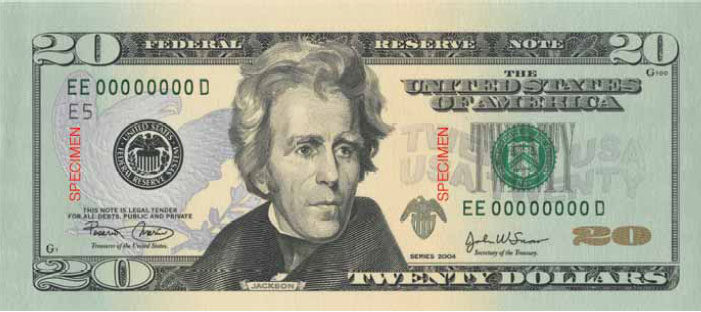
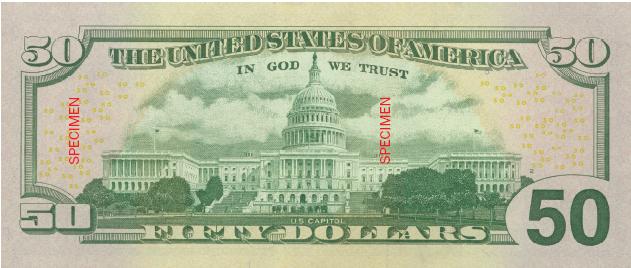
- Currency Name and Code
- US Dollar (USD)
- GDP — official exchange rate
- $12,490,000,000,000 (USD)
- GDP Real Growth Rate
- 3.5%
- Gini Index
- 45
Banknotes
Budget & Public Finance
- Fiscal Year
- 1 October - 30 September
- Annual Budget
- $2,466,000,000,000 (USD)
- Public Debt (% of GDP)
- 64.7%
- External Debt
- $8,837,000,000,000 (USD)
- Investment (% of GDP)
- 16.8%
- Current Account Balance
- -$829,100,000,000 (USD)
- Reserves of Foreign Exchange
- $2,147,483,647 (USD)
Labor, Industry & Trade
- Labor Force by Occupation
- managerial; professional; and technical 31%; sales and office 28.9%; services 13.6%; manufacturing; extraction; transportation; and crafts 24.1%; farming; forestry; and fishing 2.4%
- Household Income — highest 10%
- 30.5%
- Industries
- leading industrial power in the world, highly diversified and technologically advanced; petroleum, steel, motor vehicles, aerospace, telecommunications, chemicals, electronics, food processing, consumer goods, lumber, mining
- Agriculture Products
- wheat, corn, other grains, fruits, vegetables, cotton; beef, pork, poultry, dairy products; forest products; fish
- Export Commodities
- capital goods, automobiles, industrial supplies and raw materials, consumer goods, agricultural products
- Export Partners
- Canada 23.4%, Mexico 13.5%, Japan 7.2%, UK 4.7%, Germany 4%
- Import Commodities
- crude oil and refined petroleum products, machinery, automobiles, consumer goods, industrial raw materials, food and beverages
- Import Partners
- Canada 17.4%, China 12.5%, Mexico 10.7%, Japan 9.3%, Germany 5.3%
Energy
- Oil Production
- 7,610,000 bbl/day
- Oil Consumption
- 20,030,000 bbl/day
- Oil Reserves
- 22,450,000,000 bbl/day
- Natural Gas Production
- 539,000,000,000 cu m
- Natural Gas Consumption
- 633,600,000,000 cu m
- Natural Gas Imports
- 114,100,000,000 cu m
- Natural Gas Exports
- 24,190,000,000 cu m
- Natural Gas Reserves
- 5,353,000,000,000 cu m
Communications
- Telephone System
- General Assessment: a large, technologically advanced, multipurpose communications system Domestic: a large system of fiber-optic cable, microwave radio relay, coaxial cable, and domestic satellites carries every form of telephone traffic; a rapidly growing cellular system carries mobile telephone traffic throughout the country International: country code - 1; multiple ocean cable systems provide international connectivity; satellite earth stations - 61 Intelsat (45 Atlantic Ocean and 16 Pacific Ocean), 5 Intersputnik (Atlantic Ocean region), and 4 Inmarsat (Pacific and Atlantic Ocean regions)
- Internet Country Code
- .us
News & Weather
News & Weather
Current Weather
Latest News
Iran war live: Hegseth to face Senate grilling over growing military costs - The Independent
The Independent · 1h ago
Iran war live: Trump claims Iran desperate to talk, threatens heavy attacks - Al Jazeera
Al Jazeera · 2h ago
‘There’s no way they can survive’: Trump defends new 50% tariffs on most Canadian goods – US politics live - The Guardian
The Guardian · 9h ago
U.S. strikes unlikely to move Iran, intelligence reports say - The Washington Post
The Washington Post · 14h ago
US launches fresh strikes on Iran, as Trump warns of retaliation for deaths of soldiers - BBC
BBC · 3h ago
Why the world trusts China more than America - Financial Times
Financial Times · 8h ago
Trump Says Netanyahu Will Not Be Arrested in the U.S. - The New York Times
The New York Times · 4h ago
US imposes new 50% tariffs on $20 billion worth of Canadian products - Reuters
Reuters · 22h ago
News via Google News
Climate Overview
Mostly temperate, but tropical in Hawaii and Florida, arctic in Alaska, semi-arid in the great plains west of the Mississippi River, and arid in the Great Basin of the southwest; low winter temperatures in the northwest are ameliorated occasionally in January and February by warm chinook winds from the eastern slopes of the Rocky Mountains.
Videos
Videos
2 curated YouTube videos.
Source: YouTube
Source: YouTube
Frequently Asked Questions
Frequently Asked Questions
What is the population of United States of America?
How do people greet each other in the United States of America?
What are the dining customs in the United States of America?
What should I know about etiquette when visiting a home in the United States of America?
How should I dress in the United States of America?
What gestures should I know in the United States of America?
What is family life like in the United States of America?
What do people do for recreation in the United States of America?
What should I know before visiting the United States of America?
What is the capital of the United States of America?
Where is the United States of America located?
What countries border the United States of America?
What religion is most widely practiced in the United States of America?
What is the currency of the United States of America?
What language is spoken in the United States of America?
What is the United States of America known for?
Last reviewed 2026