
 English
 Español
 中文
中文 हिन्दी
 Français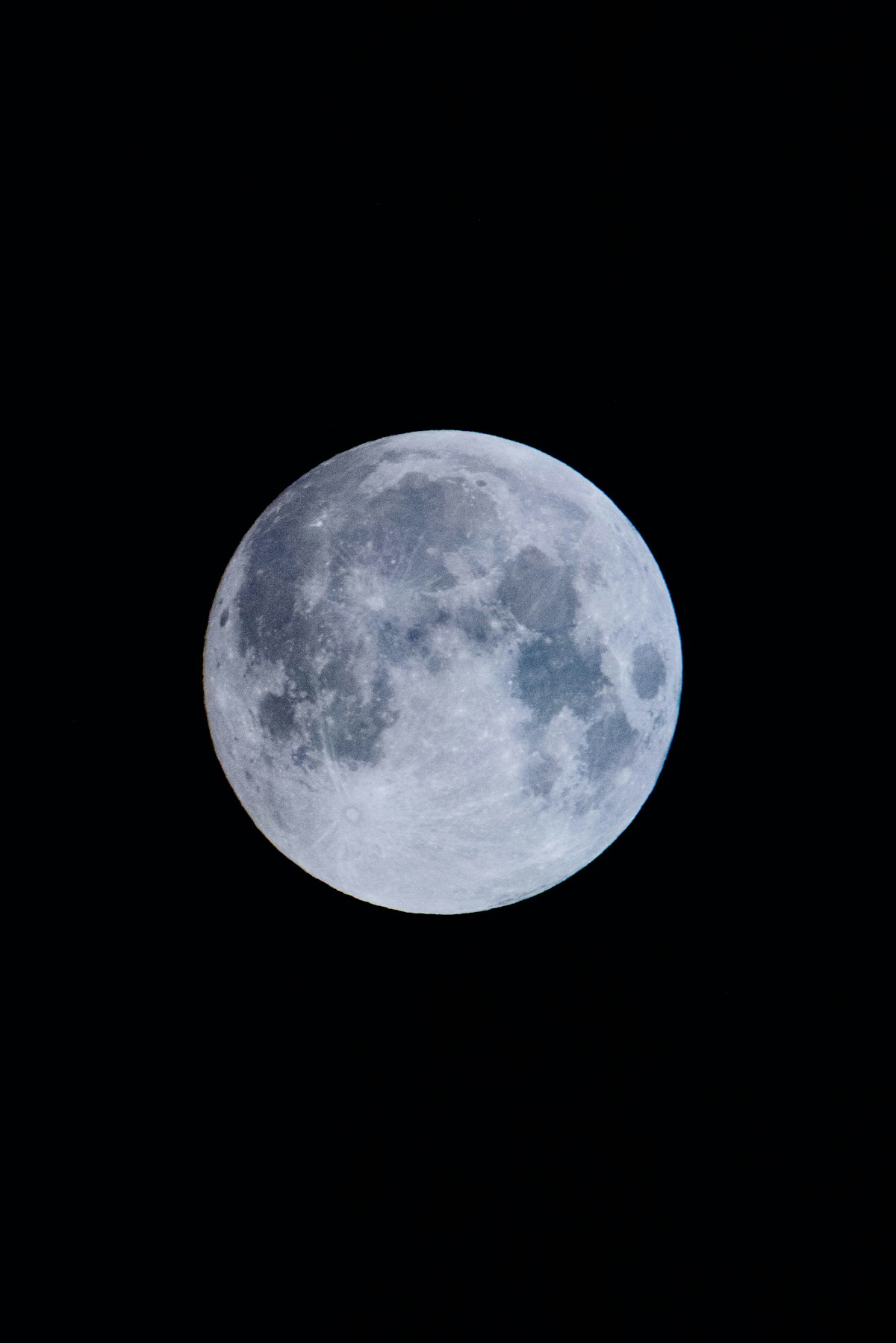
The Moon
Earth's only natural satellite — formation, exploration, and its lasting influence on life and culture.
The Moon is Earth's only natural satellite and the fifth largest moon in the solar system. It orbits our planet at an average distance of about 384,400 kilometers and has been a fixture of every human sky for as long as people have looked up. The Moon shapes our tides, stabilizes our climate, anchors our calendars, and remains the only world beyond Earth on which human beings have yet walked.
Overview
The Moon is a rocky, airless world that orbits Earth once every 27.3 days and completes a cycle of phases as seen from Earth every 29.5 days. Its diameter of approximately 3,474 kilometers is about twenty-seven percent of Earth's, making the Earth-Moon system unusual among the planets and their satellites. In relation to the size of its parent planet, the Moon is the largest natural satellite in the inner solar system, and the two bodies together are sometimes described as a double-planet system.
Average distance between Earth and the Moon is about 384,400 kilometers, or roughly thirty Earth diameters. Light takes a little more than one second to cross this gap, which is why the round-trip delay in Apollo-era radio communications with astronauts on the lunar surface was noticeable but never prohibitive. The Moon is by far the most accessible world beyond Earth, a property that has made it the first destination of every major spacefaring program.
The Moon's scientific importance is difficult to overstate. Lunar rocks returned by the Apollo and Luna programs remain the only samples of another world collected by human hands, and they continue to rewrite theories of planetary formation. The Moon's motion stabilizes Earth's axial tilt, which in turn moderates the long-term climate. Its gravitational pull drives the ocean tides, and its steady presence has shaped calendars, agriculture, religion, mythology, and art on every continent.
Culturally, the Moon sits at the heart of a vast body of human belief and practice. Lunar calendars govern Islamic, Hebrew, Hindu, and Chinese religious and civic time. Harvest festivals, New Year observances, and fasts such as Ramadan are tied to lunar cycles. Artists and writers from Sappho to Galileo to contemporary filmmakers have returned again and again to the Moon as a symbol of change, reflection, and human reach. It is both the nearest world and one of the most culturally densely imagined objects in the night sky.
Key Facts
- Type
- Natural satellite of Earth
- Diameter
- Approximately 3,474 km (about 27% of Earth's)
- Mass
- Approximately 7.342 × 10²² kg (about 1.2% of Earth's)
- Average distance from Earth
- Approximately 384,400 km
- Orbital period (sidereal)
- Approximately 27.3 Earth days
- Rotation period
- Approximately 27.3 Earth days (tidally locked)
- Synodic period (phase cycle)
- Approximately 29.5 Earth days
- Surface gravity
- Approximately 1.62 m/s2 (about 16.6% of Earth's)
- Surface temperature range
- From about +127 °C in direct sunlight to about −173 °C at night
- Atmosphere
- Essentially none — an extremely thin exosphere
- Liquid water
- None on the surface; frozen water ice exists in permanently shadowed polar craters
- Number of human visitors
- Twelve astronauts walked on the lunar surface during the Apollo program (1969–1972)
Formation
The most widely accepted explanation for the origin of the Moon is the Giant Impact Hypothesis. About 4.5 billion years ago, early in the history of the solar system, a Mars-sized body conventionally named Theia is thought to have struck the young Earth. The collision was oblique rather than head-on and released enormous amounts of energy. A mixture of vaporized rock and molten debris was flung into orbit around the surviving, now larger and hotter, Earth. Over a relatively short time — perhaps only a few thousand to a few million years — this disk of debris coalesced under its own gravity to form the Moon.
Before the Apollo program returned lunar samples, three other hypotheses competed for consensus. The capture hypothesis proposed that the Moon formed elsewhere in the solar system and was later gravitationally captured by Earth; this has difficulty explaining how such a massive body could have been slowed to a stable orbit without disintegrating. The co-formation or condensation hypothesis suggested that Earth and the Moon accreted side by side from the same disk of material; this cannot easily account for the Moon's low iron content compared with Earth. The fission hypothesis, advanced in the nineteenth century by George Darwin, imagined that a rapidly spinning young Earth shed a piece of itself which became the Moon; computer modeling shows that a spin rate high enough to cause fission is not plausible.
The Giant Impact Hypothesis became dominant after analysis of Apollo samples revealed that lunar rocks carry oxygen isotope ratios nearly identical to those of Earth, a similarity that is not shared by meteorites from Mars or from the outer asteroid belt. This strongly suggests that the Moon formed from Earth material rather than from an independent body captured from elsewhere. At the same time, the Moon is depleted in volatile elements and in iron, consistent with a hot impact event that vaporized lighter materials and left the dense iron core of the impactor largely absorbed by Earth. Ongoing refinements to computer simulations continue to test details such as the size and speed of Theia, but the central story of a giant impact and a debris-disk Moon is now the textbook explanation.
Giant Impact Hypothesis
A Mars-sized body, Theia, struck the young Earth about 4.5 billion years ago. Debris from the collision formed a disk in orbit around Earth, which coalesced into the Moon. Current scientific consensus.
Capture Hypothesis
The Moon formed elsewhere in the solar system and was later captured by Earth's gravity. Has difficulty explaining the stable circular orbit and the matching isotopic composition.
Co-formation Hypothesis
Earth and the Moon formed together from the same primordial disk of dust and gas. Cannot easily account for the Moon's relatively low iron content compared with Earth.
Fission Hypothesis
A rapidly spinning young Earth shed a piece of itself that became the Moon. Modern simulations show that no plausible spin rate produces fission, so the hypothesis is no longer considered viable.
Geology and Composition
The lunar surface is divided into two strongly contrasting terrains. The darker regions, long known as maria from the Latin word for seas, are flat basaltic plains formed when ancient impact basins were flooded by lava between roughly 3.8 and 3.0 billion years ago. The brighter, more rugged regions, known as the lunar highlands or terrae, are much older and are composed of a calcium- and aluminum-rich rock called anorthosite. The highlands are thought to be the original crust that crystallized from a global magma ocean shortly after the Moon formed.
The entire lunar surface is blanketed in regolith, a fine powder of rock fragments and glassy beads produced by several billion years of micrometeoroid impacts. The regolith on the maria is several meters thick, while on the older highlands it can reach tens of meters. Because there is no atmosphere, weather, or plate tectonics to erase them, the Moon preserves an exceptional record of impact craters. The South Pole–Aitken basin, on the far side of the Moon, is among the largest and oldest impact structures in the solar system, roughly 2,500 kilometers across and up to 13 kilometers deep.
Beneath the surface, the Moon is differentiated into crust, mantle, and core. The crust is thicker on the far side than on the near side, which is one reason the lava-filled maria are concentrated on the side that faces Earth. The mantle is made of silicate rock, and the core is small — only a few hundred kilometers in radius — with a solid inner part and a partially molten outer part. Seismometers left on the surface by Apollo astronauts operated for years and recorded moonquakes originating both at shallow depths and at the boundary between the mantle and the partially molten core.
Water exists on the Moon in the form of ice, trapped in permanently shadowed craters near the lunar poles where temperatures are so low that ice can survive for billions of years. The presence of such ice has been confirmed by missions including Lunar Prospector, the Lunar Reconnaissance Orbiter, LCROSS, and Chandrayaan-1 and Chandrayaan-3. Lunar polar water ice is of enormous practical interest because, if confirmed in sufficient quantity, it could supply drinking water, breathable oxygen, and rocket propellant for future crewed missions.

Phases of the Moon
Half of the Moon is always lit by the Sun, but observers on Earth see only a changing fraction of that illuminated hemisphere over the course of the month. This is the origin of the lunar phases. The complete cycle from one new moon to the next, known as the synodic period, averages about 29.5 days. The synodic period is longer than the orbital period of 27.3 days because Earth itself has moved along its orbit around the Sun and the Moon must travel a little further to return to the same Sun-Earth-Moon alignment.
Astronomers recognize eight named phases. At new moon the lunar near side is turned away from the Sun and appears dark. The waxing crescent follows, with a thin lit arc growing on the right-hand side as seen from the Northern Hemisphere. First quarter shows exactly half the disk lit, then the waxing gibbous phase fills in more of the disk until the full moon, when the entire near side is illuminated. After full moon the cycle reverses through waning gibbous, last quarter, and waning crescent, returning to new moon.
The Moon keeps the same face toward Earth because of tidal locking. Over billions of years, the gravitational pull of Earth has slowed the Moon's rotation until its rotation period matches its orbital period. The result is synchronous rotation. Observers on Earth never directly see the lunar far side, which was not photographed until the Soviet probe Luna 3 returned images in 1959. A small amount of additional terrain, up to about nine percent of the total surface, is visible over time because of a phenomenon called libration, in which the Moon rocks slightly in longitude and latitude due to the elliptical shape of its orbit and the tilt of its rotational axis.
Tides and Influence on Earth
The Moon's most immediate influence on Earth is the tide. The Moon's gravity pulls more strongly on the side of Earth nearest to it than on the side furthest away, and this difference in pull stretches the oceans into a pair of tidal bulges — one directly beneath the Moon and one on the opposite side of Earth. As the Earth rotates, each coastline passes through these bulges roughly twice a day, producing the familiar alternation of high and low tides. The Sun also raises tides, about half as strong as those caused by the Moon.
When the Sun, Earth, and Moon line up at new moon or full moon, the solar and lunar tides reinforce each other and produce exceptionally large spring tides. When the Sun and Moon are at right angles as seen from Earth, at first and last quarter, their tidal effects partly cancel, producing the smaller neap tides. The precise height of tides in a given location is further shaped by the depth, shape, and coastline of the local ocean basin, which is why tidal ranges vary from a few centimeters in some enclosed seas to more than fifteen meters in the Bay of Fundy in Canada.
Tides have also shaped the Earth-Moon system over geological time. The tidal drag on Earth very slowly slows its rotation, which in turn transfers angular momentum outward and pushes the Moon to a slightly higher orbit. Measurements using laser reflectors left on the Moon by Apollo astronauts show that the Moon is receding from Earth by approximately 3.8 centimeters per year, and that Earth's day is lengthening by fractions of a second per century. Perhaps most importantly for life on Earth, the gravitational presence of the Moon stabilizes Earth's axial tilt against large perturbations from other planets. Without the Moon, Earth's tilt could wander chaotically over tens of millions of years, producing climate swings that would make the evolution of complex life far more difficult.
Eclipses
An eclipse occurs when the Sun, Earth, and Moon are aligned so that one body's shadow falls on another. A lunar eclipse takes place at full moon, when Earth passes between the Sun and the Moon and casts its shadow on the lunar surface. A solar eclipse takes place at new moon, when the Moon passes between the Sun and Earth and casts its shadow on our planet. Lunar eclipses are visible from the entire night side of Earth and can last more than an hour. Total solar eclipses, in contrast, are visible only from a narrow path and at a given location last only a few minutes.
Eclipses come in several types. A total lunar eclipse occurs when the Moon passes entirely into Earth's umbra, the darkest part of its shadow, and takes on a deep red color as refracted sunlight bending through Earth's atmosphere reaches the lunar surface. A partial lunar eclipse occurs when only part of the Moon enters the umbra. A penumbral lunar eclipse occurs when the Moon passes through Earth's outer, fainter shadow, producing only a subtle dimming. Solar eclipses likewise come in total, partial, and annular forms, the last occurring when the Moon is near apogee and its apparent disk is not quite large enough to cover the Sun.
Eclipses do not happen every month because the Moon's orbit is tilted by about five degrees relative to Earth's orbit around the Sun. Most new moons and full moons therefore pass above or below the exact Sun-Earth line. Only when the Moon crosses one of the two nodes of its orbit near new moon or full moon do the three bodies align closely enough for an eclipse. Ancient cultures in Babylon, China, and Greece discovered that eclipses repeat in a cycle of about eighteen years and eleven days known as the saros, a discovery that made prediction possible long before the physical causes of eclipses were understood. Eclipses carried heavy cultural and religious meaning in many societies, and they remain among the most widely anticipated astronomical events in the modern world.
Exploration History
Human understanding of the Moon stretches back to the earliest civilizations. Babylonian astronomers kept detailed lunar records on cuneiform tablets as early as the second millennium BCE. Ancient Chinese astronomers tracked lunar motion for calendar reform, and Greek thinkers including Anaxagoras and Aristarchus of Samos in the fifth and third centuries BCE proposed that the Moon shines by reflected sunlight and estimated its size and distance from Earth. The invention of the telescope transformed lunar observation. In 1609, Galileo Galilei turned his improved refracting telescope toward the Moon and sketched its mountains, craters, and maria, demonstrating that the Moon was a world with its own landscape rather than a smooth celestial sphere.
Systematic mapping and photography followed in the nineteenth and early twentieth centuries, but the Moon remained untouched until the space age. The Soviet Union's Luna program reached it first. Luna 1 in January 1959 became the first human-built object to leave Earth's gravity and flew past the Moon; Luna 2 later that year became the first to reach the lunar surface when it impacted as planned; and Luna 3 a few weeks later returned the first photographs of the lunar far side, revealing that it was strikingly different from the near side, with far fewer maria. Subsequent Luna missions achieved the first soft landing by Luna 9 in 1966 and returned the first robotic soil samples from 1970 onward.
The United States responded with the Ranger, Surveyor, and Lunar Orbiter programs in the 1960s, which in turn prepared the way for the Apollo program. On July 20, 1969, the Apollo 11 lunar module Eagle landed in the Sea of Tranquility, and astronauts Neil Armstrong and Buzz Aldrin became the first humans to walk on another world, while Michael Collins orbited above. Five more successful landings followed — Apollo 12, 14, 15, 16, and 17 — before the program ended in December 1972 with the departure of Apollo 17. In total, twelve astronauts walked on the lunar surface, and the Apollo missions returned 382 kilograms of lunar rocks and soil to Earth, samples that continue to be studied today.
After a long pause, the twenty-first century brought a new wave of lunar exploration led by a broader set of nations. China's Chang'e program has delivered a series of firsts, including the first soft landing on the far side of the Moon by Chang'e-4 in 2019 and the return of fresh lunar samples by Chang'e-5 in 2020 and Chang'e-6 in 2024. India's Chandrayaan program achieved a historic success when Chandrayaan-3 made the first soft landing in the lunar south polar region on August 23, 2023, followed by operations of the Pragyan rover. Japan's SLIM spacecraft achieved a precision landing in January 2024. Commercial and international missions continue, and the United States Artemis program is working toward a crewed return to the lunar surface.

Cultural Significance
Few natural features have inspired as much myth, ritual, and art as the Moon. Nearly every traditional culture has identified lunar deities and attached stories to the Moon's changing phases. In ancient Greek religion, Selene personified the Moon and drove a silver chariot across the night sky. In Chinese folklore, Chang'e is the goddess who drank an elixir of immortality and ascended to live on the Moon with a jade rabbit, a story still celebrated at the Mid-Autumn Festival. In Japanese tradition, Tsukuyomi is the god of the Moon, brother of the Sun goddess Amaterasu. In pre-Islamic Arabia, a lunar god named Sin was worshipped at the city of Harran, while the Inca in the Andes revered a moon goddess named Mama Quilla.
Lunar calendars have anchored civic and religious life on every continent. The Islamic calendar is strictly lunar, with each of its twelve months beginning at the sighting of the new crescent moon; the holy month of Ramadan and the feast of Eid al-Fitr are fixed in this system. The Hebrew calendar is lunisolar, combining lunar months with occasional adjustments to keep the holidays of Passover and Sukkot aligned with their proper seasons. The traditional Chinese calendar is likewise lunisolar and governs the Lunar New Year and Mid-Autumn Festival. The Hindu calendar tracks lunar months for religious observances such as Diwali, Holi, and Navaratri.
The Moon has been a central image in literature and the arts across languages and centuries. The Greek poet Sappho wrote of the Moon's silver light on the sea. Medieval Arab poets such as Al-Mutanabbi used the full moon as a symbol of beauty. Shakespeare invoked the inconstant moon in Romeo and Juliet, and Li Bai, the Tang dynasty poet, wrote verses still memorized today on raising a cup to the moon and drinking with his own shadow. Nineteenth-century Romantic painters and twentieth-century science fiction writers returned to the Moon again and again. The first Moon landing in 1969 was watched by an estimated six hundred million people, an event that both fulfilled and transformed the long imagined relationship between humanity and the lunar world.
Time, Calendars, and Agriculture
Before the invention of mechanical clocks, the Moon was the most reliable large-scale clock in the sky. Its phases repeat on a cycle of roughly twenty-nine and a half days, a period long enough to be practically useful and short enough to be easily watched. The word month derives from the Old English mona, the same root as moon, reflecting the ancient alignment of the unit with the lunar cycle. Most early calendars were lunar or lunisolar, and even the modern Gregorian calendar preserves a month structure that is approximately, though no longer exactly, tied to lunar rhythms.
Lunar and lunisolar calendars remain in active religious use today. The Islamic calendar determines the start of Ramadan and the date of Eid al-Fitr from the observation of the new crescent; because it is purely lunar and is not reconciled with the solar year, the Islamic months drift through the seasons over a cycle of about thirty-three years. The Hebrew calendar, the traditional Chinese calendar, and the Hindu calendar use intercalary months to keep their lunar months approximately aligned with the agricultural seasons, so that spring festivals fall in spring and harvest festivals fall at harvest.
Farmers around the world have long used the Moon to schedule practical work. Almanacs in many traditions advise planting root crops during the waning Moon and leafy crops during the waxing Moon, although modern agronomy finds no consistent evidence that the phases of the Moon directly affect plant growth. Coastal fishing communities continue to plan for spring tides, which expose tidal flats and shift fish distributions. Many traditional naming systems for full moons — Harvest Moon, Hunter's Moon, Wolf Moon, Strawberry Moon — encoded seasonal information about hunting, gathering, and planting into a form that was easy to remember and pass on. The Moon thus served not only as a clock but as a practical almanac.
Future of Lunar Exploration
After a long pause following the Apollo program, the Moon has become the focus of a new era of exploration. The United States Artemis program, led by NASA in partnership with the European Space Agency, the Japan Aerospace Exploration Agency, the Canadian Space Agency, and a growing number of international partners, aims to return astronauts to the lunar surface, including the first woman and the first person of color to walk on the Moon. The program is designed to establish a sustained presence focused on the lunar south pole, where permanently shadowed craters are believed to contain accessible water ice.
A key element of the Artemis architecture is the Lunar Gateway, a small space station planned to operate in a highly elliptical orbit around the Moon. The Gateway will host crewed visits, serve as a staging point for surface missions, and provide a platform for science experiments in deep-space conditions. On the surface, a combination of NASA-contracted commercial landers under the Commercial Lunar Payload Services program, international landers, and the crewed Human Landing System is expected to deliver instruments, rovers, and eventually habitats.
China has stated its intention to carry out a crewed lunar landing before 2030 and, together with Russia, has proposed an International Lunar Research Station. India, following the success of Chandrayaan-3, is planning sample-return and eventual crewed capabilities. A growing commercial sector, including companies based in the United States, Japan, and Europe, is preparing small landers, rovers, and services such as lunar communications and position-navigation-timing relays.
Longer-term visions are more speculative but increasingly discussed. Proposals for permanent lunar bases focus on lava tubes, which may offer natural shielding from radiation and micrometeoroids, and on the polar regions for access to ice. Some proposals consider the Moon as a platform for astronomy, notably radio telescopes on the far side that would be shielded from terrestrial radio noise. Helium-3, a rare isotope on Earth but detectable in the lunar regolith, is sometimes discussed as a potential future fuel for nuclear fusion; the practicality of such mining remains debated and depends on the successful development of fusion technology. International cooperation and competition will shape how quickly and in what form these possibilities are realized.
Sources
Detailed citations, data references, and institutional sources for all CountryReports content are listed on the Sources page. The following government space agencies, academic research centers, and national museums are among the primary authorities we rely on for content about the Moon. Each link points to the institution's homepage.
Space Agencies and Government Research
- NASA — Moon portal — The United States National Aeronautics and Space Administration's hub for lunar science, mission data, and education materials, including pages on the Apollo and Artemis programs.
- NASA Jet Propulsion Laboratory (JPL) — Federally funded research and development center operated by Caltech for NASA, responsible for robotic planetary missions and the Solar System Dynamics reference data.
- European Space Agency (ESA) — Intergovernmental space agency with science and exploration programs including SMART-1 and contributions to the Artemis campaign.
- Japan Aerospace Exploration Agency (JAXA) — Japanese national space agency, operator of the Kaguya lunar orbiter and the SLIM precision lander.
- Indian Space Research Organisation (ISRO) — Indian national space agency, operator of the Chandrayaan program, including the Chandrayaan-3 south polar landing.
- China National Space Administration (CNSA) — Chinese national space agency responsible for the Chang'e lunar program and the planned International Lunar Research Station.
- United States Geological Survey Astrogeology Science Center — USGS center that produces official lunar maps, the Unified Geologic Map of the Moon, and planetary nomenclature.
Research Institutions and Scholarly Bodies
- Lunar and Planetary Institute (LPI) — Scientific research institute that supports lunar and planetary science for NASA, including the annual Lunar and Planetary Science Conference.
- International Astronomical Union (IAU) — Global professional body that sets official nomenclature for lunar features and coordinates international astronomy.
- Royal Astronomical Society — United Kingdom learned society for astronomy and geophysics, publisher of the Monthly Notices of the Royal Astronomical Society.
- MIT Department of Earth, Atmospheric and Planetary Sciences — Academic department with active research programs in planetary formation, lunar geology, and remote sensing.
- Caltech Division of Geological and Planetary Sciences — Academic division with research on planetary interiors, impact processes, and lunar sample analysis.
Museums and Public Collections
- Smithsonian National Air and Space Museum — Holds the Apollo 11 command module Columbia, Apollo-era artifacts, and extensive educational resources on lunar exploration.
If you notice an error or would like to suggest a correction, please use our contact page to get in touch.