
 English
 Español
 中文
中文 हिन्दी
 Français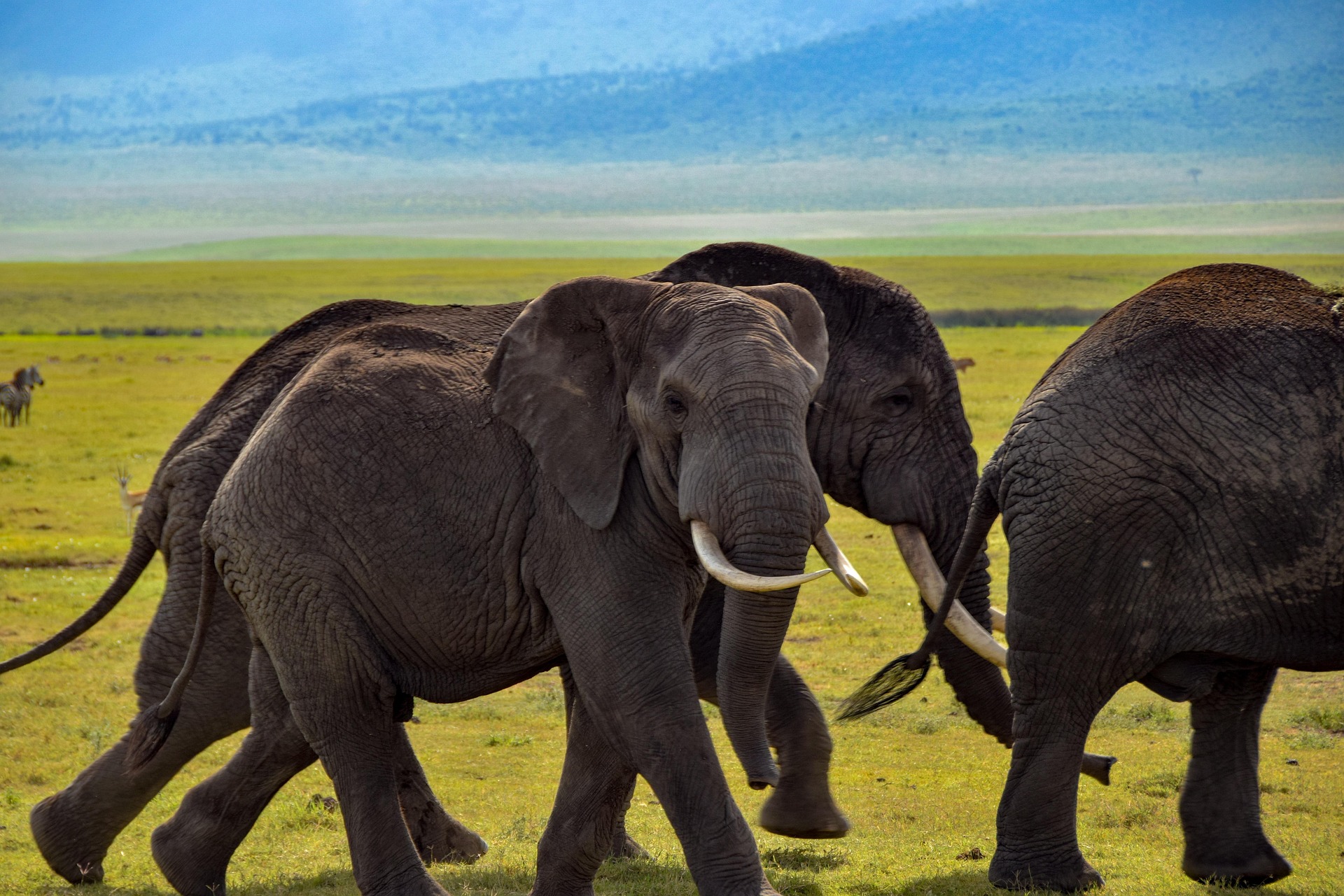
Animal Species and Biodiversity
Millions of species, eight million estimates — the diversity of animal life on Earth.
Biodiversity is the variety of life on Earth at every level of biological organization, from the genes inside a single organism to the ecosystems that span entire continents. Animal species form only one branch of that variety, yet that branch is vast: well over a million animals have been formally described, and the scientific community believes several million more remain unknown to science. This page introduces how biologists count, classify, and conserve the animal kingdom in the twenty-first century.
Overview
A species is the fundamental unit by which biologists name and compare living things. The most widely taught definition, the biological species concept advanced by the evolutionary biologist Ernst Mayr, describes a species as a group of organisms that can interbreed in nature and produce fertile offspring, and that is reproductively isolated from other such groups. Modern practice uses several complementary species concepts, including morphological, ecological, and phylogenetic definitions, because the biological concept is difficult to apply to fossils, asexual organisms, and microbes.
Biodiversity is typically described at three interlocking levels. Genetic diversity refers to variation within a species, the raw material of evolution and the reservoir that allows populations to adapt to disease, drought, and other pressures. Species diversity refers to the number and abundance of species in a given area, the level most familiar to the public. Ecosystem diversity refers to the range of habitats and ecological processes across a landscape or the planet as a whole, from coral reefs and mangroves to grasslands, boreal forests, and abyssal plains.
The Catalogue of Life, a consortium maintained in partnership with the International Union for Conservation of Nature and Species 2000, compiles validated species checklists from hundreds of taxonomic databases. Its 2024 release included roughly 2.16 million described species across all kingdoms of life, of which approximately 1.5 million are animals. A highly cited statistical analysis by Camilo Mora and colleagues, published by the Royal Society in 2011, extrapolated from the slowing pace of new higher-rank discoveries and estimated that roughly 8.7 million eukaryotic species exist on Earth, of which about 7.8 million are animals. Uncertainty around that figure is large, and revised estimates published since continue to debate both the total and how quickly it is converging.
Whichever estimate one prefers, the implication is the same: the majority of animal species alive today have not yet been formally described by science. Most of them are small invertebrates in tropical forests, in soil, and in the deep ocean. Understanding who they are, where they live, and how they interact is the central scientific task of modern biodiversity research, and it is increasingly urgent as habitats are transformed by land use and climate change.
Key Facts
- Described species (all life)
- Approximately 2.16 million (Catalogue of Life, 2024 checklist)
- Described animal species
- Approximately 1.5 million
- Estimated total animal species
- Approximately 7.8 million (Mora et al., 2011; wide uncertainty bands)
- New species described per year
- Approximately 18,000
- Share described as insects
- Roughly half of all described animal species
- Described vertebrates
- Approximately 73,000 (fish, amphibians, reptiles, birds, mammals combined)
- IUCN Red List assessments
- More than 160,000 species assessed; over 45,000 classed as threatened
- Biodiversity hotspots
- 36 regions recognized by Conservation International
- Principal global framework
- Kunming-Montreal Global Biodiversity Framework, adopted under the Convention on Biological Diversity, 2022
Taxonomy and the Tree of Life
Taxonomy is the discipline of naming and classifying organisms. Its foundations are Linnaean, named for the Swedish naturalist Carl Linnaeus, whose eighteenth-century works established the binomial system of genus and species. Every formally described animal carries a two-part Latin name, written in italics, that is unique across the whole of biology. The domestic dog, for example, is Canis familiaris; the African elephant is Loxodonta africana. Earlier natural-history traditions in Europe, the Islamic world, and East Asia laid the groundwork for this system, and pre-modern writings on flora and fauna are discussed more broadly on the Ancient Civilizations page.
Above the species level, Linnaean classification nests organisms in a sequence of ever broader ranks. The classic seven-rank hierarchy runs kingdom, phylum, class, order, family, genus, and species. Modern practice inserts additional ranks, such as domain at the top and subfamily or tribe at intermediate levels, and treats many traditional groupings as provisional rather than absolute. The animal kingdom, Animalia, is one of several multicellular kingdoms of eukaryotic life.
Since the second half of the twentieth century, classification has increasingly been guided by cladistics, a method developed by the German entomologist Willi Hennig that groups species strictly by shared evolutionary ancestry. Cladistic analyses produce branching diagrams called phylogenies that map how lineages split over time. Molecular phylogenetics, which reads the sequences of genes and whole genomes, has become the dominant source of new phylogenetic evidence and has revised long-standing groupings. Reptiles, for example, are no longer treated as a single tidy class, because birds are nested inside the reptile lineage as living descendants of theropod dinosaurs.
Taxonomy is also a practical infrastructure. Reliable names underpin the work of the International Union for Conservation of Nature, the Convention on Biological Diversity, customs and quarantine services, agricultural and public-health agencies, and international trade regulators such as the Convention on International Trade in Endangered Species of Wild Fauna and Flora. Without a stable list of names, data from different observers in different countries cannot be compared with confidence.
Major Animal Groups
The animal kingdom divides at its highest level into invertebrates, which lack a backbone, and vertebrates, which possess one. Roughly ninety-five percent of described animal species are invertebrates; vertebrates, despite their cultural prominence, account for only about five percent.
Arthropods
The single largest animal phylum, uniting insects, crustaceans, arachnids, myriapods, and horseshoe crabs. They share a jointed exoskeleton of chitin and segmented bodies, and they dominate terrestrial, freshwater, and marine invertebrate faunas alike.
- • Insects (Insecta)
- • Crustaceans (Crustacea)
- • Spiders and scorpions (Arachnida)
Mollusks and Annelids
Mollusks include snails, bivalves such as clams and mussels, and the cephalopods, a group that contains octopuses, squid, and cuttlefish. Annelids are the segmented worms, including earthworms and marine polychaetes that inhabit sediments and reefs.
- • Gastropods, bivalves, cephalopods
- • Earthworms and leeches
- • Polychaete bristle worms
Cnidarians and Sponges
Sponges, phylum Porifera, are among the oldest animal lineages and filter seawater through specialized cells. Cnidarians include jellyfish, sea anemones, and the stony corals whose calcium-carbonate skeletons build tropical reefs and archive millennia of ocean chemistry.
- • Reef-building stony corals
- • Jellyfish and hydroids
- • Glass, calcareous, and demosponges
Echinoderms and Minor Phyla
Echinoderms, exclusively marine, include sea stars, sea urchins, and sea cucumbers, whose radial symmetry sets them apart from most other animals. Smaller phyla such as flatworms, nematodes, and rotifers contribute enormously to soil, freshwater, and marine food webs despite their often microscopic size.
- • Sea stars and brittle stars
- • Sea urchins and sea cucumbers
- • Nematodes and flatworms
Fish and Other Aquatic Vertebrates
Vertebrate diversity begins in the water. Cartilaginous fish, such as sharks and rays, diverged early from the bony fish that today dominate both fresh and salt water. Lampreys and hagfish, together grouped as cyclostomes, preserve features close to the first vertebrate body plan.
- • Bony fish (Actinopterygii, Sarcopterygii)
- • Sharks, rays, and chimaeras
- • Lampreys and hagfish
Tetrapods
The four-limbed vertebrates emerged from lobe-finned fishes in the Devonian period and later radiated into amphibians, reptiles, birds, and mammals. Birds are the living dinosaurs; mammals include humans and the thousands of species discussed in later sections.
- • Amphibians (frogs, salamanders, caecilians)
- • Reptiles (lizards, snakes, turtles, crocodilians)
- • Birds and mammals
Mammals
Mammals are warm-blooded vertebrates defined by hair or fur, mammary glands that produce milk, and three middle-ear bones. About 6,500 species have been described, a number that has grown steadily as molecular studies split cryptic lineages that were once grouped together. Despite their comparative rarity alongside invertebrates, mammals include many of the largest animals on Earth and most of the species most closely monitored by conservation agencies.
The mammalian class divides into three subgroups. Monotremes, represented today by the platypus and several echidna species of Australia and New Guinea, lay eggs rather than bearing live young. Marsupials, such as kangaroos, koalas, opossums, and wombats, give birth to poorly developed young that complete their growth attached to a teat, often inside a pouch. Placental mammals, the largest group, nourish their young through a placenta before birth and dominate most continental faunas.
Among placental mammals, rodents and bats are by far the most diverse orders. Rodentia, which includes mice, rats, squirrels, and porcupines, contains roughly two-fifths of all mammal species. Chiroptera, the bats, is the second most diverse order and the only group of mammals capable of true flight. Primates, a comparatively small order of about 500 species, includes lemurs, lorises, tarsiers, monkeys, apes, and human beings. Carnivora, Artiodactyla, Cetacea, and others round out the mammalian tree.
Marine mammals illustrate the adaptability of the group. Whales and dolphins, the cetaceans, are wholly aquatic and evolved from small hoofed ancestors related to modern deer and hippopotamuses. Pinnipeds such as seals, sea lions, and walruses retain the ability to come ashore. Sirenians, including manatees and dugongs, graze on submerged seagrasses in shallow tropical waters. Megafauna on land, including elephants, rhinoceroses, and the great cats, continue to shape ecosystems where they remain numerous enough to fill their ecological roles.
Birds
Birds are feathered, endothermic tetrapods descended from small theropod dinosaurs of the Mesozoic era. Approximately 11,000 species are currently recognized, a count that continues to be refined as molecular evidence splits or merges previously accepted species. Birds inhabit every continent, including Antarctica, and exploit habitats from the open ocean to high alpine meadows.
The order Passeriformes, the perching birds, contains roughly half of all bird species and includes the majority of songbirds. Non-passerines include raptors such as hawks, eagles, and owls; waterfowl such as ducks, geese, and swans; shorebirds; seabirds such as albatrosses, petrels, and penguins; and the highly intelligent parrots, which form the order Psittaciformes. Flightless birds, including ostriches, rheas, emus, cassowaries, and kiwis, are concentrated in the Southern Hemisphere and retain many ancient features.
Migration is one of the most striking behaviors in the bird world. Many passerines cross continents between breeding and wintering grounds; the arctic tern undertakes the longest annual migration of any animal, traveling between polar regions each year. Migration routes are monitored by networks of banding stations, citizen-science platforms such as eBird, operated by the Cornell Lab of Ornithology, and tracking technologies that have expanded rapidly in the past two decades.
Bird diversity concentrates in the humid tropics. The Amazon basin, the montane forests of the northern Andes, and the island of New Guinea collectively host thousands of species, many of them endemic. These regions are central concerns of international bird conservation organizations and of government wildlife agencies in tropical countries that steward unusually rich avifaunas.
Reptiles and Amphibians
Reptiles and amphibians, often studied together under the older umbrella term herpetofauna, include some of the most species-rich and ecologically important tetrapods outside the birds and mammals. About 11,800 reptile species and 8,800 amphibian species have been described, numbers that increase each year as molecular tools uncover species previously hidden within widely ranging populations.
Living reptiles divide into four major groups: turtles and tortoises, which uniquely encase their bodies in bony shells; the tuatara of New Zealand, the sole surviving representative of an ancient lineage; the crocodilians, including crocodiles, alligators, caimans, and gharials; and the enormously diverse squamates, which comprise lizards, snakes, and the limbless amphisbaenians. Tropical forests and arid lands host the greatest reptile diversity. Snake species, in particular, have undergone extensive taxonomic revision in recent years as genomic evidence has clarified relationships among constrictors, vipers, elapids, and colubrids.
Amphibians include frogs and toads (Anura), salamanders and newts (Urodela), and the limbless, burrowing caecilians (Gymnophiona). Their permeable skin, which functions in gas exchange and water regulation, makes them especially sensitive to environmental change. Since the late twentieth century, amphibians have suffered an exceptionally severe global decline, documented by the IUCN Global Amphibian Assessment and partner institutions. A chytrid fungus, Batrachochytrium dendrobatidis, has spread across continents and is implicated in the collapse or extinction of many tropical amphibian populations, alongside habitat loss, pollution, and climate change.
Despite these pressures, reptile and amphibian diversity remains remarkable in tropical regions. Madagascar, the Amazon, the Guiana Shield, Central America, the Western Ghats of India, and the islands of Southeast Asia all harbor large numbers of endemic herpetofauna. Several of these regions overlap directly with the biodiversity hotspots discussed later on this page.
Fish
Fishes are the most diverse group of vertebrates. Approximately 35,000 species have been formally described, and new species, particularly from the deep sea, coral reefs, and poorly explored freshwater systems, continue to be named at a high rate. The grouping is not a single evolutionary lineage in the strict cladistic sense, because the tetrapods, including human beings, are nested within the fish family tree. For practical purposes, however, biologists speak of fish to describe the aquatic, gill-bearing vertebrates.
Marine fish inhabit every ocean zone. Coral reefs in the Indo-Pacific, particularly in the Coral Triangle that spans parts of Indonesia, the Philippines, Malaysia, Papua New Guinea, the Solomon Islands, and Timor-Leste, host more reef-fish species than any other region on the planet. Pelagic species such as tunas, billfish, and sharks patrol open water. Abyssal and hadal fishes inhabit the dark, cold, high-pressure environments below one thousand meters, where many species possess bioluminescent organs and specialized sensory systems.
Freshwater fish diversity is astonishing given that rivers and lakes contain a tiny fraction of the planet's water. The Amazon basin alone contains several thousand described fish species, and the African Great Lakes, especially Lake Malawi, Lake Tanganyika, and Lake Victoria, are textbook examples of adaptive radiation in cichlids. North American freshwater fishes, studied by agencies including the United States Fish and Wildlife Service and the American Fisheries Society, include hundreds of small-ranged minnows, darters, and madtoms of high conservation concern.
Commercially important species such as anchovies, herrings, tunas, cods, salmon, and shrimp support industries that feed billions of people. The Food and Agriculture Organization of the United Nations monitors the status of these stocks and reports that a growing share of assessed marine fisheries are fished at biologically unsustainable levels. Aquaculture now produces more than half of the aquatic animals consumed globally. Sustainable fisheries management, protected areas, and traceable supply chains are central pillars of modern ocean policy.
Insects and Other Arthropods
Insects are the most species-rich group of animals on Earth. Approximately one million species have been formally described, and credible estimates of the true total range from five to ten million. They are present on every continent, including Antarctica, and occupy nearly every terrestrial and freshwater habitat. Marine insects are comparatively rare, but crustaceans, their close relatives, dominate marine arthropod diversity.
Coleoptera, the beetles, is the single most diverse insect order, with roughly 400,000 described species, a fact that led the British biologist J. B. S. Haldane to remark that the Creator, if there was one, must have had an inordinate fondness for beetles. Lepidoptera, the butterflies and moths, contains around 180,000 described species and plays a central role in pollination and in the food webs of forests, grasslands, and gardens. Hymenoptera, comprising ants, bees, wasps, and sawflies, includes the social insects whose cooperative colonies can dominate ecosystems and whose pollination services are indispensable to agriculture. Diptera, the true flies, contains species responsible for pollination, decomposition, and the transmission of human and livestock diseases such as malaria and trypanosomiasis.
Spiders, scorpions, mites, and ticks make up the class Arachnida. Mites alone are thought to contain hundreds of thousands of undescribed species in soil and on plants and animals. Crustacea includes crabs, lobsters, shrimps, barnacles, krill, and the enormous range of copepods that form the nutritional base of many marine food webs. Myriapods, the centipedes and millipedes, are abundant decomposers in forest litter worldwide.
The ecological services provided by insects and other arthropods are difficult to overstate. They pollinate the majority of flowering plants, recycle organic matter and nutrients, aerate soil, regulate pest populations as predators and parasitoids, and serve as prey for tens of thousands of vertebrate species. Evidence from long-term monitoring programs in Europe and North America suggests that the biomass and abundance of many insect communities have declined substantially in recent decades, a trend that has prompted coordinated attention from the International Union for Conservation of Nature, national research councils, and citizen-science networks worldwide.
Biodiversity Hotspots
The concept of a biodiversity hotspot, advanced by the British ecologist Norman Myers in 1988, identifies regions that combine exceptional concentrations of endemic species with exceptional levels of habitat loss. Conservation International and partner institutions have since expanded the framework to thirty-six recognized hotspots, which together cover a small fraction of the land surface but hold a disproportionate share of the planet's terrestrial biodiversity. Habitat context for these regions is explored in more depth on the Biomes and Ecosystems page.
-
Sundaland
Western Indonesian archipelago
Covering Borneo, Sumatra, Java, and the Malay Peninsula, Sundaland hosts orangutans, tigers, and thousands of endemic plants and invertebrates, many confined to fast-disappearing lowland rainforest.
-
Madagascar
Madagascar and the Indian Ocean Islands
An island continent whose long isolation produced lemurs, tenrecs, fossas, hundreds of endemic reptiles and amphibians, and distinctive plant families such as the baobabs.
-
Mesoamerica
Mexico to central Panama
A biological corridor linking North and South American faunas, with extraordinary amphibian and bird diversity in cloud forests and lowland jungles.
-
Caribbean Islands
Greater and Lesser Antilles
An archipelago of small land areas with exceptionally high per-area endemism in reptiles, amphibians, and invertebrates, and a long history of extinctions following human settlement.
-
Mediterranean Basin
Mediterranean Basin
A long-inhabited region whose Mediterranean-type climate supports thousands of endemic plants and a distinctive herpetofauna across southern Europe, North Africa, and the Levant.
-
Cape Floristic
Cape Floristic Region, South Africa
A single, small area on the southwestern tip of Africa that harbors one of the richest floras on Earth and a suite of endemic invertebrates and vertebrates.
-
California Floristic
California Floristic Province
Extending from southern Oregon through California into northern Baja California, with endemic amphibians, fishes, and invertebrates alongside an exceptional flora.
-
New Caledonia
New Caledonia
A Pacific island group of remarkable endemism in reptiles, birds, and invertebrates, including the flightless kagu and many species found nowhere else on Earth.
Discoveries and Undescribed Species
The age of discovery in zoology is far from over. Approximately 18,000 species of animals, plants, fungi, and microbes are formally described each year, and the total has held remarkably steady for several decades as new habitats are explored, new tools are applied, and new taxonomists enter the discipline. Most new animal species are small invertebrates, but several dozen new vertebrates, including mammals, reptiles, amphibians, and fishes, are described in any given year.
The deep ocean remains the largest frontier. Manned and robotic submersibles operated by institutions such as the Schmidt Ocean Institute, the Monterey Bay Aquarium Research Institute, and the Woods Hole Oceanographic Institution routinely bring back specimens and video footage of species never seen before. Abyssal plains, hydrothermal vents, and submarine canyons support communities that were unknown to science a half-century ago. Tropical forests, particularly in Amazonia, the Congo basin, New Guinea, and the mountain ranges of Southeast Asia, continue to yield new species of frogs, lizards, birds, and insects whenever researchers are able to work there.
Soil microfauna represent another poorly known frontier. Mites, nematodes, springtails, and tiny annelids inhabit every gram of forest and grassland soil, but only a fraction have been named. Molecular methods now allow researchers to recognize cryptic species, lineages that look externally identical but are reproductively and genetically distinct. Entire groups once considered well known have fragmented into many species as a result.
Citizen science has become an important driver of discovery and monitoring. Global platforms such as iNaturalist and eBird accumulate tens of millions of observations each year from volunteer naturalists, who photograph and record species around the world. When vetted by experts, these records feed directly into research databases such as the Global Biodiversity Information Facility and the Encyclopedia of Life. They have produced new distribution records, new behavior observations, and, in a growing number of cases, formal species descriptions.
Threats to Biodiversity
Five widely recognized direct drivers are responsible for most contemporary losses of animal biodiversity. The Intergovernmental Science-Policy Platform on Biodiversity and Ecosystem Services, known as IPBES, and the IUCN Red List repeatedly identify the same list: habitat loss and degradation, overexploitation of wild populations, invasive alien species, pollution, and climate change. Emerging wildlife diseases are increasingly treated as a sixth major driver, particularly for amphibians, bats, and wild birds.
Habitat loss is the single most widespread threat. The conversion of tropical forests, wetlands, and native grasslands to cropland, plantations, and infrastructure removes both species and the ecological processes that sustain them. The cumulative footprint of human land use has been mapped in detail by the UNEP-WCMC, the World Conservation Monitoring Centre of the United Nations Environment Programme, and by university research groups such as those at the Royal Society and at leading North American universities.
Overexploitation affects species harvested directly for food, medicine, trade, or cultural use. Overfishing of marine stocks, unregulated wildlife trade in birds, reptiles, and mammals, and demand for products such as ivory, rhinoceros horn, and pangolin scales have driven steep declines in many populations. The Convention on International Trade in Endangered Species of Wild Fauna and Flora regulates cross-border wildlife commerce, while national agencies enforce domestic harvest laws with varying success.
Invasive alien species, introduced by shipping, horticulture, the pet trade, and other human activities, disrupt native communities and have caused particularly severe extinctions on islands. Pollution, including nutrient runoff that creates coastal dead zones, plastic waste, and a growing range of synthetic chemicals, degrades habitats in ways that often operate below the threshold of visual observation. Climate change reshuffles the geography of species, alters timing of migration and breeding, and increases the frequency of extreme events that populations have little opportunity to track. The relationship between climate and biodiversity is explored further on the Climate Change page.
Many scientists now argue that current rates of extinction are elevated enough to warrant description as a sixth mass extinction event, comparable in causal significance, though not yet in absolute magnitude, to the five great extinctions recorded in the fossil record. The Royal Society and other leading academies have published reviews that compare recent extinction rates against deep-time baselines and conclude that extinction is occurring at rates orders of magnitude above background levels. Other researchers emphasize the considerable uncertainty in such calculations and caution against overstating a single framing. What is not in dispute is that many species are declining rapidly.
Conservation
International biodiversity conservation is coordinated principally through the Convention on Biological Diversity, opened for signature at the Earth Summit in Rio de Janeiro in 1992 and now joined by nearly all the world's governments. The Convention has three core objectives: the conservation of biological diversity, the sustainable use of its components, and the fair and equitable sharing of benefits arising from the use of genetic resources. It is supplemented by the Cartagena Protocol on Biosafety and the Nagoya Protocol on access and benefit-sharing.
At the fifteenth Conference of the Parties, held in Kunming and Montreal and concluded in December 2022, parties adopted the Kunming-Montreal Global Biodiversity Framework. Its headline target, commonly known as 30x30, calls for the effective conservation and management of at least thirty percent of the world's land, inland waters, coastal areas, and ocean by 2030, with particular attention to areas of high biodiversity importance. The framework sets additional goals on reducing species extinction risk, curbing harmful incentives, and expanding financial and scientific support for developing countries.
The IUCN Red List of Threatened Species, maintained by a worldwide network of specialist groups, is the authoritative global inventory of extinction risk for animals, plants, and fungi. Species are placed into categories ranging from Least Concern through Vulnerable, Endangered, and Critically Endangered, to Extinct in the Wild and Extinct. Red List assessments inform national wildlife laws, international trade regulation, and the prioritization of conservation investment by governments and private funders alike.
Recovery is possible. The American bald eagle, driven to the brink in the mid-twentieth century by exposure to the pesticide DDT, has rebounded across North America following the pesticide's restriction and sustained protection under the United States Endangered Species Act. The giant panda was reclassified by the IUCN in 2016 from Endangered to Vulnerable following decades of habitat restoration and anti-poaching work in China. California condors, Arabian oryx, European bison, and several species of small mammals have been restored to parts of their former ranges through captive breeding, reintroduction, and community-based conservation. These successes, however, remain exceptions against the wider trend, and require sustained investment to persist.
Zoological institutions such as the Zoological Society of London, the Smithsonian National Zoo, and leading aquariums play an increasingly important role as conservation organizations in their own right. They fund and staff field programs, maintain insurance populations of species otherwise extinct in the wild, train the next generation of conservation scientists, and engage the public with the case for biodiversity. Their work is complemented by NatureServe in the Americas, the United Nations Environment Programme and its partner institutions, and nongovernmental organizations active on every continent.
Sources
Detailed citations, data references, and institutional sources for all CountryReports content are listed on the Sources page. The following international organizations, natural-history museums, and academic institutions are the primary authorities we rely on for animal diversity and conservation content. Each link points to the institution's homepage.
International Conservation and Biodiversity Bodies
- International Union for Conservation of Nature (IUCN) — The IUCN Red List of Threatened Species, Specialist Group assessments, and the World Commission on Protected Areas.
- Convention on Biological Diversity (CBD) — Treaty text, Conference of the Parties decisions, and the Kunming-Montreal Global Biodiversity Framework.
- United Nations Environment Programme (UNEP) — Global environmental outlook reports and biodiversity policy analysis.
- UNEP-WCMC (World Conservation Monitoring Centre) — Protected Planet database and species-trade monitoring.
- WWF Living Planet Report — Institutional assessment of trends in monitored vertebrate populations worldwide.
Natural History Museums and Research Institutions
- Smithsonian National Museum of Natural History — Zoological collections, research departments in vertebrate zoology, entomology, and invertebrate zoology.
- Smithsonian Tropical Research Institute — Long-term ecological research in the Neotropics, based in Panama.
- American Museum of Natural History — Scientific research divisions in vertebrate and invertebrate zoology and the Center for Biodiversity and Conservation.
- Natural History Museum (London) — Specimen collections of more than eighty million objects and a program of taxonomic and biodiversity research.
- The Royal Society (London) — Peer-reviewed journals, including Proceedings B, that publish foundational work on species counts, extinction rates, and phylogenetics.
- Zoological Society of London — Institute of Zoology research, the EDGE of Existence program, and partnership with WWF on the Living Planet Index.
Species Databases and Citizen-Science Platforms
- Global Biodiversity Information Facility (GBIF) — Open-access aggregator of biodiversity occurrence records from museums, herbaria, and citizen scientists worldwide.
- Encyclopedia of Life (EOL) — Synthesis of species information from trusted partners, hosted by the Smithsonian Institution.
- NatureServe — Conservation status assessments for species and ecosystems across the Americas.
- Catalogue of Life — Consolidated global checklist of described species, maintained with Species 2000.
If you notice an error or would like to suggest a correction, please use our contact page to get in touch.