
 English
 Español
 中文
中文 हिन्दी
 Français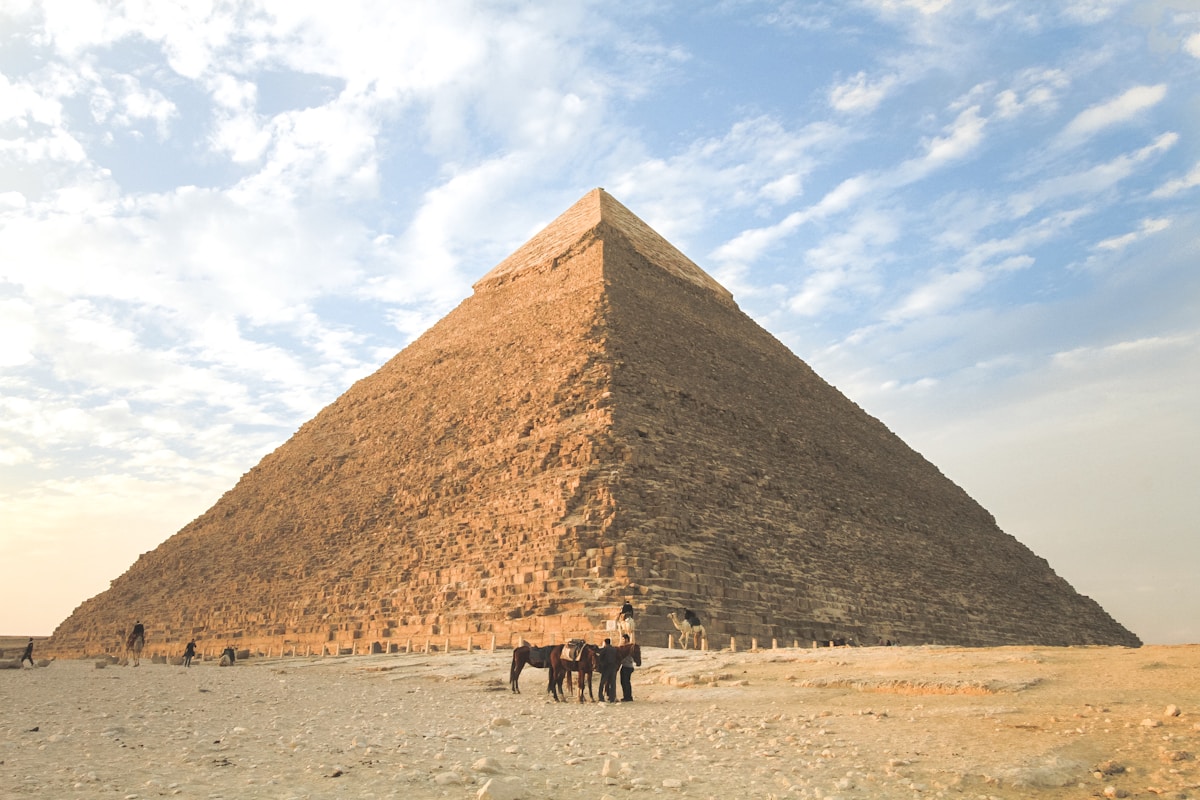
Ancient Civilizations
The civilizations that built the foundations of the modern world.
Ancient civilizations are the earliest complex, urban, literate societies produced by humanity. Across more than three thousand years and on every inhabited continent, peoples independently built cities, invented writing, codified law, domesticated crops, and constructed monuments that still define the landscapes of the modern world. Their achievements form the foundation of almost every later cultural, political, and scientific tradition.
Overview
An ancient civilization, in the sense used by modern historians and archaeologists, is a society that has become large, stratified, and organized enough to sustain cities, produce written records, and maintain a state apparatus. Societies of this kind emerged independently in several distinct regions of the world, beginning in the mid-fourth millennium before the common era and continuing to develop for several thousand years afterward. The conventional framing places the great ancient civilizations within a window that runs from roughly 3500 before the common era through about 500 of the common era, though the boundaries on either end are contested and vary by region.
Civilizations did not arise at random. They appeared in locations where reliable food production could support a population too large to feed by hunting and gathering alone. Four of the most famous early civilizations grew up along major river valleys. Mesopotamia sat between the Tigris and Euphrates, Egypt along the Nile, the Indus Valley civilization along the Indus and the now-dry Saraswati, and early Chinese civilization along the Yellow and Yangtze rivers. These rivers provided water, fertile silt, and natural transport corridors. Yet the river-valley model is not the only path to civilization. The Andes, Mesoamerica, and parts of Africa developed complex societies in quite different environments, from arid coastal plains to tropical forests and high mountain plateaus.
Once the first cities formed, a cluster of new features tended to follow. Food surplus freed some people from farming and allowed specialization in pottery, weaving, metalwork, building, priesthood, and warfare. Specialization in turn produced hierarchy. Kings, priests, scribes, soldiers, merchants, artisans, farmers, and enslaved laborers occupied distinct and unequal roles. Long-distance trade carried raw materials across hundreds or even thousands of kilometers, and writing systems emerged to track exchange, taxation, ritual, and royal achievement.
This page is a survey. It introduces the major ancient civilizations, their signature achievements, and the patterns of rise, exchange, and decline that link them. Each civilization listed here could fill many volumes on its own, and the depth offered below is intended to orient students, educators, and general readers rather than to replace deeper study. Where a linked country profile exists on CountryReports, it is included so that readers can continue into the modern history and contemporary culture of the lands where these civilizations once flourished.
What Makes a Civilization?
Scholars have long debated what separates a civilization from other large, complex societies. Most working definitions rest on a shared list of criteria proposed by the Australian archaeologist V. Gordon Childe in the 1950s and revised many times since. A society is generally described as a civilization when it exhibits a clustered combination of these features rather than any single one of them in isolation.
The most commonly cited criteria include urban centers dense enough to sustain non-farming occupations, an agricultural surplus that can feed those urban populations, social stratification with specialized roles and unequal access to wealth, writing or at least proto-writing used for administration and memory, monumental architecture such as temples, palaces, pyramids, or tombs, organized religion staffed by a priestly class, and long-distance trade in goods that cannot be obtained locally. Many definitions add specialized full-time craft production, formal political authority such as kingship or council, and standardized systems of measurement.
None of these criteria is uncontested. The Neolithic site of Çatalhöyük in present-day Turkey, dating to roughly 7100 before the common era, housed thousands of people in tightly packed mudbrick dwellings but shows little evidence of social stratification, monumental public architecture, or writing. Some scholars call it a proto-civilization, others a uniquely egalitarian experiment in dense settlement. The Indus Valley cities were highly planned and clearly literate in some fashion, yet their writing system has never been deciphered and their political structure remains obscure. In Mesoamerica, the Olmec appear to have built monumental sculpture and early glyphic writing before what most definitions would recognize as cities. Each edge case reminds researchers that civilization is a descriptive shorthand, not a checklist.
Urban Centers
Cities dense and diverse enough to support occupations beyond farming.
Agricultural Surplus
Food production reliable enough to feed a non-farming urban population.
Social Stratification
Unequal roles and access to wealth, power, and status.
Writing or Proto-Writing
Symbolic recording of language, accounts, ritual, or royal deeds.
Monumental Architecture
Temples, palaces, pyramids, tombs, or ceremonial complexes.
Organized Religion
State or community ritual practice maintained by specialists.
Specialized Labor
Full-time artisans, scribes, soldiers, priests, and administrators.
Long-Distance Trade
Exchange of goods and ideas across wide geographic networks.
Mesopotamia — The Cradle of Civilization
Mesopotamia, meaning the land between rivers in ancient Greek, occupied the floodplain of the Tigris and Euphrates in what is today Iraq, northeastern Syria, and parts of southeastern Turkey. It is widely regarded as the birthplace of urban civilization. Beginning with the Sumerians in the late fourth millennium before the common era, the region gave rise to a long sequence of peoples and empires, including the Akkadians, Babylonians, and Assyrians, each building on the cultural inheritance of the last.
Around 3200 before the common era, scribes in the Sumerian city of Uruk began pressing pictographic signs into damp clay tablets with a reed stylus. This writing system, which evolved into the wedge-shaped script called cuneiform, is among the earliest ever developed. Cuneiform was used for four languages across more than three millennia and recorded everything from temple inventories to royal inscriptions, legal contracts, love poems, and mathematical problems. The Epic of Gilgamesh, a poem assembled in roughly its final form during the second millennium before the common era, survives on cuneiform tablets and contains a flood narrative that parallels later stories in the Hebrew Bible.
Sumerian city-states such as Ur, Uruk, Nippur, Lagash, and Eridu were dominated by massive stepped temple platforms called ziggurats, which served as the earthly residences of the patron deity of the city. The Akkadian Empire, founded by Sargon of Akkad in approximately 2334 before the common era, became one of the earliest multi-ethnic empires in world history. Under Hammurabi of Babylon, around 1754 before the common era, one of the oldest surviving written law codes was inscribed on a tall basalt stele. The Code of Hammurabi enumerated offenses and punishments in extensive detail and included early statements of presumption of innocence and the right to present evidence.
Mesopotamian contributions include the wheel, the plow, the sexagesimal number system, which survives in the sixty-minute hour and the three-hundred-sixty-degree circle, the earliest known astronomical observations of Venus and eclipse cycles, extensive irrigation engineering, and the first known bureaucratic record-keeping. The region was conquered by the Achaemenid Persians in the sixth century before the common era, by Alexander the Great in 331 before the common era, and eventually by the Arab-led Islamic armies in the seventh century of the common era, but Mesopotamian mathematics, astronomy, and literature continued to influence Persian, Greek, and Arabic scholarship for many centuries.
Ancient Egypt
Ancient Egypt was organized around the predictable yearly flood of the Nile, which deposited rich black silt on the fields of its narrow valley. Around 3100 before the common era, according to tradition, the ruler Narmer unified Upper and Lower Egypt into a single kingdom. The subsequent history of Pharaonic Egypt is conventionally divided into the Old Kingdom, Middle Kingdom, New Kingdom, and Late Period, separated by Intermediate Periods of political fragmentation.
The Old Kingdom, from roughly 2686 to 2181 before the common era, is most famous for pyramid building. The Great Pyramid of Khufu at Giza, completed around 2560 before the common era, stood as the tallest human-made structure for almost four thousand years. The adjacent pyramids of Khafre and Menkaure, together with the Sphinx, form the most recognizable monumental complex of the ancient world. The Middle Kingdom saw a cultural renaissance in literature, art, and mining expeditions. The New Kingdom, from about 1550 to 1069 before the common era, was a period of imperial expansion under pharaohs such as Thutmose III, the warrior queen Hatshepsut, Akhenaten with his brief religious reform centered on the sun disk Aten, the boy king Tutankhamun, and Ramses II, who ruled for more than sixty years.
Egyptian hieroglyphic writing, in use from around 3200 before the common era, combined logographic and alphabetic signs and was carved on temple walls and painted on papyrus scrolls. The hieratic and later demotic scripts were simpler cursive forms used by scribes. The decipherment of hieroglyphs by Jean-François Champollion in 1822, using the trilingual Rosetta Stone, opened Egyptian history to modern scholarship. Egyptian religion centered on a pantheon of gods including Ra, Osiris, Isis, Horus, Anubis, and Thoth, and on the belief that the soul of the deceased continued after death. Mummification, elaborate tombs, and funerary texts such as the so-called Book of the Dead reflected this concern for the afterlife.
The final native dynasty ended with the Persian conquest, and after Alexander the Great's arrival in 332 before the common era, Egypt was ruled for three centuries by the Greek Ptolemaic dynasty, which ended with the death of Cleopatra VII and the Roman annexation in 30 before the common era. Pharaonic religion persisted for several centuries more under Roman rule before being gradually displaced by Christianity. Egyptian architecture, iconography, and funerary ideas continued to shape Mediterranean culture for centuries after the close of the Pharaonic age.
Indus Valley Civilization
The Indus Valley civilization, also called the Harappan civilization after its first excavated city, flourished across a vast area of modern Pakistan and northwestern India from about 2600 to 1900 before the common era. At its height it covered more territory than contemporary Mesopotamia or Egypt and contained hundreds of towns and five major cities, including Harappa, Mohenjo-daro, Dholavira, Rakhigarhi, and Ganweriwala.
The Indus cities are remarkable for their planning. Streets were laid out on a grid. Houses had bathrooms connected by covered drains to municipal sewer lines, a standard of urban sanitation not matched again in many parts of the world until the industrial era. A large public structure at Mohenjo-daro known as the Great Bath was carefully sealed with bitumen to hold water and may have served ritual purposes. Weights and measures were standardized across the entire culture area, which speaks to a level of administrative uniformity achieved without any identified royal inscriptions or monumental palaces.
Thousands of small soapstone seals survive, carved with images of bulls, unicorns, and other animals and with short inscriptions in a writing system that has resisted decipherment for more than a century. The Indus script may represent a language ancestral to the Dravidian family, or it may be something else entirely. Without readable texts, the political structure of the civilization is inferred from its architecture and material culture rather than from its own voice.
The Harappan cities declined and were largely abandoned between about 1900 and 1700 before the common era. No single explanation is accepted. Changes in monsoon patterns, the drying of the Ghaggar-Hakra river system once identified with the Vedic Saraswati, shifts in trade routes with Mesopotamia, and internal social transformation have all been proposed, and most specialists now argue for a combination of factors rather than a single cause. The population did not vanish; it reorganized into smaller village-based communities whose descendants contributed to later South Asian cultures.
Ancient China
Early Chinese civilization emerged along the middle and lower reaches of the Yellow River, with significant parallel developments along the Yangtze. Traditional histories name the Xia as the first dynasty, perhaps beginning around 2070 before the common era, though direct archaeological confirmation is still debated. The Shang dynasty, from approximately 1600 to 1046 before the common era, is the earliest for which abundant written evidence survives, carved on the oracle bones used by royal diviners to consult ancestral spirits.
The succeeding Zhou dynasty, from about 1046 to 256 before the common era, is associated with the political philosophy known as the Mandate of Heaven, which held that a ruler retained legitimacy only as long as he governed justly. The later Zhou period produced a remarkable flowering of thought, the so-called Hundred Schools, including Confucianism, founded by Kongzi in the sixth and fifth centuries before the common era, Daoism associated with the Daodejing and with Zhuangzi, Legalism, and Mohism. These traditions continue to shape East Asian culture and government today.
The Qin dynasty, beginning in 221 before the common era under the first emperor Qin Shi Huang, unified the warring states into a single imperial administration, standardized writing, weights, measures, and axle widths, and linked existing defensive walls into an early version of the Great Wall. The emperor was buried with a life-sized terracotta army of more than eight thousand figures, discovered near Xi'an in 1974. The Han dynasty, from 206 before the common era to 220 of the common era, stabilized imperial institutions, extended Chinese influence into Central Asia, opened the overland Silk Road, and made Confucianism the official state philosophy.
Ancient China produced some of the most consequential inventions in world history, including paper, the magnetic compass, silk production, gunpowder, cast iron, the crossbow, the crank handle, and sophisticated astronomical instruments. The Chinese written script, which first appears in a mature form on Shang oracle bones, has remained in continuous use longer than any other writing system in the world.
Mesoamerica — Olmec, Maya, Teotihuacan, Aztec
Mesoamerica, the culture area stretching from central Mexico through Guatemala, Belize, and parts of Honduras and El Salvador, hosted a long sequence of civilizations that developed in contact with one another for more than three thousand years. Their shared traditions included hieroglyphic writing, intricate calendars, step pyramids, a ritual ball game, and agriculture based on maize, beans, and squash.
The Olmec, flourishing on the Gulf Coast from roughly 1600 to 400 before the common era, are often called the mother culture of Mesoamerica. They carved colossal basalt heads weighing up to twenty tons, built early ceremonial centers at San Lorenzo and La Venta, and established artistic and religious motifs that later cultures reworked. In the Oaxaca Valley, the Zapotec built the mountaintop capital of Monte Albán and developed an early Mesoamerican writing system.
The Maya civilization occupied the Yucatán peninsula and the surrounding highlands and lowlands. Its Classic period, from about 250 to 900 of the common era, produced the cities of Tikal, Palenque, Copán, Calakmul, Caracol, and many others. The Maya made independent advances in mathematics, including the concept of zero, and developed a fully logosyllabic script that has been largely deciphered since the late twentieth century. Their Long Count calendar tracked time over millions of days with extraordinary precision. Between roughly 800 and 900 of the common era, the southern lowland Maya centers were largely abandoned in a poorly understood collapse that most researchers now attribute to a combination of prolonged drought, political conflict, and agricultural strain.
Teotihuacan, in the Valley of Mexico, was one of the largest cities in the world during the first half of the first millennium of the common era, with a population estimated at more than one hundred thousand. Its Pyramid of the Sun and Pyramid of the Moon dominated a carefully planned urban grid. The identity of its rulers and the language of its people remain unresolved. Centuries later, the Mexica, commonly called the Aztecs, built their capital Tenochtitlan on an island in Lake Texcoco from 1325 of the common era and came to dominate a tribute empire across central Mexico before the Spanish conquest of 1521. Although the Aztec empire falls toward the very end of the ancient period by most definitions, it is integral to the pre-Columbian civilizational story of the region.
Andean Civilizations — Caral, Chavín, Moche, Inca
The western slopes of South America hosted one of the world's oldest civilizational traditions, running from the arid Pacific coast of Peru up into the high Andes and the headwaters of the Amazon. Caral-Supe, sometimes called the Norte Chico civilization, built large platform mounds and sunken plazas in the Supe Valley as early as 3000 before the common era, making it contemporary with the first Egyptian dynasties and among the oldest complex societies anywhere in the Americas.
The Chavín culture, centered on the ceremonial complex of Chavín de Huántar from roughly 900 to 200 before the common era, established religious and artistic motifs that later Andean peoples continued to draw upon. On the northern coast, the Moche from about 100 to 800 of the common era built adobe pyramids, developed copper and gold metallurgy, and produced strikingly realistic portrait pottery. Their successors in the same region, the Chimú, built the vast adobe city of Chan Chan. In the southern highlands around Lake Titicaca, Tiwanaku and the Wari empire flourished in the middle of the first millennium of the common era.
The Inca empire, known in Quechua as Tawantinsuyu, arose in the Cusco Valley in the early fifteenth century of the common era and reached its greatest extent under the rulers Pachacuti and Huayna Capac. At its peak before the Spanish invasion of 1532, it stretched from present-day southern Colombia to central Chile, making it the largest empire in the pre-Columbian Americas. The Inca administered this territory without the wheel, without an alphabet in the usual sense, and without horses. They linked their provinces with a road network of more than thirty thousand kilometers, recorded administrative data on knotted cords called quipu, and built stone architecture such as Machu Picchu, Sacsayhuamán, and Ollantaytambo whose precision still astonishes modern engineers.
Andean peoples domesticated a remarkable set of crops now central to world agriculture, including the potato, with its thousands of regional varieties, maize adapted to altitude, quinoa, amaranth, and many kinds of bean. They also domesticated the llama and the alpaca, harvested seabird guano as fertilizer, and built elaborate terraced fields that turned steep mountain slopes into productive farmland. The scale and durability of these adaptations testify to a long, sophisticated civilizational tradition that arose entirely independently of the Old World.
Ancient Greece
Ancient Greece as a civilizational tradition stretches from the Bronze Age Minoan palaces of Crete, beginning around 2700 before the common era, through the Mycenaean kingdoms of the mainland, a post-collapse Dark Age in the early first millennium before the common era, the Archaic revival, the Classical period of the fifth and fourth centuries before the common era, and the Hellenistic age that followed Alexander the Great. The Roman annexation of the Achaean League after the sack of Corinth in 146 before the common era is a common endpoint, though Greek culture continued to shape the Roman and later Byzantine worlds for more than a thousand years.
Classical Greece was organized around the polis, an independent city-state combining an urban center and its surrounding countryside. The most famous poleis were Athens, Sparta, Corinth, Thebes, and the many Greek colonies founded around the Mediterranean and Black Sea coasts. Athens in the fifth century before the common era developed a distinctive form of direct democracy, in which adult male citizens voted on legislation and served by lot on public bodies. Although the system excluded women, enslaved people, and foreigners, it remains a foundational reference point for later democratic thought.
The intellectual achievements of Classical Greece set the terms of much subsequent Western philosophy, science, drama, and political theory. Socrates, Plato, and Aristotle defined philosophical questions that are still debated. Herodotus and Thucydides created the discipline of history writing. Aeschylus, Sophocles, and Euripides shaped dramatic tragedy, while Aristophanes did the same for comedy. Euclid systematized geometry, Archimedes transformed mechanics and hydrostatics, and Hippocrates founded a rational approach to medicine. The Olympic Games, first held traditionally in 776 before the common era at Olympia, drew athletes from across the Greek world and continued for more than a millennium.
The Persian Wars of the early fifth century before the common era pitted a coalition of Greek city-states against the vast Achaemenid Persian Empire and became a defining national memory. The subsequent Peloponnesian War between Athens and Sparta exhausted the Greek world. In the late fourth century before the common era, Alexander the Great of Macedon conquered an empire stretching from the Balkans to the Indus, and after his death in 323 before the common era the resulting Hellenistic kingdoms spread the Greek language, alphabet, and urban culture across western Asia and northeastern Africa.

Ancient Rome
Ancient Rome grew from a small settlement on the Tiber in central Italy, traditionally founded in 753 before the common era, into the largest state the Mediterranean had ever known. Its history is conventionally divided into the Roman Kingdom, the Roman Republic from about 509 before the common era, and the Roman Empire from 27 before the common era. The Western Roman Empire fell in 476 of the common era, while the Eastern Roman Empire, known later as the Byzantine Empire, endured until the fall of Constantinople in 1453 of the common era.
Under the Republic, Rome was governed by elected magistrates, a Senate dominated by an aristocratic patrician class, and popular assemblies. Its institutions were celebrated and copied by later republican thinkers, although the Republic collapsed into a series of civil wars in the first century before the common era. Julius Caesar's crossing of the Rubicon in 49 before the common era and his assassination in 44 before the common era prefigured the rise of his adopted heir Octavian, who took the title Augustus in 27 before the common era and established the imperial system that would govern the Mediterranean for five centuries.
The roughly two-century Pax Romana that followed was a period of relative peace and vast building projects. Roman engineers built roads totaling more than eighty thousand kilometers, bridges, aqueducts carrying fresh water to cities across the empire, public baths, amphitheaters including the Colosseum, and civic buildings using their invention of hydraulic concrete. Roman law codified under later emperors, especially in the Corpus Juris Civilis of the sixth-century emperor Justinian, became the foundation of legal systems across continental Europe and Latin America. Latin remained the language of administration, scholarship, and religion in western Europe for more than a thousand years after the fall of the Western Empire.
Christianity began in Roman-ruled Judea in the first century of the common era and spread rapidly across the empire despite periodic persecution. The emperor Constantine I legalized the religion in 313 of the common era and convened the Council of Nicaea in 325 of the common era. By the late fourth century, Christianity had become the state religion. The Western Empire weakened under military and fiscal strain, migrations of Germanic peoples, and internal political fragmentation, and the traditional date of its fall is the deposition of the emperor Romulus Augustulus in 476 of the common era. Its institutions, language, law, and religious structures, however, were absorbed and transformed by the successor kingdoms of early medieval Europe.
Other Significant Civilizations
The civilizations already surveyed are the most widely taught, but they are far from the complete list. A fuller account of the ancient world includes the following traditions, each of which deserves much deeper study.
Persian Empires. The Achaemenid Empire, founded by Cyrus the Great in the sixth century before the common era, stretched from the Aegean to the Indus and built a sophisticated road, postal, and administrative network. It was overthrown by Alexander the Great in 331 before the common era. The later Parthian and Sasanian empires sustained Persian political and cultural traditions through the seventh century of the common era, when the Sasanians fell to the early Islamic caliphate.
Phoenicia and Carthage. The Phoenician city-states of the eastern Mediterranean coast, including Tyre, Sidon, and Byblos, were seafarers and traders whose twenty-two-letter alphabet gave rise to Greek, Latin, Hebrew, Arabic, and many other writing systems. Their western colony of Carthage, in present-day Tunisia, became a major Mediterranean power that clashed with Rome in the three Punic Wars and was destroyed in 146 before the common era.
Nubia and Kush. South of Egypt, along the Nile in modern Sudan, the kingdoms of Kerma, Napata, and Meroë built pyramids, iron industries, and a distinct Meroitic script. Kushite kings ruled Egypt as its Twenty-Fifth Dynasty in the eighth and seventh centuries before the common era.
Aksum. Centered in the Tigray region of modern Ethiopia and Eritrea, the kingdom of Aksum controlled Red Sea trade from about the first to the seventh centuries of the common era. It minted its own coinage and adopted Christianity in the fourth century. Its monumental stone obelisks still stand in the city of Aksum.
Ancient Korea. Traditional histories of Korea begin with Gojoseon, a state traditionally dated to 2333 before the common era. The Three Kingdoms of Goguryeo, Baekje, and Silla dominated the peninsula from roughly the first century before the common era through the seventh century of the common era, developing distinct Buddhist art, tomb painting, and royal architecture.
Yamato Japan. The Yamato court consolidated power in the Japanese archipelago during the Kofun period of the third through sixth centuries of the common era, building enormous keyhole-shaped burial mounds for its rulers. Buddhism arrived from Korea and China in the sixth century and rapidly transformed Japanese art, architecture, and government.
Khmer Empire. Although its peak fell in the medieval period, the Khmer state of Cambodia grew out of earlier kingdoms such as Funan and Chenla. From the ninth through the fifteenth centuries of the common era, its capital at Angkor, including the temple of Angkor Wat, was one of the largest urban complexes in the preindustrial world.
Ancestral Polynesians. Starting from ancestors in island Southeast Asia, Austronesian voyagers colonized a vast triangle of the Pacific, reaching Samoa and Tonga in the late second millennium before the common era, Hawaii and Easter Island by the first millennium of the common era, and New Zealand around 1280 of the common era. Their long-distance ocean navigation, using stars, swells, and bird behavior, stands as one of the most impressive technological achievements of the ancient world.
Common Threads and Cross-Cultural Exchange
Ancient civilizations did not develop in isolation from one another. Across the Old World, they were linked by networks of exchange that moved goods, technologies, people, diseases, religions, and ideas. The Silk Road carried Chinese silk, paper, and later gunpowder west toward the Mediterranean, while gold, glass, horses, and Christianity moved east. Indian Ocean maritime trade connected East Africa, Arabia, India, Southeast Asia, and China in a sustained circuit of spice, textile, timber, and slave commerce that predates the common era. The Mediterranean itself was effectively a single cultural arena by the time of the Roman Empire, linking North Africa, the Levant, Anatolia, the Balkans, Italy, Iberia, and Gaul.
Technologies diffused along these networks, but many also arose independently in multiple places. Writing emerged in Mesopotamia, in Egypt, in the Indus Valley, in China, and in Mesoamerica in separate developments. Metallurgy was invented more than once, with copper smelting documented early in Anatolia and in the Andes. Plant and animal domestication occurred in at least seven distinct global centers, including the Fertile Crescent, the Yellow River valley, the Mexican highlands, the Andes, the Sahel, New Guinea, and eastern North America. The concept of zero arose independently in India and in the Maya world.
The debate over pre-Columbian contact between the Americas and the Old World remains active but narrow. Norse visits to Newfoundland around 1000 of the common era are archaeologically confirmed. Polynesian voyagers may have reached the South American coast, where the sweet potato is suggestive of such contact, though the evidence is incomplete. No mainstream scholar now defends claims of sustained pre-Columbian transoceanic civilization transfer. The simpler and better-supported picture is that the Americas and the Old World developed in parallel, with clear independent inventions on each side.
Older popular narratives that placed a single origin of civilization in Mesopotamia or Egypt and attributed all subsequent cultural complexity to diffusion from those centers have been largely displaced by modern archaeology. Independent invention, regional adaptation, and the creative synthesis of local ideas with imports are now understood as the normal pattern of civilizational development.
Decline and Legacy
Why do civilizations decline? Popular explanations often point to a single cause, such as invasion, moral decay, or environmental collapse, but modern archaeological and historical scholarship consistently finds multiple interacting pressures at work. Prolonged drought, soil exhaustion, and changes in sea level have contributed to the decline of many ancient states, including the Akkadian Empire at the end of the third millennium before the common era, the Classic Maya in the ninth century of the common era, and the Late Bronze Age civilizations of the eastern Mediterranean around 1200 before the common era. Epidemic disease, often carried along trade routes, repeatedly reduced populations and weakened states. Overextension of imperial frontiers, internal political fragmentation, elite infighting, and the failure of redistribution systems add additional layers. No serious modern account of Roman, Han, or Classic Maya decline relies on any single factor.
What ancient civilizations left behind remains with us every day. The seven-day week, the sixty-minute hour, and the three-hundred-sixty-degree circle are Mesopotamian in origin. The Latin alphabet, derived from Greek by way of the Etruscans, is used to write this sentence. Our numerals are descended from Indian numerals transmitted through the Arab world. The calendar month names come from Roman religion and Roman emperors. The grains that feed most of the world's population, including wheat, rice, maize, and millet, were domesticated in the ancient world. The potato, the tomato, the chili pepper, the sweet potato, and cacao were domesticated in the Americas and only entered the Old World after 1492. Contemporary legal codes, religious traditions, architectural vocabularies, philosophical questions, and democratic vocabularies all inherit directly from ancient civilizations.
The collapse of a civilization is rarely the collapse of its people. Populations survived, migrated, and reorganized. Their languages, foods, religious practices, and technologies persisted, often in new hybrids, and later societies drew on the resulting reservoir of cultural material to build new political and cultural projects. Readers interested in twentieth-century analogs of civilizational crisis and renewal can consult our related survey pages on World War I and World War II, which trace the modern remaking of the international order.
For students and researchers, the ancient civilizations remain a living laboratory. New excavations, improved dating methods, the decipherment of scripts, and the analysis of ancient genomes and environmental records continue to revise the picture each year. The broad outlines presented on this page are stable, but the details are still being written.
Sources
Detailed citations, data references, and institutional sources for all CountryReports content are listed on the Sources page. The following national museums, university research institutes, and academic libraries are the primary authorities we rely on for coverage of ancient civilizations. Each link points to the institution's homepage.
National Museums and Collections
- The British Museum — Collections and scholarly catalogues covering Mesopotamia, Egypt, Greece, Rome, and many other ancient cultures.
- The Metropolitan Museum of Art — The Met Heilbrunn Timeline of Art History provides peer-reviewed essays on the art and material culture of every major ancient civilization.
- Smithsonian Institution — The National Museum of Natural History, Freer Gallery of Art, and National Museum of the American Indian collectively hold and publish on the archaeology of the ancient Old and New Worlds.
- Musée du Louvre — Houses the Code of Hammurabi, major collections of Egyptian, Near Eastern, Greek, Etruscan, and Roman antiquities, and published scholarly research.
- The J. Paul Getty Museum and Getty Villa — Classical Mediterranean antiquities and conservation research, with open-access publications on Greek and Roman art.
University Research Institutes and Museums
- Institute for the Study of Ancient Cultures (Oriental Institute), University of Chicago — Leading center for research on the ancient Near East, with open-access publications and a major museum.
- Petrie Museum of Egyptian and Sudanese Archaeology, University College London — One of the world's great teaching collections of Egyptian and Nubian antiquities.
- Harvard Museum of the Ancient Near East — Formerly the Harvard Semitic Museum; research and teaching on the archaeology and languages of the ancient Near East.
- Penn Museum (University of Pennsylvania Museum of Archaeology and Anthropology) — Major excavation archives and collections covering Ur, the Maya world, and many other sites.
- Egypt Exploration Society — Britain's oldest Egyptological research body, publishing excavation reports and scholarly journals.
- American Academy in Rome — Research institute for Classical archaeology and the study of the Roman world.
Academic Libraries and Publications
- Perseus Digital Library, Tufts University — Open-access digital library of Greek, Latin, and other ancient-world texts with scholarly apparatus.
If you notice an error or would like to suggest a correction, please use our contact page to get in touch.