
 English
 Español
 中文
中文 हिन्दी
 Français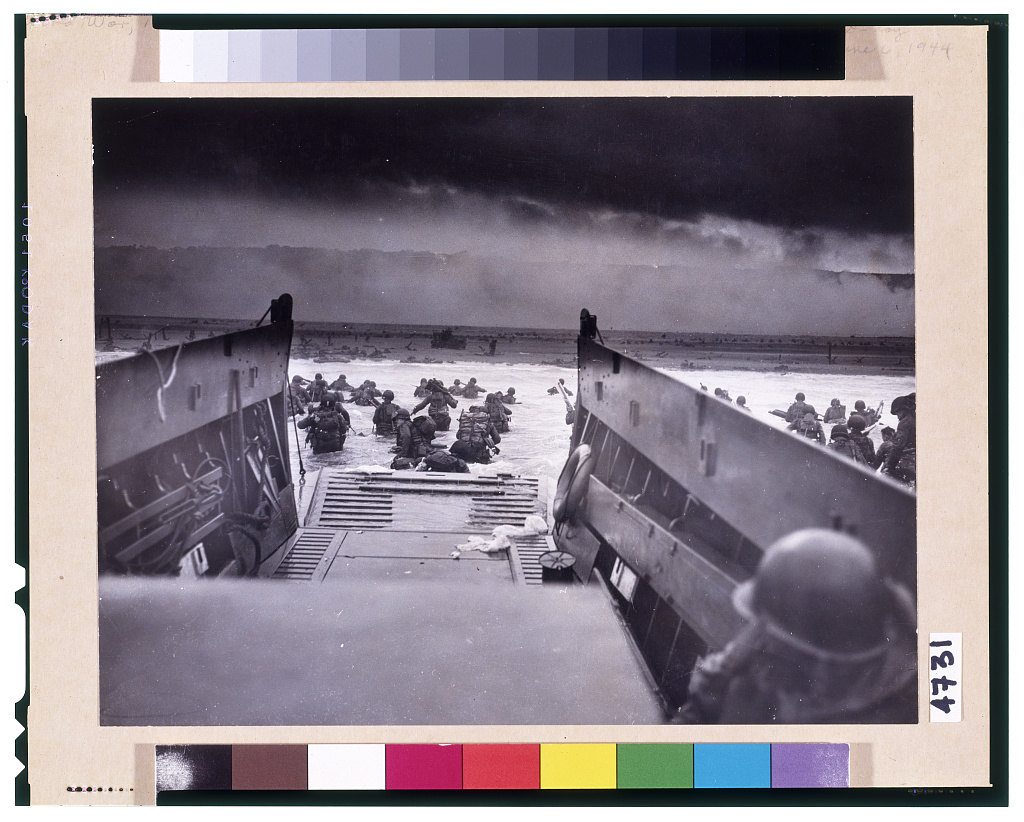
World War II
1939–1945 — the deadliest conflict in human history.
World War II was a global conflict fought from 1939 to 1945 between the Allied Powers and the Axis Powers. Every inhabited continent was touched by the war, and by its end the political map of the world had been redrawn, two superpowers had emerged, and international institutions were created to prevent such a catastrophe from ever happening again.
Overview
World War II was the most destructive armed conflict in recorded human history. It involved more than fifty nations and drew soldiers, civilians, industrial capacity, scientific research, and colonial resources from every inhabited continent. The war is conventionally dated from the German invasion of Poland on September 1, 1939 to the formal Japanese surrender aboard the USS Missouri on September 2, 1945, although related conflicts in Asia, including the Second Sino-Japanese War, began earlier.
The war was fought between two principal coalitions. The Axis Powers were led by Nazi Germany, the Kingdom of Italy, and the Empire of Japan. The Allied Powers were led by the United Kingdom, the Soviet Union, the United States, and the Republic of China, joined by dozens of other nations including Canada, Australia, New Zealand, India, South Africa, France and the Free French forces, Brazil, Mexico, and many governments in exile.
Casualty estimates range from roughly 70 to 85 million dead, the majority of them civilians. The Soviet Union and China suffered the highest absolute losses. The Holocaust, the systematic genocide of Europe's Jewish population by Nazi Germany, accounted for approximately six million of those civilian deaths. Bombing campaigns, famine, disease, forced labor, and mass atrocities compounded the toll.
The consequences of the war reshaped the twentieth century. The United States and the Soviet Union emerged as superpowers, European colonial empires began to dissolve, the atomic age began, and the United Nations was founded to coordinate international security and humanitarian action. Many of the political borders, alliances, and institutions that define the modern world trace directly to the years between 1939 and 1945.
Key Facts
- Dates
- September 1, 1939 – September 2, 1945
- Duration
- 6 years, 1 day
- Main Allied Powers
- United Kingdom, Soviet Union, United States, China, France, Canada, Australia, and others
- Estimated total deaths
- 70–85 million (civilian and military combined)
- Military deaths
- Approximately 21–25 million
- Civilian deaths
- Approximately 50–55 million, including approximately 6 million Jews in the Holocaust
- Key turning points
- Battle of Stalingrad (1942–43), Battle of Midway (1942), D-Day (June 6, 1944)
- Ended by
- Unconditional surrender of Germany (May 7/8, 1945) and Japan (August 15 / September 2, 1945)
Origins and Causes
The origins of World War II are rooted in the unresolved tensions of the First World War and the interwar decades. The Treaty of Versailles in 1919 imposed heavy reparations and territorial losses on Germany, fueling lasting resentment. The collapse of international finance during the Great Depression destabilized democracies worldwide and undermined confidence in liberal governance. In this climate, authoritarian and fascist movements rose to power in Germany, in the Kingdom of Italy under Benito Mussolini, and in the Empire of Japan, where militarists consolidated control over the government.
The League of Nations, designed to arbitrate international disputes, proved unable to enforce its decisions. Japan invaded Manchuria in 1931 and expanded its war against China in 1937. Italy invaded Ethiopia in 1935. Nazi Germany, under Adolf Hitler, remilitarized the Rhineland in 1936, annexed Austria in 1938, and seized Czechoslovakia in two stages in 1938 and 1939. Each aggression was met with concession or protest rather than collective military response.
In August 1939, Germany and the Soviet Union signed the Molotov-Ribbentrop Pact, a non-aggression agreement that included a secret protocol dividing eastern Europe between them. On September 1, 1939, Germany invaded Poland. Two days later, the United Kingdom and France declared war on Germany, marking the formal beginning of the European war.

Major Theaters of War
The war was fought across four interlocking theaters. Each had distinct geography, combatants, and strategic character, and each shaped the overall course of the conflict.
European Theater
The largest land war in history was fought between Germany and the Allies across western, central, and eastern Europe. The Eastern Front between Germany and the Soviet Union was by far the deadliest single theater of the war.
- • Western Front (France, Low Countries, western Germany)
- • Eastern Front (Soviet-German war)
- • Italian Campaign
Pacific Theater
Imperial Japan sought dominance over East Asia and the western Pacific. Allied forces, led primarily by the United States with support from Australia, New Zealand, and Commonwealth forces, pursued an island-hopping strategy to close on the Japanese home islands.
- • Pearl Harbor and the Central Pacific
- • Southwest Pacific and the Philippines
- • China-Burma-India
North African Theater
Fought across Libya, Egypt, Tunisia, and Algeria, the Desert War pitted Allied forces against Italian and German armies. Operation Torch in November 1942 brought United States forces into ground combat against Germany for the first time.
- • Western Desert Campaign
- • Second Battle of El Alamein
- • Operation Torch
Atlantic Theater
The Battle of the Atlantic was the longest continuous military campaign of the war. German submarines attempted to sever the Allied shipping lifeline between North America and the United Kingdom, while Allied escorts, code-breaking, and long-range aircraft steadily turned the tide.
- • U-boat campaign
- • Convoy system
- • Ultra signals intelligence
Timeline of Key Events
A chronological summary of the most pivotal events of the war, from the German invasion of Poland to the Japanese surrender aboard the USS Missouri.
-
Sep 1, 1939
Germany invades Poland
The United Kingdom and France declare war on Germany two days later, opening the European war.
-
Jun 22, 1940
France falls to Germany
After a six-week campaign, France signs an armistice. The Vichy regime is established in the unoccupied south.
-
Jun 22, 1941
Operation Barbarossa begins
Germany invades the Soviet Union in the largest military operation in history, breaking the Molotov-Ribbentrop Pact.
-
Dec 7, 1941
Attack on Pearl Harbor
Japan attacks the United States Pacific Fleet at Pearl Harbor, Hawaii. The United States enters the war the following day.
-
Jun 4–7, 1942
Battle of Midway
United States naval and air forces sink four Japanese fleet carriers, shifting the strategic balance in the Pacific.
-
Feb 2, 1943
German surrender at Stalingrad
The encircled German Sixth Army surrenders to the Red Army, ending the costliest battle of the war and beginning the Soviet advance westward.
-
Jun 6, 1944
D-Day: Allied invasion of Normandy
Allied forces land on five beaches in Normandy, France, opening a Western Front against Germany.
-
May 7–8, 1945
Germany surrenders; V-E Day
Germany signs unconditional surrender documents in Reims and Berlin. Europe celebrates Victory in Europe Day.
-
Aug 6 & 9, 1945
Atomic bombings of Hiroshima and Nagasaki
The United States drops atomic bombs on the Japanese cities of Hiroshima and Nagasaki. The Soviet Union declares war on Japan on August 8.
-
Aug 15 / Sep 2, 1945
Japan surrenders; V-J Day
Emperor Hirohito announces surrender on August 15. The formal instrument of surrender is signed aboard the USS Missouri in Tokyo Bay on September 2, ending the war.
The Holocaust
The Holocaust was the systematic, state-sponsored persecution and genocide of approximately six million European Jews by Nazi Germany and its collaborators between 1933 and 1945. The campaign of annihilation was pursued through ghettoization, mass shootings by Einsatzgruppen units on the Eastern Front, and industrialized killing at extermination camps including Auschwitz-Birkenau, Treblinka, Sobibor, Belzec, Chelmno, and Majdanek. Concentration camps such as Dachau, Buchenwald, and Bergen-Belsen held political prisoners, forced laborers, and victims of persecution under brutal conditions.
Alongside Jewish victims, Nazi Germany also targeted Roma and Sinti people, Soviet prisoners of war, Polish civilians, disabled people killed under the Aktion T4 program, political prisoners, Jehovah's Witnesses, and LGBTQ+ individuals. The Holocaust is widely studied as the central moral and historical reference point of the war and as the defining case of genocide in modern international law. Because of the depth and distinct character of this subject matter, it is treated in greater detail on its own dedicated page at The Holocaust.
Technology and Weapons
World War II drove an unprecedented pace of scientific and engineering development. Advances in electronics, aerospace, cryptography, and physics during the war reshaped civilian technology for decades after its conclusion.
Radar
Radio detection and ranging systems gave early warning of incoming aircraft and ships and were decisive in the Battle of Britain and the Battle of the Atlantic.
Jet Engines
Germany's Me 262 and the United Kingdom's Meteor introduced jet propulsion to aerial combat, previewing the postwar jet age.
Rocket Weapons
Germany's V-1 flying bomb and V-2 ballistic rocket were the first operational long-range guided weapons, forerunners of modern cruise and ballistic missiles.
Code-breaking
The breaking of the German Enigma cipher at Bletchley Park, known as the Ultra program, and United States success against Japanese naval codes gave the Allies decisive intelligence advantages.
Aircraft Carriers
Fleet and escort carriers replaced battleships as the dominant capital ships at sea, particularly in the vast distances of the Pacific Theater.
Atomic Weapons
The Manhattan Project produced the first nuclear fission weapons, used on Hiroshima and Nagasaki in August 1945 and inaugurating the atomic age.
End of the War
By the spring of 1945, Germany was encircled. Soviet forces advancing from the east and Allied forces advancing from the west converged on Berlin. Adolf Hitler died by suicide in his Berlin bunker on April 30, 1945. German representatives signed an act of unconditional surrender at Reims, France on May 7, followed by a ratification in Berlin on May 8. Across Europe and the Americas, the day is remembered as Victory in Europe Day, or V-E Day.
The war against Japan continued. Conventional and firebombing raids on Japanese cities, the fall of Okinawa after intense fighting, and an Allied naval blockade had brought the Japanese home islands to the edge of collapse. On August 6 and August 9, 1945, the United States dropped atomic bombs on Hiroshima and Nagasaki. On August 8, the Soviet Union declared war on Japan and invaded Manchuria. Emperor Hirohito announced Japan's surrender by radio on August 15. The formal instrument of surrender was signed aboard the USS Missouri in Tokyo Bay on September 2, 1945, ending the Second World War.
Aftermath and Legacy
The political order that emerged from the war was radically different from the one that had entered it. The United Nations was founded in San Francisco in 1945 to coordinate international security, humanitarian response, and human rights. The Nuremberg Trials prosecuted senior Nazi leaders for crimes against peace, war crimes, and crimes against humanity, establishing principles of individual criminal responsibility in international law. Parallel tribunals in Tokyo judged Japanese leaders on similar charges.
Germany was divided into four occupation zones, which evolved into the Federal Republic of Germany in the west and the German Democratic Republic in the east. The rivalry between the United States and the Soviet Union hardened into the Cold War, shaping global politics for more than four decades. The Marshall Plan financed European reconstruction, the International Monetary Fund and the World Bank were established at the Bretton Woods conference, and NATO was formed in 1949. Decolonization accelerated across Asia and Africa, with India, Indonesia, the Philippines, and dozens of other nations achieving independence in the decades that followed. The State of Israel was established in 1948, in part a response to the Holocaust and to a long-standing Zionist movement.
The Geneva Conventions were revised in 1949 to provide broader protections for civilians, prisoners of war, and the wounded. The Universal Declaration of Human Rights was adopted by the United Nations General Assembly in 1948. Commemoration and memory culture became a defining feature of postwar civic life, with memorials, museums, and national remembrance days now found on every continent. The shadow of World War II continues to shape international institutions, borders, alliances, and public debate into the twenty-first century.

Countries Most Affected
The war reshaped many nations that either fought in it, were occupied by it, or were created from its aftermath. The following countries are among those most profoundly affected. Each card links to a full country profile.
Germany
Principal Axis power; divided and occupied after 1945.
Japan
Imperial Japan led the Axis in Asia and the Pacific.
Italy
Fascist regime; surrendered in 1943, then co-belligerent.
Soviet Union
Largest Allied land force; now Russia and successor states.
United Kingdom
Principal Allied power; stood alone in Europe in 1940.
United States
Entered in 1941; industrial and military arsenal of the Allies.
France
Occupied from 1940; Free French and Resistance fought on.
China
Fought Japan from 1937; suffered enormous casualties.
Poland
First country invaded; site of many Nazi death camps.
Netherlands
Occupied 1940–45; endured the Hunger Winter of 1944.
Hungary
Axis ally; occupied by Germany in 1944, then liberated by Soviets.
Romania
Axis ally until August 1944, then switched sides to the Allies.
Philippines
Occupied by Japan; site of major Pacific land and naval battles.
Indonesia
Japanese occupation 1942–45; declared independence in 1945.
Sources
Detailed citations, data references, and institutional sources for all CountryReports content are listed on the Sources page. The following government archives, national museums, and academic institutions are the primary authorities we rely on for World War II content. Each link points to the institution's homepage.
Government Archives and Official Records
- National Archives and Records Administration (NARA) — United States Government records of the war, including operational reports, diplomatic cables, and the holdings of the Records of the War Department.
- The National Archives (United Kingdom) — Cabinet War Room papers, War Office records, and Commonwealth operational history.
- Library of Congress — Official photograph collections, oral histories from the Veterans History Project, and published Government documents.
- Bundesarchiv (German Federal Archives) — German state records relating to the Third Reich, the Wehrmacht, and postwar denazification.
- United Nations Archives and Records Management Section — Founding documents of the United Nations, drafting records of the Universal Declaration of Human Rights, and postwar reconstruction records.
National Museums and Memorial Institutions
- United States Holocaust Memorial Museum — Holocaust research, survivor testimony, and the Encyclopedia of Camps and Ghettos.
- Imperial War Museums (United Kingdom) — British and Commonwealth operational records, oral histories, and the official British war art collection.
- The National WWII Museum (New Orleans) — United States wartime home-front and operational history, including its Research Starters and oral-history archive.
- Yad Vashem — The World Holocaust Remembrance Center — Central Database of Shoah Victims' Names, photo archive, and educational resources.
- Commonwealth War Graves Commission — Register of Commonwealth casualties, cemeteries, and memorials in more than 150 countries.
- American Battle Monuments Commission — United States overseas military cemeteries and memorials, including the Normandy American Cemetery.
Academic Research Centers
- Office of the Historian, United States Department of State — Foreign Relations of the United States series, covering wartime diplomacy.
- Harvard University Davis Center for Russian and Eurasian Studies — Scholarship on the Eastern Front and the Soviet war effort.
- University of Cambridge — Faculty of History — Research and publications on the political, military, and social history of the Second World War.
If you notice an error or would like to suggest a correction, please use our contact page to get in touch.