
 English
 Español
 中文
中文 हिन्दी
 Français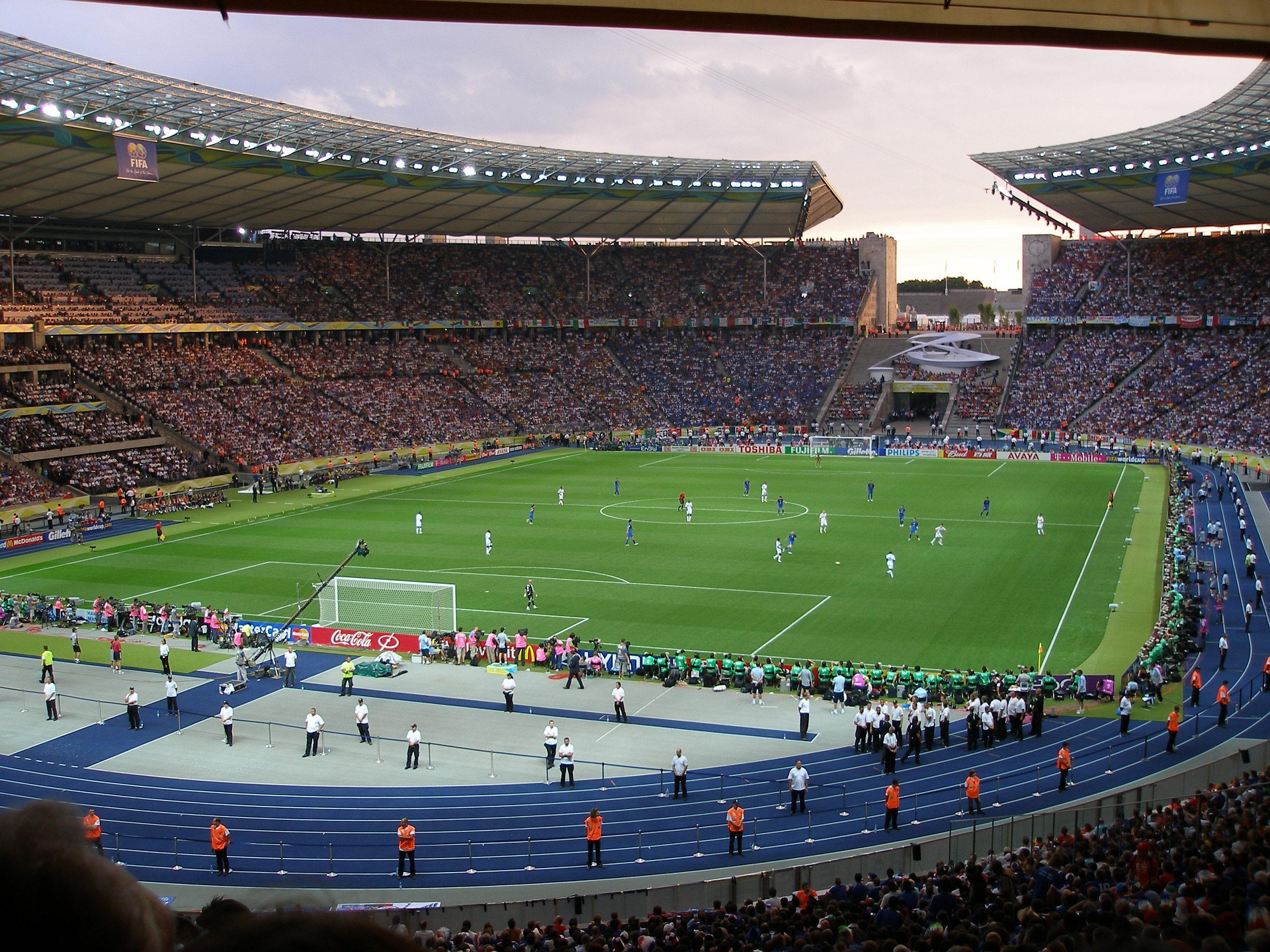
History of the FIFA World Cup
A complete history of the FIFA World Cup from the 1930 inaugural tournament in Uruguay to the modern global game
Introduction
The FIFA World Cup is the most watched single sporting event on the planet and one of the most consequential cultural phenomena of the modern world. Held every four years since 1930, with the sole interruption of the Second World War, the tournament brings together the national teams of the world's footballing federations in a month of competition that draws television audiences exceeding five billion cumulative viewers and a final-match audience consistently above one billion people. The World Cup is bigger than any league, bigger than the Olympics in terms of single-event audience, and historically more important than any other international sporting competition in shaping national identity, popular memory, and the global commercial reach of sport.
The story of the World Cup is also the story of the modern global game. Football itself was codified in England in 1863, exported through the British Empire and the networks of trade and migration that defined the late nineteenth century, and adapted by every culture it touched into something distinctively local. By the early twentieth century the game had taken root in South America, central Europe, and parts of Africa and Asia, and the question of how to determine which national team was the best in the world became urgent. The answer, eventually, was a tournament organized by the Fédération Internationale de Football Association, the worldwide governing body founded in Paris in 1904 and based since shortly afterward in Zurich. The first World Cup was held in Uruguay in 1930 with thirteen teams, four of them from Europe, and was won by the host country in a stadium built specially for the event. From that small beginning the tournament has grown into a global commercial spectacle of thirty-two teams, expanding to forty-eight teams for the 2026 edition co-hosted by the United States, Canada, and Mexico.
This article surveys the full history of the FIFA World Cup from the origins of international football and the founding of FIFA, through the inaugural tournament and every subsequent edition, the iconic moments and the great players, the political controversies and the governance scandals, the host countries and the architectural ambitions of their stadiums, and the evolution of the tournament's format and reach. It considers the players whose performances have entered the public memory of every footballing nation, the matches whose results have shaped how cultures remember decades and even generations, and the slow expansion of the women's tournament from its 1991 inaugural to its current place as one of the world's most important sporting events in its own right. The World Cup is the closest thing the human race has to a shared four-yearly festival, and its history is one of the great cultural narratives of the modern age.
The Origins of International Football
The game of association football, called soccer in some English-speaking countries to distinguish it from other football codes, was codified in London on October 26, 1863 at a meeting of representatives from a small number of school and university clubs who established the Football Association and a unified set of rules. The codification ended decades of confusion in which different schools played different versions of football with no agreed laws, and it set the stage for the rapid expansion of the game across Britain, through the British Empire and the trading and migrant networks of the late Victorian era, and then across the rest of the world. By the 1880s organized football leagues existed in England, Scotland, Wales, and Ireland, and the world's first international match between Scotland and England had been played in Glasgow in 1872 before a crowd of about four thousand spectators on a cricket ground at Hamilton Crescent. The match ended in a goalless draw and is generally regarded as the start of international football competition.
During the 1880s and 1890s the game spread rapidly. British engineers, sailors, traders, and railway workers carried football to South America, where Argentine and Uruguayan players developed the game with the help of British coaches and started their own clubs and leagues. British public-school graduates and teachers established the sport in central Europe, with Vienna, Prague, Budapest, and Zurich emerging as early footballing centers. The first international match outside the British Isles is generally identified as Argentina against Uruguay in Montevideo in 1901, although informal cross-border matches had been played before that. By the early 1900s organized national federations existed across western and central Europe and in much of South America, and the question of how to organize international competition was becoming pressing.
The early international tournaments were the British Home Championship, played from 1884 among the four British national teams, and the Olympic football tournament, first held informally at the 1900 and 1904 Olympics before becoming an official medal event at London 1908. The Olympic tournament was the only truly global international football competition before the founding of the World Cup, but it suffered from the strict amateur eligibility rules that the International Olympic Committee enforced. Many of the best players in the world by the 1920s were professionals or quasi-professionals, particularly in central Europe and South America, and they were ineligible for Olympic competition. This restriction meant that Olympic football could never be a credible competition for determining the world's best national team, and it pointed clearly toward the need for a separate tournament under FIFA rules that would admit professional players and crown a genuine world champion.
Jules Rimet and the Founding of FIFA
FIFA was founded in Paris on May 21, 1904 by representatives of seven national associations: Belgium, Denmark, France, the Netherlands, Spain, Sweden, and Switzerland. The English Football Association, the oldest in the world, declined to join initially out of suspicion of continental motives, and a degree of British aloofness toward FIFA would persist for decades, culminating in the British associations withdrawing from FIFA in 1920 over disputes about playing teams from the defeated central powers of the First World War, and again in 1928 over the amateur question. The British associations rejoined FIFA in 1946 in time for the 1950 World Cup, by which point the four British nations had played no World Cup matches and had only limited international experience against continental and South American opposition.
FIFA's earliest years were modest. The organization had no permanent staff, no offices, and no resources beyond the membership dues of its small group of national associations. Its first major project was the organization of an Olympic football tournament under FIFA rules at the 1908 London Games, and FIFA continued to oversee the Olympic football tournaments through the interwar period. The First World War interrupted FIFA's expansion, and by 1919 the organization had to be substantially rebuilt under the leadership of new president Jules Rimet, a French lawyer and sports administrator who had been involved with FIFA from its earliest days and who would go on to become the most consequential figure in the organization's history.
Rimet became FIFA president in 1921 and held the office until 1954, the longest presidential tenure in FIFA's history. Born in 1873 in the village of Theuley in eastern France, Rimet had grown up devoted to Catholic social ideals and to the belief that international sport could promote peace among nations. He was the first president of the Red Star club in Paris and helped found the French Football Federation in 1919. As FIFA president he combined a vision of football as a vehicle for international solidarity with the patient administrative work necessary to build a global federation from a small group of European associations into a worldwide governing body. The conception, organization, and successful staging of the first World Cup in 1930 was Rimet's personal achievement above all others, and the trophy presented to the world's champion bears his name to this day.
The Creation of the World Cup
The decision to organize a FIFA-administered world championship for national teams was taken at the FIFA Congress in Amsterdam on May 28, 1928. The driving forces behind the decision were Jules Rimet, by then in his seventh year as FIFA president, and the Frenchman Henri Delaunay, secretary general of the French Football Federation, who had been advocating a tournament for several years. The 1928 Amsterdam Olympics had just seen the second consecutive Olympic gold medal for Uruguay, who had also won gold at Paris 1924, and the brilliance of the Uruguayan players combined with the FIFA executive committee's growing frustration with the IOC's amateur restrictions made the moment ripe for a separate FIFA championship.
The Congress voted by a clear majority to establish a FIFA world championship to be held every four years beginning in 1930, with the first tournament to be hosted by a country chosen at a subsequent meeting. The technical and organizational details were worked out over the following two years. The choice of host country for the inaugural tournament was contested by Spain, the Netherlands, Sweden, Italy, Hungary, and Uruguay. Uruguay had several advantages that proved decisive: the Uruguayan football federation offered to pay all travel and accommodation expenses for every participating team, the country was celebrating the centennial of its constitution in 1930 and the government was eager to use the tournament as part of the national celebrations, and the Uruguayan team was the reigning Olympic champion and unquestionably one of the best in the world. The other candidate countries withdrew their bids in 1929, and Uruguay was awarded the first World Cup unopposed.
The logistical challenge of staging the first World Cup in South America was substantial. Travel from Europe to Montevideo took two or three weeks by ocean liner, the cost was high, and many European football federations were reluctant to send their amateur players away for the necessary length of time. France, Yugoslavia, Belgium, and Romania were the only European nations that ultimately sent teams. The five other European nations that had initially expressed interest declined, citing the cost and the time commitment. The Romanian team was personally selected by King Carol II, who was a football enthusiast and who reportedly negotiated time off for the players from their employers. Despite the limited European participation, the tournament successfully gathered thirteen teams from four continents: seven from South America (Uruguay, Argentina, Brazil, Bolivia, Chile, Paraguay, Peru), two from North America (United States, Mexico), and the four European entries.
The tournament's organizers also commissioned a trophy. Jules Rimet himself designed the broad concept, and the French sculptor Abel Lafleur executed the design as a gilded silver figure of the Greek goddess of victory Nike holding aloft an octagonal cup, mounted on a base of semi-precious lapis lazuli. The trophy was thirty-five centimeters tall, weighed 3.8 kilograms, and was simply called the Victory or the Coupe du Monde during its early years. It would later be officially renamed the Jules Rimet Trophy at the 1946 FIFA Congress in honor of the man who had brought the World Cup into being. The trophy traveled with Rimet to Uruguay in his hand luggage and was presented to the Uruguayan captain Jose Nasazzi after the final.
Uruguay 1930 — The Inaugural Tournament
The first FIFA World Cup opened in Montevideo on July 13, 1930 with two simultaneous matches: France against Mexico at the Pocitos stadium, and the United States against Belgium at the Parque Central. The thirteen teams were divided into four groups of three or four teams each, with the group winners advancing to the semifinals. The matches were played at three stadiums in Montevideo, including the brand-new Estadio Centenario, built specially for the tournament to commemorate the centennial of the Uruguayan constitution. The stadium was completed only just in time for the tournament, with construction continuing during the early matches because of heavy rain delays.
The French striker Lucien Laurent scored the first goal in World Cup history in the nineteenth minute of the France-Mexico match, a goal that France's player would later remember as nothing especially remarkable at the time, just a goal in another international fixture. France defeated Mexico 4-1 in that opening match, with Laurent's place in history secured. The United States, with a team composed largely of Scottish and English professional immigrants who had gone to America as steelworkers and miners, proved one of the surprises of the tournament. The American team defeated Belgium 3-0 and Paraguay 3-0 to win their group and advance to the semifinals, where they were eliminated 6-1 by Argentina. The American performance, finishing third overall, remained the best ever finish for a CONCACAF team at a World Cup until the present day.
The semifinals saw Uruguay defeat Yugoslavia 6-1 and Argentina defeat the United States 6-1. The final was played on July 30, 1930 at the Estadio Centenario between the two great South American rivals, with Argentina the slight favorite after their dominant semifinal performance. Estimates of the crowd vary, but a packed Estadio Centenario held approximately 70,000 spectators, with thousands more outside the gates. The match was preceded by a dispute over which ball would be used: both teams had brought their own match balls, and the FIFA officials resolved the disagreement by ruling that the Argentine ball would be used in the first half and the Uruguayan ball in the second.
Argentina led 2-1 at halftime, but Uruguay scored three unanswered goals in the second half to win 4-2 and claim the inaugural World Cup. The Uruguayan captain Jose Nasazzi received the Jules Rimet Trophy from the hands of Jules Rimet himself, and the tournament was declared a complete success. Uruguay's two stars, the prolific striker Hector Castro who had played the entire tournament with the lower part of his right arm missing from a childhood accident, and the midfielder Jose Andrade who was one of the first black footballers to play at the highest international level, became national heroes. Uruguay had now won every major international football tournament held in the world over the preceding six years: Olympic gold at Paris 1924, Olympic gold at Amsterdam 1928, and now the World Cup at Montevideo 1930.
Italy 1934 — Fascism's First Sporting Showcase
The second World Cup was awarded to Italy at the 1932 FIFA Congress in Stockholm, the choice reflecting both Italy's strong domestic league and the Italian government's willingness to invest substantial resources in the staging. Italy in 1934 was under the fascist dictatorship of Benito Mussolini, who had personally taken an interest in the tournament as an opportunity to display the supposed virtues of the fascist state to an international audience. Mussolini's government invested heavily in the staging and in propaganda surrounding the tournament, and the Italian Football Federation operated under direct political pressure from the regime to deliver victory for the host nation.
The tournament's format was changed for 1934 from the group-stage system of 1930 to a straight knockout tournament from the first round, an arrangement that produced shorter tournaments but reduced the number of matches played by each team. Sixteen teams competed in a tournament that was completed in just two weeks. The defending champions Uruguay, in retaliation for the limited European participation in 1930, declined to send a team to Italy, becoming the only reigning champion ever to skip the next World Cup. Argentina, partly because they had also been weakened by the migration of many of their best players to Italian clubs, also fielded a substantially weaker team than they had four years earlier.
The Italian team's run to the final has been the subject of considerable controversy. The Italian team included several oriundi, naturalized Argentine and Brazilian players of Italian descent, a practice that was permitted by the eligibility rules of the time but that gave the host nation a substantial competitive advantage. Critics in the decades since have suggested that some of Italy's matches were also influenced by referee decisions favorable to the host country, particularly in the quarterfinal against Spain, which Italy won in a replay after a brutal first match in which several players from both sides suffered serious injuries. The Italian striker Giuseppe Meazza was the team's star, scoring two goals over the course of the tournament and contributing to several others.
The final at the Stadio Nazionale del PNF in Rome on June 10, 1934 saw Italy defeat Czechoslovakia 2-1 after extra time, with the winning goal scored by the Italian-Argentine forward Raimundo Orsi. Mussolini attended the match in person and presented the trophy to the Italian captain Gianpiero Combi after the match. The Italian victory was used extensively in fascist propaganda over the following years as supposed evidence of the regime's vitality and athletic superiority, although the political subtext was understood by foreign observers from the start. The trophy returned to Italy for the period of Italian custody, where it would remain through the difficult years of the Second World War.
France 1938 — The Last Pre-War Cup
The third World Cup was awarded to France, in part out of recognition for Jules Rimet's foundational role in the tournament's creation and in part as a deliberate move to bring the World Cup back to Europe after the Italian tournament. The decision to award two consecutive World Cups to Europe led to a boycott by both Uruguay and Argentina, the leading South American footballing nations, in protest. Only Brazil and Cuba represented the Americas at the 1938 tournament. The smaller field included fifteen teams after a withdrawal, with the tournament organized again as a straight knockout from the first round.
The political context of the 1938 World Cup was the deteriorating European situation in the final years before the Second World War. Austria had qualified for the tournament before being annexed by Nazi Germany in March 1938, and the Austrian Football Association had been absorbed into the German one. Some Austrian players were forced to join the German team for the tournament, while others declined. The Spanish Civil War was in its third year, and Spain was unable to participate. The German team, weakened by political interference in selection and by the integration of unwilling Austrian players, was eliminated in the first round by Switzerland.
The star of the 1938 tournament was the Brazilian striker Leônidas da Silva, called the Black Diamond, who scored seven goals in four matches and was generally regarded as the best player at the tournament. Leônidas was famous for his bicycle kick technique and for his speed and dribbling skill, and his performances established Brazilian football as a force to be reckoned with at the highest level. Brazil reached the semifinals, where they were eliminated by Italy in a controversial match in which the Brazilian coach inexplicably left Leônidas on the bench, supposedly to rest him for an expected final. Brazil ultimately finished third.
The final at the Stade Olympique de Colombes in Paris on June 19, 1938 saw Italy defeat Hungary 4-2 to retain the World Cup. The Italian team again included the brilliant Giuseppe Meazza, who captained the side, and Italy became the first team to win consecutive World Cups, a feat that would not be repeated until Brazil in 1962 and remains rare in tournament history. The Italian victory was celebrated with appropriate fascist pageantry, although by 1938 the international audience was no longer naive about the regime that organized the celebrations. The trophy returned with the Italian team to Rome, where it would remain through the war years, hidden first in a Roman safe deposit box and later, according to legend, in a shoebox under the bed of the FIFA official Ottorino Barassi, who was determined to preserve it from looting by retreating German forces in 1943 and 1944.
The Wartime Hiatus
The Second World War prevented the staging of any World Cup between 1942 and 1950. Tournaments had been planned for 1942, with Argentina and Brazil among the candidates to host, and discussions had begun for 1946, but the war made any such planning impossible. FIFA itself continued to operate in a reduced form during the war from its base in Zurich, in a Switzerland that remained neutral through the conflict and was therefore able to host the FIFA secretariat without disruption. Jules Rimet remained president through the war years and worked to maintain the organization's existence and its records during a period when international football was essentially impossible.
The end of the war in 1945 left European football devastated. Stadiums had been destroyed, players had been killed, lost to military service, or scattered, and entire national football traditions had been disrupted by occupation, censorship, and the wartime suspension of league football. The British associations, which had withdrawn from FIFA in 1928 over the amateur question, rejoined the organization in 1946 in time to participate in the planning of the 1950 World Cup. The Italian holders of the trophy, despite the political situation and the country's defeat, retained custody of the cup throughout the war, the trophy famously preserved through the war by the FIFA official Ottorino Barassi, who kept it in a shoebox under his bed in Rome to prevent its capture by retreating German forces.
The 1946 FIFA Congress in Luxembourg formally renamed the trophy the Jules Rimet Trophy in honor of the man who had brought the World Cup into being. The same congress confirmed the resumption of the World Cup, awarded the 1950 tournament to Brazil, and began the process of restoring international football competition after the long interruption. The Soviet Union, which had not previously participated in FIFA or the World Cup, would join the organization in 1947, beginning the long process by which the eastern European footballing nations would become central to the tournament's history. The defeated Axis powers, Germany and Japan, were not invited to the 1950 tournament, while Italy was readmitted under its postwar civilian government and would compete as defending champion despite the wartime hiatus.
Brazil 1950 and the Maracanazo
The 1950 World Cup in Brazil was the largest tournament yet held, the first in twelve years, and the source of one of the most famous and devastating moments in the history of the game. The Brazilian government had invested enormous resources in the tournament, including the construction of a colossal new stadium in Rio de Janeiro, the Estadio do Maracanã, which was at the time the largest sports stadium in the world with an official capacity of 200,000 spectators. The Brazilian organizing committee viewed the tournament as a kind of national coming-out party for a country whose modernization and industrialization had accelerated during the war years, and the team's success was widely expected by the Brazilian public.
The tournament had an unusual format. The thirteen teams were divided into four pools of varying sizes for the first round, with the pool winners advancing to a four-team round-robin final pool rather than a conventional knockout final. The four nations that reached the final pool were Brazil, Uruguay, Spain, and Sweden. The result of the tournament was therefore decided not by a single final match but by the sequence of matches in the final pool. By the time of the last match between Brazil and Uruguay on July 16, 1950, Brazil had defeated Sweden 7-1 and Spain 6-1 and held a two-point lead in the table, while Uruguay had defeated Sweden 3-2 and drawn with Spain 2-2. A draw or a victory in the last match would give Brazil the World Cup.
The Maracanã was officially declared a capacity crowd of 173,850, though contemporary estimates put the actual attendance at well over 200,000 spectators, the largest crowd to attend a football match in history and a record that may stand permanently because of changes in stadium safety regulations. The Brazilian public had been preparing for a victory celebration for weeks. Newspapers had printed congratulatory headlines in advance. The Brazilian team had recorded a song called Brasil Os Vencedores, the Brazilian Victors, to be played in the dressing room after the match. The Rio de Janeiro mayor had prepared a victory speech to be delivered after the trophy presentation.
Brazil scored first through Friaca in the second minute of the second half, and the stadium erupted. The Uruguayan team, which had been written off by virtually every observer, refused to collapse. The Uruguayan captain Obdulio Varela picked up the ball from the back of his own net, walked slowly to the center circle, and is said to have urged his teammates not to despair. Uruguay equalized through Juan Schiaffino in the sixty-sixth minute, silencing the stadium. Then in the seventy-ninth minute, the Uruguayan winger Alcides Ghiggia scored a low shot past the Brazilian goalkeeper Moacir Barbosa to give Uruguay a 2-1 lead. Brazil could not equalize, and Uruguay won the match and the World Cup. The stadium fell into the famous silence that has come to define the moment in Brazilian memory, the silence broken only by the cries of the Uruguayan players celebrating.
The defeat became known in Brazil as the Maracanazo, the Maracanã blow, and the term has entered the Portuguese language as a general word for a catastrophic and unexpected defeat. The Brazilian goalkeeper Moacir Barbosa, despite a long and distinguished career, was identified by Brazilian public opinion as the principal culprit of the defeat and was effectively cursed by the experience for the rest of his life. Decades later, when Barbosa visited the Brazilian training camp in advance of the 1993 Copa America, he was reportedly turned away on superstitious grounds that his presence would bring bad luck. He died in 2000, still believing himself unfairly blamed. The Maracanazo remains the single most consequential and most discussed result in the history of South American football, and it has shaped Brazilian national feeling about football and about national identity ever since.
Switzerland 1954 — The Miracle of Bern
The 1954 World Cup in Switzerland was the first to be televised live, with limited broadcasts reaching a small number of European viewers, and the first to feature the West German national team that had been re-admitted to FIFA in 1950 as the federal republic emerged from postwar occupation. The Hungarian team that arrived in Switzerland was widely considered the strongest team in the world, having gone unbeaten for four years and counting Ferenc Puskas, Sandor Kocsis, Jozsef Bozsik, and other players who were among the most technically accomplished of the era. The team's record over those four years included a 6-3 defeat of England at Wembley in 1953, a result widely understood at the time as the moment when continental European football decisively overtook the English domestic game in technique and tactics.
The sixteen teams were divided into four groups of four, with the top two from each group advancing to a knockout stage. Hungary topped their group with victories of 9-0 over South Korea and 8-3 over West Germany, the latter result widely believed to have been engineered by the West German coach Sepp Herberger as a deliberate effort to deceive the Hungarians about his team's strength. Hungary advanced through the quarterfinal and semifinal, scoring four goals against Brazil in a famous Battle of Bern that produced three red cards and a brawl in the tunnel afterward, and four against Uruguay to set up a final rematch against West Germany.
The final at the Wankdorf Stadium in Bern on July 4, 1954 was played in heavy rain that had been falling for hours before kickoff. Hungary scored twice in the first eight minutes through Puskas and Czibor, and seemed certain to win their first World Cup. But West Germany rallied, drawing level through Max Morlock and Helmut Rahn in the first half. The match remained 2-2 until the eighty-fourth minute, when Helmut Rahn scored what would become known as the Wunder von Bern, the Miracle of Bern, hammering a low shot past the Hungarian goalkeeper Gyula Grosics to give West Germany a 3-2 lead they would hold to the final whistle.
The German victory had political and cultural significance far beyond the football. Just nine years after the end of the Second World War, with the country still divided, half occupied by the Soviet Union, and rebuilding from devastation, the German victory was experienced by many West Germans as a moment of national rehabilitation and of regained legitimacy. The radio commentary of the German broadcaster Herbert Zimmermann, who shouted the words Aus, aus, aus, aus, das Spiel ist aus, Deutschland ist Weltmeister, the game is over, Germany are world champions, became one of the most reproduced audio recordings in German history. The film The Miracle of Bern, released in 2003, dramatized the tournament's emotional importance to a generation of Germans rebuilding their lives in the aftermath of catastrophe. Hungary, denied their expected title, never recovered the team that had been the world's best. The 1956 Hungarian Revolution against Soviet domination scattered many of the leading players to clubs across Western Europe, and the great Hungarian generation that should have dominated 1950s football was effectively dispersed.
Sweden 1958 — The Arrival of Pelé
The 1958 World Cup in Sweden was the tournament that introduced the seventeen-year-old Brazilian Edson Arantes do Nascimento, known to the world as Pelé, to a global audience. The Brazilian team arrived in Sweden with a generation of brilliant players including Garrincha, Didi, Vava, Mario Zagallo, and the goalkeeper Gilmar, and with a renewed determination to overcome the trauma of the 1950 defeat that had haunted Brazilian football for the eight years since. The Brazilian Football Confederation had hired a psychologist to evaluate the players' mental fitness, and the team's preparation included scouting reports on every opposing player and a strict training regimen that was unprecedented in Brazilian football.
The tournament's group stage saw Brazil top their group ahead of England, the Soviet Union, and Austria, with Pelé held back from the early matches by team management as a precaution. Pelé made his World Cup debut in the third group-stage match against the Soviet Union, replacing the injured Mazola. He scored his first World Cup goal in the quarterfinal against Wales, the only goal of a hard-fought match. In the semifinal against France, Pelé scored a hat-trick in a 5-2 Brazilian victory that took the team to the final against the host nation Sweden.
The final at the Råsunda Stadium in Solna on June 29, 1958 was played before a crowd of 51,800 spectators including the Swedish royal family. Sweden took an early lead through Nils Liedholm in the fourth minute, and the prospect of a host-nation upset seemed real. Brazil rallied through goals by Vava and Pelé, and the Brazilian team controlled the second half. Pelé's first goal of the match has become one of the most reproduced football images in history: receiving a high ball in the penalty area with his back to goal, he chipped it over a Swedish defender's head and volleyed it into the net before the ball touched the ground. Brazil won 5-2, and Pelé became the youngest goalscorer in a World Cup final at age seventeen years and 249 days, a record that has not been broken.
The Brazilian victory was the culmination of decades of effort by Brazilian football to establish itself at the top of the world game. After the 1950 disaster, the Brazilian Football Confederation had pursued a deliberate program of professional preparation and tactical development, and the 1958 victory vindicated those investments. Brazilian football culture also changed permanently as a result of the tournament. The exuberant attacking style of the 1958 team, anchored by the dribbling brilliance of Garrincha and Pelé, established the international image of Brazilian football as joyful, creative, and technically brilliant. The Jules Rimet Trophy returned to Brazil for what would be the first of several visits over the following decades.
Chile 1962 — Brazil Again
The 1962 World Cup in Chile was held in a country that had only narrowly recovered from the devastating Valdivia earthquake of May 1960, which had been the strongest earthquake ever recorded and had destroyed much of southern Chile. The tournament went ahead despite the catastrophe, and Chile's resilient hosting was widely admired. The Chilean president Carlos Dittborn, head of the organizing committee, famously declared that because we have nothing, we will do everything, and the country reconstructed enough infrastructure to host the tournament in four cities. Dittborn himself died of a heart attack one month before the opening match, and the stadium in Arica was renamed in his honor.
Brazil arrived as defending champions with most of the 1958 team intact, though Pelé was eliminated by injury in the second match after suffering a torn groin. Pelé's withdrawal forced Brazil to rely on the brilliance of Garrincha, the dribbling winger whose career has been a subject of endless discussion in Brazilian football culture. Garrincha was born with one leg significantly shorter than the other and with crooked knees that should have prevented him from playing professional football, but his asymmetrical legs gave him an unpredictable dribbling style that defenders found impossible to read. In Pelé's absence, Garrincha carried Brazil through the rest of the tournament, scoring four goals over the knockout rounds and producing some of the most brilliant individual performances in World Cup history.
The tournament was also notorious for the Battle of Santiago between Chile and Italy on June 2, 1962, perhaps the most violent match in World Cup history. The Italian players had arrived in Chile after pre-tournament Italian newspaper articles had insulted the Chilean people and the country's poverty, and the local public turned out for the match in a hostile mood. The match itself saw two Italian players sent off in the first half, a Chilean player knocked unconscious, multiple brawls, and police intervention on the pitch. The match has been studied for decades as an example of how political and cultural tensions can erupt in the structured environment of a football match. Chile won the match 2-0.
The final at the Estadio Nacional in Santiago on June 17, 1962 saw Brazil defeat Czechoslovakia 3-1 to win their second consecutive World Cup. The Brazilian winger Mario Zagallo scored, and goals from Amarildo and Vava completed the win after Czechoslovakia had taken an early lead through Josef Masopust. Brazil became the second team to win consecutive World Cups, after Italy in 1934 and 1938. Garrincha won the Golden Ball as the tournament's best player, an award created for the 1962 tournament. The Jules Rimet Trophy returned with the Brazilian team to Rio de Janeiro, where it would be the centerpiece of national celebration for the next four years.
England 1966 — Wembley and the Hat-Trick
The 1966 World Cup in England was the first World Cup hosted by the country that had codified the game of association football a century earlier, and the Football Association invested heavily in making the tournament a celebration of England's foundational role in the game's development. The tournament was held during the summer of 1966 at eight stadiums across England, with the final at the iconic Wembley Stadium in north London. The England team, managed by the methodical Yorkshireman Alf Ramsey, had been built around a tactical innovation that Ramsey called the wingless wonders, a 4-4-2 formation without traditional wingers that emphasized hard work, defensive organization, and quick midfield play.
The tournament's early rounds saw the elimination of Brazil in the group stage after Pelé was hacked out of the tournament by violent defending from opposing teams, an experience that led Pelé to vow he would never play another World Cup. The defending champions' early exit was a major story of the tournament. The most famous early-round result was North Korea's 1-0 victory over Italy at Middlesbrough's Ayresome Park, one of the great upsets in World Cup history, which sent the North Koreans into the quarterfinals where they led Portugal 3-0 after twenty-five minutes before the Portuguese striker Eusebio scored four goals to win the match 5-3.
The semifinals saw England defeat Portugal 2-1 with two goals from the captain Bobby Charlton, and West Germany defeat the Soviet Union 2-1 to set up the most consequential final in the World Cup's history to that point. The final at Wembley on July 30, 1966 was played before a crowd of 96,924, including Queen Elizabeth II, who would present the trophy to the winning captain. The match has entered the permanent memory of English football culture as both a moment of triumph and a source of decades of subsequent disappointment.
West Germany scored first through Helmut Haller. England equalized through Geoff Hurst, the West Ham striker who had been a late selection for the final after the injury of Jimmy Greaves. England's Martin Peters scored to give them a 2-1 lead with thirteen minutes remaining. In the last minute of regulation time, West Germany equalized through Wolfgang Weber from a free kick that produced a goalmouth scramble, sending the match to extra time. In the eleventh minute of extra time, Hurst struck a powerful shot that hit the underside of the West German crossbar and bounced down. The Swiss referee Gottfried Dienst, after consulting the Soviet linesman Tofiq Bahramov, ruled that the ball had crossed the goal line, and the goal stood. The decision remains controversial to this day, with subsequent video analysis suggesting the ball may not have fully crossed the line. England led 3-2.
In the final minute of extra time, with West German players pressing for an equalizer and several spectators on the pitch in the belief that the match had ended, the BBC commentator Kenneth Wolstenholme delivered one of the most quoted lines in football broadcasting history: They think it's all over, watching the spectators on the pitch, and then as Hurst raced toward the West German goal with the ball at his feet, it is now, as Hurst struck the ball into the net for his third goal and England's fourth. England had won 4-2. Hurst became the only player ever to score a hat-trick in a World Cup final. The Queen presented the Jules Rimet Trophy to the England captain Bobby Moore, and English football celebrated a triumph that would haunt every subsequent generation of English players, none of whom would equal it for the rest of the twentieth century or the first quarter of the twenty-first.
Mexico 1970 — Brazil's Third Title and the Greatest Team
The 1970 World Cup in Mexico was the first tournament to be broadcast live in color around the world, and the brilliant attacking football of the Brazilian team made the color broadcasts a sensation in the homes that received them. The tournament was played at high altitude in cities including Mexico City, Guadalajara, and Leon, and the thin air and intense midday heat produced unusually slow, technical football in which traditional power and pace were less effective than skill and stamina. Brazil arrived with a team that combined the veterans Pelé, Mario Zagallo as manager, and the playmaker Tostao, with younger stars Jairzinho, Rivellino, Gerson, and the captain Carlos Alberto, in what has been widely regarded as the most brilliant attacking team in the history of the World Cup.
Brazil dominated the tournament from the first match. The group stage saw memorable performances including a 4-1 victory over Czechoslovakia, a 1-0 victory over England that featured the famous save by the English goalkeeper Gordon Banks against Pelé's downward header, widely called the save of the century, and a 3-2 victory over Romania. The quarterfinal against Peru was won 4-2, the semifinal against Uruguay 3-1, and the final against Italy 4-1.
The final at the Estadio Azteca in Mexico City on June 21, 1970 saw Brazil produce one of the great performances in the history of football. Italy had reached the final after defeating West Germany 4-3 in the famous Match of the Century, an extra-time semifinal at the Azteca that produced five goals after the ninetieth minute and remains one of the most dramatic matches ever played. Italy were exhausted from that effort and from the heat, while Brazil were fresh. The Brazilians played fluid attacking football for ninety minutes, with goals from Pelé, Gerson, and Jairzinho before Carlos Alberto scored the final goal in the last minutes after a passing sequence involving eight Brazilian players that has been studied as one of the most beautiful goals in the history of the game.
The victory completed Brazil's third World Cup, and under the rules established at the founding of the tournament, the country that won three World Cups received permanent possession of the Jules Rimet Trophy. The original gilded silver Nike trophy, designed by Abel Lafleur in 1929, was therefore handed over permanently to the Brazilian Football Confederation. The trophy was displayed in a glass case at the CBF headquarters in Rio de Janeiro until December 19, 1983, when it was stolen by thieves who broke into the building overnight. The trophy has never been recovered and is generally believed to have been melted down for its precious metals. FIFA commissioned a new trophy for the 1974 tournament, the trophy that has been used ever since.
West Germany 1974 — Total Football and the Cruyff Era
The 1974 World Cup in West Germany was a tournament dominated by the philosophical and tactical innovations of the Dutch national team, who arrived in Germany with a new approach to football that came to be known as total football. The Dutch system, developed at Ajax Amsterdam under the coach Rinus Michels and embodied above all in the captain Johan Cruyff, replaced the rigid positional play of traditional football with a fluid system in which every outfield player was expected to be capable of playing any position. When a defender pushed forward, a midfielder dropped back; when a winger drifted central, a fullback overlapped to fill the wide space. The system required extraordinary technical and tactical intelligence from every player and produced football of a flowing brilliance that captured the imagination of the football world.
The Netherlands swept through the tournament with a series of brilliant performances. They defeated Uruguay 2-0 and Bulgaria 4-1 in the group stage, advanced through the second-round group with victories over Argentina (4-0), East Germany (2-0), and Brazil (2-0), and reached the final without losing a single match. The 2-0 victory over Brazil in the second round, in which Johan Neeskens and Cruyff both scored, was widely interpreted as the symbolic moment when European total football replaced South American flair as the defining style of world football. Cruyff was the tournament's outstanding individual player and would receive the Golden Ball as the best player.
The final at the Olympiastadion in Munich on July 7, 1974 was contested between the Netherlands and West Germany, who had reached the final by defeating Poland 1-0 in a semifinal played in pouring rain. The match began with one of the most famous opening sequences in football history. The Dutch kicked off and kept possession through fourteen consecutive passes before Cruyff was brought down in the penalty area by the West German defender Berti Vogts, and Neeskens converted the resulting penalty in the second minute. The Netherlands had scored without a single West German player having touched the ball.
West Germany, however, recovered and dominated the rest of the match. Paul Breitner equalized from the penalty spot after a foul on Bernd Holzenbein, and Gerd Müller, the prolific scorer who had been the leading goalscorer at Mexico 1970, gave West Germany a 2-1 lead with what would be his final international goal. West Germany held on to win, denying the Netherlands the championship that the brilliance of their football had seemed to promise. Cruyff and his teammates left the field in tears, and the Netherlands began what would become a long history of being remembered for their style more than for their results. The new FIFA World Cup Trophy, commissioned to replace the lost Jules Rimet Trophy, was presented to the West German captain Franz Beckenbauer at the end of the match.
Argentina 1978 — Political Controversy and Mario Kempes
The 1978 World Cup in Argentina was held under one of the most repressive military dictatorships in South American history. The Argentine military had seized power in a coup in March 1976, and by the time of the tournament had begun what would later be documented as the Dirty War in which an estimated thirty thousand Argentinians were disappeared, tortured, and killed by the security forces. The military government invested heavily in the tournament's staging as an opportunity to present a positive image of Argentina to the world, and the Argentine team operated under explicit political pressure to deliver a victory that would legitimize the regime. International boycott movements developed in Europe in protest against the tournament, but the boycotts gained limited official support and the tournament went ahead as planned.
The tournament was won by Argentina, but the path to victory was marked by suspicions that have never been fully resolved. The first-round group stage saw Argentina advance comfortably. The second round was organized into two groups of four teams, with the group winners playing in the final. Argentina's second-round group required them to defeat Peru by four or more goals in their final match to overtake Brazil on goal difference. The match was played in Rosario, while Brazil's match against Poland was played earlier in the day, so Argentina's team knew exactly the score they needed. The result was 6-0 to Argentina, with the Argentine forward Mario Kempes scoring twice. The Peruvian performance has been the subject of decades of speculation, with credible allegations that the Argentine military government had pressured the Peruvian dictatorship into ensuring a Peruvian defeat in exchange for various financial and political considerations.
The final at the Estadio Monumental in Buenos Aires on June 25, 1978 saw Argentina defeat the Netherlands 3-1 after extra time, with Kempes scoring twice and Daniel Bertoni scoring the third goal in the final moments. The Argentine victory was celebrated as a national triumph by the military government and was used in regime propaganda for years afterward. Kempes, the long-haired Valencia striker who had played his club football in Spain for several years, was widely regarded as the player of the tournament and won the Golden Boot as the leading scorer. The Netherlands, missing the now-retired Johan Cruyff, who had declined to participate in the tournament, lost their second consecutive final after the 1974 defeat in Munich. The Dutch team's reputation as the great unrewarded side of World Cup history was confirmed.
Spain 1982 — Italy's Third Title
The 1982 World Cup in Spain was the first to feature twenty-four teams, expanded from the previous sixteen to accommodate the growing global reach of the tournament. The expanded format allowed wider participation from Africa, Asia, and CONCACAF, though the European and South American teams continued to dominate. The tournament's first round was divided into six groups of four, with the top two from each group advancing to a second round of four groups of three teams each, and the group winners advancing to the semifinals. The format was widely criticized as too complicated and was abandoned for subsequent tournaments.
The tournament produced a series of memorable matches and stories. Brazil arrived with a team built around the brilliant midfield trio of Socrates, Zico, and Falcao, and produced football that was widely regarded as among the most beautiful of any World Cup team, though they were eliminated in the second-round group by Italy in a famous 3-2 match in which the Italian striker Paolo Rossi scored a hat-trick. The Brazilian elimination disappointed footballing romantics around the world, who had expected the brilliant Brazilian football to take them to the final. The other memorable match of the tournament was the West Germany-France semifinal at the Sevilla stadium, in which West Germany came back from 3-1 down in extra time to draw 3-3 and then win on penalties, the first penalty shootout to decide a World Cup match. The match was marked by an extraordinarily violent collision between the West German goalkeeper Toni Schumacher and the French defender Patrick Battiston, who was knocked unconscious and lost teeth and required hospitalization. The referee gave Schumacher no card despite the severity of the foul.
The final at the Santiago Bernabeu in Madrid on July 11, 1982 saw Italy defeat West Germany 3-1, with Paolo Rossi scoring his sixth goal of the tournament to open the scoring and Marco Tardelli scoring the second in a moment that produced one of the most famous celebrations in football history, the running, screaming Tardelli sprinting toward the Italian bench with arms outstretched and tears streaming down his face. Alessandro Altobelli completed the scoring for Italy. Paul Breitner scored a consolation for West Germany. Italy became the third country to win three World Cups, after Brazil and West Germany would join with their victories in 1990 and 2002. Paolo Rossi was named the tournament's best player, completing a remarkable redemption story after he had returned from a two-year ban for involvement in a match-fixing scandal just before the tournament.
Mexico 1986 — Maradona's Tournament
The 1986 World Cup in Mexico was the second tournament held in Mexico, awarded on short notice after Colombia had been forced to withdraw in 1982 due to financial difficulties. The tournament was dominated above all by the brilliance of the Argentine captain Diego Maradona, who delivered what is widely regarded as the most dominant single-player performance in the history of the World Cup. Argentina arrived without significant expectations after their disappointing 1982 tournament, and Maradona at age 25 was entering the peak of his career. The Argentine coach Carlos Bilardo had built the entire team around Maradona, providing him with hard-working defensive teammates whose role was to win the ball and pass it to the captain.
Maradona's performances in the knockout rounds have entered football mythology. In the quarterfinal against England on June 22, 1986, played at the Estadio Azteca, Maradona scored both Argentine goals in a 2-1 victory. The first goal, scored in the fifty-first minute, was punched into the goal with his hand, an obvious handball that the Tunisian referee Ali Bin Nasser failed to see and that television replays subsequently revealed clearly. Maradona later said the goal had been scored by a little with the head of Maradona and a little with the hand of God, and the phrase Hand of God has been the universal name for the goal ever since. The match was charged with political significance because Argentina and the United Kingdom had fought the Falklands War only four years earlier, and Maradona himself acknowledged in his autobiography that he had thought of the war during the celebration.
Four minutes after the Hand of God, Maradona scored what FIFA later voted the Goal of the Century. Receiving the ball in his own half, he turned past two English midfielders, dribbled past Peter Beardsley and Peter Reid, then past Terry Butcher and Terry Fenwick, drew the goalkeeper Peter Shilton out of his goal and rolled the ball into the empty net. The goal lasted ten seconds, covered sixty meters, and beat five English players. The Argentine commentator Victor Hugo Morales screamed barbaridad cosmica, cosmic outrage, into his microphone, and the goal has been replayed countless times since as the supreme individual goal in football history.
In the semifinal against Belgium, Maradona scored twice more in a 2-0 victory. In the final against West Germany at the Azteca on June 29, 1986, Argentina led 2-0 before Karl-Heinz Rummenigge and Rudi Voller equalized in the closing minutes. Maradona then released his Argentine teammate Jorge Burruchaga with a single perfect through ball, and Burruchaga scored the winning goal six minutes from the end. Argentina won the World Cup, Maradona received the Golden Ball, and the tournament has been remembered ever since as the Maradona World Cup. The Argentine team had won the trophy with effectively one transcendent player carrying the burden of the entire tournament, an achievement that no individual player has been credibly accused of repeating in any World Cup before or since.
Italy 1990 — Cameroon's Run and West Germany's Triumph
The 1990 World Cup in Italy was a tournament noted for the rise of African football and for some of the most defensive, low-scoring football in World Cup history. The tournament's iconic story was the run of the African nation Cameroon, who under their veteran striker Roger Milla produced one of the great underdog campaigns in tournament history. Cameroon defeated the defending champions Argentina 1-0 in the opening match of the tournament, a result that shocked the football world. The Cameroon team played with passion and disciplined defending, and Milla, who was 38 years old and had retired from international football until being personally invited back by the president of Cameroon, scored four goals in three matches and produced the celebratory dance at the corner flag that became one of the iconic images of the tournament.
Cameroon defeated Romania 2-1 and Colombia 2-1 in the round of sixteen, reaching the quarterfinals as the first African team ever to do so. They were eliminated 3-2 by England in an extra-time match that they had led 2-1 with just nine minutes remaining before two penalties by Gary Lineker rescued England. The Cameroon performance opened the World Cup permanently to African qualifying expansion, and the gradual rise of African football over the following three decades can be traced in large part to the precedent established in 1990.
The tournament also saw the elimination of Maradona and Argentina in the second round, only narrowly, by Brazil; Argentina then progressed to a final defending their title without the same brilliance they had shown in 1986. The semifinals included the famous Turin match in which West Germany defeated England 4-3 on penalties after a 1-1 draw, with Stuart Pearce and Chris Waddle both missing penalties in a result that came to define an entire generation of English football. The match also gave rise to the BBC documentary One Night in Turin and to a culture of English national melancholy around the World Cup that has persisted to the present day.
The final at the Stadio Olimpico in Rome on July 8, 1990 between West Germany and Argentina was one of the worst finals in World Cup history, an ugly defensive match in which Argentina played for a penalty shootout from the first minute. The match was decided by a controversial penalty kick converted by Andreas Brehme in the eighty-fifth minute after a foul on Rudi Voller, and West Germany won 1-0. Two Argentinian players were sent off, the first time players had been dismissed in a World Cup final. The match was a low point for the romantic side of football and helped justify the rules changes that would transform attacking football in the following decade. West Germany became three-time world champions, and Franz Beckenbauer became the only person to have won the World Cup as both a player and a coach. The German team that he led would also be the last team to play as West Germany; by the next tournament, German reunification would have produced a single national team.
United States 1994 — Brazil's Fourth and Baggio's Miss
The 1994 World Cup was awarded to the United States in a controversial 1988 decision that prioritized the commercial potential of the American market over the country's lack of established football culture. The decision proved a commercial success: the tournament attracted record attendance and the highest cumulative attendance in tournament history, with an average crowd of more than 68,000 spectators per match. The tournament was held at nine American stadiums, including the Rose Bowl in Pasadena and Giants Stadium in New Jersey, and was a sustained promotional effort for football in the United States that helped lay the groundwork for the founding of Major League Soccer in 1996.
The tournament also introduced several rule changes that have shaped the modern game. The pass-back rule, which prohibited goalkeepers from picking up a deliberate back-pass from a teammate, had been introduced in 1992 and was applied in a major tournament for the first time in 1994. Three points for a victory rather than two was introduced to encourage attacking play. The clock was now run continuously by the fourth official rather than added at the discretion of the referee, and various other technical changes were intended to make football more attractive to American audiences accustomed to high-scoring sports.
The tournament's tragic story was that of the Colombian defender Andres Escobar, who scored an own goal against the United States in the first round to lose the match 2-1 and eliminate Colombia from the tournament. Ten days after returning home to Medellin, Escobar was shot and killed outside a nightclub in what was widely reported as retaliation by drug-trafficking criminals who had lost large bets on the Colombian team. The murder of Escobar was a global shock and remains the worst incident of violence directly associated with the World Cup. The Colombian killer was convicted and sentenced to forty-three years in prison, served eleven, and was released in 2005.
Brazil, after twenty-four years without a World Cup, arrived in 1994 with a team built around the brilliant striker Romario and the disciplined defensive organization of the coach Carlos Alberto Parreira. Brazil swept through the tournament with the dominant elimination of the United States in the round of sixteen, Romania in the quarterfinal, and Sweden in the semifinal. The final at the Rose Bowl in Pasadena on July 17, 1994 between Brazil and Italy was the first World Cup final to be decided by a penalty shootout, with no goals after 120 minutes. The tournament's outstanding player, the Italian striker Roberto Baggio, missed the decisive penalty by sending the ball high over the bar in what has become one of the most famous misses in football history. Brazil won the shootout 3-2 and claimed their fourth World Cup, with Romario named the tournament's best player. The captain Dunga, raising the trophy with the trademark Brazilian celebration, dedicated the victory to Ayrton Senna, the Brazilian Formula One driver who had died at the San Marino Grand Prix two months earlier.
France 1998 — Zidane Conquers the World
The 1998 World Cup in France was the first tournament to feature thirty-two teams, expanded from the previous twenty-four to allow wider participation. The expansion brought more African, Asian, and CONCACAF teams to the tournament and produced an additional knockout round, making the path to the final longer than ever before. The tournament was held at ten French stadiums including the brand-new Stade de France in Saint-Denis, built specifically for the tournament to international standards and capable of hosting both football and rugby. The French organizing committee delivered a tournament that was widely regarded as one of the best in modern history, with excellent organization, magnificent attendance, and a fairy-tale ending for the host country.
The tournament's storylines included the brilliant attacking football of Brazil, who reached the final with Ronaldo as their leading striker; the surprise emergence of Croatia, in their first World Cup as an independent nation after the dissolution of Yugoslavia, who reached the semifinals with Davor Suker scoring six goals; the elimination of England by Argentina in a quarterfinal that produced the iconic image of Diego Simeone's leg-flick and David Beckham's red card; and the steady progress of the host nation France under the playmaker Zinedine Zidane and the coach Aime Jacquet.
The final at the Stade de France on July 12, 1998 between France and Brazil produced one of the more mysterious events in World Cup history. The Brazilian striker Ronaldo, who had been the tournament's outstanding player and was widely expected to lead Brazil to victory, suffered some kind of medical incident in the hours before kickoff, the exact nature of which has never been fully explained. Some accounts described a seizure, others a panic attack, others stress-induced illness. Ronaldo was initially left out of the team but was then restored to the starting eleven at the last minute, reportedly under pressure from the Brazilian sponsor Nike. He played the entire match in a visibly diminished state and was largely ineffective.
France dominated the match. Zinedine Zidane scored two headers from corner kicks in the first half, the first in the twenty-seventh minute and the second in the forty-fifth minute. France led 2-0 at halftime. Emmanuel Petit scored the third goal in injury time after Marcel Desailly had been sent off, and France won 3-0 to claim their first World Cup. The celebrations in Paris were the largest in the city's history outside of the liberation in 1944, with more than a million people on the Champs-Élysées. Zidane became a national hero, and the multi-ethnic French team led by players of Algerian, Caribbean, and African heritage was widely interpreted as a moment of celebration for a multicultural France. The Brazilian Football Confederation later conducted an inquiry into Ronaldo's pre-match incident and FIFA's investigation also produced no definitive explanation.
South Korea and Japan 2002 — The First Asian World Cup
The 2002 World Cup was the first to be held in Asia and the first to be jointly hosted by two countries, South Korea and Japan. The co-hosting arrangement had been forced by a deadlock at FIFA when the two Asian nations had each campaigned strongly for the right to host. The compromise required substantial coordination between the two countries, which had a long and difficult history dating back to Japan's colonial rule of Korea from 1910 to 1945. The tournament was held at twenty stadiums, ten in each country, and required extensive air travel between matches.
The tournament produced numerous upsets and broke many traditional patterns of World Cup competition. The defending champions France were eliminated in the first round without winning a match or scoring a goal. Argentina, considered one of the strongest teams in the tournament, also went out in the group stage. South Korea, the co-host nation, reached the semifinals under their Dutch coach Guus Hiddink, producing a series of victories over Portugal, Italy, and Spain in matches that have remained the subject of intense controversy because of the referee decisions involved. Television replays of the South Korea-Italy and South Korea-Spain matches have led to credible allegations of bias or worse, though FIFA has not investigated the specific decisions in subsequent years.
The semifinals saw Brazil defeat Turkey 1-0 and Germany defeat South Korea 1-0. The final at the International Stadium Yokohama on June 30, 2002 saw Brazil defeat Germany 2-0, with both goals scored by Ronaldo in a redemptive performance that came four years after his mysterious incapacitation in the 1998 final. Ronaldo finished as the tournament's top scorer with eight goals, having recovered from a series of severe knee injuries that had ended his career at Inter Milan and threatened to end it altogether. Brazil claimed their fifth World Cup, and Ronaldo's tournament was widely interpreted as his vindication after the trauma of 1998. The German team had reached the final largely on the brilliance of the goalkeeper Oliver Kahn, who became the first goalkeeper to win the Golden Ball as the tournament's best player despite his team losing the final.
Germany 2006 — Italy's Fourth and Zidane's Headbutt
The 2006 World Cup in Germany was the first tournament hosted by the reunified Federal Republic and was widely admired for its excellent organization, festive atmosphere, and the inclusive image of the new Germany that the tournament presented. The German government invested heavily in the tournament's staging, and the host country's open and confident hosting was a sustained advertisement for modern Germany's recovery from the divisions of the twentieth century. The tournament saw record television audiences and was widely credited with reshaping international perceptions of Germany.
The tournament was won by Italy under their coach Marcello Lippi, with their fourth World Cup title coming after a tournament in which the Italian defense conceded only two goals in seven matches, both in matches that ended 2-1 to Italy. The Italian team had played the tournament under the cloud of the Calciopoli match-fixing scandal that had broken in Italian football in the spring of 2006, with several Italian players from clubs implicated in the scandal taking the field for the national team. The Italian victory was widely interpreted as a moment of catharsis for Italian football during a period of intense domestic controversy.
The final at the Olympiastadion in Berlin on July 9, 2006 between Italy and France produced one of the most extraordinary moments in the history of any major sporting event. Zinedine Zidane, who had announced before the tournament that he would retire after the World Cup and who had carried France through the knockout rounds with brilliant performances, scored an early penalty in the seventh minute. Italy equalized through Marco Materazzi in the nineteenth minute. The match remained 1-1 through ninety minutes and into extra time. In the 110th minute, Zidane headbutted Materazzi in the chest in retaliation for an insult that Materazzi had directed at Zidane's sister. The Argentine referee Horacio Elizondo, after consultation with his fourth official who had reviewed the incident on a sideline monitor, gave Zidane a red card. The greatest player of his generation walked off the pitch toward the dressing room, past the World Cup trophy on its stand, and his playing career ended without celebration.
Italy won the resulting penalty shootout 5-3 after David Trezeguet's penalty hit the crossbar. The Italian captain Fabio Cannavaro lifted the trophy after a tournament in which he had been outstanding in defense, becoming the third European captain after Beckenbauer and Bilardo to win the World Cup as a captain. Italy claimed their fourth World Cup title. The Zidane headbutt became one of the most studied images in modern sports history and has been the subject of an art installation, a song, a sculpture in Doha, and countless documentaries. Zidane has rarely spoken in detail about the incident, saying only that what Materazzi said was very offensive and that the action was unjustifiable but human.
South Africa 2010 — The First African World Cup
The 2010 World Cup in South Africa was the first World Cup held on the African continent. The decision to award the tournament to South Africa, taken at a FIFA Congress in May 2004 over bids from Morocco and Egypt and amid considerable backroom maneuvering, was widely celebrated as a moment of justice for African football. The South African government invested approximately fourteen billion rand in stadium construction and transportation infrastructure for the tournament, and FIFA worked with the South African organizing committee to address security concerns that had been raised in international media in advance of the tournament. The actual tournament passed without significant security incidents and was widely regarded as a logistical success.
The tournament was defined for many viewers by the vuvuzela, the long plastic horn that South African fans blew throughout matches and that produced a constant buzzing soundtrack that television broadcasters initially struggled to filter out. The vuvuzela became both a symbol of the tournament's South African character and a source of complaint from European players and broadcasters. The official tournament song Waka Waka, performed by the Colombian singer Shakira with the South African group Freshlyground, was a global hit that introduced many viewers to African music for the first time.
The athletic story of the tournament included the elimination of Italy and France, the two finalists from 2006, in the first round; the strong performance of Ghana, who reached the quarterfinals and was eliminated only after the Uruguayan striker Luis Suarez deliberately handled a goal-bound shot on the line and the Ghanaian striker Asamoah Gyan missed the resulting penalty before Uruguay won the subsequent shootout; and the dominant performance of Spain, who arrived as European champions and produced an entire tournament of disciplined possession football under the coach Vicente Del Bosque.
The final at the Soccer City stadium in Johannesburg on July 11, 2010 between Spain and the Netherlands was a brutal match in which the Dutch team adopted a deliberately aggressive defensive strategy that produced fourteen yellow cards. Spain won 1-0 after Andres Iniesta scored in the 116th minute of extra time, releasing him through the Dutch defense from a Cesc Fabregas pass for a low shot past the goalkeeper Maarten Stekelenburg. The Spanish victory completed an unprecedented sweep for Spanish football, which had also won the previous European Championship in 2008 and would win the next in 2012, the only national team ever to win three consecutive major international tournaments. The Netherlands lost their third World Cup final after the defeats of 1974 and 1978, confirming the country's status as the great unrewarded side of the modern game.
Brazil 2014 — The Mineirazo and Germany's Triumph
The 2014 World Cup returned to Brazil for the first time since the 1950 Maracanazo, and the tournament was the most expensive ever held to that point, with the Brazilian government investing approximately fifteen billion dollars in stadium construction, airport upgrades, and transportation infrastructure. The investment was controversial in Brazil, where large public demonstrations during the 2013 Confederations Cup and continuing into 2014 protested the use of public funds for football infrastructure while public services like healthcare, education, and transportation were inadequate. The slogan Não Vai Ter Copa, there won't be a World Cup, became a rallying cry of the protests, though the tournament proceeded as planned.
The tournament was generally well organized and produced football of high quality. Costa Rica advanced from a group that included Italy, England, and Uruguay; Colombia's young striker James Rodriguez scored six goals on his way to the Golden Boot; Argentina reached the final under the captaincy of Lionel Messi, who was widely regarded as having delivered a less impressive personal tournament than his Argentine predecessors Maradona or Mario Kempes; and Germany, under the coach Joachim Low, produced a tournament of disciplined, modern football that culminated in the most extraordinary single result in World Cup history.
The semifinal between Brazil and Germany at the Estadio Mineirao in Belo Horizonte on July 8, 2014 produced a 7-1 German victory that has come to be known in Brazil as the Mineirazo, on the Maracanazo model. The Brazilian team, missing Neymar through injury and Thiago Silva through suspension, collapsed in a fashion that no major football team had ever before collapsed at the World Cup level. Germany scored four goals in seven minutes during the first half. By halftime the score was 5-0. The German players themselves expressed visible discomfort during the second half, with several reportedly avoiding scoring opportunities out of respect for the host nation's distress. The final score was 7-1, with Toni Kroos, Miroslav Klose, Andre Schurrle, Sami Khedira, and Mesut Ozil among the goalscorers. The 7-1 entered Brazilian language and culture as a shorthand for catastrophic and humiliating defeat.
The final at the Maracana on July 13, 2014 between Germany and Argentina was won by Germany 1-0 in extra time, with Mario Gotze scoring the winning goal in the 113th minute. The German team became the first European nation ever to win a World Cup held in South America. Lionel Messi was awarded the Golden Ball as the tournament's best player, an award he later said meant nothing to him because Argentina had lost the final. The trophy passed to the German captain Philipp Lahm, and the German team, under the management of Joachim Low, was widely regarded as one of the best-organized teams in the history of the modern game.
Russia 2018 — Mbappé and the New Generation
The 2018 World Cup in Russia was held under the shadow of significant political controversies, including the Russian annexation of Crimea in 2014, the Russian state-sponsored doping program that had been documented in the McLaren Report on the Sochi Winter Olympics, and the Salisbury poisonings of March 2018 in which Russian intelligence agents had attempted to assassinate the former GRU officer Sergei Skripal in England. Several European governments engaged in a partial diplomatic boycott of the tournament. The tournament itself, however, was widely admired for its excellent organization, the warm welcome of Russian fans, and the high quality of the football played.
The tournament was marked by a number of major upsets and the elimination of all the South American nations earlier than expected. Germany, defending champions, were eliminated in the first round after losing to South Korea in their final group match. Brazil and Argentina both went out before the semifinals. Spain were eliminated by host nation Russia in a penalty shootout. The semifinals saw France defeat Belgium 1-0 and Croatia defeat England 2-1 in extra time, sending Croatia to its first ever World Cup final.
The young French striker Kylian Mbappé, aged 19 years old, emerged as the tournament's outstanding new talent, scoring four goals including two in the round of sixteen against Argentina and one in the final. Mbappé's brilliant performances established him as one of the leading players of his generation, and his Argentine victim Lionel Messi's elimination by France was widely seen as a symbolic passing of the torch from one generation to the next. The French team, multi-ethnic and largely composed of children of African and Caribbean immigrants to France, was led by the playmaker Antoine Griezmann and the captain Hugo Lloris.
The final at the Luzhniki Stadium in Moscow on July 15, 2018 between France and Croatia produced a 4-2 French victory in a free-flowing match. Mario Mandzukic scored an own goal to give France the lead, Ivan Perisic equalized for Croatia, Griezmann scored from a penalty kick, Paul Pogba scored in the second half, and Mbappé scored the fourth. Croatia pulled one goal back through Mandzukic after a French goalkeeping error. The French team claimed their second World Cup, with the captain Hugo Lloris lifting the trophy in a thunderstorm that began shortly after the final whistle and that drenched the players, the trophy, and Vladimir Putin, who attended the ceremony under a single umbrella while the leaders of France and Croatia stood in the rain. The image of the wet trophy, the wet players, and the dry Putin became one of the iconic photographs of the tournament.
Qatar 2022 — Messi's Coronation
The 2022 World Cup in Qatar was the most controversial in the tournament's history. The 2010 FIFA Congress vote that awarded the tournament to Qatar over the United States, South Korea, Japan, and Australia bids had been the subject of years of investigation amid allegations of bribery and improper influence on the FIFA executive committee. Subsequent FIFA-commissioned investigations, journalistic reporting, and law enforcement inquiries documented credible evidence of corruption in the 2010 bidding process, though Qatar maintained that its bid had been won fairly. The tournament was also controversial for the deaths of migrant workers during the construction of stadium and infrastructure projects, with various estimates of the death toll ranging from several dozen to over 6,500 over the decade of preparation. Qatar's treatment of LGBTQ visitors and of women's rights produced additional international controversy.
The tournament was the first World Cup held in winter to avoid Qatar's extreme summer heat, played in November and December rather than the traditional June and July. The compressed schedule required adjustments to the European league calendars and produced a tournament with very limited recovery time for players. Despite these difficulties, the tournament's actual football was widely admired, and the compact tournament held entirely in a small area of one country allowed many spectators to attend multiple matches.
The tournament was defined by the performances of two players. Kylian Mbappé continued the brilliance he had shown in 2018, scoring a hat-trick in the final and finishing as the tournament's top scorer with eight goals. The Argentine captain Lionel Messi, in what was widely understood to be his last World Cup, finally won the trophy that had eluded him through his career. Messi scored in every knockout match Argentina played and was named the tournament's best player for the second time, becoming the only player to win the Golden Ball twice. Argentina, under the coach Lionel Scaloni, played a balanced tactical system that allowed Messi the freedom to dictate matches.
The final at the Lusail Stadium on December 18, 2022 between Argentina and France produced what many observers identified as the greatest World Cup final ever played. Argentina led 2-0 through Messi's penalty and Angel Di Maria's brilliant team goal at halftime. France appeared to be heading toward an embarrassing defeat. With ten minutes left in regulation, Mbappé scored a penalty and then equalized eighty-seven seconds later with a brilliant volley. The match went into extra time. Messi scored in the 108th minute. Mbappé equalized again from a penalty kick after a French shot hit an Argentine arm. The match went to penalties. France missed two penalties. Argentina converted theirs. Messi raised the trophy in his last World Cup match, completing the only major achievement that had been missing from his career. The Argentine victory was celebrated with what was reportedly the largest gathering in Argentine history when the team returned to Buenos Aires.
The 2026 World Cup — North American Expansion to 48 Teams
The 2026 World Cup will be jointly hosted by the United States, Canada, and Mexico, the first three-nation co-hosting arrangement in World Cup history, and will feature an expanded format of 48 teams, up from the 32-team format used since 1998. The decision to award the tournament to the North American consortium was taken at the FIFA Congress in Moscow on June 13, 2018 by a vote of 134 to 65 over a competing Moroccan bid. The expansion to 48 teams was approved earlier in 2017 as part of FIFA President Gianni Infantino's drive to grow the tournament's reach and commercial revenue.
The tournament will be held at sixteen stadiums across the three host countries, eleven in the United States, three in Mexico, and two in Canada. The opening match will be held at Estadio Azteca in Mexico City, making it the first stadium to host opening matches at three different World Cups. The final will be held at MetLife Stadium in East Rutherford, New Jersey. Other host venues include Mercedes-Benz Stadium in Atlanta, SoFi Stadium in Los Angeles, AT&T Stadium in Arlington, Texas, Lincoln Financial Field in Philadelphia, Lumen Field in Seattle, and a refurbished Estadio BBVA in Monterrey, among others.
The 48-team format will divide the teams into twelve groups of four, with the top two from each group plus the eight best third-place teams advancing to a round of thirty-two. The expanded format will produce 104 matches over the course of the tournament, a substantial increase from the 64 of the 32-team format. Critics have raised concerns that the expansion will dilute the quality of competition by including a larger number of weaker national teams, that the longer tournament will impose unsustainable workload on players, and that the commercial logic of the expansion has overtaken the sporting logic of determining the world's best national team. Defenders of the format argue that wider participation will spread interest in the game globally and that the tournament's commercial revenue will fund development of football in regions currently underserved.
Qualification for the 2026 tournament has been underway since 2023 across all six continental confederations. The host countries qualify automatically, leaving 45 spots to be determined through qualification. AFC Asian Confederation has eight automatic spots, CAF African Confederation has nine, CONCACAF six (including the three hosts), CONMEBOL South America six, OFC Oceania one, and UEFA Europe sixteen. Two additional intercontinental playoff spots remain to be allocated. The tournament will begin on June 11, 2026 and conclude with the final on July 19, 2026.
The Women's World Cup
The FIFA Women's World Cup has grown from its 1991 inaugural tournament into one of the most important international sporting events in the world. The tournament was held first in China in 1991, with twelve teams competing in a format that was specifically labeled by FIFA at the time as the Women's World Championship rather than World Cup, FIFA being cautious about granting equal status to the women's game in its early years. The first tournament was won by the United States, who defeated Norway 2-1 in the final at Tianhe Stadium in Guangzhou. Mia Hamm and Michelle Akers led the American team that would dominate the early years of the women's tournament.
The second Women's World Cup was held in Sweden in 1995 and was won by Norway. The third tournament, held in the United States in 1999, was the breakthrough moment for women's football in the country. The American team, led by Hamm, Akers, Brandi Chastain, Julie Foudy, and Briana Scurry, played to record attendances at NFL stadiums across the United States and won the tournament after defeating China in a penalty shootout in the final at the Rose Bowl in Pasadena. The image of Brandi Chastain ripping off her shirt to celebrate the winning penalty became one of the iconic photographs of women's sport. The 1999 tournament catalyzed the founding of professional women's football leagues and transformed the place of women's sport in the United States.
Subsequent tournaments were held in the United States again in 2003 (won by Germany), China in 2007 (Germany), Germany in 2011 (Japan), Canada in 2015 (United States), France in 2019 (United States), and Australia and New Zealand in 2023 (Spain). The 2023 tournament was the first women's World Cup with thirty-two teams, expanded from twenty-four, and was widely regarded as the highest-quality women's tournament ever held. The Spanish victory came under the cloud of a scandal in which the Spanish Football Federation president Luis Rubiales forcibly kissed the player Jenni Hermoso during the trophy presentation, an incident that produced his resignation and conviction for sexual assault.
The 2027 Women's World Cup will be held in Brazil, the first to be held in South America. The growth of the women's tournament has been one of the major stories of international football over the past three decades, with player salaries, sponsorship deals, and television audiences all multiplying as the women's game has gained widespread popular support.
Tournament Format and Qualification
The format of the FIFA World Cup has evolved substantially over the tournament's history. The first tournament in 1930 featured thirteen teams in a group stage followed by knockout semifinals and final. The 1934 and 1938 tournaments used a straight knockout from the first round. The postwar tournaments through 1970 used various combinations of group stages and knockouts, with the number of teams gradually increasing from sixteen to twenty-four to thirty-two and now to forty-eight for 2026.
Qualification for the World Cup proper takes place over a two- or three-year period leading up to each tournament. National teams compete in qualification tournaments organized by their continental confederations, with the number of qualification spots allocated to each confederation varying based on confederation size and historical performance. UEFA European Confederation receives the largest share at approximately thirteen spots out of thirty-two in past tournaments, increasing for 2026. CONMEBOL South America has had between four and six spots. AFC Asian Confederation has been allocated between four and five. CAF African Confederation, despite the size of the continent's population and the number of national teams, has received between four and five spots in past tournaments, increasing for 2026.
The host nations of each World Cup qualify automatically, an arrangement that has been a topic of recurring discussion as host responsibilities have become more demanding. The defending champions historically qualified automatically through the 2002 tournament, but FIFA discontinued this arrangement starting in 2006. The reigning World Cup champion now must qualify through the normal continental process. The expansion to forty-eight teams for 2026 has substantially increased the qualification spots available across all confederations.
The tournament's format has continued to evolve to manage the tension between maximizing participation and preserving competitive quality. Group stage rounds, with the top teams advancing to knockout rounds, have been the standard since 1950 with brief experimentation in other formats. The use of penalty shootouts to break ties in knockout rounds was introduced in 1978 but first applied at the World Cup in 1982. Video Assistant Referee technology was introduced at the 2018 tournament. Goal-line technology was introduced at 2014. The tournament has gradually evolved into a complex modern sporting event with detailed rules covering player eligibility, squad sizes, substitution limits, video review procedures, and many other technical matters that did not exist when Uruguay 1930 was played.
Iconic Players and Performances
The World Cup is remembered above all for the performances of individual players who became defining figures in football culture. The Brazilian Edson Arantes do Nascimento, known as Pelé, played four World Cups between 1958 and 1970 and won three, the only player ever to win three World Cup titles. Pelé's signature moments included his teenage emergence at Sweden 1958 with the chip and volley in the final, his repeated injury-forced exits in 1962 and 1966 that recalled his vulnerability to violent defending, and his complete dominance with the brilliant 1970 Brazilian team that has been called the greatest in any World Cup.
The Argentine Diego Maradona played four World Cups between 1982 and 1994 and won one, but his 1986 tournament has been the single most discussed individual tournament performance in World Cup history. Maradona's Hand of God and Goal of the Century in the quarterfinal against England, his match-winning semifinal against Belgium, and his trophy-winning pass to Burruchaga in the final established him as the player who could carry a team to victory through individual brilliance. His later years were complicated by drug abuse and his early death in 2020 was widely mourned across Latin America.
The Argentine Lionel Messi played five World Cups between 2006 and 2022 and finally won the tournament at Qatar 2022, fulfilling what many observers had described as the single missing achievement of his career. Messi's brilliance had been less obvious at earlier tournaments, where he had often appeared to be a passenger on weaker teams. The 2022 tournament was different. Messi was the dominant player from the first match to the last, scoring in every knockout round, dictating the rhythm of every Argentine attack, and finishing with the second Golden Ball of his career. He became, by widespread consensus, the greatest player of his generation and, by many measures, the greatest player in the history of football.
The German striker Miroslav Klose played four World Cups between 2002 and 2014 and became the all-time leading goalscorer in World Cup history with sixteen goals, breaking the record of fifteen that had been held by the Brazilian Ronaldo. Klose's record came at the 2014 tournament in Brazil during Germany's 7-1 semifinal victory, in a manner that was symbolic of his career as a quiet, disciplined, perpetually underestimated striker. The brilliant Hungarian Ferenc Puskas, who scored 84 goals in 85 international matches, played at only one World Cup in 1954 because of the 1956 Hungarian Revolution and political exile to Spain. The Brazilian Garrincha, whose 1962 tournament was a personal triumph in Pelé's absence, was elected the second-best player of his country's history.
The French striker Kylian Mbappé, born in 1998, has played two World Cups by the end of 2022 and has already won one, finished second in another, and scored a hat-trick in a final. His combination of pace, finishing, and tactical intelligence at age 24 had established him as the leading candidate to be the dominant player of his generation. The Polish striker Robert Lewandowski, the Belgian Eden Hazard, the Croatian Luka Modric, and several other contemporary stars have produced major performances without yet winning the trophy.
Iconic Goals and Moments
Beyond the famous goals already described in the tournament-by-tournament narrative, certain moments and goals have become canonical references in football culture worldwide. The Geoff Hurst hat-trick goal of 1966, which may or may not have crossed the line, has been the subject of decades of subsequent video analysis and remains a touchstone of English football discussion. The Carlos Alberto goal that completed Brazil's 1970 victory has been studied as the perfect team goal in attacking football. The Marco Tardelli celebration after his 1982 final goal is the iconic image of pure footballing joy. The Diego Maradona second goal against England in 1986 is universally cited as the greatest individual goal in football history.
The Roger Milla corner-flag dance of 1990, after the Cameroon striker's improbable goals at age 38, became the symbol of African football's emergence on the world stage. The Andres Iniesta goal in extra time of the 2010 final, with the celebrating Iniesta lifting his shirt to reveal a message dedicated to a recently deceased friend, was a moment of emotional weight that transcended its sporting context. The Mineirazo of 2014, the 7-1 German destruction of Brazil at the semifinal of the Brazilian World Cup, became a national trauma comparable to the 1950 Maracanazo for the host country.
The Mario Gotze winning goal of the 2014 final, scored from a Andre Schurrle pass after Gotze had been a substitute, was the moment when the German project under Joachim Low produced its ultimate result. The Lionel Messi penalty in extra time of the 2022 final, scored with Mbappé about to equalize again, was the moment when one of football's longest individual stories of triumph and disappointment finally produced its triumphant resolution. The wet trophy ceremony of 2018, with the French team soaked while Vladimir Putin stayed dry under an umbrella, became a meme for the inequities and absurdities of geopolitics.
Several goalkeeper saves have entered the canon as well. The Gordon Banks save against Pelé at Mexico 1970 has been studied for its acrobatic athleticism and timing. The Toni Schumacher saves in the West Germany-France semifinal of 1982 were brilliant. The Manuel Neuer sweeping saves in the 2014 German campaign showed the modern goalkeeper redefined as a defender. The Emiliano Martinez save in the dying seconds of the 2022 final against Randall Kolo Muani was the kind of last-minute save that turns matches and tournaments.
Matches as a whole have entered the canon. The 1950 Maracana final, the 1954 Bern final, the 1966 Wembley final, the 1970 Italy-West Germany Match of the Century semifinal, the 1986 Argentina-England quarterfinal, the 1998 Brazil-Italy round of sixteen with Ronaldo and Roberto Carlos's free kick, the 2014 Germany-Brazil semifinal, and the 2022 Argentina-France final are all permanent fixtures in the cultural memory of the football world.
FIFA Governance, Corruption, and Reform
The governance of FIFA has been the subject of recurring controversy throughout the modern history of the World Cup. The organization is structured as a Swiss association based in Zurich, with member national associations from every footballing country in the world and a complex governance system that includes a Congress, an executive committee, and various sub-committees. The president of FIFA is elected by the Congress and serves for four-year terms with the possibility of re-election. The first president of FIFA was the French diplomat Robert Guerin, who served from 1904 to 1906. Subsequent long-serving presidents have included Jules Rimet from 1921 to 1954, Sir Stanley Rous of England from 1961 to 1974, Joao Havelange of Brazil from 1974 to 1998, Sepp Blatter of Switzerland from 1998 to 2015, and Gianni Infantino of Switzerland and Italy from 2016 to the present.
The presidencies of Havelange and Blatter, spanning forty-one years from 1974 to 2015, were the period in which FIFA was transformed from a small administrative organization into a major global commercial enterprise generating billions of dollars in revenue from broadcast rights, sponsorship, and ticket sales. The commercial growth was accompanied by extensive evidence of corruption in the awarding of host nations, the distribution of marketing rights, and the personal enrichment of FIFA officials. Investigations by Swiss prosecutors, by the United States Department of Justice, and by various journalists documented the systematic nature of corruption in FIFA over decades.
The pivotal moment in the modern FIFA corruption scandal came on May 27, 2015, when Swiss police acting on a United States indictment arrested seven FIFA officials at the Baur au Lac hotel in Zurich, where they had been gathered for the FIFA Congress. The US indictment of forty-one defendants alleged a long pattern of bribery and money laundering related to marketing rights and host nation selections, including the selection of South Africa as host for 2010, the selection of Russia for 2018, and the selection of Qatar for 2022. Many of the defendants pled guilty over the following years. Sepp Blatter, who had not been indicted, was forced to resign as FIFA president in June 2015 and was later banned from football for six years for ethical violations.
Gianni Infantino, who succeeded Blatter in February 2016, has continued the commercial expansion of FIFA while attempting to demonstrate reform of its governance. The expansion to 48 teams for 2026, the proposal to expand the Club World Cup, and the proposal to introduce a biennial World Cup have all been Infantino projects that have generated substantial revenue for FIFA but also criticism that the organization continues to prioritize commercial expansion over the integrity of the game. Infantino's own conduct, particularly his close personal relationships with leaders of authoritarian regimes including Vladimir Putin and the Qatari royal family, has been the subject of recurring criticism. The FIFA reform process initiated after 2015 has produced limited substantive change in the organization's governance, though the specific corruption practices documented in the 2015 indictment have been substantially reduced.
Host Cities, Stadiums, and Legacies
The economic and urban legacies of World Cup hosting have been a topic of debate for decades. Successful hosts in economic terms have generally been those who built or refurbished a limited number of stadiums with clear long-term uses, used existing transportation infrastructure where possible, and recovered host costs through tourism revenue and broadcast rights distributions. Less successful hosts have built large numbers of new stadiums in cities without sustainable demand for them, run extensive new transportation infrastructure that has not produced the predicted economic returns, and exceeded budget projections by large multiples.
The modern era of World Cup hosting has produced both successes and failures. The 2002 South Korea/Japan tournament left the two host nations with significant new stadium capacity that has been used for K-League and J-League football, in some cases successfully and in others with low utilization. The 2006 Germany tournament used existing Bundesliga stadiums with modest upgrades, an approach widely regarded as a model of sustainable hosting. The 2010 South Africa tournament built six new stadiums and refurbished four others; several of the new stadiums have struggled with low utilization since the tournament, particularly the Cape Town stadium and the Nelson Mandela Bay stadium in Port Elizabeth. The 2014 Brazil tournament built or substantially refurbished twelve stadiums, including a new stadium in Manaus deep in the Amazon basin that has had minimal post-tournament use. The 2018 Russia tournament built or refurbished twelve stadiums, with similar concerns about post-tournament utilization in some host cities. The 2022 Qatar tournament built or refurbished eight stadiums, several of which were designed for partial disassembly after the tournament to address the Qatari domestic market's limited demand for large football venues.
The 2026 World Cup will benefit from the established sports infrastructure of the three host nations. All sixteen host stadiums are existing major sporting venues, mostly NFL stadiums in the United States, supplemented by Mexican La Liga stadiums and Canadian sports venues. No new stadiums are being built specifically for the tournament. The tournament therefore avoids the worst legacy problems of previous tournaments. The American organizing committee has emphasized that the tournament will use the existing road, air, and rail infrastructure of three major countries, an approach that contrasts with the heavy new infrastructure construction of previous tournaments.
The long-term cultural legacies of host tournaments can be substantial. The 1970 Mexico tournament's introduction of color World Cup broadcasting to global audiences shaped the perception of Brazilian football for generations. The 1998 France tournament's celebration of multicultural French identity influenced French politics for decades. The 2014 Brazil tournament's 7-1 semifinal defeat became a permanent reference point in Brazilian culture. The 2018 Russia tournament's positive reception by visiting fans was used by the Russian government as evidence of the country's hospitality, though the political context complicated that narrative. The 2022 Qatar tournament's controversies about labor conditions and political rights produced sustained international attention to those issues. The cultural legacy of each tournament continues to evolve in the decades after the matches are played.
The Economics of the World Cup
The economic scale of the modern World Cup is vast. FIFA's revenue from the four-year cycle around the 2022 tournament was approximately seven billion dollars, the majority of which came from broadcast rights fees and from FIFA's commercial sponsorship program. Broadcast rights for major markets are sold separately to networks in each region of the world. The United States broadcast contract for 2026, sold to FOX Sports and Telemundo, is worth approximately three billion dollars over the four-year cycle including the Women's World Cup. The European broadcast rights are sold in territory-by-territory deals to public and commercial broadcasters across the continent. The Latin American, Asian, African, and Oceanian broadcast rights are sold through similar regional deals.
The FIFA Partners program, the highest level of FIFA sponsorship, has historically included approximately six to eight global brand partners including Adidas, Coca-Cola, Visa, and several others, each of whom paid approximately one hundred to one hundred fifty million dollars per four-year cycle for exclusive global FIFA association in their product category. The next tier of sponsors, FIFA World Cup Sponsors, includes additional brands paying lower fees for similar but less exclusive rights. The third tier, FIFA Regional Supporters, includes brands that purchased rights in specific continental regions only. Total FIFA sponsorship revenue from a single World Cup cycle exceeds one billion dollars.
Ticket sales for the tournament itself generate additional revenue that historically has been substantial but represents a smaller share of total FIFA revenue than broadcast and sponsorship. The 2022 Qatar tournament sold approximately 3.4 million tickets across 64 matches with prices ranging from approximately ten dollars for low-priced tickets in Qatar to over one thousand dollars for premium tickets at the final. The 2026 tournament, with 104 matches across three large countries, is expected to generate substantially higher ticket revenue. FIFA's various surrounding commercial activities including the FIFA Fan Festival branded events, licensed merchandise, and video game licensing rights produce additional substantial revenue.
The host nations also generate substantial economic activity from World Cup hosting, though the actual economic impact has been the subject of considerable debate. Tourism revenue during the tournament is substantial, with several hundred thousand foreign visitors typically arriving over the course of the tournament. Construction and infrastructure spending in the run-up to the tournament generates economic activity. The longer-term economic effects, however, have been less clear, with multiple academic studies questioning whether the cost of host preparation is recovered through subsequent tourism and other economic effects. The economic case for hosting is therefore typically based on non-economic considerations as much as on economic ones, including national prestige, soft-power benefits, and the political objectives of the host government.
The Trophy — Jules Rimet to Today
The history of the World Cup trophy is a story in three parts. The original trophy commissioned for the 1930 tournament was the gilded silver figure of Nike, the Greek goddess of victory, holding aloft an octagonal cup, mounted on a base of lapis lazuli. The trophy was designed by Jules Rimet and executed by the French sculptor Abel Lafleur. It was 35 centimeters tall and weighed 3.8 kilograms. Originally called simply the Victory or the Coupe du Monde, the trophy was officially renamed the Jules Rimet Trophy at the 1946 FIFA Congress in Luxembourg in honor of its creator. Under the rules established at the founding of the tournament, the country that won three World Cups would receive permanent possession of the trophy. Brazil achieved this in 1970 with their victory in Mexico City.
The Jules Rimet Trophy was stolen in March 1966 from a stamp exhibition in London where it was being displayed in the lead-up to the English World Cup. It was found one week later wrapped in newspaper in a south London hedge by a dog named Pickles, whose owner was rewarded with a finder's fee and whose ownership of the trophy passed temporarily to a number of celebrities before its return to FIFA. After Brazil's 1970 victory, the trophy was displayed in a glass case at the Brazilian Football Confederation headquarters in Rio de Janeiro until December 19, 1983, when it was stolen by thieves who broke into the building overnight. The original Jules Rimet Trophy has never been recovered and is generally believed to have been melted down for its precious metals.
FIFA commissioned a new trophy for the 1974 tournament. The new trophy, simply called the FIFA World Cup Trophy, was designed by the Italian sculptor Silvio Gazzaniga. It depicts two human figures rising up to support a globe, sculpted from solid 18-carat gold with a malachite base. The trophy is 36.8 centimeters tall and weighs 6.142 kilograms. It is the trophy that has been presented to the World Cup winner from 1974 onward, including the West German victory in Munich in 1974, the Argentine victories of 1978 and 1986, the Italian victories of 1982 and 2006, the German victories of 1974 and 1990 and 2014, the Brazilian victories of 1994 and 2002, the French victories of 1998 and 2018, the Spanish victory of 2010, and the Argentine victory of 2022.
Under the rules established for the new trophy, no nation can keep the trophy permanently regardless of how many tournaments they win. The winning team holds the trophy until the next World Cup is awarded and then returns it to FIFA. The winning team receives a gold-plated replica for permanent possession. The trophy itself is displayed at the FIFA Museum in Zurich between tournaments. The base of the trophy bears the names of all winning teams from 1974 onward, and the available space is expected to be filled around the year 2042, when FIFA will have to commission a new trophy or extend the base.
Mascots, Logos, and the Cultural Footprint
The visual identity of the World Cup has evolved substantially over the tournament's history. The early tournaments had no official mascot, logo, or visual identity beyond the trophy itself. The first official tournament mascot was World Cup Willie, designed for the 1966 England tournament. World Cup Willie was a lion wearing a Union Jack shirt, designed by the British illustrator Reg Hoye, and his image was used on tournament merchandise that produced what may have been the first major commercial mascot success in tournament history. Subsequent tournaments have produced increasingly elaborate mascots: Juanito the boy in a Mexican sombrero from Mexico 1970, Tip and Tap the two German children from 1974, Naranjito the talking orange from Spain 1982, Pique the green chili pepper from Mexico 1986, Footix the rooster from France 1998, Zakumi the leopard from South Africa 2010, Fuleco the armadillo from Brazil 2014, Zabivaka the wolf from Russia 2018, La'eeb the floating headdress from Qatar 2022, and the three-mascot Maple, Clutch, and Zayu trio from the 2026 tournament's three host nations.
The World Cup logo and official tournament emblem has been newly designed for each tournament since 1970, when the first proper tournament logo was introduced for the Mexico tournament. The 2010 South African logo, depicting an African footballer kicking the ball, was widely praised for its design integrity. The 2022 Qatar logo, drawing on Arabic calligraphic traditions, was a particular point of pride for the Qatari organizing committee. The 2026 tournament logo features a stylized representation of the trophy against a North American color palette.
The World Cup's cultural footprint extends far beyond its direct sporting and economic effects. The tournament has produced a substantial body of literature, including novels, memoirs, journalism, academic studies, and popular history. The tournament has been the subject of countless documentaries, dramatic films, and television series. The official tournament songs have included global hits including Italian Summer of 1990, Wavin' Flag of 2010, Waka Waka also of 2010, and various other tournament soundtracks. The video game franchise based on FIFA, produced by Electronic Arts under license from FIFA from 1993 until 2023 and then independently as the EA Sports FC franchise, has been one of the most successful sports video game franchises in history.
The tournament has shaped national identity in many countries. Brazilian football's reputation for joga bonito, the beautiful game, was established and continually refreshed by Brazilian World Cup performances. Argentine football's combination of brilliance and pragmatism has been similarly shaped by tournament results. German football's reputation for organization and tactical discipline has been continually reinforced by German tournament performances. Italian football's reputation for defensive brilliance and tactical sophistication has likewise been established by Italian tournament history. The tournament has been one of the most consequential cultural events of the modern era for shaping national footballing identities.
The Future of the World Cup
The future of the FIFA World Cup faces a series of significant questions as the tournament expands to forty-eight teams for the 2026 edition and as FIFA considers further changes for subsequent tournaments. The expansion to forty-eight teams has raised concerns about tournament length, player workload, and the dilution of competitive quality. The qualification process for forty-eight teams allows more national federations to participate meaningfully in qualification but also produces more uneven first-round groups in the tournament itself. FIFA has continued to advocate for the expansion as a means of growing the global game, while critics have argued that the tournament's quality is at risk.
The selection of host nations for future tournaments has continued to be contested. The 2030 World Cup will be jointly hosted by Spain, Portugal, and Morocco, with three preliminary matches to be held in Uruguay, Argentina, and Paraguay to commemorate the centennial of the 1930 inaugural tournament. The unusual six-nation hosting arrangement was approved in 2024 amid considerable controversy about its commercial and logistical implications. The 2034 tournament has been awarded to Saudi Arabia, a decision that has been the subject of substantial human rights criticism similar to that directed at the Qatar 2022 selection. The Saudi tournament will be the first to be held during the northern hemisphere winter to avoid extreme summer heat.
FIFA has continued to explore additional commercial expansion. The Club World Cup has been expanded to a 32-team tournament held every four years, beginning in 2025 in the United States. FIFA has periodically proposed a biennial World Cup that would double the frequency of the men's tournament, a proposal that has been resisted strongly by the major continental confederations including UEFA and CONMEBOL on the grounds that it would dilute the prestige of the World Cup and overstuff the international football calendar. The biennial proposal remains officially under consideration but is not currently scheduled for implementation.
The Women's World Cup will continue to grow. The 2027 tournament in Brazil will be the first held in South America. The 2031 tournament will be hosted by the United States, with Mexico potentially as a co-host. The financial resources directed at women's football have continued to grow substantially. The men's tournament and the women's tournament are now run as parallel but separate sporting events with separate brand identities and commercial structures.
Climate change and environmental sustainability have become increasing concerns. The summer Northern Hemisphere temperatures during World Cup tournaments have been rising, with the 2026 tournament likely to face heat-related challenges at several venues. The carbon footprint of fan and player travel for the tournament, particularly for a 48-team tournament across three large countries, has been a sustained criticism. FIFA has announced various sustainability initiatives but has not yet committed to substantial reductions in the tournament's environmental impact.
Conclusion
The FIFA World Cup is the closest thing the human race has produced to a shared four-yearly festival, an event that brings together the national teams of every footballing federation in the world for a month of competition watched by more than half of the human population. The tournament has now been held twenty-two times across nearly a century of football history, from the 1930 inaugural in Uruguay with thirteen teams to the 2022 final in Qatar with thirty-two, and is about to expand to forty-eight teams for the 2026 edition co-hosted by the United States, Canada, and Mexico. The tournament has produced moments of athletic brilliance, of national triumph, of personal tragedy, of political controversy, of commercial scandal, and of pure human emotion that have entered the permanent cultural memory of every footballing nation.
The World Cup is also the story of the modern global game. Football itself was codified in nineteenth-century England, exported through the British Empire and through patterns of trade and migration, and adapted by every culture it touched into something distinctively local. The World Cup brought all of those local traditions into competition with one another and produced the synthesis of styles that has come to define the modern game. Brazilian flair, German organization, Italian tactical sophistication, Argentine pragmatism, English directness, Spanish possession football, French multicultural brilliance, Dutch totaalvoetbal, Japanese discipline, and Senegalese flair have all met one another on the World Cup pitch and have together shaped the football that is played in stadiums and on streets around the world today.
The World Cup has produced individual figures whose performances have entered the permanent memory of football culture. Pelé at Sweden 1958 and Mexico 1970, Garrincha at Chile 1962, Bobby Moore at Wembley 1966, Beckenbauer and Cruyff at Munich 1974, Kempes at Buenos Aires 1978, Maradona at Mexico City 1986, Romario at Pasadena 1994, Zidane at Saint-Denis 1998, Ronaldo at Yokohama 2002, Iniesta at Johannesburg 2010, Mbappé at Moscow 2018, and Messi at Lusail 2022 have all delivered moments that summon decades of subsequent memory and discussion. The tournament has also produced moments of tragedy and controversy: the Maracanazo, the Battle of Santiago, the Munich massacre at Berlin 1936 may be the Olympic precedent but Munich West Germany 1974 had its own difficult political context, the Argentine 1978 victory under military dictatorship, the Andres Escobar murder of 1994, the Zidane headbutt of 2006, the FIFA corruption indictments of 2015, the Qatar 2022 labor controversies.
The World Cup will continue to evolve. The expansion to forty-eight teams, the move of subsequent tournaments to North America, Saudi Arabia, and other new host regions, the continued commercial growth of the men's and women's tournaments, the challenges of climate change and player workload and human rights, the technological changes including video review and goal-line technology, and the cultural changes in how football is consumed and discussed will all continue to shape the tournament in the coming decades. Yet the basic appeal of the World Cup, the idea that the best national teams in the world can be brought together every four years to determine which is the best, has now lasted for nearly a century and shows no sign of fading. The World Cup is the single most consequential sporting event the human race has invented, and its history is among the great cultural narratives of the modern world.
Sources
David Goldblatt, The Ball Is Round: A Global History of Football (Penguin, 2007).
David Goldblatt, The Age of Football: Soccer and the 21st Century (W. W. Norton, 2019).
Brian Glanville, The Story of the World Cup (Faber and Faber, 2010 edition).
Jonathan Wilson, Inverting the Pyramid: The History of Soccer Tactics (Nation Books, 2013).
Simon Kuper and Stefan Szymanski, Soccernomics (HarperCollins, 2018 edition).
David Conn, The Fall of the House of FIFA (Yellow Jersey, 2017).
Andrew Jennings, Foul! The Secret World of FIFA (HarperSport, 2006).
Jimmy Burns, Maradona: The Hand of God (Bloomsbury, 2010).
Paolo Hewitt, Football Italia: Italian Football in the 1990s (Mainstream, 2014).
Franklin Foer, How Soccer Explains the World: An Unlikely Theory of Globalization (HarperPerennial, 2010).
Eduardo Galeano, Soccer in Sun and Shadow (Verso, 2013 edition).
Alex Bellos, Futebol: Soccer, The Brazilian Way (Bloomsbury, 2014).
The Blizzard: The Football Quarterly, theblizzard.co.uk (various issues, 2011–present).
BBC Sport, bbc.co.uk/sport/football/world-cup (tournament records and historical archives).
FIFA Statistical Kit and FIFA Annual Report (official institutional records, FIFA Museum Zurich).