
 English
 Español
 中文
中文 हिन्दी
 Français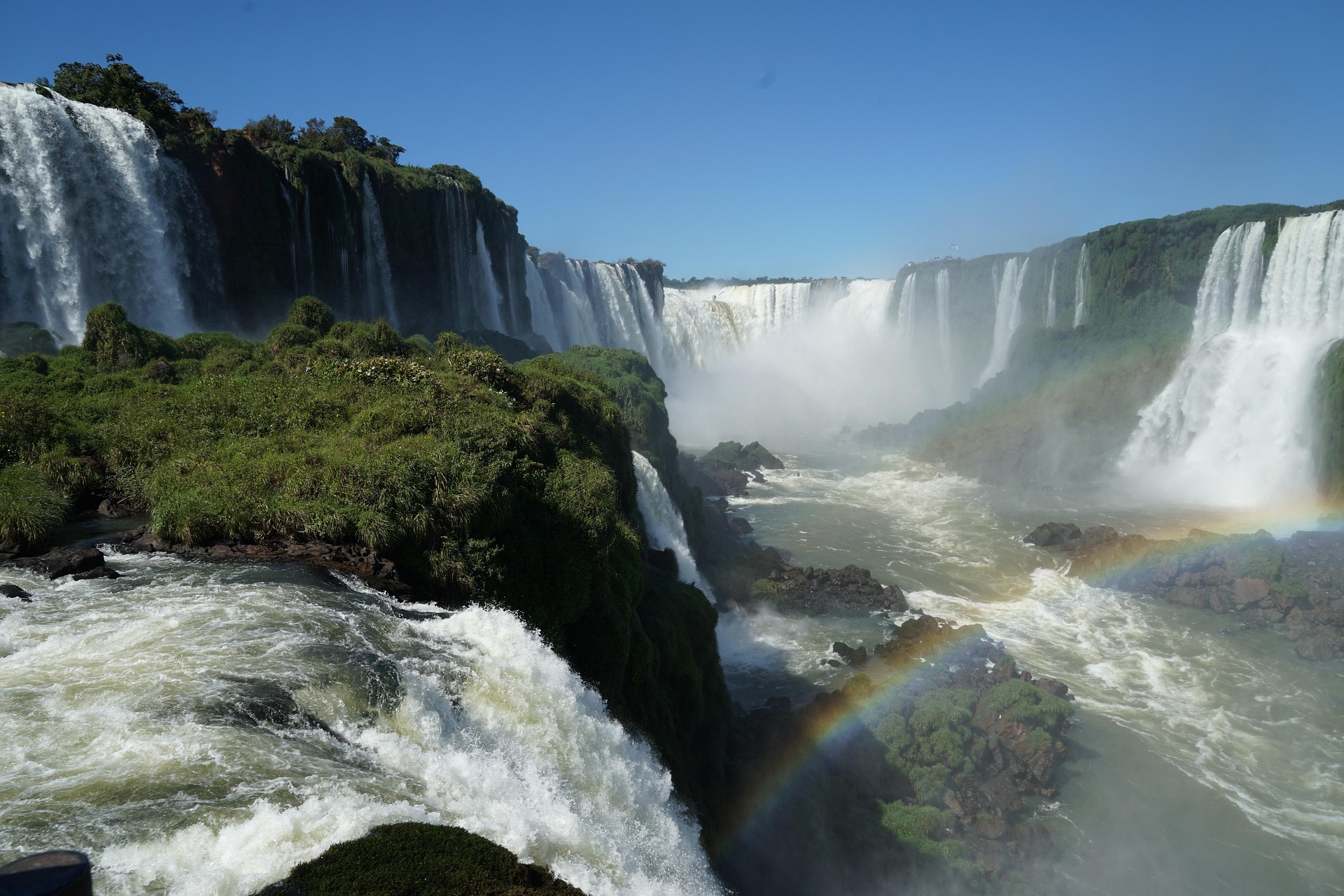
South America: a Continent of Ancient Civilizations, Natural Wonders, and Vibrant Cultures
South America countries culture geography history
South America is the fourth largest continent on Earth, covering approximately 17.8 million square kilometers and stretching from the tropical Caribbean coast in the north to the windswept tip of Patagonia near Antarctica in the south. It is a continent of extraordinary contrasts: the world's largest tropical rainforest, the world's longest mountain range, the world's highest navigable lake, the world's driest non-polar desert, and some of the world's most biodiverse ecosystems all exist within its borders. Home to approximately 440 million people spread across 12 countries, South America is a place where ancient indigenous traditions, centuries of colonial history, African heritage, and waves of European immigration have combined to create cultures of remarkable richness and complexity.
Overview and Geography
The Andes Mountains run along the entire western edge of the continent for approximately 7,000 kilometers, making them the longest continental mountain range on Earth. The range was formed by the subduction of the Nazca Plate beneath the South American Plate and contains many of the highest peaks in the Western Hemisphere, including Aconcagua in Argentina at 6,961 meters, the highest point outside of Asia. The Andes are geologically active, with numerous volcanoes and frequent earthquakes along their length.
East of the Andes lie the vast lowlands of the continent, dominated by the Amazon Basin. The Amazon River, the world's largest by water volume, drains an area of approximately 7 million square kilometers and carries roughly 20 percent of all freshwater that flows into the world's oceans. The Amazon rainforest, covering approximately 5.5 million square kilometers, is the largest tropical forest on Earth and home to an estimated 10 percent of all species on the planet.
South of the Amazon Basin are the cerrado, a vast tropical savanna, and further south the grasslands of the Pampas in Argentina and Uruguay, some of the most fertile agricultural land in the world. In the far south, Patagonia stretches across both Argentina and Chile as a cold, windswept plateau of steppes, glaciers, and fjords. The Atacama Desert along the Pacific coast of Chile and Peru is the driest non-polar desert on Earth, with some weather stations having never recorded rainfall.
The Galapagos Islands, a volcanic archipelago belonging to Ecuador and located about 900 kilometers off the Pacific coast, are one of the world's most remarkable ecosystems, famous for the unique wildlife that inspired Charles Darwin's theory of evolution by natural selection.
History of South America
South America has been inhabited for at least 15,000 years, and possibly much longer. The earliest inhabitants crossed into the Americas from Asia via the Bering land bridge and gradually spread southward across the continent. Over thousands of years, hundreds of distinct cultures developed, ranging from small hunter-gatherer bands to sophisticated urban civilizations.
The Norte Chico civilization, which flourished along the coast of present-day Peru between approximately 3000 and 1800 BCE, is one of the oldest complex societies in the world. Contemporary with ancient Mesopotamia and Egypt, Norte Chico developed monumental architecture and complex social organization without a writing system. Later pre-Columbian cultures in the Andes included the Chavin, Tiwanaku, Wari, and Chimu civilizations, each leaving significant architectural and artistic legacies.
The Inca Empire, known as Tawantinsuyu or the Four Quarters of the World, was the largest empire in pre-Columbian America. At its height in the early sixteenth century, it stretched from present-day Colombia in the north to central Chile in the south, encompassing a population of perhaps 12 million people. The Incas governed this vast territory through a sophisticated administrative system, an extensive road network of about 40,000 kilometers, and the labor tax system known as mit'a. Their capital, Cusco, was one of the great cities of its time, and their achievements in architecture, agriculture, and engineering were extraordinary.
The arrival of Spanish and Portuguese colonizers in the late fifteenth and early sixteenth centuries transformed the continent with devastating speed. Spanish forces under Francisco Pizarro conquered the Inca Empire between 1532 and 1572, using firearms, steel weapons, horses, and the catastrophic impact of European diseases to defeat a civilization that had no immunity to smallpox, measles, and other illnesses. The indigenous population of South America collapsed by an estimated 90 percent in the first century of European contact, one of the greatest demographic catastrophes in human history.
The colonial period that followed lasted nearly three centuries. Spain controlled most of the continent, while Portugal controlled the vast territory that became Brazil. The colonial economy was based on the extraction of silver and gold, plantation agriculture, and the forced labor of both indigenous peoples and enslaved Africans. The transatlantic slave trade brought an estimated 4.9 million enslaved Africans to South America, primarily to Brazil, where the sugar and later coffee economies depended on their labor.
The independence movements of the early nineteenth century swept through South America in a remarkable wave between approximately 1810 and 1826. Inspired by the American and French Revolutions and fueled by resentment of Spanish colonial rule, independence fighters led by figures such as Simon Bolivar in the north and Jose de San Martin in the south liberated most of the continent within fifteen years. Brazil achieved independence from Portugal in 1822 under a different model, becoming a monarchy under the Portuguese royal family rather than a republic.
The post-independence period was turbulent throughout the continent. Newly formed nations struggled with political instability, economic dependence on commodity exports, and sharp inequalities between small landowning elites and large impoverished majorities. The twentieth century brought periods of democracy alternating with military dictatorship across much of the continent. The 1970s and 1980s saw particularly brutal authoritarian regimes in Argentina, Chile, Brazil, and Uruguay, supported in many cases by the United States as part of Cold War strategy. The return to democracy across most of the continent in the 1980s and 1990s was followed by a period sometimes called the Pink Tide, when left-leaning governments won elections in Venezuela, Brazil, Argentina, Bolivia, Ecuador, and other countries in the early twenty-first century.
Cultural Attributes
South American culture is a synthesis of indigenous, European, and African influences that varies significantly from country to country and region to region. The result is a continent of extraordinary cultural diversity and creativity.
Music is one of South America's most significant cultural exports. Argentina gave the world the tango, a dance and musical form of profound emotional intensity that developed in the working-class neighborhoods of Buenos Aires in the late nineteenth century among immigrants from Europe and Africa. Brazil produced samba, bossa nova, and later baile funk and pagode, musical forms of global influence. Colombia contributed cumbia and vallenato. Bolivia and Peru maintain strong traditions of Andean music using instruments such as the charango, pan pipes, and various traditional drums. The continent's musical traditions have influenced music worldwide.
Literature is another area of extraordinary achievement. South American writers have produced some of the most celebrated literature of the twentieth century. Gabriel Garcia Marquez of Colombia, winner of the Nobel Prize in Literature in 1982, popularized magic realism, a literary style that blends realistic narrative with fantastical elements drawn from Latin American folklore and culture. Jorge Luis Borges of Argentina transformed world literature with his intricate philosophical short stories. Pablo Neruda of Chile, winner of the Nobel Prize in Literature in 1971, was one of the most influential poets of the twentieth century. Isabel Allende, Mario Vargas Llosa, Julio Cortazar, and many others have contributed to a literary tradition of global significance.
Food traditions reflect the continent's diverse heritage. Ceviche, raw fish cured in citrus juice with chili and onion, is a dish of ancient Peruvian origin now recognized worldwide. Asado, the Argentine and Uruguayan tradition of slow-cooking meat over open coals, is both a cuisine and a social institution. Brazilian feijoada, a rich stew of black beans and various cuts of pork, has African origins and is considered the national dish of Brazil. Ajiaco in Colombia, locro in the Andes, and moqueca in Brazil are among the many regional dishes that reflect local ingredients and cultural heritage.
Football, or soccer, is a cultural force of extraordinary power across the continent. Brazil and Argentina are among the most successful football nations in history, and the sport's hold on South American culture is difficult to overstate. Major tournaments and matches are treated as near-religious events, and the continent has produced many of the greatest players in the history of the sport.
Languages Spoken in South America
Spanish is the dominant language of South America, spoken as the official or primary language in nine of the twelve countries. Portuguese is the language of Brazil, the continent's largest country, and is spoken by approximately half the continent's population.
Beyond Spanish and Portuguese, South America has remarkable linguistic diversity. An estimated 400 to 450 indigenous languages are still spoken across the continent, though many are endangered. Quechua, the language of the Inca Empire, is the most widely spoken indigenous language, with approximately 8 to 10 million speakers across Peru, Bolivia, Ecuador, and neighboring countries. Guarani is the co-official language of Paraguay alongside Spanish, and is spoken by the majority of the population, making it one of the few indigenous languages in the Americas with strong official status.
Aymara is spoken by several million people in Bolivia, Peru, and Chile. Mapudungun is spoken by the Mapuche people of Chile and Argentina. Dutch is the official language of Suriname. English is spoken in Guyana and on the Falkland Islands. French is spoken in French Guiana, an overseas department of France. Various creole languages blend European and African linguistic elements in coastal regions throughout the continent.
Famous Tourist Attractions
Machu Picchu in Peru is perhaps the most iconic archaeological site in the Western Hemisphere. The fifteenth-century Inca citadel sits on a ridge at 2,430 meters above sea level in the Andes mountains, surrounded by cloud forest. It was built around 1450 and abandoned roughly a century later during the Spanish conquest. The site was largely unknown to the outside world until American historian Hiram Bingham visited in 1911. It was declared a UNESCO World Heritage Site in 1983 and named one of the New Seven Wonders of the World in 2007.
Iguazu Falls, on the border of Argentina and Brazil, is one of the world's largest waterfall systems, with 275 individual falls spreading across 2.7 kilometers. The falls are set within lush subtropical rainforest and are dramatically wider than Niagara Falls and taller than Victoria Falls.
The Galapagos Islands of Ecuador are one of the world's premier wildlife destinations, famous for their extraordinary biodiversity and the tameness of animals that evolved with no natural predators. Giant tortoises, marine iguanas, blue-footed boobies, and Darwin's finches are among the iconic species found there.
The Atacama Desert in Chile and Peru is one of the most visually dramatic landscapes on Earth, with salt flats, geysers, lagoons filled with flamingos, and night skies of extraordinary clarity due to the high altitude and near-total absence of moisture.
Patagonia, shared between Argentina and Chile, offers some of the world's most spectacular mountain and glacial scenery. Torres del Paine National Park in Chile is renowned for its dramatic granite towers, glaciers, and wildlife. The Perito Moreno Glacier in Argentina is one of the world's few advancing glaciers and a site of extraordinary natural spectacle.
Angel Falls in Venezuela, with a total drop of 979 meters, is the world's highest uninterrupted waterfall. The Amazon River basin offers unique ecotourism opportunities, including river cruises through pristine rainforest, wildlife observation, and visits to indigenous communities.
Argentina
Argentina is the second largest country in South America and the eighth largest in the world, covering approximately 2.78 million square kilometers from the subtropical north to the subantarctic south. It is a country of extraordinary geographic diversity, encompassing tropical jungles, high Andean peaks, the fertile Pampas grasslands, and the cold deserts of Patagonia.
Indigenous peoples including the Mapuche, Quechua, and Guarani inhabited the region for thousands of years before Spanish colonizers arrived in the sixteenth century. Argentina declared independence from Spain in 1816 following years of revolutionary struggle. The late nineteenth and early twentieth centuries brought massive waves of immigration from Europe, particularly Italy and Spain, which shaped Argentine culture profoundly. The twentieth century was marked by political turbulence, including the populist Peronist movement, military dictatorships, and the particularly brutal regime of 1976 to 1983 during which an estimated 10,000 to 30,000 people were killed or disappeared.
Argentine culture is deeply influenced by its European heritage while maintaining distinctly local forms. Buenos Aires, the capital, is one of the great cities of the world, known for its European-style architecture, vibrant arts scene, café culture, and passionate football culture. Tango, born in Buenos Aires, remains central to Argentine identity. Argentine literature, led by Jorge Luis Borges, has made enormous contributions to world letters. The country is also one of the world's leading producers of beef, wine, and soy, and its Malbec wines have achieved global recognition.
Bolivia
Bolivia is a landlocked country in the heart of South America, sharing borders with Brazil, Paraguay, Argentina, Chile, and Peru. It is one of only two landlocked countries in South America and one of the highest countries in the world, with the capital Sucre at 2,810 meters and the seat of government La Paz at approximately 3,650 meters, making it the world's highest administrative capital.
Bolivia has the largest proportion of indigenous population of any country in South America, with indigenous peoples making up over 60 percent of the population. The Aymara and Quechua are the two largest indigenous groups. Bolivia was part of the Inca Empire before Spanish conquest and was known as Upper Peru during the colonial period. It achieved independence in 1825 and was named after Simon Bolivar. The country has vast natural resources including silver, tin, lithium, and natural gas, but has historically struggled with political instability and poverty.
Bolivia's cultural life is strongly shaped by its indigenous heritage. The city of Tiwanaku near Lake Titicaca is one of the most important pre-Columbian archaeological sites in South America. Lake Titicaca, shared with Peru and sitting at 3,810 meters above sea level, is the world's highest navigable lake. The Salar de Uyuni, the world's largest salt flat, is one of South America's most spectacular natural landscapes and reflects the sky in the rainy season to create a mirror effect of extraordinary beauty.
Brazil
Brazil is the largest country in South America and the fifth largest in the world, covering approximately 8.5 million square kilometers, roughly half the continent's total area. It is the only Portuguese-speaking country in the Americas and the world's largest Portuguese-speaking nation. With a population of approximately 215 million, Brazil is the most populous country in South America and the seventh most populous in the world.
Brazil was claimed by Portuguese explorer Pedro Alvares Cabral in 1500 and remained a Portuguese colony for more than three centuries. Enslaved Africans were brought to Brazil in enormous numbers to work on sugar, cotton, and later coffee plantations. Brazil became an independent empire in 1822 under Dom Pedro I, a member of the Portuguese royal family. It became a republic in 1889. The twentieth century brought industrialization, urbanization, and periods of democratic governance alternating with military rule, including a military dictatorship from 1964 to 1985.
Brazilian culture is one of the most vibrant and globally influential in the world. Carnival, particularly the spectacular celebration in Rio de Janeiro, is one of the world's largest and most famous festivals. Samba, bossa nova, axe, and baile funk are Brazilian musical forms known worldwide. Brazilian football has produced legendary figures including Pele, Ronaldo, Ronaldinho, and Neymar, and the national team has won the FIFA World Cup a record five times. The Amazon rainforest, Brazilian wildlife including jaguars, macaws, and piranhas, the magnificent beaches of Rio de Janeiro and Bahia, and the architectural modernism of Brasilia are among Brazil's many attractions.
Chile
Chile is an extraordinarily long and narrow country stretching for approximately 4,300 kilometers from north to south along the western coast of South America while averaging only about 175 kilometers in width. This unusual shape gives Chile enormous climatic and geographic diversity, from the Atacama Desert in the north to the glaciers and fjords of Patagonia in the south.
Indigenous peoples, most notably the Mapuche, inhabited Chile for thousands of years before Spanish colonization began in the sixteenth century. Chile declared independence in 1818 under the leadership of Bernardo O'Higgins and Jose de San Martin. The country experienced significant political instability in the nineteenth century but developed a relatively stable democratic system in the twentieth century. This stability was dramatically interrupted in 1973 when General Augusto Pinochet led a military coup that overthrew the democratically elected socialist president Salvador Allende. Pinochet's dictatorship, which lasted until 1990, was characterized by widespread human rights abuses. Chile returned to democracy in 1990 and has since become one of the most economically developed countries in Latin America.
Chilean culture reflects a blend of indigenous and Spanish heritage. The poetry of Pablo Neruda and Gabriela Mistral, both Nobel laureates, has given Chile an outsized literary reputation. Chilean wine, particularly from the Maipo, Colchagua, and Casablanca valleys, has achieved international recognition. Natural attractions include the Atacama Desert, one of the world's most spectacular astronomical observation sites, Torres del Paine National Park, Easter Island with its mysterious moai statues, and the Carretera Austral road through the Patagonian wilderness.
Colombia
Colombia is located in the northwestern corner of South America and is the only country on the continent with coastlines on both the Pacific Ocean and the Caribbean Sea. It is named after Christopher Columbus and covers approximately 1.14 million square kilometers, making it the fourth largest country in South America.
Colombia was the center of several advanced pre-Columbian cultures, including the Muisca, Tairona, and Quimbaya, before Spanish colonization began in the early sixteenth century. Colombia, Venezuela, Ecuador, and Panama were briefly united as Gran Colombia following independence from Spain in 1819 under the leadership of Simon Bolivar. The union dissolved by 1831. Colombia experienced intense political violence in the twentieth century, including the period known as La Violencia in the 1940s and 1950s and decades of conflict involving guerrilla groups, drug cartels, and government forces. The FARC guerrilla organization signed a peace agreement with the government in 2016.
Colombia's cultural contributions are considerable. The literature of Gabriel Garcia Marquez, who won the Nobel Prize in Literature in 1982 for his novel One Hundred Years of Solitude, has made Colombian magical realism a recognized international literary style. Colombian music, including cumbia, vallenato, and more recently the global phenomenon of Latin pop and urban music, has enormous influence. Colombia's biodiversity is extraordinary: the country is the world's most biodiverse nation per square kilometer and is home to over 1,900 species of birds, more than any other country on Earth. Coffee from Colombia's Andean highlands is among the most prized in the world.
Ecuador
Ecuador straddles the equator, from which it takes its name, on the northwestern coast of South America. Despite being one of the smaller countries on the continent, it has extraordinary geographic diversity: Pacific coastline, Andean highlands with active volcanoes, Amazon rainforest, and the unique Galapagos Islands.
Ecuador was home to advanced pre-Columbian cultures for thousands of years before the Inca Empire expanded into the region in the fifteenth century. Spanish colonization followed in the sixteenth century. Ecuador became part of Gran Colombia after independence and became a separate republic in 1830. The twentieth century brought alternating periods of democratic governance and military rule. Ecuador has significant oil reserves discovered in the Amazon region in the 1960s, which have been central to both economic development and environmental controversy.
The Galapagos Islands, designated a UNESCO World Heritage Site and one of the world's premier conservation areas, are Ecuador's most internationally famous attraction. The colonial center of Quito, the capital, is the first city ever to be designated a UNESCO World Heritage Site. Ecuador is one of the world's leading exporters of bananas, cut flowers, and shrimp. The country's indigenous cultures, particularly in the Andean highlands and Amazon regions, maintain strong traditions of weaving, music, and ceremony.
Guyana
Guyana is the only English-speaking country in South America, a legacy of British colonial rule that sets it apart culturally and linguistically from its Spanish and Portuguese-speaking neighbors. Located on the northeastern coast of the continent, Guyana covers approximately 215,000 square kilometers and has a population of under a million people, making it one of the least densely populated countries in South America.
Guyana was inhabited by various indigenous groups including the Arawak and Carib peoples before European contact. The Dutch established settlements in the seventeenth century, followed by the British, who gained control of the colony in the early nineteenth century. Guyana achieved independence from Britain in 1966. The colonial economy was based on sugar plantation agriculture worked by enslaved Africans and later indentured laborers from India, creating the ethnic diversity that characterizes Guyana today, with roughly equal proportions of Afro-Guyanese and Indo-Guyanese populations.
Guyana is one of the most heavily forested countries in the world, with over 80 percent of its territory covered by pristine rainforest. The discovery of significant offshore oil reserves in 2015 has transformed the country's economic prospects and made Guyana one of the fastest-growing economies in the world. Kaieteur Falls, a single-drop waterfall in the interior jungle with a drop of 226 meters, is one of the most powerful waterfalls in the world and a remarkable natural attraction.
Paraguay
Paraguay is a landlocked country in central South America, bordered by Brazil, Argentina, and Bolivia. It is one of only two landlocked countries in South America. The country is divided by the Paraguay River into two distinct regions: the eastern Paraneña region, which is fertile and densely populated, and the western Chaco region, a vast lowland plain that makes up about 60 percent of the territory but contains less than 3 percent of the population.
Paraguay was home to the Guarani people for thousands of years before Spanish colonization in the sixteenth century. Jesuit missionaries established a remarkable network of reductions, autonomous communities of Guarani converts, which lasted until the Jesuits were expelled from Spanish territory in 1767. Paraguay declared independence in 1811. The country suffered the catastrophic War of the Triple Alliance from 1864 to 1870, in which Paraguay fought simultaneously against Brazil, Argentina, and Uruguay. By the war's end, Paraguay had lost approximately 60 to 70 percent of its population and most of its adult males. The country recovered slowly over the following century.
Guarani culture remains deeply embedded in Paraguayan life. Guarani is co-official with Spanish and is spoken by the majority of Paraguayans, making it one of the most vital indigenous languages in the Americas. Paraguayan music, particularly the harp tradition, is distinctive and celebrated. The Itaipu Dam on the border with Brazil, once the world's largest hydroelectric dam, is a remarkable feat of engineering that supplies a significant portion of Paraguay's electricity.
Peru
Peru is one of the most historically significant countries in South America, home to the Inca Empire and dozens of earlier pre-Columbian civilizations that left extraordinary legacies in architecture, art, and engineering. Located on the western coast of South America, Peru has three distinct geographic regions: the narrow coastal desert, the high Andean mountains and valleys, and the vast Amazon basin that covers over 60 percent of the country's territory.
Peru was home to sophisticated cultures for thousands of years, including the Chavin, Moche, Nazca, and Wari civilizations, before the Inca Empire unified the Andean region in the fifteenth century. Spanish conquistadors under Francisco Pizarro captured the Inca emperor Atahualpa in 1532 and rapidly dismantled the empire. Lima was established as the Spanish colonial capital in 1535 and became the center of Spanish power in South America. Peru achieved independence in 1821 under the leadership of Jose de San Martin and Simon Bolivar.
Machu Picchu is Peru's most iconic attraction and one of the most visited archaeological sites in the world. The Sacred Valley of the Incas near Cusco contains dozens of remarkable Inca sites. Lake Titicaca, shared with Bolivia, is the highest navigable lake in the world and home to the Uros people who live on floating reed islands. The Nazca Lines, enormous geoglyphs etched into the desert floor and visible only from the air, are one of the world's great archaeological mysteries. Peruvian cuisine has gained international recognition in recent years, with Lima becoming one of the world's top culinary destinations.
Suriname
Suriname is the smallest country in South America by area, covering approximately 164,000 square kilometers, and one of the least densely populated. Located on the northeastern coast of the continent, it was a Dutch colony until 1975 and remains the only country in South America where Dutch is the official language.
Suriname was inhabited by various indigenous peoples before the arrival of European colonizers in the seventeenth century. The Dutch established a plantation colony worked by enslaved Africans, brought in enormous numbers to work on sugar, coffee, and cacao plantations. When slavery was abolished in 1863, the Dutch brought indentured laborers from India and Java, creating the remarkable ethnic mosaic that characterizes Suriname today. The population includes people of Hindustani, Javanese, Afro-Surinamese, mixed, indigenous, Chinese, and European descent.
This extraordinary diversity makes Suriname one of the most culturally complex societies in the Americas. Several distinct creole languages are spoken alongside Dutch, including Sranantongo, which serves as a widely used lingua franca. More than 90 percent of Suriname's territory is covered by tropical rainforest, much of it pristine, and the country has significant biodiversity. The economy is based primarily on gold mining, oil, and timber.
Uruguay
Uruguay is the smallest Spanish-speaking country in South America, covering approximately 176,000 square kilometers and lying between Brazil and Argentina on the eastern coast of the continent. Despite its small size, it has developed a reputation as one of the most progressive and stable democracies in Latin America.
Uruguay was inhabited by the Charrua people before European colonization. Spanish and Portuguese colonizers fought over the territory for centuries before Uruguay achieved independence in 1828, with its existence guaranteed in part as a buffer state between the two colonial powers. The late nineteenth and early twentieth centuries brought significant immigration from Europe, particularly Spain, Italy, and Basque Country, which shaped Uruguayan culture profoundly. Uruguay was an early leader in social reform in Latin America, establishing the eight-hour workday, women's suffrage, and a secular public education system in the early twentieth century.
Modern Uruguay is known for its high quality of life, political stability, and progressive policies, including the legalization of same-sex marriage in 2013 and the legalization and regulation of cannabis in 2013. Montevideo, the capital, is a cosmopolitan city with a rich cultural life, beautiful beaches, and a well-preserved historic center. Uruguay's Pampas grasslands support a significant cattle ranching industry, and the country is one of the world's leading producers of beef and wool. Carnival in Montevideo is a major cultural celebration, featuring candombe music of African origin and elaborate theatrical performances.
Venezuela
Venezuela occupies the northern coast of South America, bordering Colombia to the west, Brazil to the south, and Guyana to the east, with the Caribbean Sea to the north. It was one of the wealthiest countries in Latin America for much of the twentieth century due to its enormous oil reserves, the largest proven reserves in the world, but has experienced a severe economic and humanitarian crisis in recent decades.
Venezuela was home to diverse indigenous peoples including the Timoto-Cuica in the Andes and various Carib and Arawak groups in the lowlands before Spanish colonization in the early sixteenth century. Venezuela was an important center of the independence movement. Simon Bolivar, who liberated much of South America from Spanish rule, was born in Caracas in 1783. Venezuela was part of Gran Colombia following independence and became a separate republic in 1830. Oil was discovered in the early twentieth century and transformed the country into one of Latin America's most prosperous. The presidency of Hugo Chavez from 1999 to 2013, and the subsequent presidency of Nicolas Maduro, brought dramatic political and economic changes that contributed to a severe economic crisis, hyperinflation, and the emigration of approximately 7 million Venezuelans.
Despite its current difficulties, Venezuela's natural beauty is extraordinary. Angel Falls in Canaima National Park is the world's highest uninterrupted waterfall. The tepuis, ancient flat-topped mountains that rise dramatically from the surrounding jungle, are found nowhere else on Earth and inspired Arthur Conan Doyle's novel The Lost World. The Llanos, vast tropical grasslands, support enormous biodiversity including capybaras, anacondas, caimans, and hundreds of bird species.
Sources
CIA World Factbook, South America: https://www.cia.gov/the-world-factbook/
UNESCO World Heritage Sites, South America: https://whc.unesco.org
IUCN, South American Biodiversity: https://www.iucn.org
ECLAC, Economic Commission for Latin America and the Caribbean: https://www.cepal.org
Country Reports, South America: https://www.countryreports.org
#SouthAmerica #LatinAmerica #MachuPicchu #Amazon #Andes #Brazil #Argentina #Colombia #Peru #Chile #Travel #History #Culture #NaturalWonders #WorldHistory
https://www.countryreports.org