
 English
 Español
 中文
中文 हिन्दी
 Français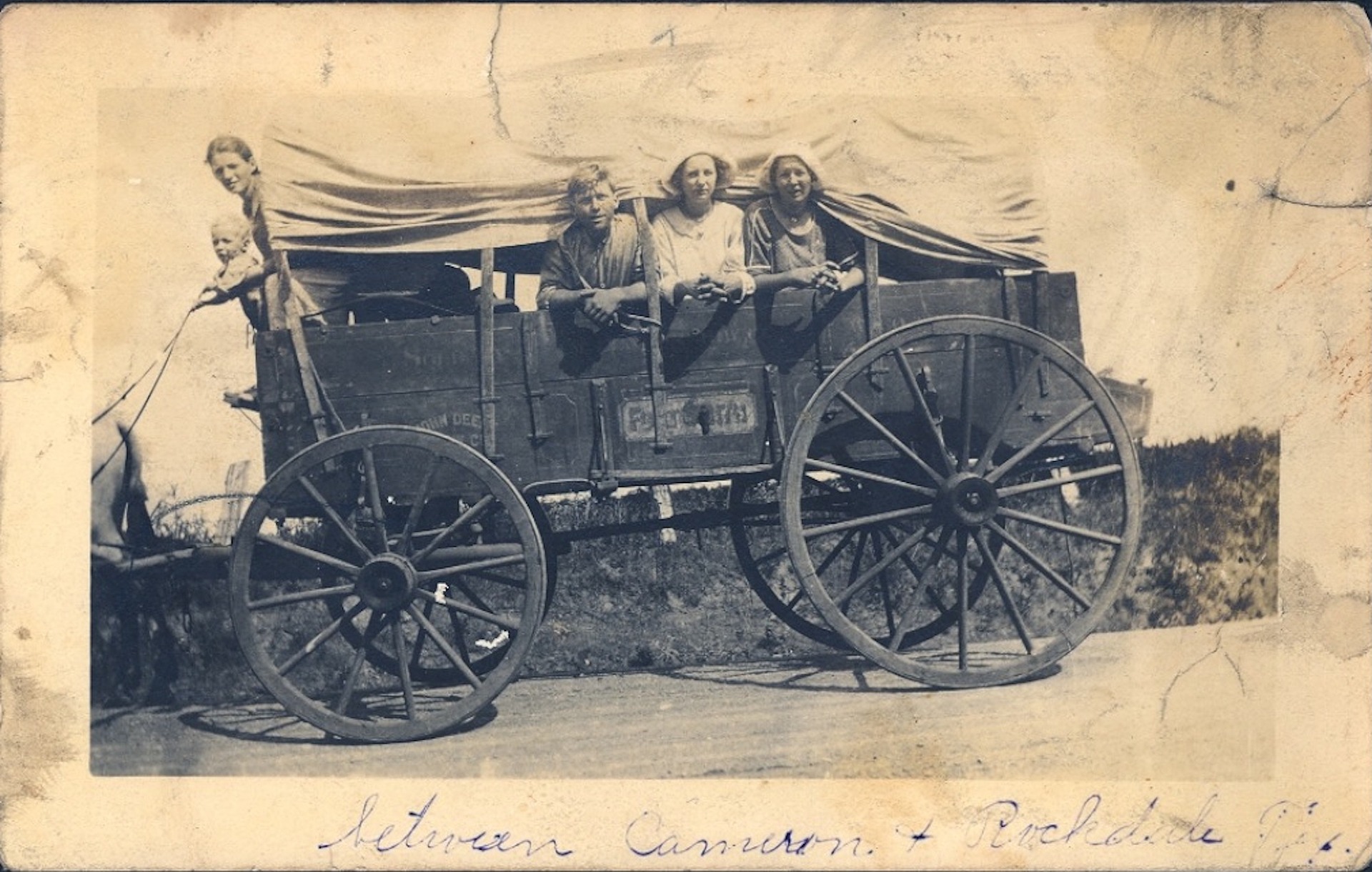
Promised Land: The Pioneer Settlement of Utah and the Birth of a Territory
Utah pioneer settlement history Mormon heritage
Promised Land: The Pioneer Settlement of Utah and the Birth of a Territory
Utah pioneer settlement history Mormon heritage
In the summer of 1847, a group of exhausted, trail-worn settlers crested the Wasatch Mountains and looked out over a vast, arid valley ringed by mountains and centered on a great inland sea. Their leader, Brigham Young, reportedly surveyed the scene and declared simply: This is the right place. Within days, they were digging irrigation ditches, planting crops, and laying out the grid of a city that would one day become Salt Lake City. What followed over the next several decades was one of the most remarkable episodes of planned colonization in American history, an organized, faith-driven migration that transformed one of the most inhospitable landscapes in North America into a thriving network of communities.
WHO WERE THE PIONEERS
The settlers who came to Utah in the mid-nineteenth century were overwhelmingly members of the Church of Jesus Christ of Latter-day Saints, commonly known as the Mormon Church. The church had been founded in 1830 in western New York by Joseph Smith, who claimed to have received divine revelation and translated an ancient scripture called the Book of Mormon. The new faith attracted converts but also intense hostility from neighbors who objected to its doctrines, including in its early years the practice of plural marriage, and to the political and economic cohesion of its communities.
The Saints, as members called themselves, were driven from New York to Ohio, from Ohio to Missouri, and from Missouri to Illinois, where they built the city of Nauvoo on the banks of the Mississippi River. At its height, Nauvoo was one of the largest cities in Illinois. But conflict with non-Mormon neighbors intensified, and in 1844, Joseph Smith was murdered by a mob while held in a jail in Carthage, Illinois. His successor, Brigham Young, made the decision that the Saints could not remain in the United States, at least not in any place where existing American settlements would surround them. They would go west, to territory then belonging to Mexico, beyond the reach of the United States government and the mob violence that had followed them for years.
The decision was both a religious act and a strategic one. Young believed the Saints needed their own space, their own land, their own society, to practice their faith and build what they believed would be a model of Zion on earth. The Great Basin, remote and largely unknown to American settlers, offered exactly that.
THE GREAT MIGRATION BEGINS
The first pioneer company left Winter Quarters, a settlement on the Missouri River near present-day Omaha, Nebraska, in April 1847. The group numbered 143 men, 3 women, and 2 children, chosen specifically for the rigors of the pioneering journey. They traveled with wagons, livestock, and scientific instruments, sending back detailed records of the trail conditions to guide those who would follow.
The route they traveled became known as the Mormon Trail. For most of its length, it paralleled the Oregon Trail along the north bank of the Platte River before crossing Wyoming and entering Utah through the mountains. The journey of roughly 1,300 miles from Winter Quarters to the Salt Lake Valley took about three and a half months.
Brigham Young himself entered the Salt Lake Valley on July 24, 1847, a date still celebrated in Utah as Pioneer Day, a state holiday. Within days, the company had begun irrigating the dry soil and planting crops, demonstrating immediately that agriculture in the desert was possible given sufficient water from the mountain streams.
The first company was followed by thousands more. In 1847 alone, nearly 2,000 settlers made the journey. By 1852, approximately 20,000 had arrived in the territory. The migration continued for decades, ultimately bringing more than 70,000 people to Utah along the Mormon Trail between 1847 and 1869, when the completion of the transcontinental railroad transformed the journey from an arduous months-long trek into a train ride of a few days.
THE HANDCART COMPANIES
Not every pioneer came with wagons and oxen. The church encouraged members who lacked the resources for a fully outfitted wagon company to make the journey in handcart companies, pulling small two-wheeled carts loaded with their possessions. Between 1856 and 1860, approximately 3,000 emigrants made the trek this way in ten handcart companies.
For most, the journey was demanding but successful. But two companies, the Willie Handcart Company and the Martin Handcart Company, departed late in the 1856 season and were caught by early winter storms on the high plains of Wyoming. The disasters that followed were among the most tragic events in Mormon history. Hundreds died from cold, starvation, and exhaustion before rescue parties dispatched by Brigham Young reached them. The Willie Company lost approximately 68 of its 500 members. The Martin Company lost over 145 of its roughly 575 members. The survivors were brought to the Salt Lake Valley through extraordinary rescue efforts, and their story has been told and retold in Mormon culture ever since as an example of faith, endurance, and communal sacrifice.
BUILDING COMMUNITIES ACROSS THE TERRITORY
From the moment of arrival, Brigham Young and church leadership pursued a systematic program of colonization that was unlike anything else in the American West. While other Western settlements were largely driven by individual initiative, the rush for gold, or the homestead impulse, Mormon settlement was centrally planned and coordinated by the church.
Young called settlers to specific locations, dispatching companies of colonists to establish new communities throughout the Great Basin and beyond. Settlers did not choose their destinations. They were called, much as a minister might be called to a congregation, and they were expected to go. This system allowed the church to establish communities at strategic locations, near water sources, along trade routes, and in valleys suitable for agriculture, with remarkable efficiency.
The first priority in establishing any new settlement was always irrigation. The Salt Lake Valley and most of the surrounding Great Basin receive too little rainfall for dry farming. Channeling water from mountain streams to fields was not optional but essential, and the cooperative labor required to build irrigation systems reinforced the communal nature of the settlements. Working together to move water was often the first collective act of a new community and set the tone for the cooperative culture that characterized Mormon settlement throughout the region.
Among the most significant early communities established beyond Salt Lake City were Ogden to the north, Provo to the south, and St. George in the red rock desert of southwestern Utah, which became an important center for cotton production and was sometimes called Utah's Dixie. Settlements were also planted in present-day Idaho, Nevada, Arizona, and California, as Young sought to establish a network of Mormon communities across the entire Great Basin region.
THE PHYSICAL LANDSCAPE AND ITS CHALLENGES
The land the pioneers chose was, by any objective measure, extraordinarily difficult. The Salt Lake Valley sits at roughly 4,300 feet above sea level in a basin surrounded by mountains. Rainfall in the valley averages about 16 inches per year, far too little for conventional agriculture. Summer temperatures can be intense. The Great Salt Lake itself, the remnant of a vast ancient lake called Lake Bonneville, is saltier than the ocean and supports no fish. The surrounding desert is home to alkali flats, scrubby sagebrush, and rattlesnakes.
What the region had was mountain runoff. The Wasatch Range, which rises to over 11,000 feet on the valley's eastern edge, captures substantial winter snowfall that feeds rivers and streams through the spring and summer. The pioneers immediately grasped that this water, properly managed, could transform the valley. They were right, though mastering the irrigation systems took years and considerable trial and error.
The first winter, 1847 to 1848, was harsh, and food was scarce. The spring planting of 1848 seemed promising, but then came the crickets. Enormous swarms of what are now called Mormon crickets, a native species of shield-backed katydid, descended on the crops and threatened to destroy the harvest entirely. According to Mormon tradition and historical accounts, flocks of California gulls appeared and consumed the crickets in large numbers, saving enough of the harvest to see the settlers through another winter. This event, known as the Miracle of the Gulls, became one of the foundational stories of Mormon settlement, and the California gull was later named Utah's state bird in commemoration.
RELATIONS WITH NATIVE PEOPLES
The arrival of thousands of Mormon settlers in the Great Basin was devastating for the Native peoples who had lived there for thousands of years. The region was home to several distinct groups, including the Ute, Shoshone, Paiute, Goshute, and Navajo peoples, each with their own territories, cultures, and relationships to the land.
Brigham Young's official policy toward Native peoples was that it was better to feed them than to fight them, and in the early years of settlement, there were genuine efforts at peaceful coexistence and trade. Mormon theology held that Native Americans were descendants of ancient peoples described in the Book of Mormon, which gave church members a particular religious interest in their well-being and conversion.
But the practical reality of colonization, with its demands for land, water, and game, inevitably created conflict. As Mormon settlements expanded and pushed into Native hunting grounds and water sources, tensions grew. Several conflicts, including the Walker War of 1853 to 1854 and the Black Hawk War of 1865 to 1872, involved serious violence. The Black Hawk War, which pitted Ute warriors under the leader Black Hawk against Mormon settlements in central Utah, was the most significant military conflict in Utah's territorial history. By its end, more than 70 settlers and an unknown number of Native people had been killed, and the displacement of Native peoples from their traditional territories was effectively complete.
The Navajo people faced particular catastrophe. In 1864, United States Army forces under Kit Carson forced the Navajo to undertake what became known as the Long Walk, a brutal forced removal from their homeland in the Four Corners region to a reservation at Bosque Redondo in New Mexico. Though this was a federal military action rather than a Mormon one, it occurred in the same period and the same region as Mormon expansion, and its effects on the Navajo were catastrophic.
STATEHOOD AND THE PATH TO UTAH'S CREATION
When the pioneers arrived in 1847, the territory was still technically part of Mexico. The Mexican-American War ended the following year with the Treaty of Guadalupe Hidalgo in 1848, which transferred the region to the United States. The discovery of gold in California in 1848 brought a flood of non-Mormon travelers through Salt Lake City along the newly established routes west, and the city became an important supply point for California-bound emigrants.
In 1849, the settlers petitioned Congress to be admitted to the Union as the state of Deseret, a word from the Book of Mormon meaning honeybee. Their proposed state was enormous, encompassing much of the present-day American Southwest. Congress declined to grant statehood but organized the region as the Utah Territory in 1850, with Brigham Young as the first territorial governor.
The relationship between the Mormon-dominated territory and the federal government was contentious throughout the territorial period. The church's practice of plural marriage, publicly announced in 1852, was deeply unpopular in the rest of the country and made Utah statehood politically impossible for decades. In 1857, President James Buchanan, believing reports of Mormon rebellion and defiance of federal authority, dispatched an army of 2,500 troops to Utah in what became known as the Utah War. The conflict ended without major bloodshed, but it deepened mutual suspicions between the territory and the federal government.
Congress passed a series of anti-polygamy laws in the 1860s, 1870s, and 1880s, culminating in the Edmunds-Tucker Act of 1887, which dissolved the Church of Jesus Christ of Latter-day Saints as a legal entity and seized its assets. Faced with this existential threat, church president Wilford Woodruff issued the Manifesto of 1890, officially ending the practice of plural marriage. With this obstacle removed, and with the territory's population and infrastructure well established, Utah was admitted to the Union as the 45th state on January 4, 1896.
THE LEGACY OF PIONEER SETTLEMENT
The pioneer settlement of Utah left a legacy that is visible in the landscape and culture of the state to this day. The street grid of Salt Lake City, laid out according to a plan Joseph Smith had envisioned for an ideal city, with wide streets oriented to the compass points and measured in blocks from the Temple Block at the center, has been replicated across dozens of Utah communities. The cooperative irrigation systems established by early settlers became the foundation of water law and management throughout the American West, influencing how water rights are understood and administered across multiple states.
The church remains central to Utah culture and demographics. Today, approximately 62 percent of Utah's population identifies as members of the Church of Jesus Christ of Latter-day Saints, and the church's influence is visible in the state's conservative politics, its low rates of alcohol consumption, its strong emphasis on family, and its extensive welfare and mutual aid systems.
The pioneer story is commemorated throughout the state. This is the Place Heritage Park in Salt Lake City, which marks the spot where Brigham Young is said to have declared the valley the right place and preserves reconstructed pioneer buildings and artifacts. Pioneer Day on July 24 is celebrated with parades and festivities across the state. The Mormon Trail, much of which is preserved and marked, is a National Historic Trail administered by the National Park Service.
Utah's transformation from a remote desert territory to a modern American state in less than 50 years was one of the most remarkable achievements in the history of Western settlement. It was driven by an unusual combination of religious conviction, central planning, collective labor, and sheer determination. The pioneers who crossed the plains and mountains with wagons and handcarts, who dug the first irrigation ditches and planted the first crops in the Salt Lake Valley, left a mark on the American West that has not faded.
SOURCES
Utah Division of State History, Pioneer Settlement: https://history.utah.gov
National Park Service, Mormon Pioneer National Historic Trail: https://www.nps.gov/mopi/index.htm
Church History Museum, Salt Lake City: https://history.churchofjesuschrist.org
Utah State Historical Society: https://history.utah.gov/utah-historical-quarterly/
Brigham Young University, Pioneer History Resources: https://history.byu.edu
Country Reports, United States of America: https://www.countryreports.org/country/UnitedStates.htm
Library of Congress, Mormon Migration: https://www.loc.gov/collections/mormon-migration/
https://www.countryreports.org