
 English
 Español
 中文
中文 हिन्दी
 Français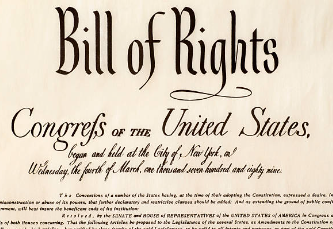
The United States Bill of Rights
INTRODUCTION
Few documents in the history of human governance have done more to shape the relationship between a government and its citizens than the first ten amendments to the Constitution of the United States of America, collectively known as the Bill of Rights. Ratified on December 15, 1791, these ten amendments stand as a monument to the persistent belief that individual liberty must be explicitly protected against the encroachments of state power, and that a written constitution, however carefully crafted, is incomplete without a formal declaration of the rights retained by the people. The story of how the Bill of Rights came to exist is a story of political argument, philosophical conviction, personal transformation, and democratic compromise — a story as dramatic and consequential as any in the American founding.
The United States emerged from the Revolutionary War as a new kind of nation, one built not on ancient tradition or monarchical bloodline but on the deliberate act of consent among free people. The federal Constitution, drafted in Philadelphia in the summer of 1787, was a remarkable work of political architecture. Yet from the moment it was made public, a fierce debate broke out over what it lacked. Critics — known as the Anti-Federalists — argued that the Constitution created a central government so powerful that it threatened the liberties of individual citizens and the sovereignty of the states. Their most potent and persistent argument was that the Constitution contained no bill of rights, no explicit enumeration of the freedoms that the new government could not take away.
The Federalists, who supported ratification, argued that a bill of rights was unnecessary and even dangerous — unnecessary because the federal government was a government of enumerated powers and could not act beyond those specifically granted, and dangerous because attempting to list rights might imply that any right not listed was not protected. James Madison, the chief architect of the Constitution, initially held this view. But the debate that raged in newspapers, pamphlets, state ratifying conventions, and private correspondence across the new nation made one truth unavoidable: a significant portion of the American people would not accept the Constitution without some assurance that their fundamental rights were protected.
What followed was one of the most remarkable legislative achievements in American history. In the summer of 1789, Madison — converted to the cause he had once opposed — stood before the First Congress in the temporary capital of New York City and proposed a series of constitutional amendments. After months of deliberation, Congress sent twelve amendments to the state legislatures for ratification. Ten of those amendments survived the ratification process, and on December 15, 1791, Virginia became the eleventh state to ratify them, meeting the constitutional threshold of three-fourths of the states and making the Bill of Rights part of the supreme law of the land.
The Bill of Rights has had a complex and evolving history since 1791. For much of the nineteenth century, the federal courts interpreted it narrowly, holding that its protections applied only against the federal government and not against the states. It was not until after the Civil War, and the ratification of the Fourteenth Amendment in 1868, that the courts began the long and still-continuing process of applying most of the Bill of Rights to the states as well, through a legal mechanism known as incorporation. In the twentieth century, particularly from the 1920s onward, the Supreme Court of the United States used the Bill of Rights to transform American law, expanding the rights of criminal defendants, protecting freedom of expression, and reshaping the relationship between religion and the state.
Today, the Bill of Rights is not merely a legal document. It is a cultural touchstone, a statement of national identity, and a source of ongoing civic argument about what American freedom means and who it protects. The original handwritten copy of the Joint Resolution of Congress proposing the amendments rests in the Rotunda of the National Archives Building in Washington, D.C., alongside the Declaration of Independence and the Constitution — the three documents that together form the foundation of American democracy. This article tells the full story of the Bill of Rights: its origins in the political struggles of the founding era, the individual men and women whose arguments shaped it, the meaning and history of each of its ten amendments, and its enduring influence on law, governance, and human rights around the world.
The story of the Bill of Rights begins not with its creation but with a deliberate decision not to create it. In the spring and summer of 1787, fifty-five delegates gathered in Philadelphia for what was officially called the Federal Convention, now known as the Constitutional Convention. They had been sent by their states with a mandate to revise the Articles of Confederation, the existing framework of national government that had proved inadequate to the needs of the new nation. Within days of convening, however, the delegates set aside the Articles entirely and began constructing a wholly new form of national government, one that would prove far more powerful than what had come before.
The convention met in the Pennsylvania State House — now known as Independence Hall — behind closed doors, with proceedings kept secret from the public. Through the long, hot Philadelphia summer, the delegates debated the structure of the new government: how power would be divided between the legislative, executive, and judicial branches; how representation would be apportioned between large and small states; how the thorny issue of slavery would be handled. The result was a document of extraordinary sophistication and deliberate ambiguity — a Constitution that balanced competing interests and created structures designed to prevent any single faction from seizing permanent control.
Yet when the convention was nearly complete, on September 12, 1787, just five days before the delegates would sign the document, George Mason of Virginia rose to propose that the Constitution be prefaced by a bill of rights. Mason, who had authored the Virginia Declaration of Rights in 1776, understood better than almost anyone the importance of explicitly enumerating the rights of citizens against their government. He told his fellow delegates that a bill of rights would give great quiet to the people and that using the state bills of rights as models, such a declaration might be prepared in a few hours. Roger Sherman of Connecticut responded that the state declarations of rights were not repealed by the new Constitution and therefore remained in force. Other delegates were exhausted after months of negotiation and anxious to go home. The motion was put to a vote, and not a single state delegation voted in favor. The Constitution would go forward without a bill of rights.
This decision proved to be one of the most consequential political miscalculations in American history. The framers who voted against Mason's motion were not, for the most part, opposed to individual rights in principle. Many sincerely believed that the structure of the new government — its separation of powers, its system of checks and balances, its limited and enumerated grants of authority — made an additional declaration of rights unnecessary. Alexander Hamilton, writing in Federalist No. 84, argued that the Constitution was itself a bill of rights in that it defined and limited government power. He further argued that enumerating rights could be dangerous, because it might imply that any right not listed was surrendered to the government.
But the framers badly misjudged the public response. As soon as the text of the Constitution was made public, critics across the country seized upon the absence of a bill of rights as proof that the new government was designed to oppress the people. The Anti-Federalists — a loosely organized but intellectually formidable opposition movement — argued that a powerful central government without explicit limitations would inevitably become tyrannical. They had history on their side: the colonists' grievances against the British Crown had been, at their core, grievances about the violation of what the colonists considered their fundamental rights as Englishmen. If the new Constitution did not protect those rights explicitly, what guarantee did Americans have that the federal government would respect them?
The absence of a bill of rights threatened to derail the entire ratification project. In state after state, ratification conventions divided sharply over the issue. Several key states agreed to ratify only on the condition that amendments would be added afterward, sending along their own proposed amendments and trusting that the First Congress would honor the commitment. The debates in state ratifying conventions — particularly in Virginia, Massachusetts, and New York — made clear that the Constitution would not achieve broad popular legitimacy without a formal declaration of rights. The political pressure this generated ultimately forced the Federalists to act.
The Anti-Federalists were not a unified party with a single leader or platform. They were a collection of individuals — farmers, lawyers, politicians, and philosophers — united by their fear that the proposed Constitution concentrated too much power in the hands of the federal government and left individuals and states too vulnerable to that power. Their arguments appeared in newspapers, pamphlets, and the deliberations of state ratifying conventions throughout 1787 and 1788.
The most intellectually sophisticated of the Anti-Federalist writings appeared under various pseudonyms. The author writing as Brutus, widely believed to have been Robert Yates of New York, published a series of essays arguing that the Constitution's Supremacy Clause and the broad powers granted to Congress would inevitably result in the absorption of state governments into a consolidated national government. The essays of Centinel, likely written by Samuel Bryan of Pennsylvania, warned that the new government would be dominated by an aristocratic elite indifferent to the rights of ordinary citizens. The Federal Farmer, another major Anti-Federalist voice, argued that the Constitution left the bulk of individual liberty unprotected.
The Anti-Federalists were also active in state ratifying conventions, where they could speak directly to the delegates who would decide the Constitution's fate. In Massachusetts, the ratifying convention was so closely divided that the Federalists were forced to strike a deal: the state would ratify, but only with a list of recommended amendments — a formula known as the Massachusetts Compromise — that the First Congress would be expected to consider. Massachusetts ratified on February 6, 1788, by a vote of 187 to 168, along with a list of proposed amendments. New Hampshire, Maryland, South Carolina, and other states followed similar patterns.
The two most important and contentious ratifying conventions were those of Virginia and New York. Virginia was the largest and most populous state, and without it, a viable union was almost inconceivable. New York controlled the vital Hudson River corridor and was home to New York City, the commercial center of the new nation. Both conventions drew the ablest political minds of the founding era to argue on each side, and both ratified the Constitution only by narrow margins and only with the understanding that amendments would follow.
The ratification debates illuminated the fundamental political philosophy underlying the demand for a bill of rights. The Anti-Federalists were not simply obstructionists seeking to defeat the Constitution. Many genuinely supported the idea of a stronger national government than the Articles had provided. What they insisted on was that such a government be explicitly constrained from violating the natural rights of citizens. Their reading of history — particularly the history of England and the colonies — convinced them that no government, however well designed, could be trusted to respect liberty without being legally bound to do so. A bill of rights, they argued, was not merely a convenience but a necessity.
The Federalists ultimately won the ratification battles, but they won them by making promises. In state after state, they agreed that once the new government was established, the First Congress would give serious consideration to amendments protecting individual rights. James Madison made this promise personally to his constituents in Virginia. It was a promise that proved both politically necessary and, in the event, genuinely kept.
Of all the individuals who contributed to the creation of the Bill of Rights, George Mason of Virginia deserves pride of place, not because he drafted the document but because his work over the preceding decade gave it much of its substance. Mason was one of the most learned constitutional thinkers of his generation, a wealthy planter who had studied law, history, and political philosophy with a depth and seriousness unusual even among the remarkable intellectual cohort of the founding era.
In May 1776, as Virginia was preparing to declare its independence from Great Britain, Mason drafted the Virginia Declaration of Rights, a document that would prove foundational not only to the Bill of Rights but to the history of human rights more broadly. The Virginia Declaration proclaimed that all men are by nature equally free and independent and have certain inherent rights, including the enjoyment of life and liberty, with the means of acquiring and possessing property, and pursuing and obtaining happiness and safety. The document went on to enumerate a series of specific rights: freedom of religion, freedom of the press, the right to trial by jury, protection against excessive bail and cruel punishment, the right of the accused to confront witnesses, protection against self-incrimination, and more. Thomas Jefferson drew on it when drafting the Declaration of Independence; Madison drew on it when drafting the Bill of Rights.
Mason brought this background to the Constitutional Convention of 1787. He was one of the most active participants in the convention's debates, attending nearly every session and contributing substantially to the document's structure. But when he rose on September 12 to propose a bill of rights and was rebuffed by his fellow delegates, he was devastated. He later stated that he would sooner chop off his right hand than put it to the Constitution as it then stood. When the convention concluded, Mason became one of only three delegates present who refused to sign the completed document. The others were Elbridge Gerry of Massachusetts and Edmund Randolph of Virginia.
Mason's objections went beyond the absence of a bill of rights — he was also troubled by provisions relating to the slave trade, the powers of the Senate, and the lack of a council to advise the president — but the bill of rights issue was foremost among them. He wrote out his objections in a pamphlet titled Objections to the Constitution of Government Formed by the Convention, which circulated widely and became one of the most influential Anti-Federalist documents of the ratification period. Mason argued that without a bill of rights, there was no declaration of any kind that the liberties of the press and jury trial would be preserved.
At the Virginia ratifying convention in June 1788, Mason joined Patrick Henry in leading the opposition to ratification. Though the convention ultimately voted to ratify, it did so with a declaration of rights and a list of proposed amendments that reflected Mason's priorities. Many of those proposals found their way into Madison's drafts before the First Congress, meaning that Mason's influence on the final text of the Bill of Rights was profound, even though he never held federal office and played no direct role in its passage.
Mason lived to see the Bill of Rights ratified in 1791, and he expressed satisfaction with most of its provisions, writing to a friend that he had received much satisfaction from the amendments to the federal Constitution. He died in October 1792, his reputation somewhat overshadowed by his refusal to support the Constitution, but his legacy as the intellectual father of the Bill of Rights secure. The Smithsonian Magazine has described him as a forgotten founder who conceived the Bill of Rights, a characterization that captures both his centrality to the document's origins and the relative historical neglect he has suffered compared to figures like Madison, Jefferson, and Hamilton.
If George Mason was the intellectual architect of the Bill of Rights, Patrick Henry was its most passionate advocate in the political arena. Henry was the most celebrated orator of the founding generation, the man whose Give me liberty, or give me death speech before the Virginia House of Burgesses in March 1775 had helped galvanize the colonies toward revolution. By 1787, he was the most powerful political figure in Virginia and the most formidable opponent the Federalists would face.
Henry had refused to attend the Constitutional Convention in Philadelphia, reportedly telling his fellow Virginians that he smelled a rat. When the finished Constitution was presented for ratification, he threw himself into opposition with his characteristic ferocity. At the Virginia ratifying convention in June 1788, he delivered speech after speech against the document, warning that it would destroy the sovereignty of the states and concentrate power in a distant federal government unaccountable to ordinary Americans. He was particularly concerned about the absence of a bill of rights.
Henry argued that the people needed explicit protections against a government that claimed to speak in their name. He warned that the general government would swallow up the state governments, that the federal courts would destroy trial by jury, and that without a declaration of rights, citizens had no legal recourse against federal overreach. His arguments resonated with many Virginians who were uncomfortable with the concentration of power in a distant capital. He spoke day after day at the convention, making extended arguments that ranged across constitutional theory, history, and political philosophy.
Henry's efforts at the Virginia convention did not defeat ratification — Virginia ratified by a vote of 89 to 79 — but they extracted a significant price. The Virginia convention proposed not merely suggested amendments but an entire declaration of rights along with twenty structural amendments that reflected Anti-Federalist priorities. More importantly, Henry used his enormous political influence in Virginia to block Madison's election to the United States Senate, maneuvering the Virginia legislature to send two Anti-Federalists to that body instead. He then engineered the drawing of Madison's congressional district to make it as unfavorable as possible for Madison, pairing him against James Monroe, another capable politician.
Ironically, Henry's efforts to marginalize Madison may have made the Bill of Rights more certain. Forced to campaign vigorously for his House seat in a competitive district, Madison made explicit and public promises to his constituents that he would champion a bill of rights in the First Congress. He won the election, entered the House of Representatives as a committed advocate for amendments, and delivered on his promises in a way that might not have happened had he coasted to a Senate seat without having to make any specific commitments to voters.
Henry's opposition to the Constitution continued even after the Bill of Rights was proposed. He believed the amendments were inadequate — a tub thrown out to a whale, as the contemporary phrase went, a distraction meant to quiet opposition without addressing the fundamental structural flaws he saw in the Constitution. But history has given him a more nuanced judgment: the political pressure he and his fellow Anti-Federalists generated was indispensable to producing the Bill of Rights in the first place. Without their persistent, intelligent, and sometimes fierce opposition, it is entirely possible that the Federalist majority in the First Congress would never have prioritized constitutional amendments.
While the debate over ratification raged in America, one of the most important participants in the conversation about a bill of rights was an ocean away. Thomas Jefferson, the primary author of the Declaration of Independence, was serving as the American minister to France in Paris, where he had been since 1784. He was not a delegate to the Constitutional Convention and played no role in the drafting of the Constitution itself. But through his correspondence with James Madison, Jefferson exercised an influence on the development of the Bill of Rights that is difficult to overstate.
Jefferson received a copy of the proposed Constitution in November 1787, and he wrote to Madison on December 20, 1787, expressing a mixture of admiration and concern. He praised many features of the document but was emphatic about what it lacked. Among the things he identified as missing was a bill of rights providing clearly for freedom of religion, freedom of the press, protection against standing armies, restriction against monopolies, the eternal and unremitting force of the habeas corpus laws, and trials by jury in all matters of fact triable by the laws of the land. Jefferson rejected the Federalist argument that enumerating rights was unnecessary or dangerous. A bill of rights, he insisted, was what the people were entitled to against every government on earth, general or particular, and what no just government should refuse or rest on inferences.
Madison responded respectfully but registered his reservations. He argued that the most dangerous violations of rights tended to come not from the government but from popular majorities within the states, and that a bill of rights imposed on the federal government would not address this problem. He also raised the concern, later developed by Hamilton, that enumerating rights might actually restrict liberty by implying that unlisted rights were not protected. But Jefferson was persistent. In a letter of March 15, 1789, after Madison had already been elected to the House of Representatives, Jefferson added a new and persuasive argument: the value of a bill of rights was that it would put rights into the hands of the judiciary — that is, into the hands of an independent legal system that could enforce them even against popular majorities.
This argument appears to have struck Madison as genuinely powerful. He had already been persuaded by the political reality that a bill of rights was necessary to secure broad popular support for the Constitution. Jefferson's argument gave him a principled, rather than merely pragmatic, reason to embrace the project. If a bill of rights could function as a legal instrument that courts could use to protect individual rights against both government overreach and popular passion, then it was not merely a concession to popular anxiety but a positive addition to the constitutional order.
Jefferson's perspective was sharpened by his observations in France. He was watching the French Revolution unfold in real time, witnessing both the excitement of popular political awakening and the dangers of unchecked power. The absence of robust legal protections for individual rights in France made the contrast with what he hoped America would become all the more vivid. When Jefferson returned to the United States in September 1789, Madison had already introduced his proposed amendments to Congress. The correspondence between the two men had helped transform a politically reluctant drafter into a genuine champion of constitutional rights.
James Madison's transformation from the most articulate opponent of a bill of rights to its most effective legislative champion is one of the more remarkable intellectual and political journeys in American history. Madison was no ordinary politician. He was perhaps the most systematic constitutional thinker of his generation, the primary architect of the Constitution, and the co-author, with Alexander Hamilton and John Jay, of the Federalist Papers — the series of essays published in 1787 and 1788 that remain the most authoritative contemporary commentary on the Constitution's meaning and purposes.
Madison's initial opposition to a bill of rights was principled and well-reasoned, not cynical or casual. He genuinely believed that the structure of the new Constitution — the separation of powers, the system of checks and balances, the representation of diverse interests in a large republic — provided better protection for individual liberty than any written declaration of rights could. In Federalist No. 51, he had argued that the multiplicity of factions in a large republic was itself the surest safeguard against tyranny, since no single faction could easily gain enough power to oppress the rest. A bill of rights, he feared, would be merely a parchment barrier — a piece of paper that majorities, when sufficiently aroused, would simply ignore.
But by the summer of 1789, Madison had changed his mind, for a combination of reasons. The political reality was obvious: without a commitment to amendments, the Constitution faced continuing opposition that threatened to destabilize the new government. Several states had ratified conditionally, with lists of proposed amendments, and there was a real risk that a second constitutional convention — which some Anti-Federalists were actively seeking — might undo much of what Madison had worked so hard to achieve. Honoring the promise of amendments was, first and foremost, politically necessary.
Beyond politics, however, Jefferson's letters had given Madison new intellectual reasons to value a bill of rights. The argument about judicial enforcement — that an explicit bill of rights would give judges a legal foundation for protecting individuals against government overreach — pointed toward a different kind of protection than the structural safeguards Madison had designed. Those structural safeguards protected against tyranny by faction; a bill of rights, properly enforced by courts, could protect against tyranny by the government itself, even when the government was acting with broad popular support.
Madison introduced his proposed amendments in the House of Representatives on June 8, 1789. His speech that day was a masterwork of political persuasion. He acknowledged the objections of those who doubted the necessity of amendments, agreed that the Constitution was excellent as written, but argued that the amendments he proposed would do no harm to the structure of the government and would do enormous good by winning the confidence of those Americans who remained skeptical of the new order. He proposed initially that the amendments be incorporated directly into the text of the Constitution, rather than added as a separate appendix — a structural approach that was ultimately rejected, with the amendments added as numbered articles at the end.
Madison drew his proposed amendments from three primary sources: the state ratifying conventions' lists of proposed amendments (particularly those of Virginia, Massachusetts, and New York), the state declarations of rights (particularly Mason's Virginia Declaration of Rights), and his own judgment about which protections were most essential. He synthesized a long list of proposals into a focused and relatively concise set of provisions, eliminating duplicates and proposals that seemed to him to alter the structure of the government rather than simply protect individual rights. His colleagues in the House were not uniformly enthusiastic, and many believed the project a distraction from more pressing business, but Madison persisted with remarkable tenacity until they agreed to act.
The First Congress of the United States convened on March 4, 1789, at Federal Hall in New York City, which was then serving as the nation's temporary capital. Federal Hall, located on Wall Street at the corner of Broad Street in lower Manhattan, had been hastily renovated and expanded to serve as the seat of the new federal government. It was there, in the building on April 30, 1789, that George Washington took the oath of office as the first President of the United States. And it was there that James Madison stood on June 8, 1789, to introduce to the House of Representatives the amendments that would become the Bill of Rights.
The First Congress operated under enormous pressure. It had to create the federal government virtually from scratch: establishing the executive departments, creating the federal judiciary (which did not yet exist in organized form), enacting a revenue system to fund the government, and resolving dozens of administrative and procedural questions that the Constitution had left open. Many of Madison's colleagues in the House felt that this work should take priority over constitutional amendments, which they regarded as at best a distraction and at worst an invitation to reopen debates that had been settled with great difficulty during ratification.
Madison was undeterred. He had promised his constituents in Virginia that he would seek amendments, and he had made the same promise in effect to the broader public during the ratification debates. He also genuinely believed — having been persuaded by Jefferson and by the force of the Anti-Federalist arguments — that adding a bill of rights was both politically necessary and substantively valuable. He introduced his proposed amendments on June 8 and continued pressing the matter through the summer, over the resistance of colleagues who wanted to defer the project.
The House of Representatives eventually took up Madison's proposals and referred them to a select committee of eleven members, one from each state represented in the House. The committee reported back in late July with a revised list, which the full House debated in August. The House approved seventeen proposed amendments and sent them to the Senate on August 24, 1789. The Senate debated them in September, combining some provisions and rejecting others, ultimately reducing the seventeen to twelve. A conference committee of House and Senate members worked out the differences between the two versions. On September 25, 1789, the First Congress officially proposed twelve amendments to the Constitution and transmitted them to the states for ratification.
The atmosphere at Federal Hall during these months was one of intense historical consciousness. The members of the First Congress were acutely aware that they were setting precedents that would define American governance for generations. The debates over the amendments were substantive and serious, reflecting genuine disagreements about the proper relationship between the federal government and the states, the appropriate role of the courts in interpreting constitutional rights, and the wisdom of enumerating rights at all. The fact that the Congress ultimately produced a document of such lasting importance — in a compressed period, under significant political pressure, while simultaneously managing a dozen other urgent tasks — is a testament to the quality of the political leadership assembled in that first Congress.
The drafting of what would become the Bill of Rights was not a single event but an extended process of synthesis, debate, and revision. Madison began by collecting the proposed amendments that the various state ratifying conventions had submitted. These were numerous — Virginia alone had proposed forty amendments — and many overlapped or conflicted with each other. Madison read through them all, identified the common themes, and began drafting a set of provisions that would address the most widely shared concerns without altering the fundamental structure of the Constitution.
Madison's approach was conservative in the best sense of the word: he was determined to add protections for individual rights without reopening the structural debates that had been resolved at Philadelphia. Many of the Anti-Federalists' proposed amendments were not really about individual rights at all but about limiting the powers of the federal government — restricting Congress's power to tax, requiring a two-thirds majority for commercial legislation, or preventing the creation of a standing army. Madison rejected these structural proposals, arguing that they were beyond the scope of what he had promised and that they would fundamentally alter the character of the national government. What he focused on instead were the rights of individuals — the freedoms and protections that citizens needed against potential government tyranny.
The state declarations of rights provided Madison with his primary raw material. The Virginia Declaration of Rights, drafted by George Mason, was the most comprehensive and influential model, but Madison also drew on declarations from other states, including Massachusetts, Pennsylvania, Maryland, and North Carolina. These documents collectively articulated a set of rights that had deep roots in English common law and in the colonial experience: freedom of religion, freedom of speech and the press, the right to bear arms, protection against unreasonable searches and seizures, the right to due process of law, the right to a speedy and public trial by jury, protection against self-incrimination, and protection against cruel and unusual punishment.
Madison organized these rights into a set of amendments that were shorter, cleaner, and more precisely worded than any of the state models. He also added two provisions — what became the Ninth and Tenth Amendments — that addressed the structural concerns of the Anti-Federalists in a general way, without altering specific powers of Congress or the President. The Ninth Amendment stated that the enumeration of certain rights in the Constitution should not be construed to deny or disparage others retained by the people — addressing the Federalist concern that a bill of rights might be read to exhaust the rights of citizens. The Tenth Amendment stated that powers not delegated to the federal government nor prohibited to the states were reserved to the states or to the people — providing a general expression of the principle of limited federal power.
The deliberations in the House and Senate refined Madison's proposals in various ways. Some provisions were combined, some were eliminated, and the language of several was adjusted. One of the most significant changes was the decision not to incorporate the amendments into the body of the Constitution, as Madison had originally proposed, but to add them as a separate appendix. This decision, made by the House over Madison's objection, has had lasting significance: it gave the amendments the character of a distinct statement of rights, rather than a series of modifications to the constitutional text, and made it easier for subsequent generations to treat them as a coherent document with a unified purpose.
When Congress transmitted its proposed amendments to the states on September 25, 1789, there were twelve of them, not ten. The first two amendments proposed — which became Articles One and Two in the congressional resolution — addressed matters that were important to the new Congress but proved unable to command sufficient support among the states.
Article the First, as it was designated in the original resolution, dealt with the apportionment of representatives in the House. It provided a formula for determining how many representatives each state would have as the population grew, specifying that after an initial census, there would be one representative for every thirty thousand persons until the total reached one hundred, after which the ratio would be adjusted. This amendment was designed to address fears that the House of Representatives would become too small and too distant from ordinary citizens. It was ratified by ten states but never achieved the required three-fourths threshold, as the number of states in the union continued to grow. It has never been ratified and technically remains pending before the states, though in practice it is considered dead as a matter of constitutional politics.
Article the Second provided that no law varying the compensation of senators and representatives would take effect until after an intervening election of the House. This amendment was intended to prevent Congress from voting itself an immediate pay raise. It was ratified by only six of the necessary states in 1789 and languished in obscurity for nearly two centuries. Then, in 1982, a University of Texas student named Gregory Watson, researching a paper on the Constitution, discovered that the amendment had never been declared expired or withdrawn, and that there was no time limit on its ratification. Watson launched a campaign to finally ratify it. After years of effort, the amendment was ratified by the necessary number of states and was certified as the Twenty-Seventh Amendment to the Constitution on May 7, 1992 — 203 years after it was first proposed.
Articles Three through Twelve, which became the ten amendments we know today as the Bill of Rights, were ratified by eleven states by December 15, 1791. The ratification of these ten amendments — the First through Tenth Amendments in our current understanding — completed the work that the First Congress had begun and fulfilled the promises that the Federalists had made during the ratification struggle.
The ratification of the Bill of Rights took just over two years from Congress's proposal to final adoption, a period during which the new federal government was finding its footing and the states were absorbing the implications of their new constitutional order. The process was governed by Article V of the Constitution, which required that proposed amendments be ratified by the legislatures of three-fourths of the states. In 1789, there were fourteen states in the union — the original thirteen had been joined by North Carolina, which had initially rejected the Constitution but rejoined the union — meaning that eleven states needed to ratify the ten amendments.
New Jersey was the first state to ratify, acting on November 20, 1789, just two months after Congress proposed the amendments. Maryland followed on December 19, 1789, and North Carolina ratified three days later, on December 22. South Carolina ratified on January 19, 1790, New Hampshire on January 25, 1790, and Delaware on January 28, 1790. Pennsylvania ratified on March 10, 1790, and New York ratified on March 27, 1790. Rhode Island, the last of the original thirteen states to ratify the Constitution itself, ratified the Bill of Rights on June 7, 1790. Vermont, which had been admitted to the union in 1791 as the fourteenth state, ratified on November 3, 1791.
Virginia's ratification on December 15, 1791, was the decisive vote — the eleventh ratification, which pushed the total over the required three-fourths threshold. Virginia's action was not without drama. The Virginia legislature had been deeply divided over the amendments, reflecting the broader political divisions between Federalists and Anti-Federalists in that state. Patrick Henry and his allies had delayed the process, arguing that the amendments did not go far enough. But in the end, the legislative majority concluded that the Bill of Rights, however imperfect from the Anti-Federalist perspective, represented a significant and genuine protection of individual rights, and Virginia ratified all ten amendments.
Two states — Georgia and Connecticut — did not ratify the original Bill of Rights in the eighteenth century. Both states eventually ratified in 1939, as a symbolic gesture on the sesquicentennial of the amendments' proposal by Congress. Massachusetts, which had proposed and debated the amendments extensively, also completed its ratification only in 1939. These late ratifications were ceremonial rather than legally significant — the Bill of Rights had long since been part of the Constitution — but they reflected a desire to close a chapter of American constitutional history.
The certification of the ratification was handled by the federal government. Once Virginia's ratification was received and it became clear that the necessary three-fourths of the states had acted, the Secretary of State — Thomas Jefferson, who had returned from France and been appointed to that position by President Washington — certified the adoption of the ten amendments. The Bill of Rights was now part of the supreme law of the land.
The First Amendment is the most celebrated and most litigated provision of the entire Constitution. In a single sentence of forty-five words, it protects five of the most fundamental freedoms of a democratic society: the prohibition on a government-established religion, the free exercise of religion, freedom of speech, freedom of the press, the right of peaceful assembly, and the right to petition the government for a redress of grievances. No other single sentence in American law has generated more litigation, more scholarship, or more public debate.
The amendment's religion clauses — often called the Establishment Clause and the Free Exercise Clause — address two distinct but related concerns. The Establishment Clause prohibits Congress from making any law respecting an establishment of religion. This language was designed to prevent the creation of a national church on the model of the Church of England, and to prevent the federal government from favoring any religion over others or religion over non-religion. Its interpretation has been the subject of persistent controversy: does it require strict separation of church and state, as Thomas Jefferson's famous metaphor of a wall of separation suggested, or does it merely prohibit formal government endorsement of a particular religion while permitting various forms of government acknowledgment of religion's role in public life?
The Free Exercise Clause protects the right of individuals to practice their religion without government interference. Its scope has been contested throughout American history. Does it protect only religious belief, or does it also protect religious conduct? What happens when a sincere religious practice conflicts with a general law? The Supreme Court has wrestled with these questions for more than a century, arriving at different answers in different eras. In Reynolds v. United States (1879), the Court held that the Free Exercise Clause protected religious belief but not necessarily religious practice — a ruling used to uphold laws against polygamy despite Mormon religious convictions. The Court moved in a more protective direction in later decisions, only to pull back in Employment Division v. Smith (1990), where it held that neutral, generally applicable laws do not violate the Free Exercise Clause even if they incidentally burden religious practice. This ruling prompted Congress to pass the Religious Freedom Restoration Act of 1993, attempting to restore the more protective standard.
Freedom of speech and freedom of the press are among the most vigorously protected rights in the American constitutional tradition. The Supreme Court has held that these provisions protect an extraordinarily broad range of expression — political dissent, artistic expression, commercial advertising, and even some forms of expression that most Americans find offensive or repugnant. The core purpose of the free speech guarantee is to protect political expression — the ability of citizens to criticize the government, advocate for change, and participate in democratic self-governance — but its scope extends far beyond this core. The Court has recognized only a narrow set of categories of speech that may be regulated or prohibited without running afoul of the First Amendment: true threats, incitement to imminent lawless action, obscenity (narrowly defined), and defamation.
The history of free speech doctrine in the United States is a story of the Court gradually expanding the scope of protection over the twentieth century, starting from a very narrow position. During World War I, the Court upheld the convictions of political dissidents who had opposed the draft, on the theory that their speech posed a clear and present danger of unlawful action. Justice Oliver Wendell Holmes, who wrote the majority opinion establishing this standard in Schenck v. United States (1919), later came to have doubts about its wisdom and, with Justice Louis Brandeis, developed a more protective approach in dissenting opinions that eventually became the dominant doctrine. By the middle of the twentieth century, the Court had developed a strong presumption in favor of free speech, which it has largely maintained.
The right of peaceful assembly protects the ability of citizens to gather together for political or other purposes — a right closely connected to the ability to engage in collective political action. The right to petition the government protects the ability of citizens to communicate their grievances directly to those in power, a right with ancient roots in English constitutional tradition going back at least to Magna Carta. Together, these provisions of the First Amendment create a framework within which democratic politics can function: citizens can believe what they wish, practice religion as they choose, speak and write freely, gather together to advance their shared interests, and communicate their demands to their government.
Landmark First Amendment cases include Schenck v. United States (1919), which established the clear and present danger test; Brandenburg v. Ohio (1969), which held that speech advocating illegal action is protected unless it is directed to producing imminent lawless action and is likely to produce such action; New York Times Co. v. Sullivan (1964), which held that public officials cannot recover for defamation without proof of actual malice; and Engel v. Vitale (1962) and Abington School District v. Schempp (1963), which held that government-sponsored prayer and Bible reading in public schools violated the Establishment Clause.
The Second Amendment states: A well regulated Militia, being necessary to the security of a free State, the right of the people to keep and bear Arms, shall not be infringed. These twenty-seven words have generated more political controversy and more legal dispute, particularly in the modern era, than almost any other provision of the Bill of Rights. At the heart of the debate is the relationship between the amendment's two clauses: the prefatory clause referring to the need for a well regulated Militia and the operative clause protecting the right of the people to keep and bear arms.
The historical context of the Second Amendment illuminates its purposes but does not resolve all the interpretive questions. The founding generation had two primary concerns relating to arms and the military. First, they feared the danger of a standing army — a permanent professional military force that could be used by a tyrannical government to oppress the citizenry. The English experience during the English Civil War and the Interregnum, and the colonial experience with British troops quartered in civilian homes, had made this fear vivid. Second, the founding generation believed that the defense of the republic should rest primarily on the militia — citizen-soldiers who would take up arms when needed and return to their farms and shops when the crisis passed. The Second Amendment was partly intended to ensure that the federal government could not disarm the state militias, which were seen as a check on federal power.
For most of American history, the courts interpreted the Second Amendment as protecting a right connected to militia service, rather than an individual right unrelated to military purposes. The Supreme Court's decision in United States v. Miller (1939) upheld a federal law restricting sawed-off shotguns, with the Court noting that there was no evidence that such a weapon had a reasonable relationship to the preservation or efficiency of a well regulated militia. This militia-focused interpretation dominated legal thinking for decades.
The Supreme Court dramatically departed from this approach in District of Columbia v. Heller (2008), holding for the first time that the Second Amendment protects an individual right to possess firearms for traditionally lawful purposes, such as self-defense within the home, independent of any connection to militia service. The 5-4 decision, written by Justice Antonin Scalia, analyzed the text and history of the amendment at length and concluded that the prefatory clause about the militia did not limit the operative clause protecting the individual right to bear arms. The Court held that the District of Columbia's near-total handgun ban violated the Second Amendment.
In McDonald v. City of Chicago (2010), the Court extended the Heller ruling to the states, holding that the Second Amendment right recognized in Heller was incorporated against state and local governments through the Fourteenth Amendment. These decisions transformed Second Amendment doctrine and opened a new era of litigation over the scope and limits of the right to bear arms. The Court has subsequently made clear that the Second Amendment right is not unlimited — that laws prohibiting possession of firearms by felons or the mentally ill, laws forbidding firearms in sensitive places, and laws imposing conditions on the commercial sale of firearms may be permissible. But the precise scope of these limitations remains actively contested.
The Third Amendment provides that no Soldier shall, in time of peace be quartered in any house, without the consent of the Owner, nor in time of war, but in a manner to be prescribed by law. Of all the provisions of the Bill of Rights, this is the one that has generated the least litigation and the least public controversy in modern times. The practice of quartering soldiers in private homes — requiring civilian householders to provide food and lodging for military personnel — seems remote from contemporary American life. Yet the amendment was of genuine and immediate concern to the founding generation, who remembered vividly the Quartering Acts that the British Parliament had imposed on the American colonies.
The Quartering Act of 1765 required colonial authorities to provide British troops with housing, food, and supplies, at colonial expense. The Act of 1774, one of the Coercive Acts that the colonists called the Intolerable Acts, went further by allowing troops to be quartered in private homes. These measures had been deeply resented by the colonists as violations of the privacy and sanctity of their homes and as a form of military occupation. Several state constitutions adopted after independence specifically prohibited the quartering of soldiers in private homes without the owner's consent, and Mason's Virginia Declaration of Rights included a similar provision.
The Third Amendment has been directly invoked in very few federal court cases. Its primary significance in modern constitutional law is indirect: courts have cited it, along with other provisions of the Bill of Rights, as evidence of a general constitutional interest in the privacy of the home, which has influenced the development of broader privacy doctrines. Justice William O. Douglas cited the Third Amendment, along with several other provisions, in his majority opinion in Griswold v. Connecticut (1965), which recognized a constitutional right to marital privacy and struck down a Connecticut law prohibiting the use of contraceptives.
The Fourth Amendment provides that the right of the people to be secure in their persons, houses, papers, and effects, against unreasonable searches and seizures, shall not be violated, and no Warrants shall issue, but upon probable cause, supported by Oath or affirmation, and particularly describing the place to be searched, and the persons or things to be seized. This provision stands as one of the most practically important protections in the Bill of Rights, governing the conduct of law enforcement in ways that affect millions of Americans every year.
The historical roots of the Fourth Amendment lie in British legal history, particularly in two celebrated eighteenth-century English cases. In Wilkes v. Wood (1763) and Entick v. Carrington (1765), English courts struck down general warrants that authorized government agents to search for and seize papers without specifying what they were looking for or what property they were authorized to search. The great English judge Lord Camden declared in Entick that such warrants were contrary to the spirit of English law and could not be sustained. These decisions were widely celebrated in the colonies, where James Otis had delivered his famous argument against writs of assistance — general search warrants issued by colonial courts — in 1761. Otis's argument, which John Adams later called the opening salvo of the American Revolution, insisted that a man's home was his castle and that general searches of homes without specific authority were tyrannical.
The Fourth Amendment established two related but distinct requirements for government searches and seizures: they must be reasonable, and warrants authorizing them must be based on probable cause and must describe with particularity the place to be searched and the things to be seized. Much of Fourth Amendment doctrine is concerned with working out what these requirements mean in practice. When is a search reasonable without a warrant? When does probable cause exist? What is the consequence when a search or seizure violates the Fourth Amendment?
The Supreme Court developed the exclusionary rule — the principle that evidence obtained through an unconstitutional search or seizure cannot be used in a criminal prosecution — in a series of decisions beginning in the early twentieth century. The rule was applied to the federal government in Weeks v. United States (1914) and extended to the states in Mapp v. Ohio (1961). The exclusionary rule has been controversial: critics argue that it allows guilty defendants to go free because of police misconduct, while supporters argue that it is the only effective remedy for Fourth Amendment violations and that without it, the amendment would be a dead letter.
The Fourth Amendment has had to adapt to technological change in ways that its drafters could not have anticipated. Early decisions addressed whether wiretapping constituted a search — the Court initially held that it did not, in Olmstead v. United States (1928), before reversing course in Katz v. United States (1967), which established that the Fourth Amendment protects people's reasonable expectations of privacy, not just physical places. More recently, the Court has grappled with digital technology: in Riley v. California (2014), it held unanimously that police generally need a warrant before searching the digital contents of a cell phone seized from an arrested person, and in Carpenter v. United States (2018), it held that the government generally needs a warrant to obtain historical cell-site records that reveal the movements of a cell phone user.
The Fifth Amendment is one of the most extensive in the Bill of Rights, encompassing several distinct protections: the requirement of grand jury indictment for serious crimes, protection against double jeopardy, the privilege against self-incrimination, the guarantee of due process of law, and the prohibition on the taking of private property for public use without just compensation. Each of these provisions has generated substantial legal doctrine and practical significance.
The grand jury requirement — that no person shall be held to answer for a capital or otherwise infamous crime unless on a presentment or indictment of a grand jury — reflects the founding generation's belief that citizens should be protected from being subjected to criminal trial on the basis of accusations that lack sufficient merit. A grand jury, composed of ordinary citizens, reviews the evidence presented by the prosecution and determines whether there is probable cause to believe that the accused committed the crime. This requirement was well established in English and American law before the Constitution; the Fifth Amendment gave it constitutional status at the federal level. It has not been incorporated against the states through the Fourteenth Amendment, meaning that states may use alternatives to grand juries in the prosecution of serious crimes.
The double jeopardy clause — the provision that no person shall be subject for the same offence to be twice put in jeopardy of life or limb — protects against the danger of repeated prosecutions for the same offense, which the founding generation recognized as a potential instrument of government persecution. If the government could try a person repeatedly for the same crime until it obtained a conviction, the protection afforded by the requirement of proof beyond a reasonable doubt would be largely illusory. The double jeopardy clause prevents the government from appealing an acquittal, from trying a person again after a conviction has been imposed and the sentence served, and from breaking a single criminal transaction into multiple prosecutions.
The self-incrimination clause — the protection against being compelled in any criminal case to be a witness against himself — is perhaps the most famous provision of the Fifth Amendment, embedded in American popular culture through the phrase pleading the Fifth. The privilege against self-incrimination reflects the Anglo-American legal tradition's rejection of torture and coerced confessions as methods of obtaining evidence, and its commitment to the principle that the government must prove its case through independent evidence rather than by forcing the accused to provide the evidence against himself. The Supreme Court's landmark decision in Miranda v. Arizona (1966) gave the self-incrimination clause its most famous practical expression, holding that individuals in police custody must be informed of their right to remain silent and their right to an attorney before interrogation can begin.
The due process clause of the Fifth Amendment — the guarantee that no person shall be deprived of life, liberty, or property, without due process of law — is one of the most broadly interpreted provisions of the Constitution. In its most basic sense, it requires that the federal government follow fair procedures before depriving a person of life, liberty, or property. But courts have also read the due process clause to impose substantive limitations on what the government may do, a concept known as substantive due process. The clause applies to the federal government; a parallel provision in the Fourteenth Amendment applies the due process guarantee to the states.
The Takings Clause — the provision that private property shall not be taken for public use without just compensation — establishes the framework for eminent domain, the government's power to acquire private property for public purposes. The government may take private property for roads, schools, military installations, or other public uses, but it must pay the property owner fair market value. The Supreme Court's decision in Kelo v. City of New London (2005), which upheld the use of eminent domain to transfer property to private developers for economic development purposes, generated widespread controversy and prompted many states to pass legislation restricting the use of eminent domain.
The Sixth Amendment establishes a comprehensive set of rights for persons accused of crimes: the right to a speedy and public trial, the right to trial by an impartial jury, the right to be informed of the charges, the right to confront adverse witnesses, the right to compulsory process for obtaining favorable witnesses, and the right to the assistance of counsel. These rights collectively define the meaning of a fair criminal trial in the American legal system and reflect the founding generation's determination to prevent the abuses of criminal procedure they had observed under British rule.
The right to a speedy trial is designed to prevent the government from holding accused persons in pretrial detention for extended periods, or from drawing out prosecutions as a form of harassment. The Supreme Court has developed a balancing test for evaluating speedy trial claims, considering the length of the delay, the reason for the delay, whether the defendant asserted the right, and the prejudice suffered by the defendant. Congress has also enacted the Speedy Trial Act, which sets specific time limits within which federal prosecutions must be brought to trial.
The right to trial by jury — one of the most valued rights in the English and American legal traditions — guarantees that criminal defendants may have their guilt or innocence determined by a group of fellow citizens rather than by a government official acting alone. The right to a public trial serves as a check on the potential for abuse in closed proceedings and helps maintain public confidence in the justice system. The right to confront adverse witnesses — the Confrontation Clause — requires that witnesses against a defendant testify in open court, subject to cross-examination, rather than having their statements read into the record or introduced through hearsay. This right has been at the center of significant Supreme Court litigation in recent years, particularly concerning the use of testimonial statements from witnesses who are not present at trial.
The right to counsel is perhaps the most practically significant right in the Sixth Amendment. For most of American history, the right to counsel meant the right to retain an attorney if one could afford to do so — not a guarantee that the government would provide an attorney if the defendant was too poor. The Supreme Court's decision in Gideon v. Wainwright (1963) changed this dramatically, holding that the Sixth Amendment right to counsel requires the states to provide an attorney to any person facing serious criminal charges who cannot afford one. The Gideon decision, one of the Warren Court's most important rulings, transformed the administration of criminal justice in America and led to the creation of public defender offices throughout the country.
The Seventh Amendment preserves the right to jury trial in civil cases at common law where the value in controversy exceeds twenty dollars, and provides that no fact tried by a jury shall be re-examined in any court of the United States except according to the rules of common law. This provision reflects the founding generation's deep commitment to the jury as a fundamental institution of democratic governance and a check on judicial and government power.
Civil jury trial had been a valued right in the colonies, and the absence of an explicit guarantee of this right in the original Constitution had been one of the Anti-Federalists' specific objections. Several state ratifying conventions had proposed amendments to address this gap. The twenty-dollar threshold, which seems almost trivially low by modern standards, reflected the value of that sum in 1791 and was understood to encompass a broad range of ordinary civil disputes.
The Seventh Amendment has not been incorporated against the states through the Fourteenth Amendment, meaning that states are not constitutionally required to provide civil jury trials in all cases where the federal amendment would apply. Many states do provide such rights under their own constitutions, but the federal constitutional guarantee applies only in federal courts. The amendment's second clause, preserving the common law rules for review of jury findings, has been interpreted to limit the power of federal courts to overturn jury verdicts in civil cases. Appellate courts may not simply substitute their judgment for that of the jury on questions of fact; they may only overturn a verdict if it is so against the weight of the evidence as to be unconscionable, or if the jury applied the wrong legal standard.
The Eighth Amendment prohibits excessive bail, excessive fines, and cruel and unusual punishments. All three provisions reflect a concern with the potential for government to use the criminal justice system not merely to punish wrongdoing but to destroy or oppress individuals through disproportionate penalties. The language of the Eighth Amendment was drawn almost verbatim from the English Bill of Rights of 1689, which used the same phrase in response to the notorious abuses of the judiciary under King James II.
The cruel and unusual punishment clause has been the source of the most significant Eighth Amendment litigation. The Supreme Court has interpreted it to impose two kinds of limitations on criminal punishment: it prohibits certain methods of punishment as inherently cruel, regardless of the crime, and it prohibits punishments that are grossly disproportionate to the offense. The death penalty has been the primary focus of Eighth Amendment litigation for the past half century. In Furman v. Georgia (1972), the Supreme Court effectively struck down capital punishment as then administered, with a majority of justices concluding (for different reasons) that the arbitrary and discriminatory manner in which death sentences were imposed violated the Eighth Amendment. States subsequently revised their capital punishment procedures, and in Gregg v. Georgia (1976), the Court upheld the revised Georgia statute, allowing capital punishment to resume.
The Court has placed various constitutional limits on the death penalty over subsequent decades. It has held that the death penalty cannot be imposed for crimes other than murder (Coker v. Georgia, 1977; Kennedy v. Louisiana, 2008), that it cannot be imposed on persons with intellectual disabilities (Atkins v. Virginia, 2002), and that it cannot be imposed for crimes committed by persons under the age of eighteen (Roper v. Simmons, 2005). These decisions have reflected the Court's evolving interpretation of what constitutes cruel and unusual punishment in light of evolving standards of decency in American society.
The proportionality principle — the idea that the Eighth Amendment prohibits punishments that are grossly disproportionate to the offense — has also generated significant litigation outside the death penalty context. The Court has used it to limit certain mandatory sentencing schemes and to restrict the imposition of life imprisonment without the possibility of parole on juvenile offenders. The excessive fines clause, long relatively dormant, was revived by the Supreme Court in Timbs v. Indiana (2019), which held that it is incorporated against the states and prohibits the government from using civil asset forfeiture as a vehicle for imposing grossly excessive financial penalties.
The Ninth Amendment states that the enumeration in the Constitution, of certain rights, shall not be construed to deny or disparage others retained by the people. This brief provision was Madison's direct response to one of the principal Federalist objections to a bill of rights: that listing specific rights might be taken to imply that rights not listed were surrendered to the government. The Ninth Amendment declares that this implication is false — that the people retain rights beyond those specifically enumerated in the Constitution.
The Ninth Amendment has been one of the most mysterious and contested provisions of the Bill of Rights. Its meaning has been disputed since the founding era, and it was largely ignored by the courts for more than a century after ratification. The central interpretive question is whether the Ninth Amendment itself provides a source of judicially enforceable rights — that is, whether courts can use it to protect rights not specifically mentioned in the Constitution — or whether it is merely a rule of construction, telling courts how to interpret the other provisions of the Bill of Rights without itself creating new rights.
Justice Arthur Goldberg, in his concurring opinion in Griswold v. Connecticut (1965), argued that the Ninth Amendment should be read as providing support for recognizing unenumerated constitutional rights. But the majority opinion in Griswold, written by Justice William O. Douglas, relied instead on the concept of penumbras and emanations from the specific guarantees of the Bill of Rights, without directly invoking the Ninth Amendment as a source of rights. Subsequent courts have been reluctant to use the Ninth Amendment as a freestanding source of enforceable rights, though it continues to be cited as evidence of the founding generation's understanding that the Bill of Rights was not intended to be an exhaustive catalogue of all the rights the people possessed.
The Ninth Amendment remains genuinely important as a statement of constitutional philosophy: it reflects the founders' understanding that government power is limited not only by those rights that can be specifically named but by the broader principle that the people are sovereign and retain all powers and rights not specifically delegated to the government. This understanding has influenced the development of privacy doctrine, liberty doctrine, and other areas of constitutional law in which the courts have recognized rights not expressly mentioned in the text of the Constitution.
The Tenth Amendment provides that the powers not delegated to the United States by the Constitution, nor prohibited by it to the States, are reserved to the States respectively, or to the people. This provision, the last in the Bill of Rights, gives constitutional expression to the principle of federalism — the idea that the federal government possesses only the powers specifically granted to it by the Constitution, and that all other powers belong to the states or to the people themselves.
The Tenth Amendment was the Anti-Federalists' most direct structural victory in the Bill of Rights. They had argued persistently that the Constitution granted the federal government far too broad a scope of power and would eventually result in the destruction of the states as meaningful political units. The Tenth Amendment was Madison's attempt to reassure the Anti-Federalists that the states retained their sovereignty in all matters not specifically delegated to the federal government.
The practical significance of the Tenth Amendment has varied enormously across American history, reflecting the broader political battles over federalism and the scope of federal power. In the nineteenth century, advocates of states' rights frequently invoked the Tenth Amendment to limit federal authority, most fatefully in the arguments surrounding slavery and secession. After the Civil War and the ratification of the Fourteenth Amendment, the constitutional framework for federalism was significantly altered, and the Tenth Amendment's force was substantially reduced.
In the twentieth century, as the federal government expanded dramatically during the New Deal era and beyond, the Supreme Court at first largely treated the Tenth Amendment as a truism — a restatement of the obvious principle that the federal government could not exceed its enumerated powers — rather than as an independent limitation on federal authority. But beginning in the 1990s, the Court revived the Tenth Amendment as a meaningful limit on Congress's power, holding in New York v. United States (1992) and Printz v. United States (1997) that Congress cannot commandeer state officials to enforce federal law. These decisions reflect the ongoing vitality of federalism as a constitutional value in American law.
The following is the complete verbatim text of the first ten amendments to the United States Constitution, as transcribed from the enrolled original of the Joint Resolution of Congress proposing the Bill of Rights, which is on permanent display in the Rotunda at the National Archives Museum in Washington, D.C. The spelling and punctuation reflect the original document, as provided by the National Archives and Records Administration at https://www.archives.gov/founding-docs/bill-of-rights-transcript.
Note: The following text is a transcription of the first ten amendments to the Constitution in their original form. These amendments were ratified December 15, 1791, and form what is known as the Bill of Rights.
Congress shall make no law respecting an establishment of religion, or prohibiting the free exercise thereof; or abridging the freedom of speech, or of the press; or the right of the people peaceably to assemble, and to petition the Government for a redress of grievances.
A well regulated Militia, being necessary to the security of a free State, the right of the people to keep and bear Arms, shall not be infringed.
No Soldier shall, in time of peace be quartered in any house, without the consent of the Owner, nor in time of war, but in a manner to be prescribed by law.
The right of the people to be secure in their persons, houses, papers, and effects, against unreasonable searches and seizures, shall not be violated, and no Warrants shall issue, but upon probable cause, supported by Oath or affirmation, and particularly describing the place to be searched, and the persons or things to be seized.
No person shall be held to answer for a capital, or otherwise infamous crime, unless on a presentment or indictment of a Grand Jury, except in cases arising in the land or naval forces, or in the Militia, when in actual service in time of War or public danger; nor shall any person be subject for the same offence to be twice put in jeopardy of life or limb; nor shall be compelled in any criminal case to be a witness against himself, nor be deprived of life, liberty, or property, without due process of law; nor shall private property be taken for public use, without just compensation.
In all criminal prosecutions, the accused shall enjoy the right to a speedy and public trial, by an impartial jury of the State and district wherein the crime shall have been committed, which district shall have been previously ascertained by law, and to be informed of the nature and cause of the accusation; to be confronted with the witnesses against him; to have compulsory process for obtaining witnesses in his favor, and to have the Assistance of Counsel for his defence.
In Suits at common law, where the value in controversy shall exceed twenty dollars, the right of trial by jury shall be preserved, and no fact tried by a jury, shall be otherwise re-examined in any Court of the United States, than according to the rules of the common law.
Excessive bail shall not be required, nor excessive fines imposed, nor cruel and unusual punishments inflicted.
The enumeration in the Constitution, of certain rights, shall not be construed to deny or disparage others retained by the people.
The powers not delegated to the United States by the Constitution, nor prohibited by it to the States, are reserved to the States respectively, or to the people.
Source: National Archives and Records Administration, https://www.archives.gov/founding-docs/bill-of-rights-transcript
The enrolled original of the Joint Resolution of Congress proposing the Bill of Rights was attested to by four officials of the First Congress. The document bears the signatures of Frederick Augustus Muhlenberg, Speaker of the House of Representatives; John Adams, Vice-President of the United States and President of the Senate; John Beckley, Clerk of the House of Representatives; and Sam. A. Otis, Secretary of the Senate. These signatories certified that Congress had duly passed the resolution and that it represented the official proposal of the amendments to the state legislatures.
Frederick Augustus Muhlenberg deserves more recognition in the history of the Bill of Rights than he typically receives. Born in Trappe, Pennsylvania, in 1750, Muhlenberg was the son of Henry Melchior Muhlenberg, the patriarch of the Lutheran Church in America. He served as a Lutheran minister before entering politics, representing Pennsylvania in the Continental Congress and then in the First Congress, where he was elected as the first Speaker of the House of Representatives. His role in certifying the proposed amendments was formal rather than substantive — he had played no particular part in drafting or debating the provisions — but his name on the document binds him to one of the most important acts of American constitutional history.
John Adams, as Vice-President and President of the Senate, signed the document in his role as presiding officer of the upper chamber. Adams had been a consistent advocate for written declarations of rights going back to the revolutionary period. In his Thoughts on Government (1776), he had argued that a free constitution required clear definitions of the rights of citizens. His signature on the document proposing the Bill of Rights represented both his official role and his genuine commitment to the project.
The fourteen handwritten copies of the joint resolution — one for the federal record and one for each of the thirteen states then in the union — were prepared by clerks working for the Congress and sent out to the governors of the states after Congress approved the resolution on September 25, 1789. Each copy was handwritten on parchment, reflecting both the technology of the time and the understanding that parchment was a more durable medium than paper for documents of permanent importance. The copies varied slightly in their formatting and layout, as would be expected of documents produced by hand, but their text was substantively identical.
The original enrolled Joint Resolution of Congress proposing the Bill of Rights is one of the most important physical artifacts in American history. It was created on parchment — material made from animal skin that had been stretched, dried, and prepared to provide a smooth writing surface. The text was written in iron gall ink, the standard writing medium of the eighteenth century, using a quill pen. The document measures approximately twenty-eight and a half inches wide and nearly twenty-four inches tall, a substantial physical object that reflects the gravity of what it proposed.
The preservation history of the document is in some respects as dramatic as its creation. Like many important historical documents, the Bill of Rights original has suffered from the effects of time, handling, and the varying conditions of its storage over more than two centuries. For many decades of the nineteenth century, the documents of the founding era were stored in relatively informal conditions, in offices and government buildings where they were subject to fluctuations of temperature and humidity, exposure to light, and physical handling. The ink of the original Bill of Rights has faded over time, and the parchment has developed some surface damage.
In the twentieth century, the federal government undertook systematic efforts to preserve and protect the founding documents. The National Archives, created by Congress in 1934, eventually took custody of the Declaration of Independence, the Constitution, and the original Bill of Rights, and developed increasingly sophisticated preservation techniques. The documents are now housed in sealed cases filled with inert argon gas, maintained at carefully controlled temperature and humidity levels, and protected behind bulletproof glass. They are monitored continuously and receive expert conservation attention.
The fourteen handwritten copies sent to the states in 1789 have had varying fates. Some have been carefully preserved in state archives; others have been lost or damaged over the centuries. One copy sent to Georgia disappeared during the Civil War and has never been recovered. In 2000, the FBI recovered a copy that had been stolen from North Carolina's state archives during the Civil War; it had been in private hands for more than a century before its recovery. These state copies, like the federal original, are precious physical links to the founding moment of American constitutional history.
In 2001 and 2003, the National Archives undertook a major project to re-encasement the founding documents in new, state-of-the-art preservation cases, replacing those in which the documents had been displayed since 1952. The re-encasement project involved teams of preservation specialists who worked directly with the documents, examining their condition, making conservation treatments where appropriate, and carefully transferring them to new sealed aluminum and titanium cases. Each case was filled with humidified argon gas to prevent further oxidative and biological deterioration, and equipped with sensors that monitor conditions within the case continuously.
For most of the nineteenth century, the Bill of Rights occupied a surprisingly marginal place in American constitutional life. This is not because the rights it protected were unimportant — freedom of speech, freedom of religion, the right to a fair trial were all deeply valued by Americans — but because the constitutional framework of the nineteenth century offered remarkably few opportunities for the federal courts to apply those rights.
The reason was a legal doctrine established very early in the republic's history. In Barron v. Baltimore (1833), a property owner named John Barron sued the city of Baltimore for damage done to his wharf by municipal construction projects that had diverted streams and deposited silt near his property, making it too shallow for commercial vessels. Barron argued that the city had taken his property without just compensation, in violation of the Fifth Amendment's Takings Clause. The Supreme Court, in a unanimous opinion written by Chief Justice John Marshall — one of the great Federalists who had argued for the Constitution's ratification — held that the Bill of Rights applied only to the federal government, not to state or local governments.
Marshall's reasoning was historical and textual. The Constitution, he noted, contained provisions that explicitly applied to the states — such as the prohibitions on ex post facto laws and bills of attainder — and these provisions were expressed in language clearly directed at the states. The provisions of the Bill of Rights, by contrast, were expressed in general terms, and Marshall concluded that the historical context made clear they were intended only to limit the federal government. The First Congress had been responding to concerns about federal overreach; the amendments were a limitation on the newly created national government, not on the states, which already had their own constitutions and bills of rights.
The Barron decision meant that the Bill of Rights was essentially irrelevant to the most common forms of government action that affected ordinary Americans' daily lives. In the nineteenth century, the federal government's direct impact on the lives of ordinary citizens was relatively limited. It was the states — through their police powers, their criminal laws, their regulation of business and property, their control of education — that most directly touched the lives of Americans. Since the Bill of Rights did not constrain the states, it offered no protection against most of the government actions that affected ordinary people.
This does not mean that individual rights went unprotected in the nineteenth century. The states had their own constitutions, many of which contained their own bills of rights, and state courts developed substantial bodies of law protecting individual liberties under state constitutional provisions. Freedom of the press, trial by jury, protection against unreasonable searches — all of these rights existed at the state level in most of the country, enforced by state courts under state constitutional authority. But the protection was uneven, varying from state to state and subject to the varying political climates of different regions.
The antebellum period most starkly exposed the limitations of a constitutional order in which the Bill of Rights did not apply to the states. The rights of enslaved people — who constituted a substantial fraction of the population of the Southern states — were not protected by any level of government. Free Black citizens in both the North and the South were subjected to legal discrimination that would have been straightforwardly unconstitutional if the Bill of Rights had applied to the states. The failure of the constitutional order to protect the rights of Black Americans was one of the most profound moral failures of the founding generation's legacy, and it would take a civil war and the Reconstruction amendments to begin addressing it.
The Civil War itself made apparent how fragile constitutional protections could be even at the federal level. The Lincoln administration suspended habeas corpus, imprisoned thousands without trial, suppressed newspapers, and engaged in other measures that would have faced serious constitutional challenge under the Bill of Rights in peacetime. The courts largely acquiesced in these measures, and where they did not, the executive often proceeded regardless. The lesson that constitutional rights require active and vigilant enforcement — not merely their formal existence on paper — was one that subsequent generations would have to learn repeatedly.
The Civil War and the Reconstruction era that followed fundamentally altered the constitutional landscape of the United States, and with it the status of the Bill of Rights. The Thirteenth Amendment (1865) abolished slavery. The Fourteenth Amendment (1868) established birthright citizenship, prohibited the states from abridging the privileges or immunities of citizens of the United States, required the states to provide due process of law before depriving any person of life, liberty, or property, and guaranteed every person equal protection of the laws. The Fifteenth Amendment (1870) prohibited the denial of the right to vote on the basis of race.
Of these three Reconstruction amendments, the Fourteenth is the most consequential for the history of the Bill of Rights. Its Due Process Clause — providing that no state shall deprive any person of life, liberty, or property, without due process of law — became the vehicle through which the Supreme Court, over the course of the twentieth century, applied most of the provisions of the Bill of Rights to the states. The process by which this happened is known as incorporation.
The initial steps toward incorporation were tentative and the early doctrine was confused. In the Slaughterhouse Cases (1873), the Supreme Court interpreted the Fourteenth Amendment's Privileges or Immunities Clause narrowly, declining to use it as a vehicle for applying federal constitutional rights against the states. In subsequent decades, the Court rebuffed attempts to use the Fourteenth Amendment to apply the Bill of Rights to the states, holding in a series of decisions that the Fourteenth Amendment's Due Process Clause did not incorporate the specific provisions of the Bill of Rights but only guaranteed a vague standard of fundamental fairness.
The decisive turn toward selective incorporation came in Gitlow v. New York (1925). Benjamin Gitlow was a socialist who had been convicted under a New York law for publishing a manifesto advocating the overthrow of the government by force. The Supreme Court upheld his conviction, but in doing so, it made a statement of enormous constitutional significance: the Court assumed, without deciding, that freedom of speech and freedom of the press were among the fundamental personal rights and liberties protected by the due process clause of the Fourteenth Amendment from impairment by the states. This assumption opened the door to what became selective incorporation.
Over the following decades, the Supreme Court applied one Bill of Rights provision after another to the states, using the Due Process Clause of the Fourteenth Amendment as the vehicle. The question in each case was whether the particular right was among those fundamental rights implicit in the concept of ordered liberty — a phrase from Palko v. Connecticut (1937) — or, in a later formulation, whether it was fundamental to our scheme of ordered liberty and deeply rooted in this Nation's history and tradition. The Court applied the incorporation doctrine selectively, amendment by amendment, right by right, rather than incorporating the entire Bill of Rights at once.
The Warren Court of the 1950s and 1960s dramatically accelerated the incorporation process, applying most of the criminal procedure provisions of the Fourth, Fifth, Sixth, and Eighth Amendments to the states in a series of landmark decisions. By the end of the twentieth century, nearly all of the substantive provisions of the Bill of Rights had been incorporated against the states, with only a few exceptions: the Third Amendment's quartering provision, the Fifth Amendment's grand jury requirement, and the Seventh Amendment's civil jury right have not been held to apply to the states through incorporation.
The incorporation doctrine transformed the role of the federal courts in American constitutional life. Before incorporation, the federal courts were largely confined to cases involving federal law and federal government conduct. After incorporation, they became the primary enforcers of individual constitutional rights throughout the country — in state criminal prosecutions, in state administrative proceedings, in state legislative enactments. The Bill of Rights, dormant for most of the nineteenth century, became in the twentieth century the most actively litigated and most consequential part of the Constitution.
The Bill of Rights has been the subject of an enormous volume of Supreme Court litigation across more than two centuries, and it would be impossible to comprehensively survey all of the landmark cases in a single article. But a selection of the most important decisions can illuminate the way in which the Bill of Rights has been applied, interpreted, and developed through the process of judicial review.
Marbury v. Madison (1803) established the Supreme Court's power of judicial review — the authority to declare acts of Congress unconstitutional — without which the Bill of Rights might have remained largely unenforced. While not a Bill of Rights case itself, Marbury created the institutional framework within which the Bill of Rights would subsequently be interpreted and applied.
Barron v. Baltimore (1833), discussed at length above, was the foundational case limiting the Bill of Rights to the federal government, a limitation that persisted until the incorporation doctrine of the twentieth century substantially reversed it.
Schenck v. United States (1919) established the clear and present danger test for First Amendment cases, holding that speech creating a clear and present danger of illegal action was not protected. The case arose from the prosecution of a Socialist Party official for distributing pamphlets opposing the World War I draft. Justice Oliver Wendell Holmes wrote the majority opinion; his later dissents in subsequent cases, particularly Abrams v. United States (1919), pointed toward a more protective interpretation of free speech that eventually became dominant.
Near v. Minnesota (1931) held for the first time that the First Amendment's freedom of the press applied to the states, incorporating the press clause against state action. The case involved a Minnesota law that allowed courts to enjoin the publication of newspapers deemed to be malicious, scandalous, and defamatory — a form of prior restraint that the Court struck down as unconstitutional.
Mapp v. Ohio (1961) applied the exclusionary rule — the principle that evidence obtained through unconstitutional searches must be excluded from criminal trials — to the states, incorporating the Fourth Amendment's search and seizure protections against state law enforcement.
Engel v. Vitale (1962) held that official school prayer violated the Establishment Clause of the First Amendment, even when the prayer was nondenominational and participation was officially voluntary. The decision was intensely controversial at the time and remains so, reflecting the ongoing debates over the role of religion in public life that the First Amendment both addresses and, inevitably, leaves unresolved.
Gideon v. Wainwright (1963) held that the Sixth Amendment right to counsel applied to the states and required them to provide lawyers to criminal defendants who could not afford one. The case arose from the prosecution of Clarence Earl Gideon, a Florida drifter who had been tried without a lawyer and convicted of breaking and entering. Gideon wrote a handwritten petition to the Supreme Court from his prison cell; the Court's unanimous ruling in his favor transformed criminal justice across America.
New York Times Co. v. Sullivan (1964) dramatically restructured defamation law, holding that public officials could not recover for defamatory statements about their official conduct without proving that the statements were made with actual malice — knowledge of falsity or reckless disregard for the truth. The decision protected robust public criticism of government officials, recognizing that an overly punitive defamation law would chill exactly the kind of speech the First Amendment was designed to protect.
Griswold v. Connecticut (1965) recognized a constitutional right to marital privacy, striking down a Connecticut law prohibiting the use of contraceptives. The Court found this right in the penumbras and emanations of various Bill of Rights provisions, including the Third, Fourth, and Fifth Amendments, and the Ninth Amendment's reservation of rights to the people. Griswold was the foundation for subsequent privacy cases that have shaped American constitutional law for the following six decades.
Miranda v. Arizona (1966) held that the Fifth Amendment's privilege against self-incrimination and the Sixth Amendment's right to counsel required police to inform arrested persons of their rights before interrogation. The Miranda warnings — you have the right to remain silent, anything you say can be used against you in court, you have the right to an attorney — have become a fixture of American popular culture and a foundational element of modern criminal procedure.
Texas v. Johnson (1989) held that the First Amendment protected flag burning as a form of symbolic political speech, over vigorous dissent and public outrage. The decision illustrated the Court's consistent protection of political expression even when the content of that expression is deeply offensive to many citizens.
District of Columbia v. Heller (2008) and McDonald v. City of Chicago (2010) recognized and incorporated an individual right to bear arms under the Second Amendment, as discussed in detail in the section on that amendment above.
New York State Rifle and Pistol Association v. Bruen (2022) further developed Second Amendment doctrine, holding that the proper framework for evaluating gun regulations is historical rather than interest-balancing — that restrictions on the right to bear arms must be consistent with the historical tradition of firearms regulation in the United States at the time of the founding or the Reconstruction era.
These cases, and the hundreds of other significant Bill of Rights decisions that have shaped American law, demonstrate the living character of constitutional rights: the Bill of Rights is not a static document but a set of principles that courts have continuously interpreted and reinterpreted in light of new circumstances, new technologies, and evolving understandings of human dignity and democratic governance.
The Bill of Rights touches the lives of Americans in ways that are both highly visible and largely invisible. In the most obvious sense, it defines the terms of civic debate: when Americans argue about gun control, free speech on the internet, police surveillance, the death penalty, prayer in public schools, or the rights of criminal defendants, they are arguing about the meaning of the Bill of Rights. These debates are conducted not only in courts and legislatures but in newspapers, on social media, in classrooms, and around dinner tables — reflecting the way in which the Bill of Rights has become embedded in American political culture.
In a more practical sense, the Bill of Rights shapes the daily conduct of government at every level. Law enforcement officers must follow Fourth Amendment requirements in conducting searches and seizures; prosecutors must observe Fifth and Sixth Amendment protections in criminal proceedings; courts must apply Eighth Amendment limits on punishment; and legislatures at all levels must take First Amendment constraints into account when regulating speech, press, and religion. The Bill of Rights is enforced not only by the Supreme Court but by thousands of federal and state judges who apply its provisions in countless cases every year.
Modern technology has created new challenges for Bill of Rights interpretation that the founders could not have anticipated. The Fourth Amendment's protection against unreasonable searches must be applied to digital surveillance, social media monitoring, facial recognition technology, and the vast quantities of personal data that individuals routinely share with private companies. The First Amendment's protection of free speech must accommodate the rise of social media platforms that have become the dominant public squares of the digital age, raising difficult questions about the relationship between First Amendment values and private platform regulation. The Second Amendment must be applied to weapons technologies that bear no resemblance to the muskets and flintlock pistols of the founding era.
The Bill of Rights also intersects with issues of racial and social justice that have been central to American public debate. The criminal procedure provisions of the Fourth, Fifth, Sixth, and Eighth Amendments are particularly relevant to debates about policing, mass incarceration, and the unequal application of criminal justice. Critics argue that these constitutional protections have been unevenly applied and that the criminal justice system systematically disadvantages racial minorities and the poor, notwithstanding the formal guarantees of the Bill of Rights. Advocates for reform invoke the Bill of Rights as a standard against which the existing system must be measured and found wanting.
Freedom of speech protections have been invoked in recent years by voices across the political spectrum: by conservatives arguing that social media companies unfairly suppress conservative viewpoints, by progressives arguing that political protest must be protected against government suppression, and by journalists arguing for the press freedoms essential to democratic accountability. The First Amendment's protections for religious exercise have been invoked by religious minorities seeking exemptions from generally applicable laws and by religious institutions seeking to maintain their autonomy from government regulation. In each of these contexts, the core questions of the Bill of Rights — what is the appropriate scope of individual freedom, and what is the appropriate role of government in defining its limits — remain vigorously contested.
At the same time, the Bill of Rights remains a source of national pride and a symbol of American commitment to liberty. The document's provisions are cited by citizens across the political spectrum in support of their causes and convictions. This wide invocation of the Bill of Rights by people of very different political views reflects its status as a genuinely shared constitutional heritage, a common framework within which Americans argue about the meaning of freedom. Even when Americans disagree bitterly about the meaning or application of particular provisions of the Bill of Rights, they share the conviction that individual rights are fundamental and that government power must be limited — and this shared conviction is itself the most important legacy of the founding generation's work.
The American Bill of Rights has exercised a profound influence on constitutional development around the world. It was among the earliest modern examples of a written enumeration of individual rights embedded in a supreme national constitution, and its example inspired constitution-makers in many countries, particularly during the great waves of democratization that swept the world in the nineteenth and twentieth centuries.
The most immediate influence was on France. The Declaration of the Rights of Man and of the Citizen, adopted by the French National Assembly on August 26, 1789 — just weeks before the American Congress proposed the Bill of Rights — drew on many of the same Enlightenment sources and addressed many of the same concerns. Thomas Jefferson, who was present in Paris as the French Declaration was being drafted, is believed to have provided input based on his knowledge of the American constitutional debates. The French Declaration proclaimed the natural and imprescriptible rights of man, including liberty, property, security, and resistance to oppression, and established principles of legal equality, the presumption of innocence, and freedom from arbitrary arrest that paralleled the American Bill of Rights.
In the nineteenth century, as nations across Europe and Latin America drafted or revised their constitutions, the American model was frequently invoked. The constitutions of many Latin American nations, which achieved independence from Spain and Portugal in the first decades of the nineteenth century, drew heavily on the American Constitution and included provisions analogous to those of the Bill of Rights. The constitutions of Mexico, Argentina, Colombia, and other Latin American nations incorporated protections for freedom of speech, freedom of religion, due process of law, and other rights that reflected the American influence.
In the twentieth century, the American Bill of Rights served as a reference point for the drafters of the Universal Declaration of Human Rights, adopted by the United Nations General Assembly in December 1948. Eleanor Roosevelt, who chaired the UN Commission on Human Rights that drafted the Universal Declaration, was deeply influenced by the American constitutional tradition, and many of the Declaration's provisions — freedom of speech, freedom of thought, freedom of religion, the right to a fair trial, protection against torture — reflect the influence of the American Bill of Rights among other sources.
The post-World War II period saw a remarkable wave of constitution-making around the world, as new nations emerged from colonialism and former Axis powers rebuilt their governments on democratic foundations. The constitutions of Germany, Italy, Japan, India, South Korea, and dozens of other nations all included extensive bills of rights that reflected, among other sources, the American example. The German Basic Law's guarantee of human dignity, the Japanese constitution's pacifist provisions and enumeration of rights, and the Indian constitution's lengthy fundamental rights chapter all bear witness to the global influence of the American Bill of Rights tradition.
More recently, the South African Constitution of 1996, which was drafted after the end of apartheid, contains what many constitutional scholars regard as the most comprehensive and progressive bill of rights in the world, explicitly protecting rights to equality, dignity, privacy, freedom of expression, religion, and assembly, as well as socioeconomic rights to education, health care, food, water, and social security. While the South African Bill of Rights goes well beyond the American model, its architects acknowledged the influence of the American constitutional tradition on their work.
The influence of the American Bill of Rights has not been uncritical or uniformly positive. Critics in other countries have noted that the American model is highly individualistic rather than communitarian, that it focuses on negative liberties — freedoms from government interference — rather than positive rights, which are entitlements to government provision of goods and services such as education, health care, and housing. They have also noted that the enforcement of constitutional rights through an unelected judiciary raises persistent questions about democratic legitimacy. These critiques have informed the development of alternative models of rights protection in other constitutional systems — models that may provide more extensive socioeconomic rights or rely more heavily on legislative rather than judicial enforcement — but they have not diminished the significance of the American Bill of Rights as the pioneering model of modern constitutional rights protection.
The original enrolled copy of the Joint Resolution of Congress proposing the Bill of Rights — the document bearing the signatures of Speaker Muhlenberg, Vice-President Adams, Clerk Beckley, and Secretary Otis — is today permanently displayed in the Rotunda for the Charters of Freedom at the National Archives Museum in Washington, D.C. The Rotunda, designed by architect John Russell Pope and completed in 1952, is one of the most visited spaces in the American capital, drawing hundreds of thousands of visitors each year who come to see the founding documents of American democracy.
The founding documents are displayed in specially designed cases made of titanium, aluminum, and bulletproof glass, filled with argon gas to prevent deterioration. The cases are sealed to maintain a consistent low-oxygen, low-humidity environment that slows the chemical processes that cause parchment and ink to deteriorate over time. The temperature in the Rotunda is carefully controlled, and the cases are protected from vibration and light damage. Each night, the cases are lowered into a vault made of reinforced concrete and steel, located twenty-two feet below the Rotunda floor, where they rest in hermetically sealed containers.
The National Archives and Records Administration (NARA), which is the federal agency responsible for the preservation of the founding documents, maintains digital facsimiles of the documents that are available to the public through its website at archives.gov. This digitization project has made the founding documents more accessible than at any previous point in American history and has enabled scholars to examine them in detail that would be difficult or impossible to achieve even in person. Visitors who cannot travel to Washington can view high-resolution images of the original Bill of Rights, including the signatures of its certifying officials and the handwriting of the clerks who prepared it, from anywhere in the world.
Visitors to the National Archives Rotunda encounter the founding documents in a space designed to convey their significance and inspire reflection. The Rotunda is a circular, domed room with marble walls and floors, and murals by artist Barry Faulkner depicting the presentation of the Declaration of Independence and the Constitution. The mood is deliberately solemn — the Rotunda functions in some ways as a secular shrine, a place where Americans come to see the physical embodiment of their constitutional order. The display of the Bill of Rights alongside the Declaration of Independence and the Constitution is itself a statement: these three documents are presented as a unified expression of the American founding, each essential to understanding the other two.
The National Archives also conducts educational programs, exhibitions, and outreach activities related to the founding documents, including programs that bring school groups to see the originals, teacher education initiatives, and online resources that make the documents and their history accessible to a broad public. The agency's mission of preserving the records of American democracy extends well beyond the founding documents to encompass millions of records from across the full span of American history, but the founding documents remain the most visible and symbolically important items in its custody.
The Bill of Rights, now more than two centuries old, continues to define the terms of American constitutional life and to inspire constitutional movements around the world. Its legacy is complex and contested, as all great human achievements are, but its significance is beyond dispute.
The most fundamental legacy of the Bill of Rights is the principle that individual rights are not gifts from the government but inherent possessions of the people, which the government may not take away. This principle — which was radical in its time, when most governments in the world derived their legitimacy from religion, tradition, or force — has become the common currency of democratic constitutionalism worldwide. The idea that individuals have rights against the state, that those rights are legally enforceable, and that courts have a role in protecting them against political majorities has spread from Philadelphia and New York to virtually every corner of the world.
The Bill of Rights also leaves a legacy of aspiration and incompleteness. It was a document created by imperfect human beings in an imperfect political context, and it bore the marks of those imperfections. It was written by white men of property, and its protections were systematically denied to enslaved people, to women, to the poor, and to many others for the better part of two centuries. The gap between the promise of the Bill of Rights and its application to all Americans is a central theme of American history, from the antebellum slavery debates through the civil rights movement of the twentieth century to the continuing arguments about criminal justice and equal protection today.
The process of extending the Bill of Rights' protections more broadly — through the incorporation doctrine, through landmark Supreme Court decisions, through legislation and social movement — represents some of the most significant moral progress in American history. The story of the Bill of Rights is, in part, a story of Americans insisting that the document mean what it says, that its promises of liberty and due process and equal treatment apply to all people within the United States, not only to those who possessed them from the beginning.
The Bill of Rights also leaves a legacy of democratic argument. Its provisions are not self-executing; they require interpretation, and interpretation is contested. What does freedom of speech require in an era of digital media and algorithmic amplification? What does the Second Amendment mean for the regulation of modern firearms? What does due process require in the context of national security threats? These questions do not have simple answers, and the Bill of Rights does not resolve them — it provides the framework within which they must be argued and resolved through the democratic process and the legal system. This is as it should be: the Bill of Rights is a charter for a living democracy, not a set of instructions for a mechanical system.
James Madison, the document's principal author, did not think of himself as creating a work for the ages when he rose in Federal Hall in June 1789 to introduce his proposed amendments. He was responding to immediate political pressures, honoring promises made during the ratification debates, and trying to address legitimate concerns about the scope of federal power. But the document he helped create has proven to be one of the most enduring and influential statements of human rights in the history of democratic governance. Its ten amendments, in their compressed and sometimes ambiguous language, have provided the framework for some of the most consequential legal and political debates of the past two centuries, and they continue to shape the lives of more than 330 million Americans.
The Bill of Rights endures because the concerns it addresses are not time-bound but permanent features of the human political condition. Every society that aspires to be free must grapple with the tension between government power and individual liberty, between the needs of the majority and the rights of the minority, between security and freedom. The Bill of Rights did not resolve these tensions — no document can — but it gave them a constitutional form and a legal vocabulary that has proven remarkably durable. More than two centuries after its ratification, it remains what Thomas Jefferson hoped it would be: a legal instrument in the hands of the people, a bulwark against tyranny, and a declaration of the human freedom that democratic government exists to protect and advance.
The voices of the founding generation — Mason insisting that a bill of rights might be prepared in a few hours; Henry thundering that the people needed explicit protections against the government's pretensions; Jefferson writing from Paris that a bill of rights is what the people are entitled to against every government on earth; Madison rising in Federal Hall to propose the amendments he had once opposed — are still audible in the American constitutional order, still relevant to the arguments Americans conduct about the meaning of freedom and the limits of power. That enduring relevance is the truest measure of the Bill of Rights' greatness.
SOURCES
National Archives and Records Administration. The Bill of Rights: A Transcription. https://www.archives.gov/founding-docs/bill-of-rights-transcript
National Archives and Records Administration. The Bill of Rights: How Did it Happen? https://www.archives.gov/founding-docs/bill-of-rights/how-did-it-happen
National Archives and Records Administration. Bill of Rights (1791). https://www.archives.gov/milestone-documents/bill-of-rights
National Archives and Records Administration. Ratifying the Bill of Rights in 1939. https://www.archives.gov/publications/prologue/2016/winter/poh-bill-of-rights
National Archives and Records Administration. Constitution of the United States — A History. https://www.archives.gov/founding-docs/more-perfect-union
Bill of Rights Institute. James Madison and the Bill of Rights. https://billofrightsinstitute.org/essays/james-madison-and-the-bill-of-rights/
Bill of Rights Institute. Madison and the Bill of Rights. https://billofrightsinstitute.org/essays/madison-and-the-bill-of-rights/
Bill of Rights Institute. Patrick Henry. https://billofrightsinstitute.org/founders/patrick-henry
Bill of Rights Institute. The Fourteenth Amendment: Substantive Due Process and Incorporation. https://billofrightsinstitute.org/essays/the-fourteenth-amendment-substantive-due-process-and-incorporation/
National Constitution Center. Correspondence on a Bill of Rights (1787-1789). https://constitutioncenter.org/the-constitution/historic-document-library/detail/thomas-jefferson-and-james-madison-correspondence-on-a-bill-of-rights
National Constitution Center. George Mason's Objections to the Constitution of Government Formed by the Convention (1787). https://constitutioncenter.org/the-constitution/historic-document-library/detail/george-mason-objections-to-the-constitution-of-government-formed-by-the-convention-1787
First Amendment Encyclopedia (MTSU). Barron v. Baltimore. https://firstamendment.mtsu.edu/article/barron-v-baltimore/
First Amendment Encyclopedia (MTSU). Gitlow v. New York (1925). https://firstamendment.mtsu.edu/article/gitlow-v-new-york/
First Amendment Encyclopedia (MTSU). George Mason. https://firstamendment.mtsu.edu/article/george-mason/
First Amendment Encyclopedia (MTSU). Anti-Federalists. https://firstamendment.mtsu.edu/article/anti-federalists/
First Amendment Encyclopedia (MTSU). Patrick Henry. https://firstamendment.mtsu.edu/article/patrick-henry/
First Amendment Encyclopedia (MTSU). Incorporation of the First Amendment. https://firstamendment.mtsu.edu/article/incorporation-of-the-first-amendment/
Constitution Annotated (Congress.gov). Application of the Bill of Rights to the States Through the Fourteenth Amendment and Selective Incorporation. https://constitution.congress.gov/browse/essay/intro.7-6/ALDE_00013948/
Constitution Annotated (Congress.gov). Bill of Rights (First Through Tenth Amendments). https://constitution.congress.gov/browse/essay/intro.6-2/ALDE_00000681/
Library of Virginia. The Bill of Rights to the U.S. Constitution, December 15, 1791. https://www.lva.virginia.gov/collections/educator-resources/dbva/items/show/181
Teaching American History. Madison and Jefferson Discuss the Bill of Rights. https://teachingamericanhistory.org/blog/madison-and-jefferson-discuss-the-bill-of-rights/
First Amendment Watch. Madison-Jefferson Letters on Advisability of a Bill of Rights, 1787-1789. https://firstamendmentwatch.org/history-speaks-madison-jefferson-letters-on-advisability-of-a-bill-of-rights-1787-1789/
Mount Vernon. George Mason. https://www.mountvernon.org/library/digitalhistory/digital-encyclopedia/article/george-mason
Colonial Williamsburg. George Mason. https://www.colonialwilliamsburg.org/discover/18th-century-people/nation-builders/george-mason/
Constituting America. James Madison, the Bill of Rights and Political Compromise. https://constitutingamerica.org/james-madison-the-bill-of-rights-political-compromise/
Heritage Foundation. Patrick Henry: Defender of American Liberty. https://www.heritage.org/american-founders/leading-founders/patrick-henry-defender-american-liberty
U.S. Capitol Visitor Center. New York's ratification of the Bill of Rights, March 27, 1790. https://www.visitthecapitol.gov/artifact/new-yorks-ratification-bill-rights-march-27-1790
Center for the Study of the American Constitution, University of Wisconsin-Madison. Bill of Rights. https://csac.history.wisc.edu/2020/12/15/bill-of-rights/
American Founding. The Madison-Jefferson Exchange on Ratification and the Bill of Rights. https://americanfounding.org/entries/the-madison-jefferson-exchange-on-ratification-and-the-bill-of-rights-part-ii/
Grateful American Foundation. What Did George Mason Suggest About the Bill of Rights? https://gratefulamericanfoundation.org/what-did-george-mason-suggest-about-the-bill-of-rights/
CountryReports.org. https://www.countryreports.org