
 Français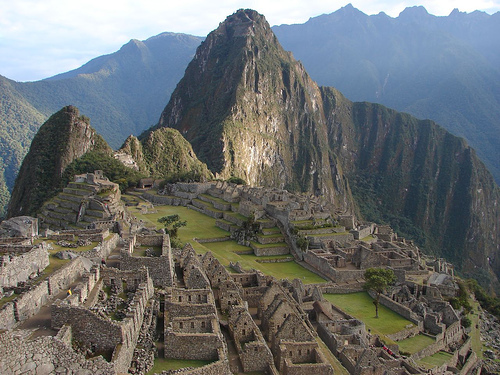
UNESCO World Heritage Sites
Over 1,200 places of outstanding universal value across every inhabited continent.
The UNESCO World Heritage List is the international register of cultural and natural places recognized as possessing outstanding universal value to humanity as a whole. Established under a 1972 international treaty and administered by the United Nations Educational, Scientific and Cultural Organization, the list today includes more than 1,200 inscribed properties in approximately 170 countries, ranging from prehistoric rock art and ancient cities to tropical reefs, boreal forests, and active volcanic landscapes.
Overview
The World Heritage List is the best known instrument of the 1972 Convention Concerning the Protection of the World Cultural and Natural Heritage, an international treaty administered by the UNESCO World Heritage Centre in Paris. As of the most recent sessions of the World Heritage Committee in late 2024, the list contains approximately 1,200 inscribed properties. Because the Committee meets yearly and adds, extends, or in rare cases removes properties at each session, the precise total shifts from year to year; published counts should therefore be read as approximate.
Inscribed properties are divided into three categories. Cultural sites, which include archaeological zones, historic city centers, monumental ensembles, religious complexes, industrial landscapes, and vernacular settlements, account for approximately 950 listings. Natural sites, recognized for geological formations, biodiversity, ecological processes, or exceptional scenic value, number around 230. Mixed sites, which meet both cultural and natural criteria, make up a smaller category of roughly 40 properties. A further classification, transboundary and serial properties, groups component parts across one or more States Parties under a single inscription.
The properties on the list are distributed across approximately 170 countries, although the geographic distribution is uneven. Italy, China, Germany, France, and Spain have historically held the largest national totals, while many small island developing states, nations in sub-Saharan Africa, and Pacific territories are represented by few or no inscribed sites. Addressing this imbalance is a long-standing policy priority of the World Heritage Centre and its advisory bodies.
The World Heritage system is governed by the World Heritage Committee, an intergovernmental body of 21 States Parties elected on a rotating basis from among the 194 nations that have ratified the 1972 Convention. The Committee meets in ordinary session each year to review new nominations, monitor the state of conservation of inscribed sites, and allocate resources from the World Heritage Fund. Technical evaluation is provided by three advisory bodies: the International Council on Monuments and Sites, the International Union for Conservation of Nature, and the International Centre for the Study of the Preservation and Restoration of Cultural Property.
The 1972 Convention
The Convention Concerning the Protection of the World Cultural and Natural Heritage was adopted by the General Conference of UNESCO on November 16, 1972, and entered into force in December 1975. Its drafting was shaped in part by the international campaign to safeguard the Abu Simbel temples and other Nubian monuments in Egypt and Sudan, which would otherwise have been submerged by the rising waters of Lake Nasser following construction of the Aswan High Dam in the 1960s. That rescue operation, coordinated by UNESCO and involving more than fifty nations, demonstrated that the preservation of heritage of exceptional significance could be treated as a shared international responsibility rather than a purely national concern.
The Convention is one of the most widely ratified international agreements in the world, with 194 States Parties as of 2024. It obliges signatory states to identify, protect, conserve, present, and transmit to future generations the cultural and natural heritage located within their borders. It also creates a mechanism for international assistance, establishing the World Heritage Fund, which pools mandatory and voluntary contributions from States Parties and issues grants for emergency conservation, preparatory assistance to nominating states, training, and technical cooperation. The Fund is modest in scale, typically operating with an annual envelope measured in single-digit millions of United States dollars, and is therefore used strategically to leverage larger national and philanthropic commitments.
The Operational Guidelines for the Implementation of the World Heritage Convention, revised periodically by the Committee, set out in detail the procedures for inscription, boundary modifications, reactive monitoring, periodic reporting, and the granting of international assistance. These Guidelines are the principal working document of the World Heritage system and are regularly updated to reflect emerging concerns such as climate change, sustainable tourism, the role of Indigenous peoples, and the integration of intangible heritage perspectives.
Selection Criteria
At the heart of the World Heritage system is the concept of outstanding universal value, which the Operational Guidelines define as cultural or natural significance so exceptional as to transcend national boundaries and to be of common importance for present and future generations of humanity. To be inscribed on the list, a property must meet at least one of ten criteria, must satisfy the conditions of authenticity or integrity, and must have an adequate legal protection and management system in place.
Criteria one through six address cultural heritage. They include representing a masterpiece of human creative genius, exhibiting an important interchange of human values over time, bearing unique testimony to a cultural tradition or civilization, illustrating a significant stage in human history, being an outstanding example of traditional human settlement or land use, and being directly associated with events, living traditions, ideas, beliefs, or artistic and literary works of outstanding universal significance. Criteria seven through ten address natural heritage. They cover superlative natural phenomena or exceptional beauty, outstanding examples of the major stages of Earth's history, significant ongoing ecological and biological processes, and the most important natural habitats for in situ conservation of biological diversity. A site that meets both cultural and natural criteria is inscribed as mixed.
The nomination process is lengthy and structured. A State Party first places a property on its Tentative List, which functions as an inventory of sites it intends to consider for nomination in the coming years. A full nomination dossier is then prepared, documenting boundaries, buffer zones, comparative analysis, protection and management arrangements, and proposed justification for outstanding universal value. The dossier is evaluated by the International Council on Monuments and Sites for cultural and mixed properties, and by the International Union for Conservation of Nature for natural and mixed properties, each of which conducts a desk review and site mission and produces a recommendation. The World Heritage Committee then decides at its annual session whether to inscribe the property, to defer or refer the nomination back to the State Party for additional information, or to decline inscription altogether.
Cultural Sites
Cultural sites form by far the largest category on the World Heritage List, accounting for roughly three quarters of all inscriptions. The category is deliberately broad. It includes monumental architecture such as the Pyramids of Giza in Egypt, classical monuments such as the Acropolis of Athens in Greece, and engineering works of unprecedented scale such as the Great Wall of China. It also covers archaeological complexes such as Angkor in Cambodia and Machu Picchu in Peru, both of which weave human design into mountainous or forested settings of great environmental complexity.
Beyond the most famous monuments, cultural heritage encompasses historic city centers such as those of Rome, Prague, and Kyoto; sacred ensembles such as the Vatican, the monasteries of Mount Athos, and the temples of Kyoto; industrial heritage such as the Derwent Valley Mills in England and the Rideau Canal in Canada; and modernist architecture such as the works of Le Corbusier inscribed as a transnational serial property in 2016. A distinctive subcategory, the cultural landscape, was introduced by the World Heritage Committee in 1992 to recognize places where human activity and natural setting have produced combined works of outstanding significance, such as the rice terraces of the Philippine Cordilleras and the wine-producing region of the Alto Douro in Portugal. Together these listings reflect a steadily broadening understanding of what cultural heritage means in international law and practice.
Natural Sites
Natural World Heritage sites are evaluated by the International Union for Conservation of Nature against the four natural criteria, which address superlative natural phenomena and beauty, major stages of Earth's geological history, significant ongoing ecological and biological processes, and habitats of importance for biodiversity conservation. The category is compact relative to the cultural list but includes many of the most recognizable protected areas in the world. Examples include the Galápagos Islands of Ecuador, inscribed in 1978 among the earliest wave of natural sites; the Great Barrier Reef of Australia, the largest coral reef system on Earth; the Serengeti National Park of Tanzania, renowned for its annual ungulate migration; and Yellowstone National Park and Grand Canyon National Park in the United States, both inscribed in the late 1970s.
Natural properties also include smaller and more specialized sites recognized for particular geological or ecological features. The Plitvice Lakes National Park of Croatia, inscribed in 1979, is a stepped karst system of travertine dams that continues to form actively through biochemical processes. The Waddensee, a transboundary site shared by Germany, the Netherlands, and Denmark, protects the largest unbroken system of intertidal flats in the world. Sites such as the Wrangel Island Reserve in Russia, the Air and Ténéré Natural Reserves of Niger, and the Central Amazon Conservation Complex of Brazil illustrate the variety of ecosystems and biogeographic realms represented. Evaluation of natural nominations places particular emphasis on long-term integrity, which requires that a property be of sufficient size and quality of management to sustain the features that justify its inscription over time.
Mixed Sites
Mixed sites are properties inscribed for meeting at least one cultural and at least one natural criterion. The category is comparatively small, comprising approximately forty listings, but it has become increasingly influential in shaping how heritage is understood. Mount Taishan in China, inscribed in 1987, is revered as one of the sacred mountains of Daoism and has been a place of imperial pilgrimage for more than two millennia while also being recognized for its montane ecology and dramatic geology. Tongariro National Park in New Zealand, originally inscribed as a natural site in 1990, was renominated in 1993 to recognize its profound cultural and spiritual importance to the Māori Ngāti Tūwharetoa people, becoming the first property on the list to be recognized as an associative cultural landscape. Papahānaumokuākea, a vast marine national monument in the northwestern Hawaiian archipelago of the United States, was inscribed as a mixed site in 2010 for its extraordinary marine biodiversity and for its cosmological and ancestral significance to Native Hawaiian culture.
Mixed sites tend to occupy an especially complex management position, because they require protection measures that address both ecological integrity and cultural values, sometimes for communities that continue to live and worship within the property. The Ennedi Massif in Chad, inscribed in 2016, combines spectacular Saharan sandstone formations with thousands of rock art panels depicting human and animal figures across roughly seven millennia of occupation. Mixed inscriptions of this kind have helped to reframe the World Heritage system around integrated, place-based stewardship rather than a rigid separation of cultural and natural categories.
Endangered Heritage
The 1972 Convention provides for a parallel register, the List of World Heritage in Danger, onto which the Committee may inscribe properties whose outstanding universal value is assessed to be under serious threat. As of 2024 the Danger List includes approximately 55 properties. Inscription on the Danger List is not intended as a sanction but as a mechanism to focus international attention, trigger emergency assistance from the World Heritage Fund, and oblige the State Party to develop a corrective action plan in coordination with the advisory bodies.
The threats that justify Danger-listing fall into several broad categories. Armed conflict has taken an especially heavy toll: all six Syrian World Heritage properties, including the ancient city of Palmyra, were placed on the Danger List in 2013 following the outbreak of civil war, and Palmyra suffered widely documented destruction during its occupation by the Islamic State in 2015 and 2016. The Old City of Sana'a in Yemen, inscribed in 1986 for its exceptional concentration of earthen tower houses, was added to the Danger List in 2015 after sustained aerial bombardment. The Timbuktu manuscripts and mausoleums of Mali were attacked by militant groups in 2012 and have since required extensive restoration overseen by UNESCO.
Other threats include uncontrolled urban development, extractive industries such as mining and oil drilling, pollution, invasive species, poaching and wildlife trafficking, and the accumulating effects of climate change. Melting glaciers, coral bleaching, rising sea levels, and increasingly severe wildfires are now routinely cited in state-of-conservation reports. The World Heritage Centre coordinates reactive monitoring missions, emergency grants, and public awareness campaigns to mobilize resources for properties at acute risk.
Preservation Challenges
Inscription on the World Heritage List is often associated with a sharp rise in visitor numbers, which can both support local economies and generate pressures that threaten the values for which a property was recognized. The historic city of Venice in Italy has been the subject of repeated debate at the Committee over the cumulative impact of cruise ship traffic, mass day tourism, depopulation of the historic fabric, and lagoon-scale ecological change. Machu Picchu in Peru, inscribed as a mixed site in 1983, has introduced staged entry, timed tickets, and visitor caps to mitigate erosion of trails and stone structures. Similar visitor-management tools, including zonation, quotas, and booking platforms, are now routinely recommended by the advisory bodies as part of nomination dossiers and state-of-conservation responses.
Climate change is increasingly recognized as a systemic threat. In 2023 the World Heritage Committee adopted an updated Climate Action for World Heritage Policy Document, which integrates climate risk assessment into Operational Guidelines and encourages State Party reporting on adaptation and mitigation. Natural sites face coral bleaching, glacier retreat, permafrost loss, and altered fire regimes; cultural sites face storm surges, flooding, heat-driven material decay, and shifts in the hydrology that sustains earthen architecture. A growing body of site-level climate vulnerability assessments is being produced by the International Union for Conservation of Nature and by partner research institutions, including the University College London Institute of Archaeology and the Harvard University Graduate School of Design.
Alongside technical conservation, community and Indigenous stewardship has gained prominence as a preservation strategy. Co-management arrangements at sites such as Uluru-Kata Tjuta National Park in Australia, Head-Smashed-In Buffalo Jump in Canada, and Papahānaumokuākea in the United States illustrate how traditional knowledge systems and customary law can be integrated with formal protected-area governance. The Getty Conservation Institute, ICCROM, and Parks Canada have developed practitioner training and toolkits that support this approach across cultural and natural properties.
Controversies and Delisting
Delisting is rare and is reserved for cases where the outstanding universal value of a property has been irretrievably lost. The first delisting in the history of the Convention occurred in 2007, when the Committee removed the Arabian Oryx Sanctuary in Oman, originally inscribed in 1994, after Oman unilaterally reduced the size of the protected area by roughly ninety percent, a change that rendered the reserve incapable of sustaining the wild oryx population for which it had been recognized. The second delisting occurred in 2009, when the Dresden Elbe Valley in Germany was removed after construction of the four-lane Waldschlösschen Bridge across the river valley, which the Committee judged to have damaged the integrity of the cultural landscape. The third came in 2021 with the removal of Liverpool Maritime Mercantile City in the United Kingdom, following sustained concern about the scale and character of development in the historic docklands.
Beyond delisting, the World Heritage system has been the subject of recurring political controversy. Nominations of contested sites, including properties in disputed territories or those with conflicting national narratives, have at times produced sharp debate within the Committee. Critics have argued that inscription can be influenced by diplomatic considerations and by the varying capacity of States Parties to prepare and sustain nominations. The advisory bodies and the World Heritage Centre have responded with reforms to the Operational Guidelines, enhanced transparency of evaluations, a stronger role for comparative analysis, and targeted capacity-building programs to reduce inequity in the preparation of nominations.
Geographic Distribution
The geographic distribution of World Heritage properties has been asymmetric from the first inscriptions in 1978. European states, together with the United States and Canada, have historically accounted for roughly half of all listings, while large parts of sub-Saharan Africa, the Pacific region, and the Caribbean have remained underrepresented. This imbalance reflects disparities in the technical capacity available to prepare nominations, in the availability of comparative and scholarly documentation, and in the historical framing of heritage categories, which initially privileged monumental and built-form expressions familiar to European conservation traditions.
The Global Strategy for a Representative, Balanced, and Credible World Heritage List, adopted by the Committee in 1994, was the first formal attempt to address this imbalance. It encouraged nominations from underrepresented regions, from thematic areas such as industrial heritage and twentieth-century architecture, and from categories such as cultural landscapes and routes that had previously been difficult to accommodate. Associated capacity-building programs, delivered in partnership with ICOMOS, IUCN, ICCROM, and regional centers, have funded training, Tentative List review, and nomination support for dozens of States Parties. The pace of change has been gradual. More recent inscription cycles have increased the share of African, Pacific, and Indigenous-nominated properties, and the Committee has adopted procedural measures, including annual limits on the number of nominations per State Party, intended to encourage broader participation over time.
Serial and transboundary inscriptions have also helped to diversify the list. Properties such as the Qhapaq Ñan Andean Road System, inscribed in 2014 as a single property shared among Argentina, Bolivia, Chile, Colombia, Ecuador, and Peru, combine dozens of component segments under a shared statement of outstanding universal value and a jointly developed management framework. These nomination types, while administratively complex, make it possible to recognize heritage phenomena that cross modern borders or are distributed across multiple sites.
Intangible Cultural Heritage
The 1972 Convention addresses tangible heritage, that is, fixed monuments, groups of buildings, sites, and natural properties. It does not extend to living traditions, practices, and expressions. To address this gap, UNESCO adopted a separate instrument, the Convention for the Safeguarding of the Intangible Cultural Heritage, in 2003. That Convention entered into force in 2006 and has since been ratified by more than 180 States Parties. It establishes its own Representative List, Urgent Safeguarding List, and Register of Good Safeguarding Practices, maintained alongside but distinct from the World Heritage List.
Intangible cultural heritage includes oral traditions and expressions, performing arts, social practices, rituals, festive events, knowledge and practices concerning nature and the universe, and traditional craftsmanship. Elements inscribed under the 2003 Convention range from the yearly olive tree cultivation traditions of the Mediterranean to the sona sand drawings of Angola, from the Chhau dance of India to the Alpine transhumance practiced in several European countries. Although governed by a different legal instrument, the intangible heritage system is closely coordinated with the World Heritage system, and many cultural landscapes and mixed sites on the World Heritage List are also associated with inscribed intangible practices. Together the two Conventions form the principal international framework for the safeguarding of cultural heritage in all its forms.
Notable World Heritage Sites
A curated selection of World Heritage properties spanning every inhabited continent and all three categories of inscription. Each card links to the corresponding country profile on CountryReports, where additional context and related resources are available.
Memphis and its Necropolis – the Pyramid Fields
 Egypt
Egypt
Royal funerary complexes of the Old Kingdom, including the Great Pyramid of Khufu and the Sphinx.
The Great Wall
 China
China
A defensive system of walls, towers, and garrisons stretching thousands of kilometers across northern China.
Taj Mahal
 India
India
A seventeenth-century white marble mausoleum in Agra commissioned by the Mughal emperor Shah Jahan.
Angkor
 Cambodia
The capital of the Khmer Empire from the ninth to the fifteenth centuries, including Angkor Wat and the Bayon.
Historic Sanctuary of Machu Picchu
 Peru
Peru
A fifteenth-century Inca estate on an Andean ridge above the Urubamba river, inscribed for both cultural and natural values.
Galápagos Islands
 Ecuador
A volcanic archipelago in the eastern Pacific known for endemic species and for its role in evolutionary biology.
Serengeti National Park
 Tanzania
A vast East African savanna famed for its annual migration of more than one million wildebeest and associated predators.
Timbuktu
 Mali
Mali
A medieval center of Islamic learning and trade on the southern edge of the Sahara; currently inscribed on the Danger List.
Petra
 Jordan
The rock-cut Nabataean caravan city in southern Jordan, carved into sandstone cliffs and served by an elaborate water system.
Acropolis of Athens
 Greece
A fifth-century BCE sacred citadel with the Parthenon, Erechtheion, Propylaea, and temple of Athena Nike.
Historic Centre of Rome
 Italy
Italy
The ancient and medieval heart of Rome, including the Forum, the Colosseum, and the properties of the Holy See.
Stonehenge, Avebury and Associated Sites
 United Kingdom
A Neolithic and Bronze Age ceremonial landscape on Salisbury Plain, including Europe's most famous stone circle.
Grand Canyon National Park
 United States
A canyon system carved by the Colorado River exposing nearly two billion years of geological history.
Yellowstone National Park
United States
The world's first national park, inscribed with the first group of World Heritage properties, recognized for its geothermal features and wildlife.
Great Barrier Reef
 Australia
The largest coral reef system on Earth, extending some 2,300 kilometers along the Queensland coast.
Pre-Hispanic City of Chichén-Itzá
 Mexico
A major Maya-Toltec capital on the Yucatán Peninsula, including the Temple of Kukulcán and the Great Ball Court.
Robben Island
 South Africa
The island prison off Cape Town where Nelson Mandela and other anti-apartheid leaders were held for many years.
Rapa Nui National Park
 Chile
Chile
The remote Polynesian island of Easter Island, renowned for its monolithic moai statues and ceremonial platforms.
Sources
Detailed citations, data references, and institutional sources for all CountryReports content are listed on the Sources page. The following United Nations agencies, advisory bodies, national parks services, and academic institutions are the primary authorities relied on for World Heritage content on CountryReports. Each link points to the institution's homepage.
United Nations and International Bodies
- UNESCO World Heritage Centre — the secretariat of the 1972 Convention, maintaining the full World Heritage List, Operational Guidelines, state-of-conservation reports, and the Danger List.
- UNESCO Headquarters — programmatic context for cultural and natural heritage within the broader mandate of the United Nations Educational, Scientific and Cultural Organization.
- UN World Tourism Organization — research and policy on sustainable tourism at heritage sites.
Advisory Bodies and Conservation Institutes
- ICOMOS — International Council on Monuments and Sites — advisory body to the World Heritage Committee for cultural and mixed properties.
- IUCN — International Union for Conservation of Nature — advisory body for natural and mixed properties, including evaluations and state-of-conservation monitoring.
- ICCROM — International Centre for the Study of the Preservation and Restoration of Cultural Property — third advisory body, specializing in training, research, and capacity building.
- Getty Conservation Institute — research, field projects, and practitioner training in the conservation of cultural heritage.
National Museums and Heritage Agencies
- Smithsonian Institution — collections, research, and public scholarship on world cultures and natural history.
- The British Museum — global collections of artifacts and associated scholarship on ancient and historic cultures.
- Musée du Louvre — collections and scholarship covering antiquity through the nineteenth century.
- The Metropolitan Museum of Art — encyclopedic collection and the Heilbrunn Timeline of Art History.
- National Park Service (United States) — management agency for United States World Heritage properties including Yellowstone, Grand Canyon, and Papahānaumokuākea.
- Parks Canada — stewardship of Canadian World Heritage properties and bilateral conservation research.
Academic Research Centers
- University College London — Institute of Archaeology — heritage policy, site management, and archaeological research.
- Harvard University Graduate School of Design — research on historic preservation, urban conservation, and cultural landscapes.
If you notice an error or would like to suggest a correction, please use our contact page to get in touch.