
 English
 Español
 中文
中文 हिन्दी
 Français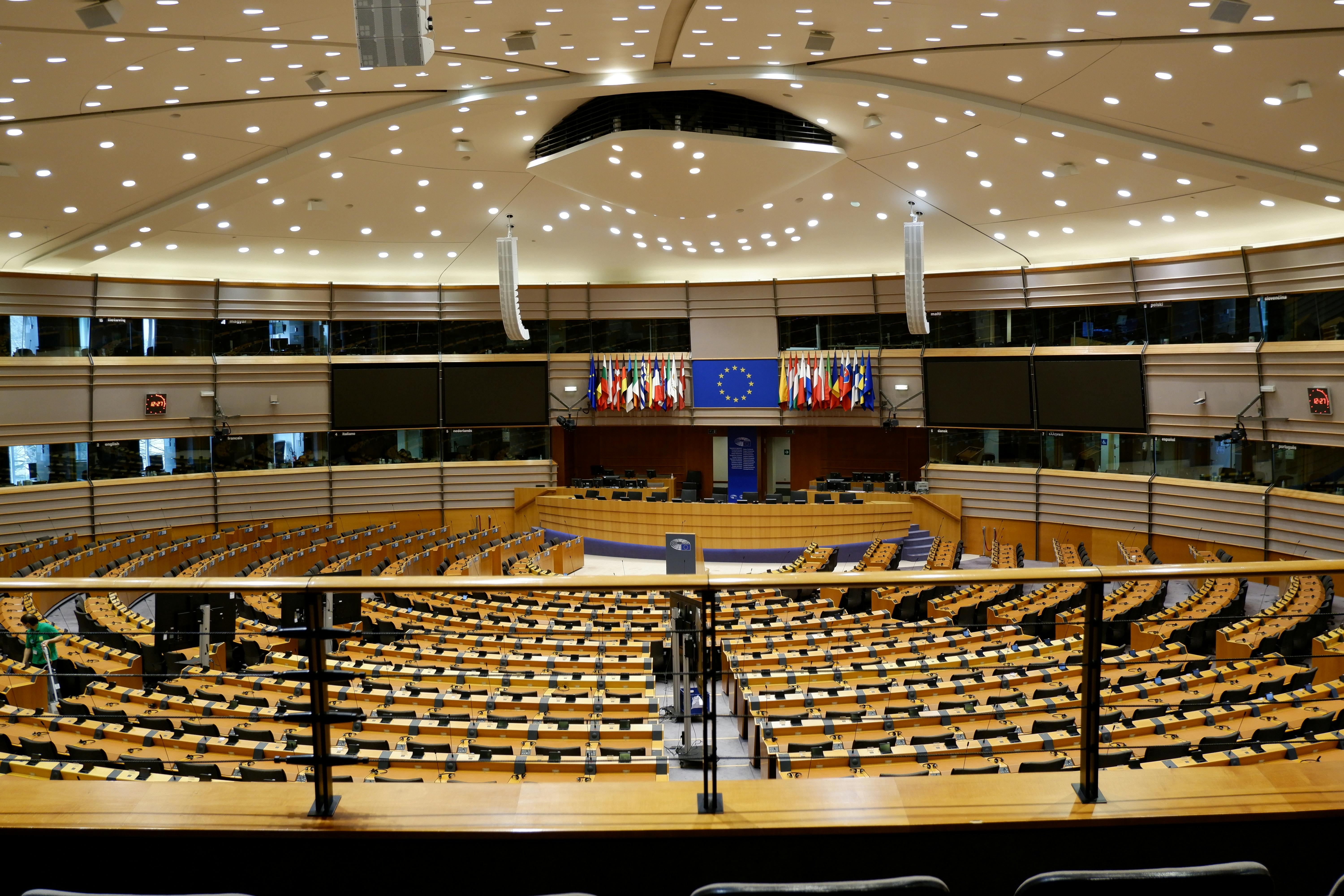
The European Union
1951–present — a political and economic union of 27 European member states built on six founding treaties.
The European Union is a political and economic union of twenty-seven European member states that together form one of the world's largest single markets and most deeply integrated blocs of sovereign states. Founded in its modern form by the Maastricht Treaty of 1992 and built on a sequence of earlier communities that date back to 1951, the Union combines supranational institutions with intergovernmental coordination across economic policy, trade, justice, foreign affairs, the environment, and the regulation of digital and agricultural markets.
Overview
The European Union is a unique international organization that combines features of a federal state, a confederal alliance, and a classical intergovernmental body. Its twenty-seven member states have delegated substantial legal and policy authority to Union institutions in areas such as trade, competition, agriculture, customs, and monetary policy for countries that use the euro. In other areas, including taxation, social policy, defense, and foreign affairs, cooperation remains closer to traditional intergovernmental diplomacy and typically requires unanimity among member governments.
The Union traces its institutional lineage to the European Coal and Steel Community of 1951, the European Economic Community and Euratom established by the Treaty of Rome in 1957, and the full European Union created by the Maastricht Treaty that entered into force on November 1, 1993. Successive treaties, most recently the Treaty of Lisbon in 2009, have refined the balance of competences between the Union and its member states, expanded the powers of the directly elected European Parliament, and introduced a permanent President of the European Council and a High Representative for foreign affairs.
The Union today has a combined population of roughly 449 million people and a combined gross domestic product that places it among the three largest economic blocs in the world alongside the United States and the People's Republic of China. Twenty member states have adopted the euro as their common currency, twenty-nine European states participate in the Schengen border-free travel area, and the single market guarantees the free movement of goods, services, capital, and persons across internal borders. The Union is governed through seven principal institutions and a dense network of agencies, advisory bodies, and codecision procedures.
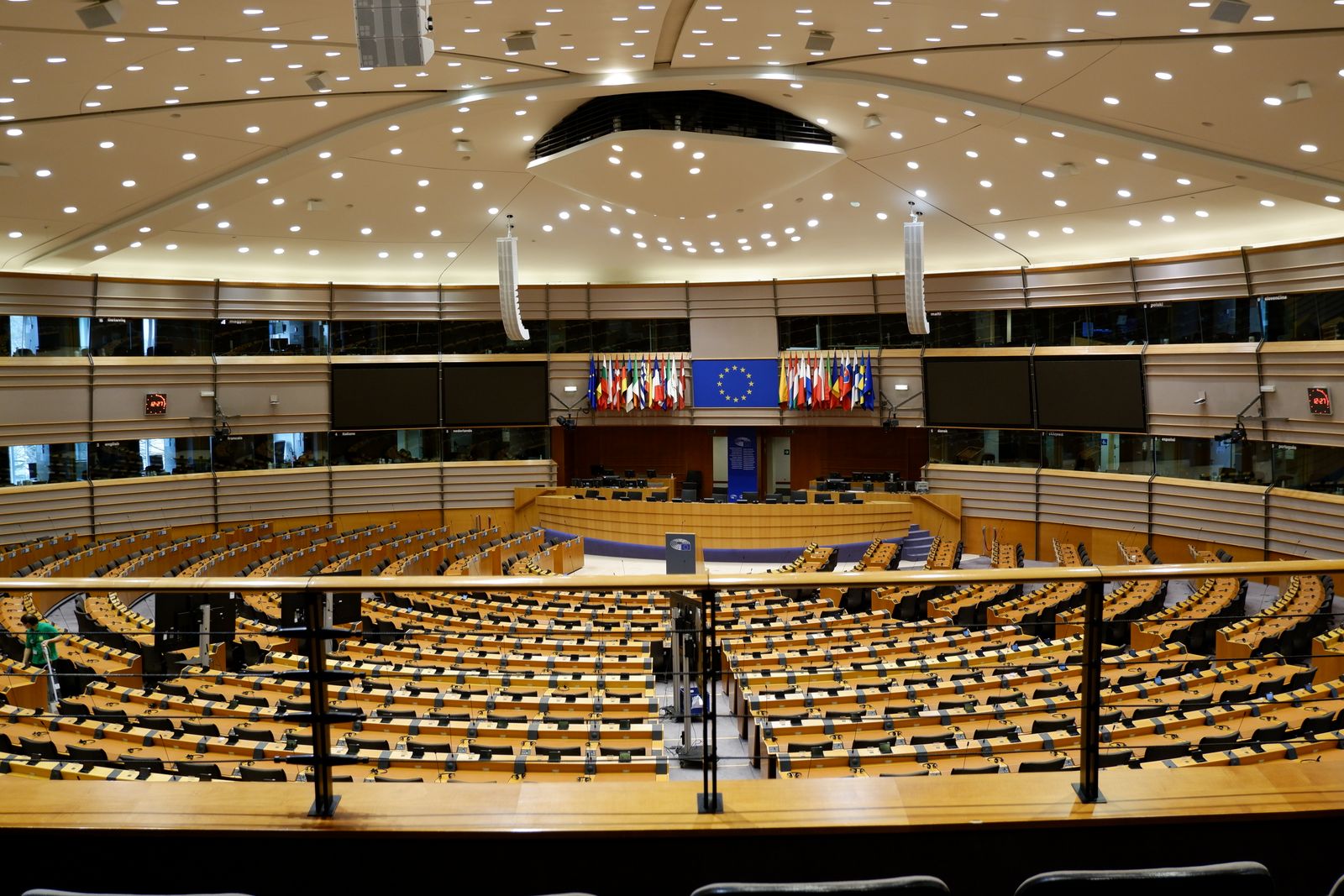
The European Union is based in Brussels, with additional seats in Strasbourg, Luxembourg, and Frankfurt. It has observer status at the United Nations, is a full member of the World Trade Organization, and participates in the Group of Seven and the Group of Twenty through its own representation alongside member states. Its combined economic weight, single regulatory market, and unique blend of supranational and intergovernmental governance make the Union one of the most distinctive and influential political entities in contemporary international affairs.
Key Facts
- Formal founding
- Maastricht Treaty entered into force November 1, 1993
- Institutional origin
- European Coal and Steel Community, Treaty of Paris, signed April 18, 1951
- Member states
- 27 (since the United Kingdom withdrawal on January 31, 2020)
- Euro area members
- 20 member states (Croatia most recently, January 1, 2023)
- Schengen area
- 29 European states participate in the border-free travel zone
- Population
- Approximately 449 million residents
- Combined GDP
- Approximately 17 trillion euros (nominal, among the top three world economies)
- Current Commission President
- Ursula von der Leyen (second term began December 2024)
- European Council President
- António Costa (since December 1, 2024, succeeding Charles Michel)
- Multiannual budget
- Multiannual Financial Framework 2021–2027: approximately 1.2 trillion euros plus NextGenerationEU recovery instrument
- Official languages
- 24 official languages with equal legal standing
- Headquarters
- Brussels (main), with parliamentary seat in Strasbourg, courts in Luxembourg, central bank in Frankfurt
Origins
The origins of European integration lie in the devastation of World War II and the search for political and economic arrangements that could make another continental war in Europe impossible. On May 9, 1950, French Foreign Minister Robert Schuman presented a proposal, drafted largely by Jean Monnet, to place French and German production of coal and steel under a single supranational authority open to other European countries. The Schuman Declaration argued that by pooling the raw materials of war under common management, the historic hostility between France and Germany could be replaced by shared economic interests and lasting peace. May 9 is now observed annually as Europe Day.
The Treaty of Paris, signed on April 18, 1951, by France, West Germany, Italy, Belgium, the Netherlands, and Luxembourg, established the European Coal and Steel Community and brought the Schuman plan to life. The ECSC created a supranational High Authority, a Common Assembly, a Council of Ministers, and a Court of Justice, together forming the institutional template that would guide later European integration. Although its scope was narrow, the ECSC represented the first time in modern history that sovereign European states had voluntarily transferred significant regulatory authority to a joint body.
The Treaties of Rome, signed on March 25, 1957, by the same six founding states, extended integration dramatically. They established the European Economic Community, which set out to create a customs union and a common market among the six, and the European Atomic Energy Community (Euratom), which coordinated the peaceful development of nuclear power. The EEC put in place the Common Agricultural Policy, introduced a common external tariff, and committed members to the free movement of goods, services, capital, and persons, foreshadowing the single market that would be completed decades later. Throughout the Cold War the Communities offered a framework of peaceful integration that stood in parallel with the broader security architecture of NATO.
The Merger Treaty of 1965, which entered into force in 1967, combined the executive institutions of the three Communities into a single Commission and Council. The Single European Act, signed in February 1986 and in force July 1987, launched the program to complete the single market by the end of 1992 and introduced qualified majority voting for many internal-market measures, reducing the scope of national vetoes. The single market was formally completed on January 1, 1993. Ten months earlier, on February 7, 1992, foreign ministers had signed the Treaty on European Union in the Dutch city of Maastricht; on November 1, 1993, that treaty entered into force and the European Union as a legal entity was born.
Major Treaties
The European Union and its predecessor Communities have been reshaped by seven principal treaty revisions. Each reform has redefined the balance of authority among the institutions, expanded the areas of cooperation, or accommodated new member states.
-
Apr 18, 1951
Treaty of Paris — European Coal and Steel Community
Six founding states place coal and steel production under a supranational High Authority. Entered into force July 23, 1952; expired on its fiftieth anniversary in 2002.
-
Mar 25, 1957
Treaties of Rome — EEC and Euratom
Establish the European Economic Community and Euratom, launching the customs union and committing members to the four freedoms and a Common Agricultural Policy.
-
Feb 17 & 28, 1986
Single European Act
Sets the target of completing the internal market by the end of 1992, expands qualified majority voting, and adds legal bases for environmental and research policy.
-
Feb 7, 1992
Maastricht Treaty — Treaty on European Union
Formally creates the European Union, introduces European citizenship, sets out the plan for Economic and Monetary Union, and adds pillars for foreign policy and justice cooperation. Entered into force November 1, 1993.
-
Oct 2, 1997
Treaty of Amsterdam
Strengthens the European Parliament's codecision powers, incorporates the Schengen acquis into the EU legal framework, and expands employment and social policy competences.
-
Feb 26, 2001
Treaty of Nice
Reweights Council votes and adapts institutional rules to prepare the Union for the large enlargement of 2004. Entered into force February 1, 2003.
-
Dec 13, 2007
Treaty of Lisbon
Replaces the rejected Constitutional Treaty, creates the permanent President of the European Council, introduces the High Representative for Foreign Affairs and Security Policy, gives the Charter of Fundamental Rights legal force, and sets out the withdrawal procedure of Article 50. Entered into force December 1, 2009.
Institutions
The Treaty on European Union lists seven principal institutions, each with a distinct role in the legislative, executive, judicial, or financial governance of the Union. Together they form a balance between supranational bodies and representation of the member states.
European Commission
The Commission is the Union's executive body and the guardian of the treaties. It alone has the right of legislative initiative for most EU law, proposes the annual budget, negotiates trade and international agreements, and enforces competition and state-aid rules. It is composed of twenty-seven Commissioners, one per member state, and is headed by a President confirmed by the European Parliament.
- • Seat: Brussels
- • President: Ursula von der Leyen (2024–)
- • Term: Five years
European Parliament
The Parliament is the only directly elected EU institution. Its 705 members represent European citizens in proportion to national populations and are elected every five years. The Parliament shares legislative and budgetary authority with the Council of the EU under the ordinary legislative procedure and holds the Commission politically accountable.
- • Seats: Strasbourg (plenary), Brussels, Luxembourg
- • Members: 705 MEPs
- • Most recent election: June 2024
Council of the European Union
Often called the Council of Ministers, this institution brings together national ministers from each member state according to the subject matter under discussion. The Council negotiates and adopts EU laws jointly with the Parliament, coordinates economic policies, and concludes international agreements. Its rotating presidency changes every six months.
- • Seat: Brussels
- • Ten sectoral configurations
- • Voting: qualified majority in most areas
European Council
Distinct from the Council of the EU, the European Council brings together the heads of state or government of the member states, the President of the European Council, and the President of the Commission. It provides the Union with overall political direction and priorities but does not exercise legislative functions.
- • Seat: Brussels
- • President: António Costa (2024–)
- • Meets at least four times a year
Court of Justice of the European Union
The CJEU interprets EU law and ensures that it is applied uniformly in all member states. It comprises the Court of Justice proper and the General Court. Landmark rulings on direct effect and supremacy, beginning with Van Gend en Loos (1963) and Costa v. ENEL (1964), established EU law as a distinct legal order binding on national courts.
- • Seat: Luxembourg
- • Judges: one per member state (Court of Justice)
- • Established: 1952
European Central Bank
The ECB is responsible for monetary policy in the euro area, with a primary objective of price stability. Together with the national central banks of the euro-area member states, it forms the Eurosystem. Since the banking crisis of 2012, the ECB has also supervised the largest credit institutions in the euro area through the Single Supervisory Mechanism.
- • Seat: Frankfurt am Main
- • Established: June 1, 1998
- • Currency: euro (EUR)
European Court of Auditors
The Court of Auditors is the Union's independent external auditor. It examines the legality, regularity, and sound financial management of EU revenue and expenditure and publishes an annual report on the implementation of the EU budget, an essential input to the Parliament's discharge decision.
- • Seat: Luxembourg
- • Members: one per member state
- • Established: 1977
Other Bodies and Agencies
Alongside the seven principal institutions, the Union operates the European External Action Service led by the High Representative, more than forty decentralized agencies including the European Medicines Agency and Frontex, and consultative bodies such as the European Economic and Social Committee and the Committee of the Regions.
- • EEAS: diplomatic service
- • Frontex: external border agency
- • European Investment Bank: EU lending arm
Enlargement
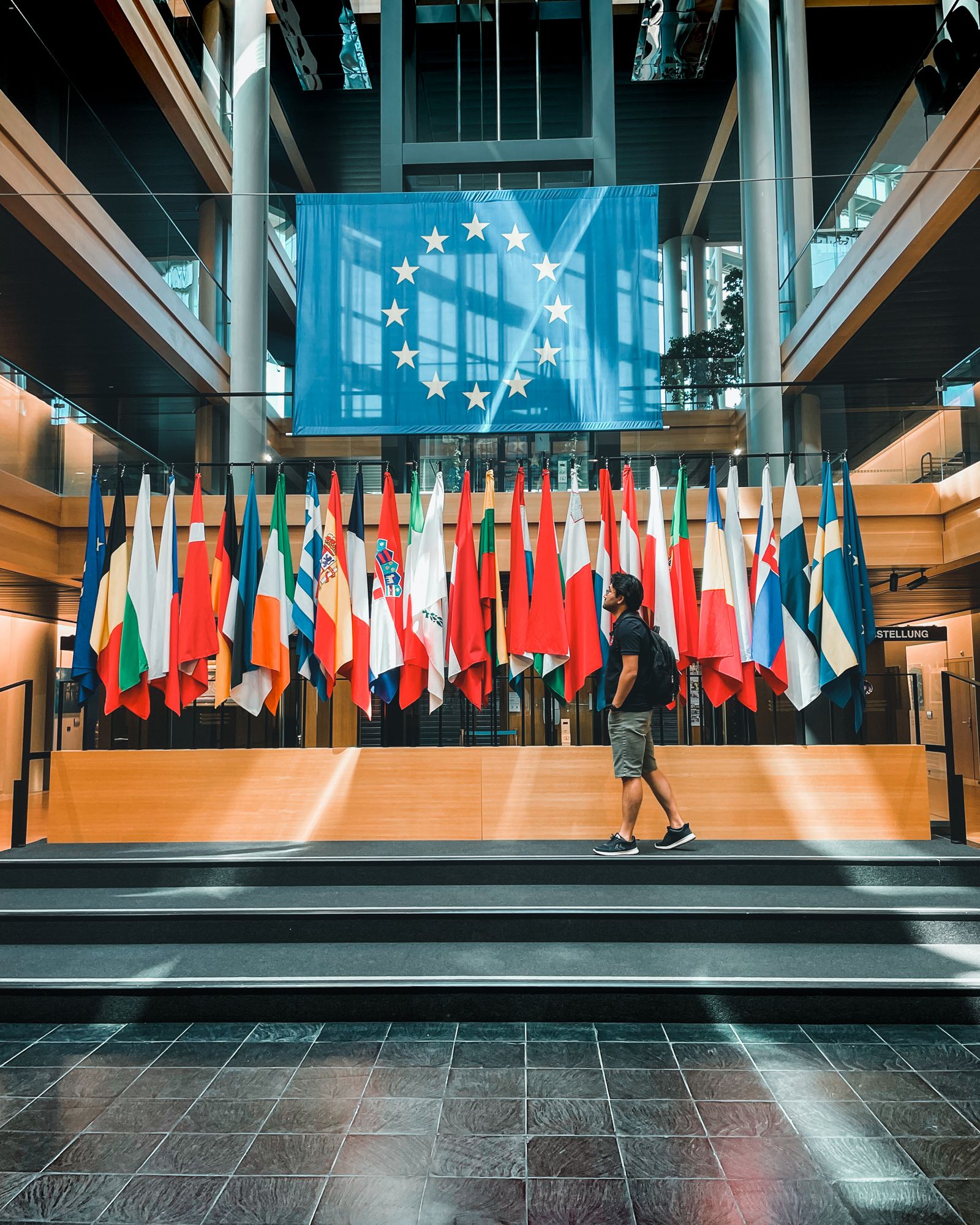
Enlargement has been one of the most transformative processes in the history of European integration. Beginning with the six founding states, the European Communities and then the European Union have grown in eight successive waves to the present membership of twenty-seven countries. Each wave has required long negotiations, the adoption of the entire body of EU law known as the acquis communautaire, and political and economic reforms in the acceding states.
The first enlargement took place in 1973 with the accession of the United Kingdom, Ireland, and Denmark, each of which had initially declined to join. Greece followed in 1981 after its return to democracy, and Portugal and Spain joined in 1986 after similar democratic transitions. These southern enlargements consolidated the European project as a community of democracies after the end of dictatorship in Iberia and in Greece.
In 1995 Austria, Finland, and Sweden acceded following the end of the Cold War, bringing the previously neutral states of central and northern Europe into the Union. Norway negotiated membership but rejected it in a 1994 referendum. The single largest enlargement, often called the Big Bang, took place on May 1, 2004, when ten countries acceded simultaneously: the Czech Republic, Cyprus, Estonia, Hungary, Latvia, Lithuania, Malta, Poland, Slovakia, and Slovenia. Bulgaria and Romania joined on January 1, 2007, and Croatia became the twenty-eighth member state on July 1, 2013.
Accession negotiations are ongoing with several candidate states. Turkey has held candidate status since 1999, but negotiations have been effectively frozen since 2018. Candidate status is also held by North Macedonia, Montenegro, Serbia, Albania, and, following Russia's full-scale invasion of Ukraine in February 2022, by Ukraine and Moldova from June 2022, Bosnia and Herzegovina from December 2022, and Georgia from December 2023. Kosovo holds the status of potential candidate. Enlargement remains one of the Union's most powerful foreign policy instruments, offering a long-term prospect of membership in exchange for substantial domestic reform.
Single Market and Four Freedoms
The single market, formally completed on January 1, 1993, is the economic heart of the European Union. It brings together the national markets of the member states into one large space of more than four hundred million consumers, governed by common rules and freed from most internal barriers. Its operation rests on four fundamental freedoms: the free movement of goods, services, capital, and persons. Each of these freedoms is rooted in the founding Treaties of Rome and has been elaborated through more than six decades of legislation and case law of the Court of Justice.
Alongside the internal market, the Union maintains a customs union. All member states apply a common external tariff to goods imported from non-member countries and do not charge customs duties on goods moving across internal borders. The European Commission negotiates tariff schedules and commercial agreements on behalf of the entire Union at the World Trade Organization, giving the bloc a single voice in global trade. A network of bilateral free-trade agreements covers major partners such as Japan, Canada, Mercosur, South Korea, and the United Kingdom.
Free Movement of Goods
Member states may not impose customs duties or quantitative restrictions on goods originating in the Union. The principle of mutual recognition means that products lawfully sold in one member state may generally be sold throughout the Union.
Free Movement of Services
Service providers established in one member state have the right to offer services across borders on a non-discriminatory basis. The 2006 Services Directive codified much of this regime across regulated professions and cross-border commerce.
Free Movement of Capital
Restrictions on movements of capital and payments between member states, and between member states and third countries, are generally prohibited. This freedom underpins the integration of European financial markets and cross-border investment.
Free Movement of Persons
EU citizens have the right to live and work in any member state. They enjoy access to the labor market, recognition of professional qualifications, equal social benefits, and a derived right of family reunification.
Schengen Area
The Schengen Agreement of 1985 and Convention of 1990 eliminated systematic internal border controls among signatories. Twenty-nine European states now participate, though some controls may be reintroduced temporarily in response to serious threats.
Customs Union
The customs union predates the single market and extends beyond EU membership through agreements with Turkey, Andorra, and San Marino. Goods cleared for free circulation at any EU border can then move freely throughout the Union.
The Euro Area
Economic and Monetary Union is one of the most ambitious policies of the European Union. The Maastricht Treaty laid out a three-stage plan for the introduction of a single currency, with convergence criteria covering inflation, public deficits, debt levels, exchange-rate stability, and long-term interest rates. Stage Three of EMU began on January 1, 1999, when the euro was introduced as a book currency and the exchange rates of eleven founding member states were irrevocably fixed against the new unit. Euro banknotes and coins entered circulation on January 1, 2002, replacing the national currencies of the participating member states.
Membership of the euro area has grown steadily. From the original eleven members of 1999, the group has expanded to twenty member states, with Croatia the most recent to adopt the currency on January 1, 2023. Denmark has a permanent opt-out from the euro, while other non-members are in principle required to join once they meet the convergence criteria. Monetary policy is set by the Governing Council of the European Central Bank, whose primary mandate is to maintain price stability, defined as inflation of close to but below two percent over the medium term.
Between 2010 and 2015 the euro area faced its most severe test in the sovereign debt crisis that began with the revelation of the true scale of the Greek deficit. Greece, Ireland, Portugal, Spain, and Cyprus each required emergency financing, provided first through the European Financial Stability Facility and then through the permanent European Stability Mechanism. At the same time the European Central Bank launched unconventional monetary measures, including long-term refinancing operations and, from 2015, large-scale asset purchases, which together calmed bond-market pressures after the 2012 pledge by ECB President Mario Draghi to do whatever it takes to preserve the euro.
In response to the crisis, the euro area moved toward a Banking Union that centralizes the supervision of the largest credit institutions at the ECB through the Single Supervisory Mechanism and provides a common framework for bank resolution through the Single Resolution Mechanism. A European deposit insurance scheme remains under negotiation. The euro is today the second most widely held reserve currency in the world, used by more than 340 million residents of the euro area and serving as a legal or de facto currency in a number of non-EU territories.
Major Policy Areas
The Union acts across a wide range of policy areas defined by the Treaties. In some fields, such as competition, customs, monetary policy for the euro area, and trade, the Union has exclusive competence. In others, including agriculture, environment, consumer protection, and energy, the Union shares competence with the member states.
Common Agricultural Policy
Established by the Treaty of Rome in 1957, the CAP supports farmers through direct income payments and rural-development funding. It remains among the largest budget items and has been reformed repeatedly to reduce market-distorting subsidies and promote environmental standards.
Cohesion Policy
Cohesion and structural funds channel resources to poorer regions to reduce disparities in development. The European Regional Development Fund, the European Social Fund Plus, and the Cohesion Fund are the main instruments and account for about a third of the EU budget.
Competition and State Aid
The Commission enforces rules against anti-competitive agreements, abuse of dominant market position, and distortive state aid. Merger control requires notification of large transactions, and landmark cases have imposed multi-billion-euro fines on global technology and industrial firms.
European Green Deal
Launched in December 2019, the Green Deal sets a legally binding target of climate neutrality by 2050 and an interim reduction of net greenhouse-gas emissions by at least fifty-five percent from 1990 levels by 2030. Its Fit for 55 package overhauls emissions trading, energy, buildings, and transport rules.
General Data Protection Regulation
Effective May 25, 2018, the GDPR harmonizes data protection law across the Union and applies extraterritorially to firms that process the personal data of EU residents. National data-protection authorities and the European Data Protection Board cooperate on enforcement.
Digital Markets and Services Acts
Adopted in 2022 and applicable from 2023 and 2024, the DMA targets large online gatekeepers with ex ante obligations on interoperability, self-preferencing, and access to data, while the DSA sets out responsibilities for online intermediaries regarding illegal content, transparency, and systemic risks.
Artificial Intelligence Act
Adopted in 2024, the AI Act is the world's first comprehensive legal framework for artificial intelligence. It uses a risk-based approach, prohibiting a narrow set of applications, imposing strict requirements on high-risk systems, and setting transparency and governance obligations for general-purpose models.
Common Foreign and Security Policy
The CFSP, coordinated by the High Representative and the European External Action Service, allows member states to pursue common positions and joint actions in world affairs. Decisions are generally taken by unanimity. Permanent Structured Cooperation (PESCO) and the European Defence Fund support closer defense integration.
Brexit — The United Kingdom Withdrawal
The withdrawal of the United Kingdom from the European Union, commonly known as Brexit, is the only instance to date in which a member state has invoked the exit procedure of Article 50 of the Treaty on European Union. On June 23, 2016, voters in the United Kingdom approved a referendum proposition to leave the Union by a margin of 51.9 percent to 48.1 percent on a turnout of 72.2 percent. The outcome set in motion a complex legal and political process that reshaped relations between the United Kingdom and the Union for years to come.
On March 29, 2017, Prime Minister Theresa May formally notified the European Council of the United Kingdom's intention to withdraw, triggering a two-year negotiating period under Article 50. After several extensions and the replacement of Prime Minister May by Boris Johnson, the parties concluded the Withdrawal Agreement, which was signed in January 2020 and entered into force on January 31, 2020. On that date the United Kingdom formally ceased to be a member of the European Union after forty-seven years of membership, and the total number of member states fell from twenty-eight to twenty-seven.
A transition period ran from February 1, 2020, to December 31, 2020, during which the United Kingdom remained within the single market and customs union while negotiations continued on the future relationship. The EU–UK Trade and Cooperation Agreement was signed on December 30, 2020, and applied from January 1, 2021. It provides for zero tariffs and zero quotas on goods that meet rules-of-origin requirements, but it introduced new customs formalities, sanitary and phytosanitary checks, and restrictions on cross-border services and the free movement of persons.
Special arrangements apply to Northern Ireland under the Protocol on Ireland/Northern Ireland, reformed by the 2023 Windsor Framework, which keeps Northern Ireland aligned with certain single-market rules to avoid a hard border with the Republic of Ireland while introducing differentiated checks at ports on the island of Great Britain. Brexit has transformed EU–UK relations from full membership to a distinctive external partnership and remains a reference point in debates on the costs and benefits of the single market.
Challenges and Debates
The European Union faces a number of persistent political and institutional debates. One of the oldest is the so-called democratic deficit, a concern that decisions taken at the European level lack sufficient direct democratic legitimacy compared with national parliaments. Successive treaty reforms have expanded the powers of the directly elected European Parliament and introduced instruments such as the European Citizens' Initiative, though scholars continue to argue about whether these changes have fully addressed the question.
The migration crisis of 2015 and 2016, during which more than a million people arrived in the Union by sea from Syria, Iraq, Afghanistan, and sub-Saharan Africa, placed acute strain on the Schengen area and on the Dublin system of asylum. The Pact on Migration and Asylum, adopted in 2024, sets out a revised framework for border procedures, responsibility for applicants, and a mandatory solidarity mechanism among member states. Migration and asylum remain among the most politically divisive files within the Union.
Disputes over the rule of law have sharpened since the mid-2010s, particularly involving Hungary and Poland. The European Commission has launched infringement proceedings over judicial independence, media freedom, and academic freedom, and the Council has activated the procedure of Article 7 of the Treaty on European Union. The 2020 Rule of Law Conditionality Regulation links the disbursement of EU funds to respect for rule-of-law principles and has since been applied in several cases.
Debates on strategic autonomy and defense cooperation have intensified in the years since Russia's full-scale invasion of Ukraine in February 2022. The Union has provided large-scale financial, humanitarian, and military assistance to Ukraine through the European Peace Facility and has imposed successive packages of economic sanctions on Russia. Permanent Structured Cooperation (PESCO), launched in 2017, and the European Defence Fund, operational from 2021, channel cooperation among member states on military capability projects and defense-industrial research, in coordination with NATO.
Looking forward, the Union is engaged in a broad reflection on the institutional implications of further enlargement, particularly in the Western Balkans and to the east. The Conference on the Future of Europe, which concluded in May 2022, produced a wide-ranging set of recommendations on climate, health, democracy, and the economy. Implementation continues through legislative proposals and ongoing debates on whether further treaty revision will be required to prepare the institutions for a possible Union of more than thirty members.
Sources
Detailed citations, data references, and institutional sources for all CountryReports content are listed on the Sources page. The following official institutions, European agencies, and academic research centers are the primary authorities we rely on for content about the European Union. Each link points to the institution's homepage or a relevant subsite.
Official European Union Institutions
- European Union — Official Portal — Consolidated entry point to the Union's principal institutions, agencies, and publications.
- European Commission — Executive of the Union, source for policy proposals, legislation, and infringement procedures.
- European Commission — Policy Departments (ec.europa.eu) — Directorates-General covering competition, trade, agriculture, digital policy, the environment, and more.
- European Parliament — Directly elected legislative institution, with legislative observatory, plenary records, and committee reports.
- Council of the European Union and European Council — Records of Council meetings, European Council conclusions, and rotating presidency priorities.
- Court of Justice of the European Union — Case law database, including landmark judgments on EU law supremacy and direct effect.
- European Central Bank — Monetary policy decisions, economic bulletins, and statistics for the euro area.
- Eurostat — Official statistical office of the European Union, the primary source for demographic, economic, and social data on member states.
- EUR-Lex — Official repository of EU law, consolidated texts of the treaties, regulations, directives, and case law.
- European Court of Auditors — Annual reports, special reports, and audits of EU revenue and expenditure.
Policy Research Institutes
- Centre for European Policy Studies (CEPS) — Brussels-based research institute producing analysis across EU institutions, economic policy, energy, and foreign affairs.
- Jacques Delors Institute — Paris-based think tank founded by the former Commission President, focused on European integration, economic governance, and citizenship.
- Bruegel — Brussels-based economics think tank providing research and datasets on EU macroeconomic policy, trade, energy, and digital issues.
- Chatham House (Royal Institute of International Affairs) — London-based independent policy institute, publishing analysis on EU foreign policy, UK–EU relations, and European security.
Peer-Reviewed Academic Journals
If you notice an error or would like to suggest a correction, please use our contact page to get in touch.