
 English
 Español
 中文
中文 हिन्दी
 Français
On this page
Overview
Colorado is a state in the Mountain West of the United States, bordered by Wyoming, Nebraska, Kansas, Oklahoma, New Mexico, Utah, and Arizona — meeting the last three at the Four Corners, the only point where four U.S. states touch. With roughly 5.84 million residents across 104,094 square miles, it is the eighth-largest state by area and the 21st most populous.
The state is named for the Colorado River, in turn named by Spanish explorers for the red-tinted (colorado) sediment of its waters. Colorado is famous for its share of the Rocky Mountains, which run roughly through its center; it has more peaks above 14,000 feet (called “fourteeners”) than any other state — 58 in total.
Colorado was admitted to the Union on August 1, 1876 — exactly 100 years after the Declaration of Independence — earning the nickname “The Centennial State.” Today its economy combines aerospace and defense, energy, tourism, life sciences, and a major federal presence around Denver and Colorado Springs.
Geography & Climate
Colorado’s geography is defined by the Rocky Mountains, which form a north-south spine through the state. The Continental Divide runs along the highest crests, separating waters that flow to the Pacific from those flowing to the Gulf of Mexico. Colorado is the highest state in the Union by mean elevation (6,800 feet), and Mount Elbert in the Sawatch Range reaches 14,440 feet — the highest point in the Rocky Mountains.
East of the Rockies, the Great Plains rise from roughly 3,500 to 7,000 feet, supporting wheat, sorghum, and cattle ranching. West of the Rockies, the Colorado Plateau and Western Slope contain deep canyons, mesas, and the headwaters of the Colorado River. The state contains four national parks — Rocky Mountain, Mesa Verde, Great Sand Dunes, and Black Canyon of the Gunnison.
The state experiences a semi-arid climate over much of its area, with sunny days, low humidity, and dramatic temperature swings. Snowfall in the mountains drives both ski tourism and the water supply of much of the western United States. Major rivers include the Colorado, Arkansas, Rio Grande, and South Platte — all of which begin in Colorado.
History
Colorado’s history stretches back thousands of years. The Ancestral Puebloans built remarkable cliff dwellings at Mesa Verde from roughly 600 to 1300 CE, leaving one of the finest archaeological sites in North America. At European contact, the Ute Mountain Ute and Southern Ute occupied much of the mountain region; the Arapaho, Cheyenne, Apache, Comanche, and Kiowa lived on the plains.
The eastern half of present-day Colorado came to the United States in the Louisiana Purchase of 1803. The western half — held first by Spain, then Mexico — was ceded to the United States in 1848 by the Treaty of Guadalupe Hidalgo. The 1858 Pike’s Peak Gold Rush brought a flood of prospectors, and Colorado Territory was created in 1861.
Colorado was admitted as the 38th state on August 1, 1876. Silver booms at Leadville and Aspen, coal mining in the south, and the arrival of the railroad shaped the late 19th century. The Ludlow Massacre of 1914, in which striking coal miners and their families were killed by the state militia, remains a defining moment in U.S. labor history.
The 20th century brought military installations (including the U.S. Air Force Academy and NORAD), water projects diverting Colorado River water to the eastern plains, ski resorts at Aspen, Vail, and Breckenridge, and a major influx of population to the Front Range that continues today.
Economy
Colorado’s economy is diverse, with strengths in aerospace and defense, energy, tourism, technology, life sciences, and a substantial federal government footprint.
- Aerospace and defense: Colorado has one of the largest aerospace industries in the country. The U.S. Space Force headquarters, U.S. Air Force Academy, NORAD, Lockheed Martin Space, Ball Aerospace, and Northrop Grumman all operate major sites here.
- Energy: Oil and natural gas extraction in the DJ Basin and Piceance Basin remain significant, alongside major investments in wind, solar, and hydroelectric power. The National Renewable Energy Laboratory is based in Golden.
- Tourism and outdoor recreation: World-class ski resorts (Vail, Aspen, Breckenridge, Steamboat), four national parks, and the outdoor recreation economy drive billions in annual visitor spending and support hundreds of thousands of jobs.
- Technology and life sciences: The Denver–Boulder corridor is a major hub for software, cybersecurity, and life sciences. The University of Colorado Anschutz Medical Campus is one of the largest health-sciences centers in the western United States.
- Agriculture: Cattle, dairy, corn, wheat, hay, and Rocky Ford melons are the leading agricultural products. Colorado is also a major brewery state, with Coors in Golden and a deep craft-beer scene.
Government
Colorado operates under its original 1876 state constitution, amended dozens of times — Colorado is one of the most amendable state constitutions in the country due to its citizen-initiative process. The General Assembly is bicameral, with a 35-seat Senate and a 65-seat House. Legislators serve four- and two-year terms respectively, with term limits.
The Governor of Colorado serves a four-year term and can serve up to two consecutive terms. The state also elects a Lieutenant Governor (running on a ticket with the Governor), Attorney General, Secretary of State, and Treasurer. The Taxpayer’s Bill of Rights (TABOR), adopted in 1992, requires voter approval for many state and local tax increases.
Colorado has eight seats in the U.S. House of Representatives after the 2020 reapportionment, plus two U.S. Senators. The Colorado Supreme Court has seven justices appointed by the Governor and subject to retention elections. The state capital is Denver.
Culture
Colorado culture blends frontier heritage, Native American history, Hispanic traditions of the southern San Luis Valley, and an outdoors-oriented modern identity. Skiing, hiking, climbing, fly-fishing, and cycling are central to the way Coloradans see themselves; the state hosted the first Winter X Games and is home to the Olympic and Paralympic Training Center in Colorado Springs.
Music is a defining part of state identity. The Red Rocks Amphitheatre near Morrison — carved naturally into red sandstone — is considered one of the world’s greatest outdoor concert venues. Aspen is home to a renowned summer music festival, and Telluride hosts famous bluegrass and film festivals.
Denver and Boulder have become important culinary destinations, with strong Mexican, Southwestern, and farm-to-table traditions. Colorado is also a major brewery state — home of Coors and an outsized share of the U.S. craft beer industry — and one of the first U.S. states to legalize recreational cannabis (2014).
Notable Cities
- Denver — State capital and largest city, at the foot of the Rocky Mountains. The “Mile-High City” (so named for its 5,280-foot elevation) anchors a metropolitan area of roughly 3 million people and is the financial, tech, and cultural heart of the Mountain West.
- Colorado Springs — Second-largest city, home of the U.S. Air Force Academy, the headquarters of U.S. Space Command, NORAD, the U.S. Olympic and Paralympic Training Center, and the Garden of the Gods red-rock park.
- Aurora — Major suburb east of Denver and the state’s third-largest city. Home to the University of Colorado Anschutz Medical Campus and a highly diverse immigrant population.
- Boulder — University town northwest of Denver, home of the flagship University of Colorado Boulder, the National Center for Atmospheric Research, and NIST/NOAA campuses. A national leader in outdoor recreation, cycling culture, and tech startups.
- Aspen — World-renowned ski resort and cultural destination in the Roaring Fork Valley. Site of the Aspen Music Festival, the Aspen Institute, and four major ski mountains.
State Symbols
Colorado’s official state symbols, designated by the General Assembly, celebrate the alpine landscapes, mining heritage, and unique natural history of the Centennial State.
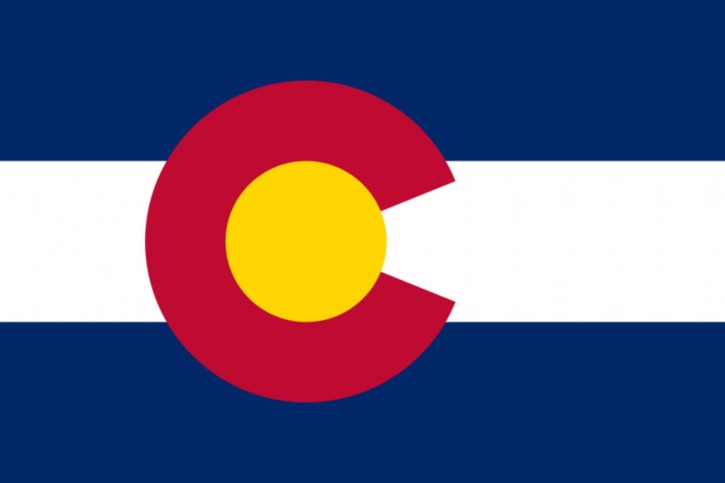
State Flag
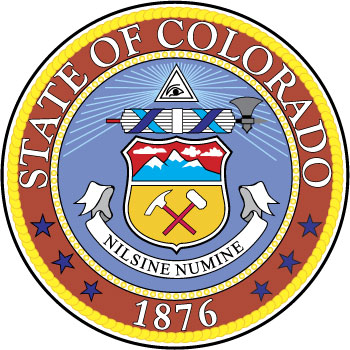
Great Seal
Nickname
The Centennial State
Motto
Nil sine numine (“Nothing without providence”)
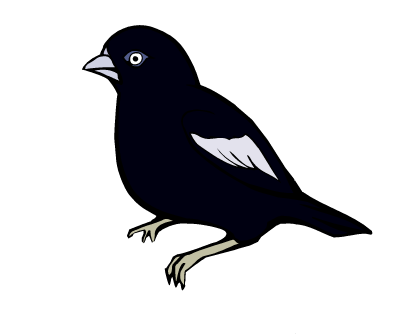
Bird
Lark Bunting
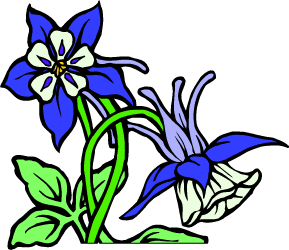
Flower
Rocky Mountain Columbine
Tree
Colorado Blue Spruce
Mammal
Rocky Mountain Bighorn Sheep
Fish
Greenback Cutthroat Trout
Reptile
Western Painted Turtle
Insect
Colorado Hairstreak Butterfly
Gemstone
Aquamarine
Mineral
Rhodochrosite
Songs
“Where the Columbines Grow” and “Rocky Mountain High”