
 English
 Español
 中文
中文 हिन्दी
 Français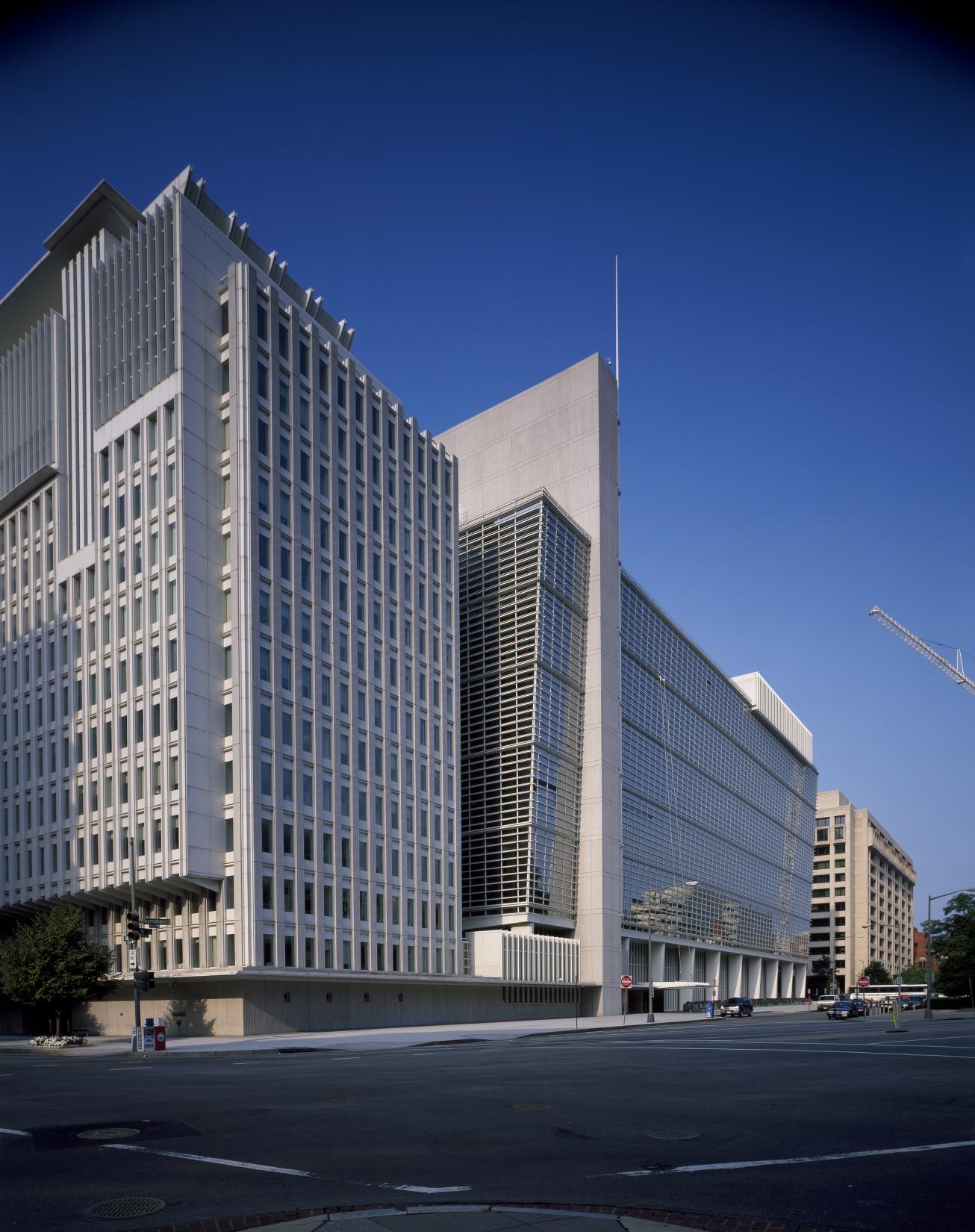
The World Bank and International Monetary Fund
The Bretton Woods twins — architects of postwar global finance and of enduring debate about development, conditionality, and debt.
The World Bank Group and the International Monetary Fund are the two principal pillars of the postwar international financial architecture. Conceived together at a conference of forty-four Allied nations at Bretton Woods, New Hampshire, in July 1944, they were designed to prevent a repeat of the currency instability, beggar-thy-neighbor trade policies, and financial collapse that contributed to the Great Depression and to World War II. More than eight decades later, both institutions remain central, and controversial, actors in global economic governance.
Overview
The World Bank and the International Monetary Fund are separate institutions with different mandates, different balance sheets, and different instruments, but they share a common origin and a common headquarters city. Both were created at the United Nations Monetary and Financial Conference held at the Mount Washington Hotel in Bretton Woods, New Hampshire, from July 1 to July 22, 1944, and both are based in Washington, D.C. They are often referred to collectively as the Bretton Woods Institutions.
The International Monetary Fund is charged with safeguarding the stability of the international monetary system. It provides short-term and medium-term lending to countries experiencing balance-of-payments difficulties, conducts surveillance of the global and national economies, and offers technical assistance on macroeconomic and financial-sector policy. As of 2026, the IMF has 190 member countries, represented on its Executive Board through constituencies weighted by economic size.
The World Bank Group is a development finance institution focused on long-term poverty reduction, infrastructure, human capital, and private-sector growth. It is made up of five legally distinct but operationally integrated organizations that lend to governments, invest in private companies, insure cross-border investors against political risk, and arbitrate investor-state disputes. The Bank has 189 member countries and its core lending arms disburse tens of billions of dollars annually across nearly every developing region.
The two institutions have evolved considerably since their founding. The IMF, initially designed to police a system of fixed exchange rates pegged to the United States dollar, reinvented itself after the collapse of that system in the early 1970s, becoming a crisis lender and policy advisor to developing and emerging-market economies. The Bank, first a reconstruction lender for war-torn Europe, shifted in the 1950s and 1960s toward project lending in developing countries, and later toward policy-based lending, programmatic support, and a growing focus on global public goods such as climate finance and pandemic preparedness.
Key Facts
- Founded
- Bretton Woods Conference, July 1–22, 1944; Articles of Agreement entered into force December 27, 1945
- Headquarters
- Washington, D.C., United States — IMF at 700 19th Street NW, World Bank at 1818 H Street NW
- IMF member states
- 190 member countries
- World Bank member states
- 189 member countries (IBRD); membership figures vary slightly across World Bank Group affiliates
- World Bank Group affiliates
- IBRD (1944), IDA (1960), IFC (1956), MIGA (1988), ICSID (1966)
- IMF Managing Director
- Kristalina Georgieva (Bulgarian national; in office since October 2019, second term began 2024)
- World Bank President
- Ajay Banga (United States national, Indian-born; assumed office June 2023)
- IDA replenishment cycles
- Three-year cycles funded by donor contributions; IDA20 covered fiscal years 2023–2025, IDA21 negotiated during 2024
- Governance model
- Weighted voting via a quota and shareholding system, reflecting economic size and reviewed periodically
- Flagship meetings
- Annual Meetings (autumn) and Spring Meetings (April) of the IMF and World Bank, held jointly in Washington, D.C., or rotated to member cities
- Major 2021 SDR allocation
- Approximately $650 billion in new Special Drawing Rights issued in August 2021 to bolster reserves during the COVID-19 crisis
Bretton Woods Origins
The Bretton Woods Conference, formally the United Nations Monetary and Financial Conference, convened in the closing year of World War II while fighting still raged across Europe and the Pacific. Delegations from forty-four Allied nations gathered at the Mount Washington Hotel in the White Mountains of New Hampshire for three weeks in July 1944. The conference was chaired by United States Treasury Secretary Henry Morgenthau, Jr., and its intellectual architecture was drawn primarily from two rival plans: the White Plan prepared by Harry Dexter White of the United States Treasury, and the Keynes Plan developed by the British economist John Maynard Keynes, head of the United Kingdom delegation.
The conferees agreed that the interwar period had shown the catastrophic cost of monetary disorder. The collapse of the gold standard, competitive currency devaluations, exchange controls, protectionist trade barriers, and the absence of any lender of last resort for nations in balance-of-payments crisis had amplified the Great Depression and contributed to the political instability that led to war. They set out to design a cooperative system that would support fixed-but-adjustable exchange rates, facilitate the gradual return to current-account convertibility, and provide pooled resources that countries could draw on when under pressure.
Two institutions emerged from this effort. The International Monetary Fund would manage the exchange-rate system and extend short-term credits. The International Bank for Reconstruction and Development, usually referred to as the World Bank, would provide long-term loans to rebuild Europe and, by its terms of reference, to finance the development of productive facilities and resources in member countries. The United States dollar was anchored to gold at $35 per ounce, and other currencies pegged to the dollar within narrow bands, producing what came to be known as the gold-dollar standard. The Soviet Union participated in the conference but declined to ratify the Articles of Agreement, a foreshadowing of the Cold War divide that would soon shape global governance.

Mandate Distinctions
Although they sit across 19th Street from each other in Washington, the IMF and the World Bank perform fundamentally different functions. Confusion between them is common, even in policy coverage, but the distinction matters for how each institution is financed, how its lending works, and what it can and cannot do.
The IMF is a monetary institution. Its core activity is surveillance of the global and national economy, codified in Article IV of its Articles of Agreement, which requires annual or biennial consultations with each member country and produces public staff reports on macroeconomic policy. When countries face balance-of-payments pressures, reserve losses, or currency crises, the IMF provides short-term financing from a pool of resources contributed by members, generally conditioned on a program of macroeconomic adjustment. Its instruments are measured in months and a small number of years, not decades.
The World Bank, by contrast, is a development finance institution. It lends to governments, and through its private-sector arm to private firms, for long-term investment in infrastructure, education, health systems, agriculture, energy, and public-sector management. Its project cycle routinely unfolds over five to ten years and its amortization schedules stretch out across decades. The Bank does not, in the first instance, lend against balance-of-payments need; it lends against investment plans and policy reforms that are expected to raise productivity and reduce poverty over time.
International Monetary Fund
Safeguards monetary and financial stability. Lends to members facing short-term balance-of-payments pressures, conducts Article IV surveillance, and provides macroeconomic policy advice and technical assistance.
- • Short-term and precautionary lending
- • Currency and reserves focus
- • Conditionality on macroeconomic policy
World Bank Group
Finances long-term development. Lends to governments for projects and programs in infrastructure, human capital, and governance, and invests directly in private enterprises in developing economies.
- • Project and policy lending over decades
- • Poverty reduction focus
- • Public- and private-sector arms
The World Bank Group
The World Bank Group is a federation of five legally distinct institutions under common leadership. Each serves a particular segment of the development-finance market.
IBRD (1944)
The International Bank for Reconstruction and Development is the original World Bank. It lends at near-market rates to middle-income and creditworthy low-income countries, funded primarily by borrowing on international capital markets against the guarantee of member shareholders.
IDA (1960)
The International Development Association provides concessional credits and grants to the world's poorest countries. IDA is funded largely by donor contributions in three-year replenishment cycles and is one of the largest single sources of assistance for low-income countries.
IFC (1956)
The International Finance Corporation is the Group's private-sector arm. It makes equity investments, loans, and provides advisory services to private firms in developing countries, working alongside commercial banks, private investors, and sovereign wealth funds.
MIGA (1988)
The Multilateral Investment Guarantee Agency insures cross-border investors and lenders against non-commercial risks such as expropriation, currency inconvertibility, war, civil disturbance, and breach of contract by host governments.
ICSID (1966)
The International Centre for Settlement of Investment Disputes provides facilities for the arbitration and conciliation of investment disputes between member states and foreign investors, a core institution of modern international investment law.
Common Leadership
The five institutions share a single President, a single Board of Governors, and overlapping Executive Directors. Operationally they are integrated through the World Bank Group Country Partnership Framework and Corporate Scorecard.
The IMF Toolkit
The IMF offers a menu of instruments calibrated to different types of external pressure, different country circumstances, and different income levels. Its core surveillance activity, mandated by Article IV, produces regular consultations with each member and underlies both the policy-advice function and the design of lending programs.
The Stand-By Arrangement is the workhorse instrument for short-term balance-of-payments support. The Extended Fund Facility addresses longer, structural problems over three to four years. For low-income countries, the Poverty Reduction and Growth Facility, later replaced by the Extended Credit Facility, the Standby Credit Facility, and the Rapid Credit Facility, provides concessional financing through the Poverty Reduction and Growth Trust. The Rapid Financing Instrument and Rapid Credit Facility allow emergency disbursements, heavily used during the COVID-19 crisis, and the Flexible Credit Line and Precautionary and Liquidity Line provide insurance-style access to countries with strong fundamentals.
Special Drawing Rights are an international reserve asset created by the IMF in 1969, valued against a basket currently composed of the United States dollar, the euro, the Chinese renminbi, the Japanese yen, and the British pound. SDRs are allocated to member countries in proportion to their IMF quotas. The allocation of approximately $650 billion in August 2021, the largest in IMF history, was intended to bolster global reserves during the COVID-19 pandemic and has since been partially channeled through the Resilience and Sustainability Trust to low-income and climate-vulnerable countries.
Leadership and Governance
By an unwritten convention that dates to the institutions' founding, the President of the World Bank has always been a United States national nominated by the U.S. administration, and the Managing Director of the IMF has always been a European, usually nominated by European Union governments in informal coordination. The convention has been sharply criticized for privileging the two largest shareholding blocs over merit and geographic balance, and each leadership transition since the early 2000s has reopened debate over whether an open, merit-based selection process should replace the tradition.
Voting power at both institutions is weighted by economic size through a quota system at the IMF and a shareholding system at the World Bank. The United States has historically held the largest share of voting rights and has been the only member with a de facto veto over major decisions requiring an 85 percent supermajority. Successive governance reviews have shifted shares toward emerging economies. The 2010 IMF quota reform, implemented in 2016, moved about six percentage points of quota share from advanced to emerging and developing economies, and made China, India, Brazil, and Russia among the ten largest IMF shareholders for the first time.
At the World Bank, the creation of a third sub-Saharan African chair on the IBRD Executive Board in 2010 and subsequent capital increases have modestly boosted African voice. Debates over a further increase in African shareholding, over the representation of small states, and over the formula used to translate economic weight into voting power are a recurring feature of the IMF-World Bank Spring and Annual Meetings. The fifteenth and sixteenth quota reviews at the IMF have been pivotal moments in these discussions, with the sixteenth review in 2023 confirming equi-proportional increases in quotas without changing relative shares, leaving realignment to a future review.
Post-War to the 1980s
In its first years, the World Bank's principal task was European reconstruction. Its inaugural loan, approved in 1947, was a $250 million credit to France. As the Marshall Plan and the United States bilateral aid programs took over the main burden of European reconstruction, the Bank quickly pivoted toward developing countries, financing projects in India, Latin America, and elsewhere. Its early work was dominated by hard infrastructure, particularly hydroelectric dams, highways, railways, and ports.
The IMF in its first quarter-century oversaw the par-value system, in which member currencies were pegged to the U.S. dollar within one-percent bands, and the dollar in turn to gold. That system broke down between 1971 and 1973 when the United States suspended dollar-gold convertibility under President Nixon and the major currencies floated against one another. The Second Amendment to the IMF Articles of Agreement, which took effect in 1978, legitimized floating rates and reoriented the Fund toward surveillance and crisis lending rather than exchange-rate discipline.
The oil shocks of 1973 and 1979 and the subsequent recycling of petrodollars through commercial banks left many developing countries with rapidly accumulating dollar-denominated debt. When Paul Volcker's disinflation raised United States interest rates sharply at the end of the 1970s, and a global recession followed, debtor countries found themselves unable to service loans. The announcement by Mexico in August 1982 that it could no longer meet its obligations triggered what came to be known as the Latin American debt crisis and ushered in an era of structural adjustment lending in which both the IMF and the World Bank extended financing conditioned on programs of fiscal austerity, trade liberalization, privatization, and financial deregulation.
Washington Consensus and Backlash
In a 1989 paper for the Institute for International Economics, the British-born economist John Williamson proposed the term Washington Consensus to describe the ten broadly shared policy recommendations that the IMF, the World Bank, and the United States Treasury tended to urge on Latin American borrowers in the 1980s. The list included fiscal discipline, redirection of public spending toward pro-poor services and infrastructure, tax reform, interest-rate liberalization, competitive exchange rates, trade liberalization, openness to foreign direct investment, privatization of state-owned enterprises, deregulation, and secure property rights.
Williamson's intention was descriptive, but the term rapidly took on a normative and often negative charge. Critics argued that the package overemphasized liberalization and austerity, underestimated the role of the state in development, paid too little attention to poverty and inequality, and neglected the sequencing problems that arose when developing and transition economies tried to liberalize capital accounts before building the financial regulation needed to manage volatile flows.
The Asian Financial Crisis of 1997 and 1998 crystallized much of this backlash. The IMF's programs in Thailand, Indonesia, and the Republic of Korea were widely criticized for applying excessive fiscal tightening, for premature capital-account liberalization, and for intrusive structural conditionality. The Fund itself later acknowledged, through its Independent Evaluation Office, that it had underestimated the depth of the contractions and mis-specified several program elements. In the post-Soviet transition economies, IMF and World Bank advice during the early 1990s, particularly on rapid privatization, became another focus of criticism as inequality widened and living standards fell sharply in many countries.
A period of institutional self-examination followed. The 2000 report of the U.S. Congressional International Financial Institution Advisory Commission, chaired by Allan Meltzer, recommended a more narrowly focused IMF and a World Bank shifted toward grants and knowledge work in the poorest countries. James Wolfensohn's tenure as World Bank President introduced the Comprehensive Development Framework, which emphasized country ownership of reform programs and the integration of social, institutional, and governance dimensions alongside macroeconomic policy. Both institutions began publishing more of their staff analysis, opening Executive Board records, and engaging more systematically with civil society, even as fundamental critiques persisted.

From the 2000s to the Present
The Millennium Development Goals adopted by the United Nations in 2000, and the Sustainable Development Goals that succeeded them in 2015, reoriented Bank and Fund work toward measurable outcomes in poverty, health, education, gender equality, and environmental sustainability. The Heavily Indebted Poor Countries initiative, launched in 1996 and expanded in 1999, and the 2005 Multilateral Debt Relief Initiative together delivered substantial debt cancellation for more than thirty low-income countries, most of them in sub-Saharan Africa, freeing fiscal space for social spending.
The 2008 global financial crisis returned the IMF to center stage after a decade during which its lending portfolio had shrunk dramatically. The G20 leaders meeting in London in April 2009 agreed to triple the Fund's resources, and the IMF extended large programs to Ukraine, Hungary, Latvia, and other European economies. The subsequent Eurozone debt crisis drew the Fund into an unprecedented joint role with the European Commission and the European Central Bank, the so-called Troika, in programs for Greece, Ireland, Portugal, and Cyprus. The Greek program in particular became deeply controversial, and the IMF Independent Evaluation Office later documented important failures of program design and inter-institutional coordination.
The COVID-19 pandemic in 2020 and 2021 prompted the largest and fastest mobilization in the history of the institutions. The IMF rapidly deployed the Rapid Financing Instrument, the Rapid Credit Facility, and the Catastrophe Containment and Relief Trust, extending emergency financing to more than ninety countries in a matter of months. The G20 Debt Service Suspension Initiative (DSSI), supported operationally by the Bank and the Fund, provided temporary relief on official bilateral debt to seventy-three low-income countries during 2020 and 2021, and was succeeded by the Common Framework for Debt Treatments beyond the DSSI, intended to allow coordinated restructuring involving China and other non-Paris Club creditors. The World Bank's IDA20 replenishment in 2021 was front-loaded to support pandemic response, and the 2021 SDR allocation added close to $650 billion to global reserves. Since 2022, attention has shifted to a renewed wave of sovereign debt distress in low-income countries, to climate finance and the Bank's Evolution Roadmap, and to the challenge of scaling private-sector engagement in pursuit of the Sustainable Development Goals.
Criticism and Reform
Few international institutions have attracted as sustained and as varied a body of criticism as the Bretton Woods Institutions. Economic critics argue that structural adjustment programs in the 1980s and 1990s compressed public spending on health and education, reduced agricultural support, and dampened growth in countries that adopted them, with a rich empirical literature documenting harms to child nutrition, school enrollment, and gender outcomes. Feminist scholarship has highlighted how macroeconomic conditionality can shift unpaid care burdens onto women as public services contract. The Bank's environmental track record, including hydroelectric dam projects that displaced large populations and the Chad-Cameroon pipeline of the early 2000s, has been a focus of civil-society campaigns led by organizations such as the Bretton Woods Project, International Rivers, and the Bank Information Center.
Governance critiques focus on the distribution of voting power, the unwritten leadership convention, and the sense among developing-country members that the Bank and Fund speak primarily with the voice of their largest shareholders. The rise of alternative lenders, including the New Development Bank established by Brazil, Russia, India, China, and South Africa in 2014, the Asian Infrastructure Investment Bank launched in 2016, and large-scale Chinese bilateral lending under the Belt and Road Initiative, has added new options for developing-country borrowers and increased competitive pressure on the Bretton Woods Institutions to reform their own products and procedures.
Internal reform has been continuous rather than episodic. The World Bank's Inspection Panel, established in 1993, and the IFC and MIGA Compliance Advisor Ombudsman, established in 1999, provide independent accountability channels for project-affected communities. The IMF Independent Evaluation Office, established in 2001, has produced widely cited reports on capital-account liberalization, on the Asian crisis, on the Eurozone programs, and on Fund engagement with fragile states. Safeguards frameworks on environmental and social standards, on gender, on indigenous peoples, and on labor have been repeatedly updated. The Bank's 2023 Evolution Roadmap and the Fund's parallel efforts on the Global Sovereign Debt Roundtable, on climate and resilience, and on digital-era surveillance represent the latest phase of this continuous reinvention. Whether those efforts are judged sufficient by the Bank and Fund's many critics is likely to depend on the substance of the next two decades of lending, advice, and institutional behavior.
Sources
Detailed citations, data references, and institutional sources for all CountryReports content are listed on the Sources page. The following official, academic, and civil-society institutions are the primary authorities we rely on for World Bank and International Monetary Fund content. Each external link opens in a new tab.
Official Institutional Sources
- The World Bank Group — Official site of IBRD, IDA, IFC, MIGA, and ICSID, including annual reports, country strategies, project documents, and the World Development Indicators database.
- International Monetary Fund — Article IV staff reports, World Economic Outlook, Global Financial Stability Report, Fiscal Monitor, and program documents for lending arrangements.
- Independent Evaluation Office of the IMF — Independent evaluations of IMF policies and operations, including reports on capital-account liberalization, the Asian crisis, and the Eurozone programs.
- International Finance Corporation (IFC) — The World Bank Group's private-sector development arm.
- Multilateral Investment Guarantee Agency (MIGA) — Political risk insurance arm of the World Bank Group.
- International Centre for Settlement of Investment Disputes (ICSID) — Investor-state arbitration institution within the World Bank Group.
Research and Policy Institutions
- Center for Global Development (CGD) — Independent Washington-based research center on the effectiveness of the multilateral development banks, debt sustainability, and development finance.
- ODI (Overseas Development Institute) — London-based global affairs think tank with substantial output on concessional lending, debt, and international financial architecture.
- Brookings Institution — Research on international macroeconomic policy, global governance, and the reform of the Bretton Woods Institutions.
- Bretton Woods Project — Independent watchdog scrutinizing World Bank and IMF policy from a civil-society perspective.
Peer-Reviewed Journals
- IMF Economic Review — Peer-reviewed journal of international macroeconomic and financial research published by Palgrave Macmillan on behalf of the IMF.
If you notice an error or would like to suggest a correction, please use our contact page to get in touch.