
World Monuments and Wonders
The architectural and engineering achievements that define human civilization.
From the Pyramids of Giza on the edge of the Sahara to the Burj Khalifa rising above the Arabian Gulf, the monuments and wonders of the world mark the highest ambitions of the societies that built them. They are at once feats of engineering, declarations of faith and power, and instruments of public memory. This guide surveys the great monuments of antiquity and the modern age, the famous lists that have tried to rank them, and the preservation questions that shape their future.
Overview
A monument, in the broadest sense, is a structure built or set apart to commemorate, to glorify, or to endure. A wonder is something more ambiguous: a work so extraordinary in scale, artistry, engineering, or cultural reach that it inspires admiration across generations and civilizations. The categories overlap heavily. Every wonder is, in its way, a monument; not every monument rises to the status of a wonder. Among the qualifications commonly applied are sheer scale, the technical difficulty of construction, the level of craftsmanship, the cultural or spiritual significance attached to the site, and the ability of the work to endure centuries of use, weather, and human neglect.
The distinction between a monument and a heritage site is also worth drawing. The UNESCO World Heritage Centre, founded in 1972, maintains a list of cultural and natural properties of outstanding universal value. That list includes many of the monuments discussed on this page, but its criteria are formal, administrative, and tied to the 1972 World Heritage Convention. Monumentality and wonder, by contrast, are cultural judgments that predate the treaty by thousands of years. Many sites that appear on every popular list of wonders were celebrated long before a modern conservation regime existed. For a deeper look at the treaty system itself, see the companion page on UNESCO World Heritage Sites.
This page surveys monuments and wonders in several overlapping frames. The classical Seven Wonders of the Ancient World established the habit of listing monuments in the Mediterranean world more than two thousand years ago. The New Seven Wonders of the World, announced in 2007 after a global online poll, extended that habit to the modern age. Beyond these lists, the page treats the great religious, imperial, civic, and engineering monuments of the world, the threats those monuments face in the twenty-first century, and the role monuments play in shaping how nations remember themselves.
CountryReports does not attempt to rank monuments against one another. The entries below are selected for cultural reach, scholarly documentation by institutions such as the World Monuments Fund, the Getty Conservation Institute, and the International Council on Monuments and Sites, and for their usefulness in understanding the countries and regions covered elsewhere on this site.
Key Facts
- Oldest surviving wonder
- Great Pyramid of Giza, completed approximately 2560 BCE
- Oldest known monumental site
- Göbekli Tepe, southeastern Turkey, approximately 9500 BCE
- Tallest building in the world
- Burj Khalifa, Dubai, 828 meters (2,717 feet), completed 2010
- Tallest freestanding structure
- Burj Khalifa, Dubai (by most structural measures)
- Largest religious monument
- Angkor Wat, Cambodia, covering approximately 162 hectares
- Seven Wonders of the Ancient World
- Seven sites catalogued by Hellenistic writers; only the Great Pyramid of Giza survives
- New Seven Wonders of the World
- Announced 2007 after a global poll organized by the New7Wonders Foundation
- Longest defensive monument
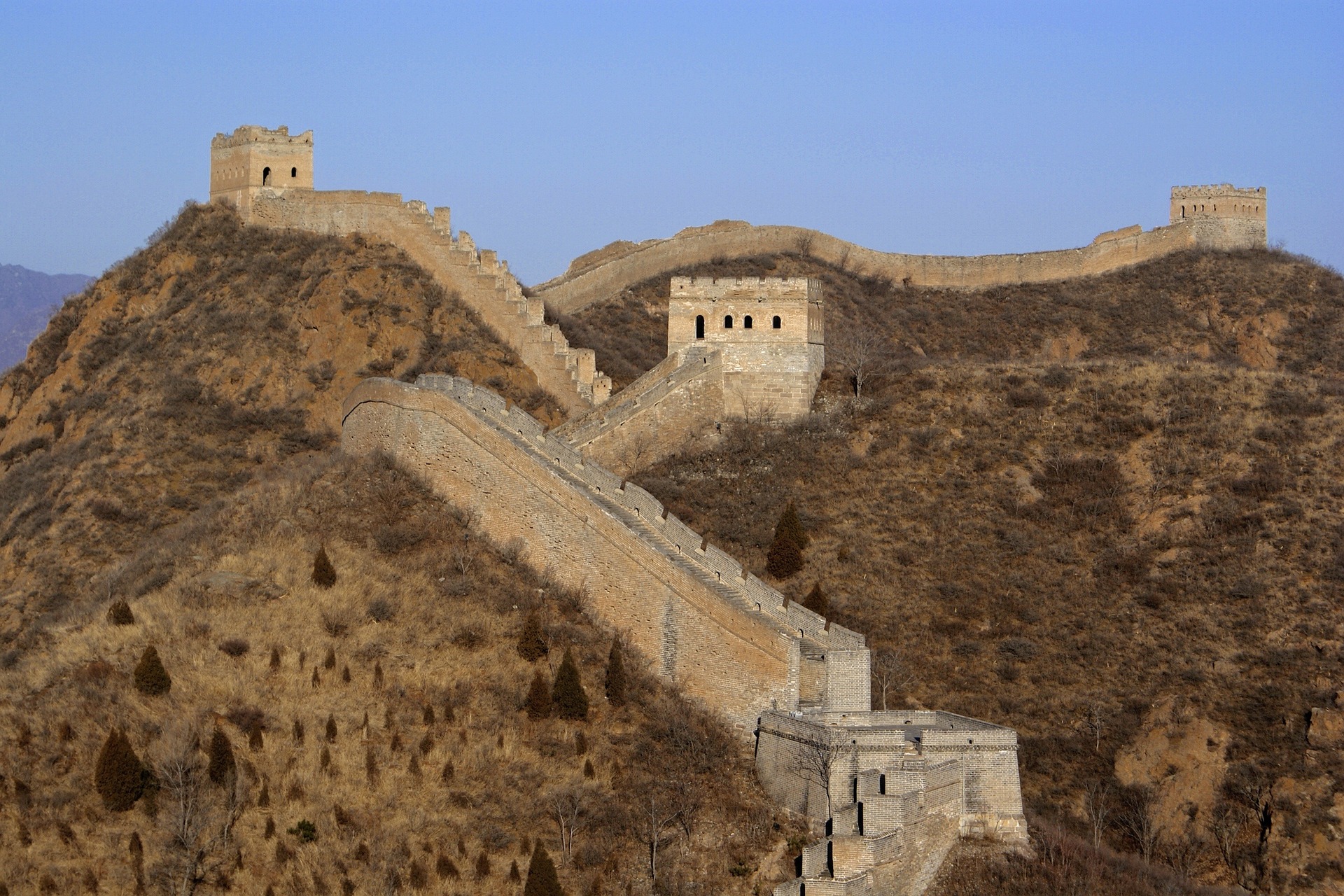
- Great Wall of China, approximately 21,196 kilometers of combined sections
- UNESCO cultural heritage sites
- More than 900 properties worldwide (see UNESCO World Heritage Sites)
The Seven Wonders of the Ancient World
The habit of listing seven exceptional monuments is itself an ancient tradition. The canonical Seven Wonders of the Ancient World emerged in Hellenistic-era guidebooks and compilations between the third and second centuries before the Common Era, at a time when Greek-speaking travelers moved across the eastern Mediterranean under the successor kingdoms of Alexander the Great. Writers such as Antipater of Sidon and, later, Philo of Byzantium collected descriptions of the most celebrated sights known to the Greek world. The list was never a single fixed document; it coalesced across several sources, and the final form familiar today was not standardized until the Renaissance.
The seven sites conventionally named are the Great Pyramid of Giza in Egypt, the Hanging Gardens of Babylon in present-day Iraq, the Statue of Zeus at Olympia in Greece, the Temple of Artemis at Ephesus in western Anatolia, the Mausoleum at Halicarnassus in what is now the Turkish coast, the Colossus of Rhodes on the Greek island of Rhodes, and the Lighthouse of Alexandria on the Egyptian coast. Of these, only the Great Pyramid of Giza still stands. The others were destroyed by earthquake, fire, war, or the long attrition of centuries.
The Great Pyramid, built for the Pharaoh Khufu during the Fourth Dynasty of the Old Kingdom, rose to an original height of approximately 146.6 meters and remained the tallest human-made structure on Earth for nearly four thousand years. The Hanging Gardens, described by Greek writers as terraced plantings irrigated by complex machinery, are uniquely problematic: no archaeological trace of them has been confirmed at Babylon, and scholars including Stephanie Dalley of the University of Oxford have proposed that the gardens described in classical texts may actually have stood at Nineveh, under the Assyrian king Sennacherib. The existence of the Hanging Gardens of Babylon remains debated.
The Statue of Zeus at Olympia, sculpted by Phidias in the fifth century before the Common Era, was a chryselephantine colossus of gold and ivory that sat inside the Temple of Zeus and was lost, most likely by fire, in the fifth century of the Common Era. The Temple of Artemis at Ephesus was burned and rebuilt repeatedly before its final destruction in late antiquity. The Mausoleum at Halicarnassus, built for the Carian satrap Mausolus in the mid-fourth century before the Common Era, survived into the medieval period before collapsing, and its marble was eventually reused in the construction of a Crusader castle. The Colossus of Rhodes, a bronze statue of the sun god Helios that stood near the harbor, fell in an earthquake approximately 226 before the Common Era and was left in ruins for centuries. The Lighthouse of Alexandria, built on the island of Pharos in the third century before the Common Era, functioned as a working navigational beacon for more than a thousand years before it was toppled by earthquakes in the medieval period. Fragments from its base were recovered from the Alexandrian harbor by marine archaeologists in the 1990s and are studied today with the support of the Institut français d'archéologie orientale and the Getty Conservation Institute.
New Seven Wonders of the World (2007)
In 2007, the Swiss-based New7Wonders Foundation announced the results of a global online and telephone poll designed to produce a modern counterpart to the classical list. The winning sites were the Great Wall of China, the rock-cut city of Petra in Jordan, the statue of Christ the Redeemer overlooking Rio de Janeiro in Brazil, the Inca site of Machu Picchu in Peru, the Mayan city of Chichén Itzá in Mexico, the Colosseum in Rome, Italy, and the Taj Mahal at Agra in India. The Great Pyramid of Giza was granted honorary status outside the competition in recognition of its place as the sole surviving classical wonder.
The poll attracted more than one hundred million votes. Its methodology was also widely criticized by heritage specialists. UNESCO declined to endorse or participate in the poll, noting that its criteria were not scientific and that nothing in the voting process guaranteed that each voter cast a single ballot. Several governments organized campaigns to mobilize votes for national monuments, and some critics argued that the result reflected tourism marketing more than any rigorous assessment of cultural value. Despite these objections, the New Seven Wonders list has proved durable in popular usage, and it has had a measurable effect on visitor numbers at the listed sites.
The same foundation later sponsored campaigns to name the New Seven Wonders of Nature (announced 2011) and the New Seven Wonders Cities (announced 2014). Those later lists have attracted less attention than the original 2007 vote.
Ancient Monuments of the World
Beyond the classical Seven Wonders, the ancient world left behind a much wider roster of monumental works. The Giza plateau alone contains not only the Great Pyramid of Khufu but the pyramids of Khafre and Menkaure, the Great Sphinx, the mortuary temples of each pharaoh, subsidiary queens' pyramids, mastaba tombs, and the causeways and harbor works that connected the complex to the Nile. Fieldwork by institutions including the Egyptian Museum in Cairo and the Giza Plateau Mapping Project has clarified the extent of the workers' settlement south of the plateau and challenged the older view that the pyramids were built by slaves.
Stonehenge, on the Salisbury Plain in the United Kingdom, is the most recognizable surviving megalithic circle in Europe. Its sarsen and bluestone phases span roughly three thousand to twenty-five hundred years before the Common Era. The site was built and rebuilt over centuries, and recent isotope studies on cattle and human remains from the surrounding landscape have shown that it drew visitors from across what is now the British Isles. In Central America, the Maya city of Tikal, in the rainforest of northern Guatemala, rose steeply above the jungle canopy from roughly the fourth century before the Common Era to the ninth century of the Common Era. Its Temple IV, at approximately seventy meters, is among the tallest pre-Columbian structures anywhere in the Americas.
The moai of Rapa Nui, on what is now the Chilean territory of Easter Island in the southeastern Pacific, are monumental stone figures carved between roughly the thirteenth and seventeenth centuries of the Common Era from the volcanic tuff of Rano Raraku. Nearly nine hundred moai are known. Scholarship by the University of California and the Easter Island Statue Project has mapped their distribution, reconstructed their transport using wooden sledges and ropes, and revised older theories of ecological collapse on the island.
Perhaps the most important reshaping of our understanding of early monumental architecture has come from Göbekli Tepe, a complex of circular stone enclosures in southeastern Turkey. Excavations led by the German Archaeological Institute since the 1990s have dated the site to approximately nine thousand five hundred years before the Common Era, making it several thousand years older than the first cities. The dating is still being refined as additional enclosures are excavated and as new radiocarbon evidence accumulates, but the site has already upended the older assumption that monumental religious architecture followed the rise of agriculture rather than helping to drive it. For fuller context on the civilizations that built these works, see the companion page on Ancient Civilizations.
Religious Monuments
Religion has been the single most productive patron of monumental architecture in world history. The great temples, mosques, cathedrals, and pilgrimage centers are among the most closely documented buildings on the planet, and they continue to function as living religious spaces rather than as static museum pieces.
Angkor Wat, in northwestern Cambodia, is the largest religious monument in the world by land area, covering approximately one hundred sixty-two hectares within its moats. It was built in the first half of the twelfth century by the Khmer king Suryavarman II as a state temple oriented to Vishnu and was later adapted for Buddhist use. Borobudur, in central Indonesia, is a ninth-century Mahayana Buddhist stupa complex whose terraces carry more than twenty-six hundred relief panels and hundreds of Buddha statues. A major restoration campaign led by the Indonesian government and UNESCO between 1975 and 1982 disassembled and reassembled much of the monument.
In the Christian world, Notre-Dame de Paris in France is a paradigmatic Gothic cathedral, begun in 1163, and a case study in post-disaster conservation since the fire of April 2019. Hagia Sophia in Istanbul, Turkey, is older and more layered: built in 537 of the Common Era as the cathedral of the Eastern Roman Empire, converted into a mosque after the Ottoman conquest of 1453, operated as a museum between 1935 and 2020, and now functioning as a mosque again. The Meenakshi Temple in Madurai, southern India, is dedicated to the goddess Meenakshi and her consort Sundareswarar and is famous for its towering gopuram gateways covered in thousands of polychrome sculptures.
The Great Mosque of Mecca, also called Masjid al-Haram, in Saudi Arabia, surrounds the Kaaba and is the holiest site in Islam; it has been expanded repeatedly to accommodate more than two million pilgrims during the annual Hajj. Scholarship on the historical development of the site is maintained at institutions including the Institute of Ismaili Studies in London, whose work on early Islamic architecture traces the evolution of sacred space across the Muslim world. The Potala Palace in Lhasa, on the Tibetan plateau within the People's Republic of China, is the former winter residence of the Dalai Lamas and rises more than one hundred seventy meters above its rock base. The Church of the Holy Sepulchre in the Old City of Jerusalem is venerated by many Christian traditions as the site of the crucifixion, burial, and resurrection of Jesus of Nazareth and has been shared under the Status Quo agreement among six Christian communities since the nineteenth century.
Imperial and Royal Monuments
Rulers have always built to leave a visible record of their rule. Imperial and royal monuments form a distinct category in which architectural ambition is inseparable from political legitimacy. The Forbidden City in Beijing, built between 1406 and 1420 under the Yongle Emperor of the Ming dynasty, was the ceremonial and administrative center of the Chinese state for nearly five centuries and is now the Palace Museum. Its axial plan, layered courtyards, and hierarchical use of yellow glazed roof tiles articulate a cosmological claim about the emperor's position between heaven and earth.
The Palace of Versailles, outside Paris, was transformed from a royal hunting lodge into the seat of the French monarchy by Louis XIV in the second half of the seventeenth century. Its Hall of Mirrors, the gardens by André Le Nôtre, and the two Trianons established an architectural language that was copied across Europe and beyond. The Taj Mahal at Agra, in India, was built between 1631 and 1653 by the Mughal emperor Shah Jahan as a mausoleum for his wife Mumtaz Mahal. Its white marble dome, flanking minarets, and inlaid pietra dura are widely studied as the apex of Mughal funerary architecture.
The Red Fort in Delhi, built by the same Shah Jahan as a palace-citadel when the Mughal capital moved from Agra, remains the ceremonial heart of India's Independence Day observances. Topkapi Palace in Istanbul served as the administrative seat of the Ottoman sultans from the fifteenth through the nineteenth centuries and contains the imperial harem, treasury, and a collection of Islamic relics. The Alhambra at Granada, in Spain, was the fortified palace of the Nasrid emirs and is among the most intact examples of late medieval Islamic palace architecture in the western Mediterranean. Schönbrunn Palace in Vienna, Austria, served as the summer residence of the Habsburgs and is an important Baroque and Rococo ensemble, with extensive formal gardens and the Gloriette on the hill above the palace.
Civic and Commemorative Monuments
Civic and commemorative monuments occupy a different register from palaces and temples. They are public works, built by and for the state or the city, and they are designed to make claims about national identity, sacrifice, and values. The Statue of Liberty, on Liberty Island in New York Harbor, was a gift from the people of France to the United States in 1886. Designed by Frédéric Auguste Bartholdi with an internal iron framework by Gustave Eiffel, it became one of the most widely reproduced national symbols of the modern age.
On the National Mall in Washington, D.C., the Washington Monument, completed in 1884, and the Lincoln Memorial, dedicated in 1922, form one of the most deliberate civic tableaus anywhere. The Mall's axial composition, including the reflecting pool and the Vietnam Veterans Memorial, is documented by the United States National Park Service and forms the subject of long-running study by the Library of Congress and Harvard Graduate School of Design. In Paris, the Arc de Triomphe, commissioned by Napoleon in 1806 and completed in 1836, stands at the western end of the Champs-Élysées and bears the names of French generals and victories from the Revolutionary and Napoleonic wars. The Eiffel Tower, completed in 1889 for the Exposition Universelle marking the centenary of the French Revolution, was initially controversial; critics called for its demolition until its utility as a radio and later television transmission mast secured its place.
The Brandenburg Gate in Berlin, completed in 1791 as a neoclassical city gate, became a focal point of German national memory across the Napoleonic occupation, the Cold War division of the city, and the reunification of 1990. The Motherland Calls, at Mamayev Kurgan in Volgograd, Russia, is an eighty-five-meter concrete statue completed in 1967 to commemorate the Battle of Stalingrad. At its completion it was the tallest freestanding sculpture in the world; it remains among the largest commemorative statues ever built.
Modern Engineering Marvels
Since the late nineteenth century, the category of monumental architecture has expanded to include engineering works whose purpose is nominally functional but whose scale and public reception place them firmly in the tradition of the wonder. The Eiffel Tower in Paris, completed in 1889, was the first structure to exceed three hundred meters in height and remained the tallest human-made object in the world until 1930. The Empire State Building in New York, completed in 1931, held that record until 1972 and is among the most influential examples of the early skyscraper; its Art Deco massing and steel frame have been studied in detail by curators at the Smithsonian Institution.
The Golden Gate Bridge, spanning the mouth of San Francisco Bay and completed in 1937, brought the suspension bridge to a new scale and remains one of the most recognizable engineering works of the twentieth century. The Burj Khalifa in Dubai, United Arab Emirates, completed in 2010, rises to 828 meters and is the tallest building on Earth by any conventional structural measure. Its buttressed core system, developed by Skidmore, Owings & Merrill, made it possible to extend the traditional skyscraper form to previously unreached heights.
Infrastructure works likewise belong in the modern roster of wonders. The Channel Tunnel, opened in 1994, carries rail traffic fifty kilometers beneath the Strait of Dover between the United Kingdom and France. The Panama Canal, opened in 1914 and significantly expanded in 2016 with the new set of Neopanamax locks, transformed global shipping and remains one of the most studied civil-engineering works in the Western Hemisphere. The Three Gorges Dam on the Yangtze River in China, completed in 2012, is the largest hydroelectric facility in the world by installed capacity. The Millau Viaduct in southern France, opened in 2004 and designed by the engineer Michel Virlogeux with the architect Norman Foster, is the tallest bridge in the world and a celebrated example of minimalist structural expression. The Sydney Opera House in Australia, completed in 1973 and designed by Jørn Utzon, is inscribed on the World Heritage List for its masterpiece status in twentieth-century architecture.
Monuments Under Threat
Many of the monuments described on this page face urgent threats. Armed conflict, iconoclasm, climate change, mass tourism, and the simple passage of time place continuous pressure on sites that have survived for millennia. The International Council on Monuments and Sites (ICOMOS), the World Monuments Fund, and the Getty Conservation Institute coordinate much of the international response to those pressures, through survey work, restoration grants, and professional training for national heritage authorities.
The ancient caravan city of Palmyra, in the Syrian desert, illustrates the destructive capacity of modern warfare. Between 2015 and 2017, elements of the Islamic State of Iraq and the Levant deliberately demolished the Temple of Bel, the Temple of Baalshamin, the Arch of Triumph, and several tower tombs, and killed the site's longtime director, Khaled al-Asaad. The Bamiyan Buddhas in central Afghanistan, two colossal sixth-century sandstone statues carved into a cliff face along the Silk Road, were dynamited by the Taliban in March 2001. Their niches remain empty; international debate continues over whether partial reconstruction is appropriate.
Climate change has become a dominant concern for site managers. Rising sea levels and the increased frequency of acqua alta events threaten Venice, whose medieval core was placed on the World Heritage in Danger List in 2021 before the completion of the MOSE flood-barrier system. Accelerated erosion and increased rainfall affect Machu Picchu, where the government of Peru has restricted daily visitor numbers and implemented timed entry. Thermal stress, permafrost thaw, and wildfire smoke are emerging threats to monuments from Svalbard to the American Southwest.
The World Monuments Fund publishes the biennial World Monuments Watch, a list of sites under particular stress, as a tool for mobilizing attention and funding. The Metropolitan Museum of Art, the British Museum, and the Penn Museum contribute curatorial and archaeological expertise to many of these campaigns, and the Archaeological Survey of India coordinates conservation at the Taj Mahal and other Indian monuments. The field is in continual debate about the ethics of reconstruction, the repatriation of monumental fragments held in foreign collections, and the use of digital tools such as photogrammetry and three-dimensional modelling to preserve sites that are at immediate risk of destruction.
Monuments and National Identity
Monuments are never politically neutral. They are commissioned, sited, and maintained by institutions with particular agendas, and they function as visible claims about which pasts are to be remembered and which are to be forgotten. The study of public memory has grown into a substantial academic field, with contributions from the Smithsonian Institution, the National Geographic Society, and departments of history and memory studies at institutions such as Harvard Graduate School of Design and the Penn Museum.
Debates over the retention or removal of monuments have intensified in the twenty-first century. In the United States, the presence of Confederate monuments, most of them installed decades after the end of the Civil War during the Jim Crow era or the civil-rights backlash of the mid-twentieth century, has become a subject of sustained public controversy. Many municipalities have removed or relocated such statues following the events of 2015, 2017, and 2020; others remain in place under state preservation laws. In South Africa, the Rhodes Must Fall movement, which began at the University of Cape Town in 2015, led to the removal of a statue of the colonial administrator Cecil Rhodes and catalyzed wider debates about university curriculums, scholarships, and the presence of colonial-era statuary across the Commonwealth.
Similar debates have played out across Europe. Statues of Leopold II of Belgium, responsible for the atrocities of the Congo Free State, have been removed or defaced in several Belgian cities. In Bristol, in the United Kingdom, the statue of the slave trader Edward Colston was toppled and thrown into the harbor by demonstrators in June 2020 and is now displayed, in its damaged condition, at the M Shed museum. In post-Soviet states, the removal of Lenin and Soviet-era war memorials has produced its own political disputes, most recently and visibly in Ukraine since 2014. For the broader historical context of these debates, see the companion page on Decolonization.
CountryReports documents monument debates where they materially affect how a country or city presents itself to the world, but does not advocate a position on specific statue removals. Readers should consult primary sources and local institutions for the context of any particular case.
Intangible and Natural Wonders
Although this page concentrates on human-made monuments, the language of wonder has long extended to natural features of extraordinary scale and beauty. An unofficial list known as the Seven Natural Wonders of the World was popularized in the mid-twentieth century, most often attributed to a 1997 compilation by CNN, and typically includes the Grand Canyon in the United States, the Great Barrier Reef off northeastern Australia, the aurora borealis, Mount Everest on the border between Nepal and China, the volcano Paricútin in Mexico, the Harbor of Rio de Janeiro, and Victoria Falls on the Zambezi River between Zambia and Zimbabwe.
Unlike the classical or the New Seven Wonders, this natural list has no single authoritative source. It has no governing body equivalent to the New7Wonders Foundation. UNESCO's World Heritage Centre maintains a separate list of natural sites of outstanding universal value, and the International Union for Conservation of Nature provides the scientific assessments that support those nominations. Each of the seven natural wonders named above is protected, in whole or in part, by national park authorities or equivalent agencies, and each poses distinctive challenges for conservation in an era of climate change. Detailed treatments of many of these sites appear on the CountryReports pages for their respective countries.
Intangible cultural heritage, recognized in a separate 2003 UNESCO convention, is a third category relevant here. It covers traditions, performing arts, rituals, and craftsmanship rather than buildings. Monuments and intangible heritage are often tied together: a sacred building without its ceremonies, or a gateway without its processions, loses much of what makes it a wonder.
Notable Monuments
A showcase of eighteen widely recognized monuments and wonders. Each card links to the country profile for the host nation; licensed imagery will replace the placeholder thumbnails at launch.
 Egypt
Ancient
Egypt
Ancient
Great Pyramid of Giza
Sole surviving classical wonder; tomb of Pharaoh Khufu, c. 2560 BCE.
 China
Imperial
China
Imperial
Great Wall of China
Fortifications totaling approximately 21,196 kilometers across successive dynasties.
 Jordan
Ancient
Jordan
Ancient
Petra
Rock-cut Nabataean capital with elaborate rock-hewn tombs and facades.
 Peru
Pre-Columbian
Peru
Pre-Columbian
Machu Picchu
Inca citadel in the eastern Andes, built in the fifteenth century.
 Brazil
Modern
Brazil
Modern
Christ the Redeemer
Thirty-meter Art Deco statue atop Corcovado, dedicated 1931.
 India
Mughal
India
Mughal
Taj Mahal
White marble mausoleum at Agra, completed 1653 under Shah Jahan.
 Mexico
Pre-Columbian
Mexico
Pre-Columbian
Chichén Itzá
Mayan city on the Yucatán Peninsula; pyramid of El Castillo is its centerpiece.
 Italy
Ancient
Italy
Ancient
Colosseum
Flavian Amphitheatre in Rome, completed 80 CE under Emperor Titus.
 France
Modern
France
Modern
Eiffel Tower
Wrought-iron lattice tower in Paris, completed 1889 for the Exposition Universelle.
 United States
Civic
United States
Civic
Statue of Liberty
Gift of France, dedicated 1886 on Liberty Island in New York Harbor.
 Australia
Modern
Australia
Modern
Sydney Opera House
Shell-roofed performing-arts center by Jørn Utzon, completed 1973.
 United Arab Emirates
Modern
United Arab Emirates
Modern
Burj Khalifa
828-meter skyscraper in Dubai, the tallest building in the world.
China
Imperial
Forbidden City
Ming and Qing imperial palace in central Beijing; now the Palace Museum.
 Cambodia
Religious
Cambodia
Religious
Angkor Wat
Twelfth-century Khmer temple complex; the largest religious monument by area.
 Indonesia
Religious
Indonesia
Religious
Borobudur
Ninth-century Mahayana Buddhist stupa in central Java.
 United Kingdom
Prehistoric
United Kingdom
Prehistoric
Stonehenge
Megalithic circle on Salisbury Plain; built in phases c. 3000-2500 BCE.
 Chile (Rapa Nui)
Ancient
Chile (Rapa Nui)
Ancient
Moai of Rapa Nui
Monumental stone figures carved on Easter Island between c. 1250 and 1500 CE.
 Spain
Medieval
Spain
Medieval
Alhambra
Fortified Nasrid palace complex at Granada, built in the thirteenth and fourteenth centuries.
Sources
Detailed citations, data references, and institutional sources for all CountryReports content are listed on the Sources page. The following institutions are the primary authorities relied on for monuments and wonders content. Each link points to the institution's homepage.
International Heritage Bodies
- UNESCO World Heritage Centre — Administrator of the 1972 World Heritage Convention and the authoritative database on inscribed cultural and natural properties.
- International Council on Monuments and Sites (ICOMOS) — Non-governmental advisory body to UNESCO on cultural heritage; publishes the Venice Charter and ongoing thematic studies.
- World Monuments Fund — Institutional sponsor of the biennial World Monuments Watch and field conservation programs in more than one hundred countries.
- Getty Conservation Institute — Research and training in the conservation of cultural heritage, including site-management planning and materials science.
Museums and National Collections
- The British Museum — Collections and curatorial scholarship on ancient Mediterranean, Near Eastern, African, Asian, and Oceanic monumental traditions.
- The Metropolitan Museum of Art — Curatorial essays in the Heilbrunn Timeline of Art History covering classical, Islamic, Asian, and pre-Columbian architecture.
- Smithsonian Institution — Research units including the National Museum of American History and the National Museum of the American Indian document civic monuments and indigenous architectural traditions.
- Library of Congress — Architectural photography collections, Historic American Buildings Survey records, and the Prints and Photographs Online Catalog.
- Musée du Louvre — Collections from ancient Egypt, the Near East, and medieval France, and long-standing curatorial scholarship on monumental sculpture and architecture.
- Egyptian Museum (Cairo) — Primary collection for the Giza plateau and the broader Old, Middle, and New Kingdom monumental record.
- Penn Museum — University of Pennsylvania collections covering Mesopotamia, Mesoamerica, and Egypt; active excavations and heritage partnerships.
Academic and Specialist Institutions
- Harvard Graduate School of Design — Research and publication on historic preservation, monumentality, and the theory of public space.
- Archaeological Survey of India — Custodian agency for protected monuments of national importance across India, including the Taj Mahal, Red Fort, and Ajanta-Ellora caves.
- Institute of Ismaili Studies — Scholarship on historical Islamic architecture, including early mosques, madrasas, and palatial sites.
- National Geographic Society — Field grants and expeditionary reporting on monuments under threat and emerging archaeological discoveries.
If you notice an error or would like to suggest a correction, please use our contact page to get in touch.